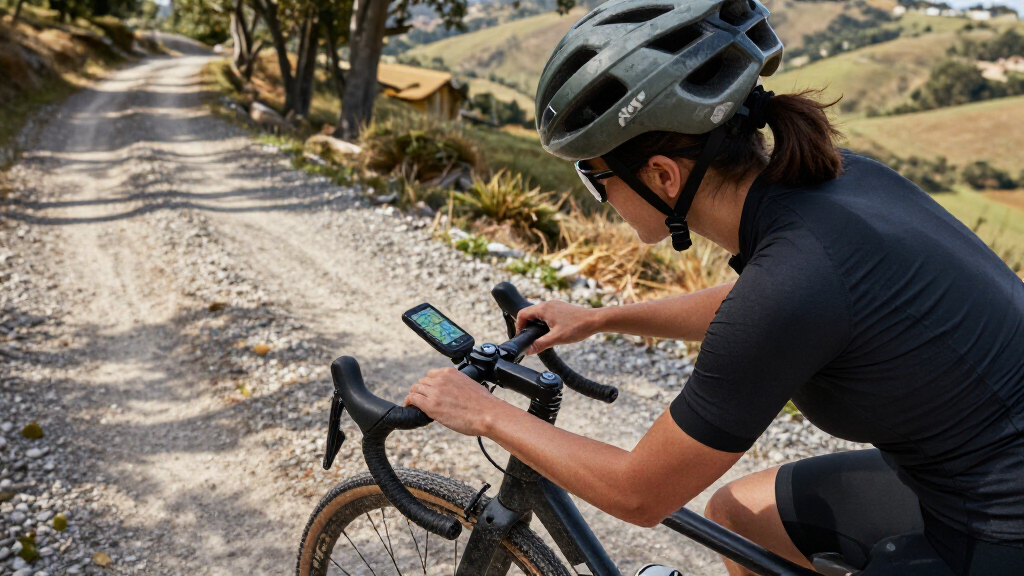

For riders seeking the 15 best cycling computers for every type of ride, the Garmin Edge 1050 is my best overall pick for its premium navigation and broad ride features. The Wahoo ELEMNT BOLT V3 is a strong choice for riders who want a compact GPS unit, while the Garmin Edge 540 suits cyclists who value performance-focused controls over a touchscreen. The main tradeoffs are navigation depth versus simplicity, advanced data versus ease of use, and GPS convenience versus the low-maintenance basics of a wired or wireless speedometer. Read on for the full breakdown, including which models make sense for commuting, training, touring, and casual rides.

Get sports gear delivered free with Prime
- Fast, free delivery on millions of items
- Prime Video, Amazon Music and more included
- Member-only deals all year
Complete the kit


Key Takeaways
- The Garmin Edge 1050 leads for feature-rich riding: It is the premium pick for cyclists who want advanced navigation and ride data, but its capabilities may exceed what casual riders need.
- The Wahoo ELEMNT BOLT V3 and Garmin Edge 540 serve different performance priorities: The BOLT V3 favors a compact GPS setup, while the Edge 540 is aimed at riders who prefer training-focused controls.
- Touchscreens and larger displays are not automatic upgrades: The iGPSPORT BSC500 and COOSPO CS600 offer screen-forward designs, while smaller or simpler units can be easier to fit and read at a glance.
- Basic computers still have a clear use: The CatEye Urban, CatEye Enduro, and CatEye Padrone avoid the setup burden of feature-heavy GPS devices when riders mainly want core ride data.
- Specialized extras create tradeoffs: The VLOXO combines a computer with a headlight and horn, while radar-compatible and sensor-connected options suit riders building a more connected cockpit.
| Garmin Edge 1050 Premium Cycling Computer |  | Best Premium Navigation and Training | Screen: 3.5-inch LCD color touchscreen | Battery life: Up to 20 hours in demanding use; up to 60 hours in battery saver mode | Storage: 64 GB | VIEW ON AMAZON | See Our Full Breakdown |
| iGPSPORT BSC500 GPS Bike Computer with 3.3-Inch Touchscreen and Voice Navigation |  | Best for Voice-Guided Route Riding | Display: 3.3-inch touchscreen | Controls: Touchscreen and buttons | Positioning: Dual-band L1/L5; GPS, Beidou, GLONASS, Galileo, QZSS | VIEW ON AMAZON | See Our Full Breakdown |
| Garmin Edge 540 GPS Cycling Computer |  | Best for Button-Controlled Training | Screen: 2.6-inch LCD, 246 x 322 resolution | Controls: Buttons | Battery life: Up to 26 hours in demanding use; up to 42 hours in battery saver mode | VIEW ON AMAZON | See Our Full Breakdown |
| iGPSPORT BSC200S GPS Bike Computer with Route Navigation |  | Best Compact Sensor-Friendly Pick | Display: 2.4-inch color screen, 320 x 240 resolution | Dimensions: 82 x 53 x 14.1 mm | Weight: 67 g | VIEW ON AMAZON | See Our Full Breakdown |
| Bikevee GPS Bike Computer with 2.4-Inch Display |  | Best for Straightforward Ride Tracking | Display: 2.4-inch LCD | Battery life: Up to 28 hours | Battery capacity: 650 mAh | VIEW ON AMAZON | See Our Full Breakdown |
| GEOID CC700 Wireless Bike Computer with 2.8-Inch Color Screen |  | Best for Customizable Navigation | Display: 2.8-inch color screen | Connectivity: ANT+, Bluetooth, Wi-Fi | Satellite systems: GPS, BEIDOU, GLONASS, QZSS, GALILEO | VIEW ON AMAZON | See Our Full Breakdown |
| CatEye Urban Wireless Bike Computer |  | Best for Simple Commuting | Speed metrics: Current, maximum, and average | Distance: Total and trip | Additional metrics: Elapsed time, calorie consumption, pace arrow, and clock | VIEW ON AMAZON | See Our Full Breakdown |
| VLOXO GPS Bike Computer with Headlight and Horn |  | Best for Commuter Convenience | Display: 2.4-inch LED | Battery capacity: 4000 mAh | Battery life: Up to 90 hours | VIEW ON AMAZON | See Our Full Breakdown |
| CYCPLUS G1 Wireless GPS Bike Computer | 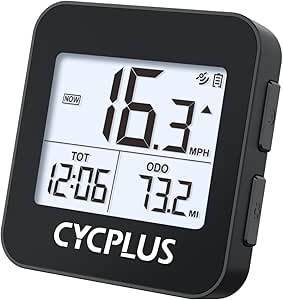 | Best for Long, Simple GPS Rides | Display: 2-inch LED FSTN with automatic backlight | Battery: 1,200 mAh lithium polymer | Battery life: Listed as 50 hours average and more than 55 hours | VIEW ON AMAZON | See Our Full Breakdown |
| Wahoo ELEMNT BOLT V3 GPS Bike Computer |  | Best for Route-Focused Training | Display: Color screen listed as 2.2 inches in the description and 2.3 inches in product information | Memory: 16 GB | Battery life: Listed as 15 hours in the description and 20 hours in product information | VIEW ON AMAZON | See Our Full Breakdown |
| BKVTOP Wireless GPS Bike Computer with 2.4″ Screen |  | Best for Long, Simple Rides | Display: 2.4-inch LCD | Battery life: Up to 28 hours | Weight: 50 g | VIEW ON AMAZON | See Our Full Breakdown |
| CatEye Enduro Wired Bike Computer |  | Best for Rugged, No-Fuss Riding | Display: LCD | Battery life: Up to 3 years | Connectivity: Wired | VIEW ON AMAZON | See Our Full Breakdown |
| CooSpo BC107 Wireless GPS Cycling Computer |  | Best for Sensor-Based Training on a Budget | Display: 2.4-inch LCD, 240 × 320 resolution | Battery life: Up to 80 hours | GPS: Dual-mode positioning | VIEW ON AMAZON | See Our Full Breakdown |
| CATEYE Padrone Wireless Bike Computer |  | Best for Large, Easy-to-Read Basics | Display: 5.5 cm LCD | Wireless transmission range: 70 cm | Sensor type: Analog wireless | VIEW ON AMAZON | See Our Full Breakdown |
| COOSPO Color Touchscreen GPS Bike Computer CS600 |  | Best for Touchscreen Navigation and Connectivity | Display: 2.4-inch LCD color touchscreen | Battery life: Up to 36 hours | GPS: GPS with GLONASS support | VIEW ON AMAZON | See Our Full Breakdown |
| cycling computers for every type of ride | Battery life | Display | Weight | Connectivity |
|---|---|---|---|---|
| Garmin Edge 1050 Premium Cycli | Up to 20 hours in demanding use; up to 60 hours in battery saver mode | — | — | Bluetooth, USB, Wi-Fi |
| iGPSPORT BSC500 GPS Bike Compu | — | 3.3-inch touchscreen | 107 g | — |
| Garmin Edge 540 GPS Cycling Co | Up to 26 hours in demanding use; up to 42 hours in battery saver mode | — | — | Bluetooth, Wi-Fi, USB |
| iGPSPORT BSC200S GPS Bike Comp | Up to 25 hours | 2.4-inch color screen, 320 x 240 resolution | 67 g | Bluetooth, ANT+, USB |
| Bikevee GPS Bike Computer with | Up to 28 hours | 2.4-inch LCD | 50 g | — |
| GEOID CC700 Wireless Bike Comp | — | 2.8-inch color screen | 0.21 kg | ANT+, Bluetooth, Wi-Fi |
| CatEye Urban Wireless Bike Com | — | — | — | — |
| VLOXO GPS Bike Computer with H | Up to 90 hours | 2.4-inch LED | — | — |
| CYCPLUS G1 Wireless GPS Bike C | Listed as 50 hours average and more than 55 hours | 2-inch LED FSTN with automatic backlight | 70 g | Wireless |
| Wahoo ELEMNT BOLT V3 GPS Bike | Listed as 15 hours in the description and 20 hours in product information | Color screen listed as 2.2 inches in the description and 2.3 inches in product information | 84 g | Bluetooth Smart, ANT+, Wi-Fi |
| BKVTOP Wireless GPS Bike Compu | Up to 28 hours | 2.4-inch LCD | 50 g | USB-C |
| CatEye Enduro Wired Bike Compu | Up to 3 years | LCD | 27.22 g | Wired |
| CooSpo BC107 Wireless GPS Cycl | Up to 80 hours | 2.4-inch LCD, 240 × 320 resolution | 100 g | ANT+ and Bluetooth |
| CATEYE Padrone Wireless Bike C | About 1 year | 5.5 cm LCD | 1.12 oz | — |
| COOSPO Color Touchscreen GPS B | Up to 36 hours | 2.4-inch LCD color touchscreen | 120 g | Bluetooth and ANT+ |
More Details on Our Top Picks
Garmin Edge 1050 Premium Cycling Computer
The Edge 1050 is the premium pick for riders who want a large, detailed map and training tools on one device. Its 3.5-inch color touchscreen gives route details and ride stats more room than the button-operated Garmin Edge 540, making it a more natural fit for riders who value visual navigation. A built-in speaker adds spoken prompts and a bike bell, while the 64 GB storage and North America maps support route-focused rides. Battery life reaches up to 20 hours in demanding use, or 60 hours in battery saver mode, though demanding use is less suited to very long events without power planning. Connected features depend on a compatible smartphone, and personalized training needs compatible power and heart-rate devices. Choose it over the simpler Edge 540 for its larger touch display and speaker; skip it if you want a basic, button-only computer.
Pros:- Large color touchscreen makes maps and ride data easier to read at a glance
- Up to 60 hours of battery life in battery saver mode
- Combines navigation, alerts, and performance tracking
- Built-in speaker provides prompts and a bike bell
Cons:- Several connected features require a compatible smartphone
- Personalized training features need compatible power and heart-rate devices
- Demanding-use battery life is limited to up to 20 hours
Best for: Road, gravel, and touring riders who want a large touchscreen, detailed North America maps, connected ride tools, and training features in one computer.
Not ideal for: Riders who prefer physical buttons, need extensive training metrics without adding sensors, or want a simpler device with fewer smartphone dependencies.
- Screen:3.5-inch LCD color touchscreen
- Battery life:Up to 20 hours in demanding use; up to 60 hours in battery saver mode
- Storage:64 GB
- Connectivity:Bluetooth, USB, Wi-Fi
- Satellite navigation:GPS, GLONASS, Galileo
- Map coverage:North America
- Mounting:Handlebar mount
Our verdict“Choose the Edge 1050 if a generous touchscreen, detailed navigation, and connected training matter more than a simpler interface and fewer device dependencies.”
iGPSPORT BSC500 GPS Bike Computer with 3.3-Inch Touchscreen and Voice Navigation
The iGPSPORT BSC500 makes route guidance its main advantage: voice navigation can reduce the need to keep glancing down, while automatic rerouting helps when a turn is missed. Its 3.3-inch touchscreen is paired with buttons, giving riders another way to operate the computer compared with the fully button-controlled Garmin Edge 540. It can display up to 12 data points per page and offers climb previews and training analysis, so it can serve riders who want more than basic speed and distance. Its dual-band, five-satellite positioning support is a strong fit for route tracking. The tradeoff is limited battery-life information, making it harder to judge for long events, and route planning relies on compatible apps or imported files. Choose it for guided rides, not for a self-contained route-planning workflow.
Pros:- Voice navigation helps riders follow routes with fewer screen checks
- Touchscreen and physical buttons provide two control options
- Dual-band positioning supports route tracking
- IPX7 water resistance suits wet-weather rides
Cons:- Battery life information is not provided
- Route planning depends on compatible apps or imported files
- Training analysis may offer less value to riders who only need basic ride data
Best for: Riders who follow imported routes and want spoken turn guidance, automatic rerouting, and a mix of touchscreen and button controls.
Not ideal for: Long-distance riders who need a clearly stated battery runtime, or cyclists who expect to plan routes entirely on the device without an app or imported file.
- Display:3.3-inch touchscreen
- Controls:Touchscreen and buttons
- Positioning:Dual-band L1/L5; GPS, Beidou, GLONASS, Galileo, QZSS
- Data fields:Up to 12 per page
- Weight:107 g
- Water resistance:IPX7
- Battery type:Lithium-ion
Our verdict“Pick the BSC500 for voice-guided route riding and flexible controls, but look elsewhere if stated battery endurance is a priority.”
Garmin Edge 540 GPS Cycling Computer
The Garmin Edge 540 is a focused choice for riders who want serious training and navigation functions without a touchscreen. Its physical buttons suit operation in conditions where touch controls can be awkward, though they make map interaction less direct than on the Garmin Edge 1050. Multi-band GNSS supports accurate positioning, and ClimbPro and stamina insights can help riders pace climbs and manage effort. Adaptive coaching and workout prompts add structure, while maps cover road, trail, and gravel riding. Battery life reaches up to 26 hours in demanding use and 42 hours in battery saver mode, exceeding the Edge 1050’s demanding-use figure. The smaller 2.6-inch screen is the clear compromise for map readability. Some training insights also require a compatible power meter and heart-rate monitor, so this is best for riders willing to build out a sensor setup.
Pros:- Multi-band GNSS supports accurate positioning
- ClimbPro and stamina insights can help manage effort
- Adaptive coaching and workout prompts add training structure
- Up to 26 hours of demanding-use battery life
Cons:- Button controls make map interaction less direct than on the Edge 1050
- The 2.6-inch screen is smaller than the Edge 1050 display
- Some training features require compatible power and heart-rate devices
Best for: Training-focused road, trail, and gravel riders who prefer physical controls and want climb, stamina, and workout guidance.
Not ideal for: Riders who prioritize a large touchscreen for map interaction or want advanced training insights without compatible power and heart-rate sensors.
- Screen:2.6-inch LCD, 246 x 322 resolution
- Controls:Buttons
- Battery life:Up to 26 hours in demanding use; up to 42 hours in battery saver mode
- Storage:16 GB
- Connectivity:Bluetooth, Wi-Fi, USB
- Satellite navigation:GPS
- Compatible devices:Android, iPhone
Our verdict“Choose the Edge 540 if you want button-based controls, strong training guidance, and longer demanding-use runtime than the Edge 1050.”
iGPSPORT BSC200S GPS Bike Computer with Route Navigation
The BSC200S is a compact option for riders who want route guidance and sensor connectivity without moving up to a large-screen computer like the iGPSPORT BSC500. At 67 g, it keeps handlebar bulk down, while Bluetooth and ANT+ support speed, cadence, heart-rate, and power sensors. Its 2.4-inch color screen is smaller than the BSC500’s 3.3-inch touchscreen, so it suits riders who value a light, straightforward display over spacious maps. Battery life is specified at up to 25 hours, and IPX7 water resistance helps it handle wet rides. Route creation and imports add flexibility, though some features depend on the iGPSPORT app. The USB Type-C cable is not included, an extra setup detail to account for before a ride. This is a better fit for compact sensor-based setups than screen-first navigation.
Pros:- Lightweight 67 g body keeps the handlebar setup compact
- Supports Bluetooth and ANT+ speed, cadence, heart-rate, and power sensors
- Up to 25 hours of battery life
- IPX7 water resistance and route import support
Cons:- The 2.4-inch display is less spacious for map viewing than the BSC500
- Some features require the iGPSPORT app
- USB Type-C charging cable is not included
Best for: Riders seeking a lightweight GPS computer with route imports, a stated 25-hour battery life, and support for common ANT+ or Bluetooth sensors.
Not ideal for: Cyclists who want a large touchscreen for maps, prefer detailed voice-guided navigation, or expect every feature to work without a companion app.
- Display:2.4-inch color screen, 320 x 240 resolution
- Dimensions:82 x 53 x 14.1 mm
- Weight:67 g
- Battery life:Up to 25 hours
- Battery capacity:600 mAh
- Connectivity:Bluetooth, ANT+, USB
- Data storage:Up to 400 hours of riding data
- Controls:6 buttons
Our verdict“Choose the BSC200S for a light, sensor-friendly GPS setup with route support, not for a large-screen navigation experience.”
Bikevee GPS Bike Computer with 2.4-Inch Display
The Bikevee GPS Bike Computer is aimed at riders who want core ride and elevation data without the training platform of the Garmin Edge 540 or the route-focused tools of the iGPSPORT BSC500. Built-in GPS tracks speed and distance without a wheel sensor or spoke magnet, while the barometric altimeter adds altitude, gradient, and accumulated ascent data. Its 28-hour battery life is longer on paper than the BSC200S’s 25 hours, and automatic backlighting supports changing light conditions. IPX7 water resistance adds weather protection. The tradeoff is a simpler feature set: the provided information does not describe route navigation or sensor-pairing support, so riders seeking guided mapping or a connected training setup should choose another model. It also uses buttons and enters sleep mode after seven minutes of inactivity, which may not suit every riding pattern.
Pros:- Built-in GPS tracks rides without a wheel sensor or spoke magnet
- Barometric altimeter records altitude, gradient, and accumulated ascent
- Up to 28 hours of battery life
- IPX7 water resistance and automatic backlighting
Cons:- Route navigation is not listed among the supplied features
- Sensor-pairing and advanced training support are not specified
- Sleep mode activates after seven minutes of inactivity
Best for: Commuters and recreational cyclists who want GPS-based speed, distance, and elevation tracking with long stated battery life and minimal setup.
Not ideal for: Route-focused riders who need turn-by-turn navigation, or training cyclists who want documented sensor connectivity and advanced workout analysis.
- Display:2.4-inch LCD
- Battery life:Up to 28 hours
- Battery capacity:650 mAh
- Sensors:GPS, motion sensor, barometric altimeter, speed sensor
- Water resistance:IPX7
- Dimensions:1.77 x 0.63 x 2.76 inches
- Weight:50 g
- Controls:Buttons
Our verdict“Pick the Bikevee for straightforward GPS and elevation tracking with long battery life, but choose the BSC200S or Garmin Edge 540 for navigation or sensor-based training.”
GEOID CC700 Wireless Bike Computer with 2.8-Inch Color Screen
The GEOID CC700 suits riders who want navigation and detailed ride data without moving up to a premium computer. Its color route guidance, turn alerts, and automatic rerouting make it a more capable route companion than the simpler CYCPLUS G1, which tracks core ride metrics but does not list mapping or turn-by-turn guidance. You can tailor as many as 10 data pages, each with up to 10 items, and pair sensors over ANT+ or Bluetooth; Wi-Fi adds ride syncing to STRAVA and TrainingPeaks. It also supports indoor smart-trainer workouts, giving it broader use than a basic outdoor speedometer. The tradeoff is a three-button interface instead of touch controls, and the stated five-second GPS positioning depends on recently synced AGNSS data, which remains valid for 14 days.
Pros:- Color route navigation includes turn reminders and automatic rerouting
- ANT+, Bluetooth, and Wi-Fi support a wide range of sensors and syncing
- Up to 10 customizable data pages with as many as 10 items per page
- Supports smart-trainer workouts and ride syncing to STRAVA and TrainingPeaks
Cons:- Three-button controls may feel less direct than a touchscreen interface
- Five-second positioning depends on AGNSS data synced within its 14-day validity period
Best for: Riders who want customizable training screens, sensor support, and rerouting for regular road or indoor-trainer rides.
Not ideal for: Riders who prefer touchscreen controls or want quick GPS positioning without periodically syncing AGNSS data.
- Display:2.8-inch color screen
- Connectivity:ANT+, Bluetooth, Wi-Fi
- Satellite systems:GPS, BEIDOU, GLONASS, QZSS, GALILEO
- Positioning:Five seconds with synced AGNSS
- Data pages:Up to 10 pages, with up to 10 data items per page
- Controls:Three buttons
- Water resistance:IPX7
- Weight:0.21 kg
Our verdict“Choose the GEOID CC700 if customizable ride data and rerouting matter more to you than touchscreen operation.”
CatEye Urban Wireless Bike Computer
The CatEye Urban Wireless is the straightforward pick for commuters who want useful ride figures without GPS routes, sensor pairing, or a complex setup. It records current, maximum, and average speed alongside trip distance, elapsed time, calories, pace, and the clock. Its automatic stop detection pauses elapsed time and average speed at traffic lights, which makes the figures more useful for stop-and-go city rides. Compared with the GPS-equipped CYCPLUS G1, this CatEye offers fewer route and altitude functions, but its focus on everyday ride metrics keeps the experience simpler. The FlexTight bracket is designed for easy mounting and adjustment, and manual odometer setting helps preserve accumulated mileage when replacing the battery. Skip it if you want mapped navigation, GPS tracking, or ride uploads; those capabilities are not specified here.
Pros:- Tracks current, maximum, and average speed plus total and trip distance
- Automatic stop detection pauses time and average speed at stops
- Manual odometer setting preserves mileage when the battery is changed
- FlexTight bracket supports easy mounting and adjustment
Cons:- No GPS navigation or route tracking is specified
- Does not list wireless sensor pairing or ride syncing
- Provides a more limited feature set than GPS computers such as the CYCPLUS G1
Best for: Urban commuters and recreational riders who want at-a-glance speed, distance, and time without GPS features.
Not ideal for: Route-focused cyclists or data-oriented riders who need GPS tracking, altitude records, sensor connectivity, or ride syncing.
- Speed metrics:Current, maximum, and average
- Distance:Total and trip
- Additional metrics:Elapsed time, calorie consumption, pace arrow, and clock
- Mount:FlexTight bracket
- Stop detection:Automatically pauses time and average speed when stopped
- Odometer:Manual setting available
Our verdict“Pick the CatEye Urban if your rides call for simple, stop-aware commuting metrics rather than GPS navigation.”
VLOXO GPS Bike Computer with Headlight and Horn
The VLOXO BK-5201 takes a different approach from dedicated route computers: it combines GPS ride tracking with a headlight and audible horn, cutting down on separate handlebar accessories. Its 2.4-inch high-contrast screen and manual backlight control are intended to support visibility in changing light, while a listed battery life of up to 90 hours makes it suited to frequent rides between charges. Compared with the Wahoo ELEMNT BOLT V3, the VLOXO emphasizes built-in commuter equipment and long stated runtime over route planning, turn-by-turn navigation, and sensor connectivity, which the Wahoo lists. GPS setup has a real catch: the first outdoor signal lock takes about five minutes, so it may frustrate riders who expect an immediate start. This is a practical all-in-one choice, not a navigation-led training computer.
Pros:- Combines GPS tracking, a headlight, and an audible horn in one device
- Battery life is listed at up to 90 hours
- High-contrast 2.4-inch screen has manual backlight control
- USB-C charging and included handlebar mount support everyday setup
Cons:- Initial GPS positioning takes approximately five minutes
- First GPS signal lock requires outdoor use
- The listed features do not specify turn-by-turn navigation or sensor connectivity
Best for: Commuters who want GPS ride tracking, a built-in light, and a horn in one handlebar-mounted device.
Not ideal for: Riders who rely on turn-by-turn navigation, route planning, or ANT+ and Bluetooth sensor pairing.
- Display:2.4-inch LED
- Battery capacity:4000 mAh
- Battery life:Up to 90 hours
- Charging:USB-C
- Sensor:GPS
- Mount:Handlebar mount
- Additional features:Front headlight and audible horn
Our verdict“Choose the VLOXO if integrated visibility and a horn matter more than advanced route guidance or sensor pairing.”
CYCPLUS G1 Wireless GPS Bike Computer
The CYCPLUS G1 is a compact choice for riders who want GPS-based ride records and a readable screen without paying for route guidance they may not use. It tracks time, distance, total mileage, and altitude, while its 2-inch display with automatic backlighting adapts to changing light. At 70 g, it is lighter than the 0.21 kg GEOID CC700, though the GEOID offers color navigation, rerouting, and a much broader set of configurable data pages. The CYCPLUS instead prioritizes a simple readout, with IPX6 water resistance and a 1,200 mAh battery listed for more than 55 hours in one section and 50 hours average in another. That inconsistency makes runtime harder to pin down. Its product details do not specify mapping or turn-by-turn directions, so riders seeking route support should look at the Wahoo ELEMNT BOLT V3.
Pros:- GPS records ride time, distance, total mileage, and altitude
- Automatic backlighting helps keep the display readable as light changes
- IPX6 water resistance suits wet-weather riding
- Compact 70 g design with a 1,200 mAh battery
Cons:- Battery life is listed inconsistently as 50 hours average and more than 55 hours
- Product details do not specify mapping or turn-by-turn navigation
- Offers fewer listed navigation and data-customization features than the GEOID CC700
Best for: Riders who want a lightweight GPS computer for tracking basic ride stats and altitude on longer outings.
Not ideal for: Cyclists who need turn-by-turn navigation, route mapping, or a clearly stated battery runtime.
- Display:2-inch LED FSTN with automatic backlight
- Battery:1,200 mAh lithium polymer
- Battery life:Listed as 50 hours average and more than 55 hours
- Water resistance:IPX6
- Connectivity:Wireless
- Weight:70 g
- Dimensions:2.36 x 0.98 x 2.24 inches
- Mount:Handlebar mount
Our verdict“The CYCPLUS G1 fits riders who value lightweight GPS tracking and basic metrics over mapped navigation.”
Wahoo ELEMNT BOLT V3 GPS Bike Computer
The Wahoo ELEMNT BOLT V3 is the strongest fit here for riders who plan routes, follow turn-by-turn directions, and pair cycling sensors. Its on-device navigation and rerouting put it ahead of the CYCPLUS G1, whose listed strengths are GPS ride records rather than mapping. Bluetooth Smart, ANT+, and Wi-Fi give the Wahoo broad pairing and syncing options, while 16 GB of memory and customizable data pages support a more involved training setup. Quick-look LEDs add another way to check ride information without relying only on the screen. Compared with the GEOID CC700, this is a more established route-and-training-style feature set, though the supplied details do not make the exact battery or display size clear: they list both 15 and 20 hours of battery life, and 2.2- and 2.3-inch screen measurements. Smart notifications and LiveTrack also require a smartphone during the ride.
Pros:- On-device turn-by-turn navigation includes rerouting
- Bluetooth Smart, ANT+, and Wi-Fi support sensor pairing and route syncing
- Customizable data pages and quick-look LEDs support training-focused use
- 16 GB of memory and USB-C charging
Cons:- Smart notifications and LiveTrack require a smartphone during the ride
- Battery life is listed as both 15 and 20 hours
- Display size is listed as both 2.2 and 2.3 inches
Best for: Road cyclists who regularly follow planned routes, use compatible sensors, and want customizable ride data.
Not ideal for: Riders who want phone-independent smart notifications or need product specifications with a single stated battery and screen size.
- Display:Color screen listed as 2.2 inches in the description and 2.3 inches in product information
- Memory:16 GB
- Battery life:Listed as 15 hours in the description and 20 hours in product information
- Connectivity:Bluetooth Smart, ANT+, Wi-Fi
- Water resistance:IPX7
- Weight:84 g
- Charging:USB-C
- Interface:Buttons
Our verdict“Choose the Wahoo ELEMNT BOLT V3 if route following and sensor-supported training are your priorities and you are comfortable carrying a phone for connected features.”
BKVTOP Wireless GPS Bike Computer with 2.4″ Screen
The BKVTOP makes the most sense for riders who want GPS-based speed, distance, and altitude without setting up a wheel sensor. Its 28-hour battery life is a practical advantage for long outings, while the 50 g body adds little weight to the handlebar. Compared with the CatEye Padrone, it does not rely on a separate wheel sensor, and its IPX7 protection suits wet-weather use. The tradeoff is a short feature list: there is no stated route navigation, smartphone connection, or app syncing, so it cannot match the connected training options of the CooSpo BC107 or COOSPO CS600. I’d choose it for straightforward ride recording, not for following routes or analyzing sensor data.
Pros:- Built-in GPS records speed, distance, and altitude without a wheel sensor or magnet.
- Up to 28 hours of battery life supports long rides between charges.
- IPX7 waterproof protection is suited to riding in wet weather.
- 50 g body and support for eight languages make it a lightweight, accessible basic option.
Cons:- Does not list route navigation or advanced training metrics.
- No smartphone connectivity or app integration is specified.
- The 2.4-inch LCD offers fewer stated display capabilities than the color touchscreen on the COOSPO CS600.
Best for: Riders who want GPS-derived basic ride metrics and long battery life without pairing a phone or buying a wheel sensor.
Not ideal for: Riders who need turn-by-turn navigation, app syncing, or heart-rate, cadence, and power data.
- Display:2.4-inch LCD
- Battery life:Up to 28 hours
- Weight:50 g
- Connectivity:USB-C
- Water resistance:IPX7
- Mounting:Handlebar mount
- Languages:8
Our verdict“Choose the BKVTOP for lightweight, sensor-free GPS ride recording, but skip it if you want navigation or connected training data.”
CatEye Enduro Wired Bike Computer
The CatEye Enduro favors simple controls and a durable wired sensor over wireless convenience. A single front button keeps operation uncomplicated, and the computer tracks more everyday ride details than a bare-bones speed-and-distance unit, including ride time, pace, calories, and carbon offset. Its automatic stop detection pauses timing and average-speed calculations at a stop, reducing misleading ride stats in traffic. Compared with the GPS-equipped BKVTOP, the Enduro needs a magnet and wired sensor, but it offers a broad set of listed metrics without depending on GPS. The long stated battery life also suits riders who prefer infrequent replacements. The compromise is the installation and exposed wire; riders who want a clean wireless setup or route guidance should look at the CooSpo BC107 instead.
Pros:- Tracks speed, distance, ride time, calories, carbon offset, pace, and time.
- Automatic pause adjusts timing and average-speed calculations when stopped.
- Single-button operation keeps the interface simple while riding.
- Heavy-duty wire is intended for road, mountain, and gravel use.
Cons:- Wired sensor and magnet require more involved setup than GPS-based computers.
- Does not list navigation or smartphone connectivity.
- Button-based operation lacks the touch controls available on the COOSPO CS600.
Best for: Road, mountain, and gravel riders who value straightforward operation, a wired sensor, and a broad set of basic ride statistics.
Not ideal for: Riders who want GPS route tracking, wireless installation, or touchscreen controls.
- Display:LCD
- Battery life:Up to 3 years
- Connectivity:Wired
- Controls:Single front button
- Weight:27.22 g
- Mounting:Handlebar mount
- Warranty:2 years
Our verdict“Pick the Enduro if you want a durable, button-operated computer with detailed basic stats and can live with a wired sensor.”
CooSpo BC107 Wireless GPS Cycling Computer
The BC107 is the stronger choice here for riders building a connected training setup without moving to a feature-rich premium computer. Dual-mode GPS positioning records rides, while ANT+ and Bluetooth support compatible heart-rate, speed, cadence, and power sensors. Ride data can sync through the CoospoRide app to Strava, giving it a clear advantage over the simpler BKVTOP and sensor-focused CatEye Enduro. Its 80-hour battery claim also stands out in this group. The screen is a 2.4-inch LCD rather than the CS600’s color touchscreen, and the BC107’s first GPS lock may take three to five minutes. You’ll also need to budget for compatible sensors and, if desired, an out-front mount, which are not included.
Pros:- Dual-mode GPS positioning records rides without a wheel sensor.
- ANT+ and Bluetooth support compatible heart-rate, speed, cadence, and power sensors.
- Up to 80 hours of battery life reduces charging frequency.
- CoospoRide app sync enables activity uploads to Strava.
Cons:- Out-front mount and additional sensors are sold separately.
- Initial GPS positioning can take three to five minutes.
- Its LCD display lacks the color touchscreen and built-in navigation described for the COOSPO CS600.
Best for: Cyclists who already own or plan to add ANT+ or Bluetooth training sensors and want ride syncing with Strava.
Not ideal for: Riders who want built-in route navigation, an included sensor bundle, or a fast GPS lock every time they start.
- Display:2.4-inch LCD, 240 × 320 resolution
- Battery life:Up to 80 hours
- GPS:Dual-mode positioning
- Connectivity:ANT+ and Bluetooth
- Water resistance:IP67
- Weight:100 g
- Warranty:12 months
Our verdict“Choose the BC107 for long battery life and sensor-connected training, provided you are comfortable supplying the accessories it lacks.”
CATEYE Padrone Wireless Bike Computer
The Padrone puts readability ahead of mapping and training connectivity. Its large LCD presents core figures such as current, maximum, and average speed, trip distance, elapsed time, and clock, making it a comfortable option for riders who want quick glances rather than a dense data screen. ClickTec controls, a tool-free mount, and automatic stop detection keep everyday operation straightforward. Compared with the wired CatEye Enduro, the Padrone avoids a wire running along the bike, though it still depends on a wheel-mounted sensor and magnet. Unlike the GPS-based BKVTOP, it does not provide GPS-derived ride tracking, navigation, or altitude. Its strengths are simple display and setup; riders who want routes, phone syncing, or training sensors should choose a more connected computer.
Pros:- Large LCD displays core speed, distance, and ride-time information.
- Wireless sensor avoids the cable used by the CatEye Enduro.
- Tool-free FlexTight mount makes installation and adjustment straightforward.
- Auto stop pauses timing and average-speed calculations when stationary.
Cons:- No GPS, navigation, or heart-rate tracking.
- Wireless sensor is intended for front-wheel use only.
- The listed battery life is about one year, shorter than the Enduro’s stated three years.
Best for: Recreational cyclists who want large, easy-to-read core ride stats and a simple wireless speed-sensor setup.
Not ideal for: Riders who need GPS tracking, navigation, altitude data, or heart-rate and cadence connections.
- Display:5.5 cm LCD
- Wireless transmission range:70 cm
- Sensor type:Analog wireless
- Battery life:About 1 year
- Weight:1.12 oz
- Mounting:Handlebar mount with FlexTight adjustment
- Warranty:2 years
Our verdict“Choose the Padrone for a large, uncomplicated display of basic ride data, not for GPS or connected training.”
COOSPO Color Touchscreen GPS Bike Computer CS600
The CS600 is the most feature-rich pick in this batch for riders who want on-device route navigation alongside sensor connectivity. Its 2.4-inch color touchscreen, GPS with GLONASS support, and auto backlight give it a more navigation-focused setup than the basic BKVTOP or the large-display-but-no-GPS CatEye Padrone. Bluetooth and ANT+ also let it connect with compatible accessories, including bike radar, and its 36-hour battery life supports long days between charges. The tradeoff is that cadence, heart-rate, and power readings require separate sensors. Touch controls may also be less responsive in heavy rain, even with IPX7 protection. Compared with the CooSpo BC107, the CS600 adds a color touchscreen and built-in navigation, but its stated battery life is shorter.
Pros:- Color touchscreen combines touch and button input for ride control.
- GPS with GLONASS support and built-in route navigation supports route-following rides.
- Bluetooth and ANT+ connectivity includes support for bike radar and other compatible accessories.
- Up to 36 hours of battery life, USB-C charging, and IPX7 protection suit extended rides.
Cons:- Cadence, heart-rate, and power data require separately purchased sensors.
- Touchscreen response may be less reliable in heavy rain.
- Its 36-hour battery life is shorter than the BC107’s stated 80 hours.
Best for: Riders who want built-in route navigation, a color touchscreen, and Bluetooth or ANT+ connections for compatible accessories.
Not ideal for: Riders who prefer a basic display, need included cadence or heart-rate sensors, or often operate a touchscreen in heavy rain.
- Display:2.4-inch LCD color touchscreen
- Battery life:Up to 36 hours
- GPS:GPS with GLONASS support
- Connectivity:Bluetooth and ANT+
- Water resistance:IPX7
- Charging:USB-C
- Weight:120 g
Our verdict“Pick the CS600 if you want route navigation and a color touchscreen in a connected computer, and accept the need for separate training sensors.”

How We Picked
I ranked these computers by how well they serve distinct ride types, rather than treating the longest feature list as the winner. My comparison focused on navigation usefulness, display readability, control style, GPS and sensor connectivity, battery and mounting practicality, and the amount of setup or maintenance each device asks from its owner. I also weighed whether a feature solves a real riding need: turn guidance matters more to touring riders than to short-ride commuters, while simple speed and distance can be enough for casual use.
The order reflects the balance of capability and audience fit. The Garmin Edge 1050 ranks first as the most capable all-round choice, while the Wahoo ELEMNT BOLT V3 and Garmin Edge 540 stand out for performance-oriented riders with different preferences. Lower-ranked models are not automatically poor choices; many are better matches for riders who want a simpler display, a compact unit, basic wired or wireless tracking, or a specific extra. Buyers should confirm current device compatibility, included accessories, and feature support before purchasing.
Factors to Consider When Choosing 15 Best Cycling Computers For Every Type Of Ride
Choose a cycling computer around the rides you actually take, not the most demanding ride you might do once. A reliable fit depends on the information you need while moving, how much setup you will tolerate, and whether you expect the device to work with other cycling gear.
Match Navigation to Your Routes
For familiar commutes and short spins, turn-by-turn guidance may add little; a clear speed and distance display can be more useful. Riders exploring unfamiliar roads or touring should look closely at route handling and how legible guidance is while riding. A device that can show a route is not necessarily the same as one that makes rerouting or following a complicated course easy. Think about whether you plan routes in advance, follow downloaded courses, or mostly choose roads on the fly. Avoid paying for elaborate navigation if you rarely leave known routes, but do not underbuy if getting back on course is a regular need.
Choose a Screen You Can Read at a Glance
Display size is only one part of readability: contrast, field layout, glare, and the number of values shown all affect how quickly you can check the screen. A larger color display can help with maps, but it may take up more handlebar space and encourage riders to show too much data at once. Compact units suit crowded cockpits and riders who only need a few fields. Consider gloves, weather, and the riding position you use when deciding between touch controls and physical buttons. A useful screen is one you can interpret without staring at it.
Check Connectivity Before Building a Sensor Setup
ANT+ and Bluetooth support can matter if you plan to pair heart-rate straps, cadence sensors, power meters, or radar. Compatibility should be checked for each accessory rather than assumed from a general connectivity label. A GPS computer may record rides without extra sensors, so new riders can start with the device alone and add equipment later. If you already own sensors, confirm how they connect and whether the computer can show the metrics you want. Buying a feature-rich unit without compatible accessories can leave much of its data capability unused.
Balance Battery Life Against Ride Length and Navigation
Published battery figures can change with screen brightness, GPS settings, connected sensors, and navigation use. Match the stated endurance to your longest usual ride, then leave room for aging batteries and cold-weather performance. Riders on long days or multi-day tours should prioritize dependable runtime and a charging plan over a short list of extra display effects. For shorter commutes, frequent charging may be an acceptable tradeoff if the computer is otherwise a better fit. Do not compare battery claims without checking whether the devices are being used under similar conditions.
Decide How Much Setup and Maintenance You Want
GPS devices typically reduce reliance on wheel-based setup, while wired and basic wireless computers can suit riders who want straightforward ride information. Simpler models may still require correct sensor placement, wheel-size configuration, or battery replacement. Consider whether you are comfortable pairing devices, managing routes, and adjusting data pages, or would rather mount a unit and keep the controls minimal. A computer with more features can save effort on route-heavy rides but create extra configuration work before the first outing. Choose the simplest system that covers your real needs, not the simplest one regardless of what you ride.
Treat Bundled Extras as a Fit Question
Integrated lights, horns, radar support, and large color screens can make a setup more convenient, but each should solve a problem you actually have. A combined device may reduce cockpit clutter, yet a separate accessory can be easier to replace or position. Check mounting options and whether the computer leaves room for your existing lights, phone mount, or bags. For urban riders, visibility and controls may matter more than training metrics; for group or road riding, sensor and radar compatibility may matter more. Judge extras by their practical value on your routes rather than by the number of features listed.
Frequently Asked Questions
Should I choose a GPS computer or a basic wired or wireless bike computer?
Choose GPS if you want route guidance, ride recording without a wheel sensor, or the option to review detailed ride data. A basic wired or wireless computer can be a better fit when speed, distance, and elapsed time are all you need. It may also mean less pairing and fewer app settings, though setup can depend on correct sensor placement and wheel information. Think about whether navigation would change your rides, rather than choosing GPS just because it offers more features. For many short commutes and familiar loops, a simpler unit is entirely adequate.
Is a touchscreen a good choice for cycling in rain or with gloves?
A touchscreen can make map interaction and menu selection feel direct, but its convenience depends on weather, glove use, and how often you need to change settings mid-ride. Physical buttons can be easier to operate by feel, especially when conditions are wet or your hands are cold. Riders who mostly start a route before leaving may not need frequent screen interaction. Consider how you ride and whether the unit offers controls that remain practical in your usual conditions. Do not choose by screen type alone; layout and readability matter just as much.
Will these computers work with the sensors I already own?
Compatibility varies by computer and accessory, so check the exact connection standard and supported sensor type before buying. ANT+ and Bluetooth are common, but a device may not support every accessory or display every available metric. Confirm whether you need speed, cadence, heart rate, power, or radar data, then compare that list with the computer’s specifications. If you are not using sensors now, a GPS unit can still be useful on its own. This check is especially important when replacing a computer in an established setup.
Do I need a larger color screen for route navigation?
A larger color display can make map context easier to see, especially on unfamiliar routes, but it is not the only way to follow a course. Turn prompts and a clear route line may be enough for riders following planned roads without frequent map checks. Larger screens can occupy more handlebar space and may show more information than you need while riding. Consider how often you explore, how complex your routes are, and whether you prefer map context or simple prompts. If your rides are mostly familiar, a smaller display may be the more practical choice.
How much battery life should I plan for on long rides?
Start with the longest ride you regularly take, then allow extra time for navigation, screen use, connected sensors, and battery aging. A device’s published runtime may not reflect the settings you use on the road. Riders touring or riding for a full day should also think about charging access and whether they can reduce power use when needed. Short-distance commuters can often accept a shorter runtime if they charge regularly. Compare battery expectations alongside your ride habits, not as a standalone specification.
Conclusion
For the broadest mix of navigation and ride features, I recommend the Garmin Edge 1050 as the best overall, especially for riders who will use its advanced capabilities. The Wahoo ELEMNT BOLT V3 is my best value-oriented performance pick for cyclists who want a compact GPS computer, while the Garmin Edge 1050 is also the best premium choice for riders seeking a feature-rich cockpit. Beginners who mainly want essential ride information can start with a simpler option such as the CatEye Urban or CatEye Padrone, while riders who want training-focused controls should compare the Garmin Edge 540. For specialized needs, the VLOXO pairs computer functions with a headlight and horn, and the COOSPO CS600 is worth a look for riders interested in a color touchscreen and radar support. Pick the device that matches your routes and setup rather than buying features you will not use.