TL;DR

Get sports gear delivered free with Prime
- Fast, free delivery on millions of items
- Prime Video, Amazon Music and more included
- Member-only deals all year
Outdoor Life published a roundup of 13 tactics shared by experienced whitetail hunters, emphasizing careful observation, low-impact access and decisions based on current conditions. The advice comes from individual hunters and is not a controlled comparison proving that any tactic guarantees a mature buck harvest.
Outdoor Life published a report on Nov. 4, 2026, outlining 13 tactics shared by experienced whitetail hunters, from keeping long-term trail-camera records to choosing setups around a specific buck’s behavior. The roundup presents hunters’ field advice rather than a controlled study, so the tactics are recommendations, not guarantees of success.
The report, titled “These Are the 13 Tactics Expert Whitetail Hunters Actually Use to Tag Mature Bucks,” is based on interviews with hunters and outdoor-media personalities, including Mark Drury of Drury Outdoors, Grant Woods of Growing Deer TV and Paul Beasley of “Canada in the Rough.” Their advice centers on learning how deer use a property and adjusting decisions to the conditions rather than repeating a familiar routine.
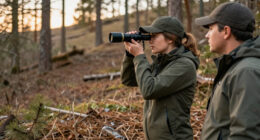
Drury said he has saved trail-camera photographs of antlered bucks dating to 2007, organizing them to review patterns over multiple seasons. He advised hunters to study those records throughout the year. His reasoning is that bucks can show habitual patterns, while changes in factors such as crop rotations and weather may make past observations useful in later seasons. The report does not quantify how often the method leads to a harvest.
Several contributors stressed that mature bucks should be treated as individuals. Beasley described a buck on a 100-acre property that changed where it appeared as the season approached. After adding cameras, his team found the buck was still on the property but using another area; Beasley said he shot it from a setup the team had not previously used to harvest a buck. Other advice in the roundup includes evaluating each hunt before entering the woods, prioritizing favorable wind and access, and using recent camera information to consider early-season opportunities.
Better Decisions, Less Disturbance
The tactics share a practical theme: observation and restraint can matter as much as time spent hunting. A hunter who tracks a particular buck, accounts for wind and considers how an entry route could alert deer may avoid relying on a setup that no longer fits the animal’s movements. That is the central usefulness of the roundup for readers: it offers decision-making principles that can be adapted to a property, rather than a single recipe.
The advice also sets expectations. A trail-camera pattern is evidence of past activity, not proof that a buck will appear in daylight or follow the same route during the season. Weather, hunting pressure and other changing conditions can affect what hunters see. Readers should treat the contributors’ experiences as informed guidance, not a promise that following the list will produce a mature buck.
Products Worth Considering

GoPro Wireless Mic Complete Kit with 2 Transmitters, 2 Receivers, and Charging Case

Garmin inReach Messenger Satellite Communicator Bundle

Garmin Tacx NEO 2T Smart Trainer
As an affiliate, we earn on qualifying purchases.
Advice Drawn From Field Experience
Outdoor Life frames the recommendations as lessons from hunters who repeatedly study deer and their habitat. The article’s opening premise is that successful hunters keep learning and experiment with tactics; it then presents practical examples from individual contributors. The material is a reported advice roundup, not new research or an official change in hunting rules.
The examples range from long-term information gathering to choices made on a single hunt. Drury’s archive provides a multiyear view of camera records, while Beasley’s account illustrates why a familiar property does not guarantee that a particular buck will keep using the same area. Nate Hosie of HeadHunters TV said he now weighs wind, temperature, season timing and camera information when deciding when to hunt, rather than assuming that more time in the woods always improves his chances.
The supplied report also includes advice about scent and avoiding detection. Rick White recommends consistent scent-management practices and hunting with the wind in mind; Nick Mundt of Bone Collector stresses that wind should shape each sit and that access and exit routes can expose a hunter. These are the contributors’ recommendations, not findings established by the article through comparative testing.
“Save trail monitoring pictures in an organized fashion for easy review in future years.”
— Mark Drury, Drury Outdoors, as quoted by Outdoor Life
Limits of the Hunting Advice
The supplied source material does not provide a full itemized account of all 13 tactics, nor does it show comparative data on harvest rates, success probabilities or how the advice performs across regions and conditions. The article attributes recommendations and anecdotes to its contributors; it does not establish that any one approach caused a particular outcome in a way that can be generalized.
Results can depend on local habitat, weather, hunting pressure, season dates and applicable regulations. The report does not specify how readers should adapt every tactic to those factors, and the material provided does not identify a formal follow-up study or measurement of effectiveness.
Apply Tactics to Local Conditions
The Outdoor Life report is a set of field recommendations, not an announcement of a forthcoming program or research milestone. Hunters who use the advice can start by keeping organized camera records, reviewing recent activity and planning each entry and exit with wind and disturbance in mind. They should check local hunting rules and seasons, and avoid assuming that a past pattern will hold in current conditions.
Whether these methods improve a hunter’s results cannot be determined from the roundup alone. Further evidence would require consistent comparisons across hunters, properties and seasons; the supplied report does not announce such a study.
Key Questions
What did Outdoor Life publish?
Outdoor Life published a 13-tactic roundup based on advice from experienced whitetail hunters and outdoor-media personalities. The source material provided here details several tactics but not a complete item-by-item list.
Who contributed advice to the report?
Named contributors include Mark Drury, Grant Woods and Paul Beasley, along with hunters and personalities such as Nate Hosie, Rick White, Nick Mundt and Aaron Gaines.
Why does the report recommend saving trail-camera photos?
Mark Drury said he organizes buck photographs dating back to 2007 to review activity across seasons. He argues that historical records may help hunters recognize patterns, although the report does not measure the tactic’s success rate.
Does following these tactics guarantee a mature buck harvest?
No. The article presents contributors’ experience and recommendations, not controlled evidence that the tactics guarantee a harvest. Deer behavior and hunting conditions vary by property and season.
Source: outdoorlife.com