TL;DR

Get sports gear delivered free with Prime
- Fast, free delivery on millions of items
- Prime Video, Amazon Music and more included
- Member-only deals all year
An Outdoor Life report published Oct. 24, 2026, names New York, Pittsburgh, Miami and Milwaukee as four major cities with notable urban fishing opportunities. Its examples include migratory striped bass near New York, catfish in Pittsburgh, canal fishing in Miami and trout and salmon around Milwaukee.
Outdoor Life has named New York, Pittsburgh, Miami and Milwaukee as four major U.S. cities with notable urban fishing opportunities, pointing to species ranging from striped bass to peacock bass, catfish, trout and salmon. The report argues that city waterways can offer productive fishing despite their industrial surroundings and the common assumption that urban waters hold few fish.
The report’s author describes fishing the Hackensack River in New Jersey, near Manhattan, with Captain Zach Flake. During a Saturday visit in peak fall striped bass season, the author saw only one other boat launching at a public ramp and reported catching striped bass around concrete rubble, old docks and other manmade structures. That account is a firsthand example, not a measure of fishing pressure across the whole region.
The four city recommendations reflect different kinds of fishing. In New York, the report points to spring and fall migrations of striped bass and bluefish in surrounding saltwater. In Pittsburgh, where the Ohio, Monongahela and Allegheny rivers meet downtown, it highlights flathead catfish. Miami offers a network of freshwater canals and species including peacock bass, largemouth bass, snook, knifefish, snakeheads and small tarpon, according to the report.
For Milwaukee, the article cites brown trout in the harbor, steelhead in rivers running through the city and salmon entering from Lake Michigan. Outdoor Life presents these locations as options for anglers willing to fish within city limits; it does not provide a comparative ranking, catch-rate data or a standardized test of the four destinations.
City Waters Offer Varied Fishing
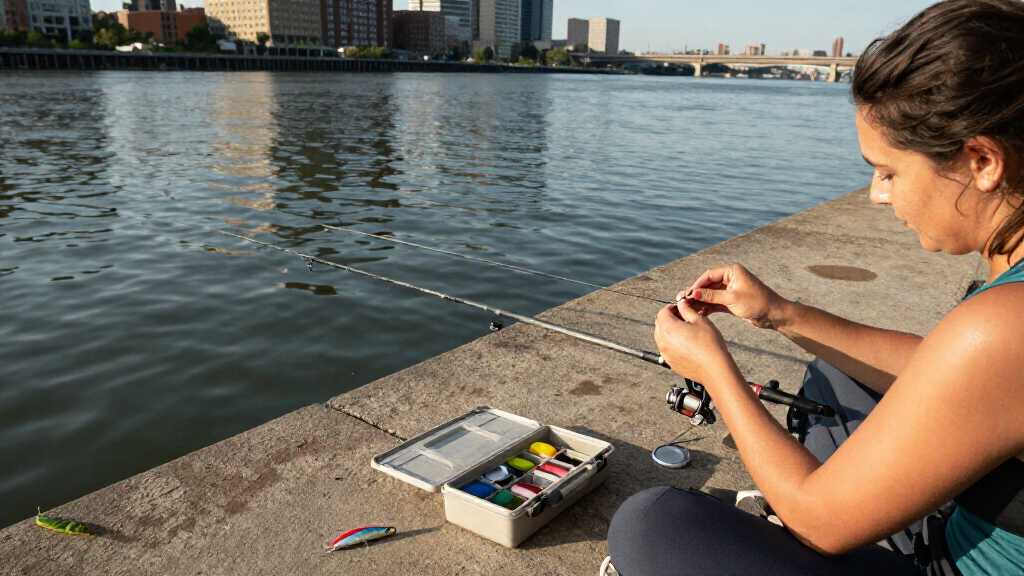
The report challenges the idea that fishing requires a long drive away from dense development. For urban residents and visitors, rivers, canals, harbors and tidal waters may offer access to a range of fisheries close to homes and transit. The examples also show how fishing opportunities can differ sharply by geography: a coastal migration fishery in New York is not the same experience as canal fishing in Miami or pursuing catfish in Pittsburgh.
The author links the potential of some urban waters to improvements in water quality and to habitat formed by bridges, pilings, bulkheads and rocky banks. Those observations give readers a reason to look beyond a waterway’s appearance, but do not establish that every city waterway is clean or safe to fish. Local advisories, regulations and access conditions still matter.
Products Worth Considering

Coleman Skydome XL 8-Person Family Tent

GoPro MAX2 Waterproof 360 and Traditional Action Camera with Touch Screen

GoPro MAX Waterproof 360 and Traditional Action Camera with Touch Screen, 5.6K Video, 16.6MP Photos, Live Streaming, Stabilization
As an affiliate, we earn on qualifying purchases.
How Urban Waterways Support Fish
The Outdoor Life report frames urban fishing through the author’s experiences over roughly 20 years of fishing in cities and through a trip on the Hackensack. It notes that the river was historically polluted and says it has improved, while acknowledging that it is not perfect. The article attributes broader improvements in urban waterways to changes in environmental law, but does not identify particular laws or provide water-quality measurements.
On the Hackensack, the report describes a tidal system that draws in and flushes out saltwater, along with built structures that create changes in depth and current. The author says those conditions can attract migrating striped bass and provide habitat for smaller fish. The piece also recalls an earlier Miami trip for peacock bass where the author saw no other boats in the fishing areas. These are reported personal observations, not evidence that urban fishing locations are generally uncrowded.
“The Hackensack River where I fished with Flake is a prime example of why that’s wrong.”
— Outdoor Life report
Access, Safety and Catch Rates
The report does not compare the four cities using common measures such as catch rates, the number of public access points, seasonal fishing pressure or water-quality data. Its recommendations are based on the author’s experience and descriptions of local fisheries, so readers should not treat the list as a verified ranking of the best urban fishing in the country.
Conditions also vary by location and season. The article does not give specific regulations, license requirements, consumption advisories, or access rules for the waters it mentions. It is not clear from the report how current fishing conditions compare across all four cities. Anglers should check state and local rules and consult relevant fish-consumption and water advisories before fishing or eating a catch.
Check Local Rules Before Fishing
The report does not announce a follow-up study or a formal ranking process. For readers considering a trip, the next step is to identify a specific river, harbor or canal and confirm that fishing access is open. Local wildlife agencies and municipal authorities can provide current information on seasons, licenses, size and harvest limits, and health advisories.
Fishing prospects will change with migration timing, weather and water conditions. New York’s striped bass and bluefish opportunities, for example, are described as seasonal runs, while the article identifies different target species for each city. The piece offers a starting list rather than a guarantee of catches or a schedule for when any particular location will be productive.
Key Questions
Which four cities does the report recommend?
Outdoor Life names New York, Pittsburgh, Miami and Milwaukee as cities with notable urban fishing opportunities. The article does not rank them against one another.
What can anglers target in these cities?
The report mentions striped bass and bluefish around New York; flathead catfish in Pittsburgh; peacock bass, largemouth bass, snook, knifefish, snakeheads and small tarpon in Miami; and brown trout, steelhead and salmon around Milwaukee.
Does the article show that city waterways are safe to fish?
No. The report describes some waterways as cleaner than they used to be but does not provide current water-quality measurements or safety assessments for each location. Check local fishing and fish-consumption advisories.
Are the four cities ranked by catch rates?
No. The article offers the author’s recommendations and examples, not a standardized comparison of catch rates, fishing access or pressure across the four cities.
Source: rss