Choosing a sports bottle comes down to how you drink. Insulated sports water bottles keep water cold for hours, making them better for long days, outdoor sessions and people who dislike warm drinks. Squeeze sports water bottles are lighter and let you drink quickly with one hand, which suits cycling, team sports and fast-paced workouts. The tradeoff is clear: insulation adds weight, cost and cleaning complexity; a squeeze design gives up temperature control for speed and convenience. For most short workouts, a squeeze bottle is the practical pick. Choose insulated if cold water throughout a long session or day matters enough to carry extra weight.

Get sports gear delivered free with Prime
- Fast, free delivery on millions of items
- Prime Video, Amazon Music and more included
- Member-only deals all year
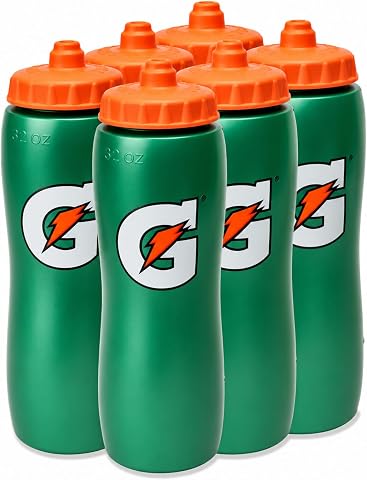
Gatorade 32 oz Squeeze Sports Bottles, Pack of 6
- ✔ Capacity: 32 oz per bottle
- ✔ Pack size: 6 bottles
- ✔ Material: Plastic

50 Strong Reusable 22 oz Sports Water Bottles, 6-Pack
- ✔ Capacity: 22 fl oz each
- ✔ Quantity: 6 bottles
- ✔ Material: BPA-free polyethylene plastic
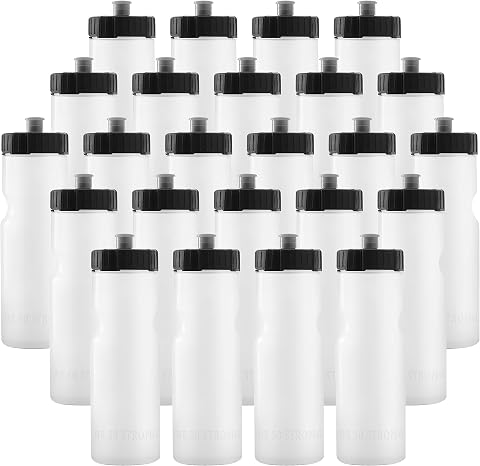
50 Strong 22 oz Sports Squeeze Water Bottles, 24-Pack, Clear
- ✔ Capacity: 22 oz per bottle
- ✔ Pack size: 24 bottles
- ✔ Material: BPA-free HDPE plastic
At a Glance
| Criteria | Insulated sports water bottles | Squeeze sports water bottles | Winner |
|---|---|---|---|
| Temperature retention | Keeps drinks cold for hours; hot-drink retention varies by design | Little temperature retention; drink temperature follows surroundings | A |
| Drinking speed during exercise | Usually requires opening a cap or lid and tipping to drink | Fast access through a bite valve or nozzle; easy to drink one-handed | B |
| Weight and portability | Heavier and often bulkier due to double-wall construction | Lightweight, compressible or easy to carry in a cage | B |
| Cleaning and maintenance | Narrow openings and lids can take more effort to clean | Wide openings and simple bodies are often easier to rinse | B |
| Durability and leak resistance | Rigid body; lid seals and moving parts need care | Can wear, crack or leak at the valve; fewer parts on basic models | Depends |
| Capacity and refill convenience | Commonly available in medium and large sizes; opening and weight can slow refills | Often shaped for quick grabs and cage use; easy to refill | Depends |
| Price and value | Usually costs more, especially for premium insulation | Usually inexpensive and easy to replace | B |
Gatorade 32 oz Squeeze Sports Bottles, Pack of 6
For buyers who want more water or sports drink between refills, the 32 oz capacity sets this six-pack apart from both 22 oz 50 Strong options. That extra volume makes sense for longer practices, sideline use, or a home supply shared by several athletes. The clear fluid-level strip also makes it easier to see how much remains without guessing from the bottle’s shape.Its defining feature is the one-way self-sealing valve: we can drink by squeezing without opening and closing the lid each time. That is a meaningful difference from the 50 Strong pull-top caps, which favor a simpler, familiar opening. The contoured grip supports handling during activity, and the wide-mouth screw-on lid simplifies filling and emptying. The lid is for refilling; drinking still requires squeezing the bottle.There are real limits to that convenience. A squeeze valve is less suitable for anyone who wants to drink with minimal hand effort, and the larger bottle can be awkward if a compact bike-cage fit is essential. The product details do not claim cage compatibility, unlike the 22 oz 50 Strong bottles. Six bottles also suit a team or multi-person household better than someone who needs just one. We place it first for its blend of generous capacity, quick squeeze access, and practical refill features, not as the best fit for every cycling setup.
Pros:
- 32 oz capacity provides a larger serving than either 50 Strong option.
- Self-sealing valve supports squeeze-to-drink use without repeatedly opening the lid.
- Clear strip makes remaining fluid easy to check.
- Wide-mouth lid and top-rack dishwasher care simplify refilling and cleanup.
Cons:
- Drinking requires squeezing the bottle, which may not suit every user.
- Six bottles may be more than needed for a single athlete or small household.
- Bike-cage compatibility is not specified, unlike for the 50 Strong models.
Best for: Athletes, families, or practice groups who want six bottles with a larger 32 oz serving and an easy-to-see fluid level.
Not ideal for: Cyclists who need a bottle explicitly designed for standard bike cages, or users who do not want to squeeze to drink.
Bottom line: We recommend this six-pack for buyers who value larger servings and a self-sealing squeeze valve more than compact bike-cage fit.
“We recommend this six-pack for buyers who value larger servings and a self-sealing squeeze valve more than compact bike-cage fit.”
50 Strong Reusable 22 oz Sports Water Bottles, 6-Pack
The six-bottle 50 Strong set is the more manageable choice when a 24-pack would be excessive. Each bottle holds 22 oz, less than the Gatorade option, but that more compact capacity is paired with an explicit claim that the bottles fit most bike cages and standard bottle holders. For riders who need a conventional carry setup, that makes this set a more directly specified choice than the larger Gatorade bottles.Its pull-top cap offers quick access without the squeeze valve mechanism used by Gatorade. The bottle is described as lightweight and easy to squeeze, and the BPA-free polyethylene construction suits buyers who want reusable plastic bottles for practice or everyday hydration. Top-rack dishwasher care also matches the other products in this roundup, so cleanup does not separate it from the competition.Compared with the 24-pack version from 50 Strong, the main advantage is restraint: six bottles are easier to store and distribute when outfitting a small team or household. The tradeoff is that this set provides far fewer bottles for a large event, while its 22 oz capacity means more frequent refills than the 32 oz Gatorade bottle. Clear plastic offers less color variety, and the age guidance starts at three years, so younger children are outside the stated use range. This is our pick for a small group that values bike-holder fit and a practical quantity.
Pros:
- Designed to fit most bike cages and standard bottle holders.
- Six-bottle quantity suits a household or small team better than a 24-pack.
- BPA-free polyethylene construction is lightweight and easy to squeeze.
- Pull-top caps and top-rack dishwasher care support quick use and cleanup.
Cons:
- 22 oz capacity is smaller than the Gatorade bottle and may require more refills.
- Pull-top cap may be less convenient for buyers who prefer a screw-top or self-sealing valve.
- Clear bottles provide less color variety, and the stated age range begins at three years.
Best for: Small teams, families, or cyclists looking for a six-bottle supply in a size designed for most bike cages and standard holders.
Not ideal for: Large sports programs needing a bulk supply, buyers who want 32 oz servings, or those who prefer a screw-top or self-sealing valve.
Bottom line: We would choose this six-pack for a small group that needs bike-cage-friendly bottles without storing a bulk-event quantity.
“We would choose this six-pack for a small group that needs bike-cage-friendly bottles without storing a bulk-event quantity.”
50 Strong 22 oz Sports Squeeze Water Bottles, 24-Pack, Clear
When the number of users matters more than maximizing each bottle’s capacity, this 24-pack is the clear group-use option. It shares the same 22 oz size and pull-top style as the six-bottle 50 Strong set, and is also designed to fit most standard bike cages. The distinction is the scale: a coach, school, or event organizer can supply many participants from one set, while the six-pack is a better match for smaller groups.The lightweight, BPA-free HDPE bottles are reusable and top-rack dishwasher safe, including the caps. Those details support repeated use and straightforward cleanup after practice. Compared with the Gatorade pack, the 50 Strong bottles are smaller and use pull-top lids rather than a self-sealing squeeze valve. Buyers who prioritize a larger drink between refills or want to drink without opening a pull-top may prefer Gatorade’s 32 oz design.Quantity is also this product’s central drawback. Twenty-four bottles require storage and make little sense for a single athlete, while each 22 oz bottle offers less capacity than the Gatorade option. A pull-top is simple, but some users will prefer a screw-on lid; the available details do not list one. The stated age guidance begins at three years, so the set is not intended for younger children. We rank it third overall because its strongest benefit is specialized: it is the best match when organizers need a large, consistent supply, rather than the most adaptable choice for an individual buyer.
Pros:
- Twenty-four bottles can cover a team or group event from one pack.
- 22 oz size is designed to fit most standard bike cages.
- BPA-free HDPE construction is lightweight and reusable.
- Bottles and caps are top-rack dishwasher safe.
Cons:
- The 24-bottle quantity may be excessive for individual or small-group use.
- 22 oz capacity is smaller than the Gatorade 32 oz option.
- Pull-top lids may not suit users who prefer screw-on access or a self-sealing valve.
Best for: Coaches, schools, sports clubs, and event organizers who need many reusable bottles with a stated bike-cage fit.
Not ideal for: Individual athletes, small households with limited storage, or buyers who want a larger capacity or a self-sealing valve.
Bottom line: We recommend this bulk set when equipping a team is the priority and a 22 oz pull-top bottle meets the group’s needs.
“We recommend this bulk set when equipping a team is the priority and a 22 oz pull-top bottle meets the group’s needs.”
As an Amazon Associate we earn from qualifying purchases.
Key Differences
The biggest practical difference is what each bottle optimizes. Insulated models preserve cold water, which can make a long practice, hot-weather hike or full workday more comfortable. Their thicker walls and heavier construction are the cost of that benefit. Squeeze bottles prioritize access: a quick squeeze or bite lets you drink without unscrewing a lid or pausing for long. That matters more when you are moving than when a bottle is sitting in a gym bag.
Convenience continues after the workout. A basic squeeze bottle is often easier to rinse, lighter to carry and cheaper to replace. Insulated bottles can have more complicated lids and openings that need regular cleaning, and their weight can be noticeable in a cycling cage or small bag. The better value depends on use: pay extra for insulation if you reliably need cold drinks for hours; otherwise, a simple squeeze bottle usually delivers more useful function per dollar.
Detailed Comparison
Temperature retention (Insulated sports water bottles wins — major)
Insulated bottles win by a major margin: their double-wall construction can keep drinks cold for hours, while squeeze bottles offer little protection from heat. For a short indoor workout, the gap may not matter; for a long outdoor session or a bottle left in a hot car, insulation can make the drink much more pleasant. Choose A when temperature is a real need, not just a nice extra.
Drinking speed during exercise (Squeeze sports water bottles wins — moderate)
Squeeze bottles win by a moderate margin because a valve or nozzle is ready for quick, one-handed drinking. Insulated models often ask you to open a cap or tip the bottle, which can interrupt movement. The difference matters most on a bike, court or field; during rest breaks at the gym, either design works.
Weight and portability (Squeeze sports water bottles wins — moderate)
Squeeze bottles win by a moderate margin. Their lighter bodies are easier to carry in a jersey pocket, sports bag or bottle cage, while insulation adds weight and bulk. If you carry the bottle for a long time or have limited cage space, that extra mass can become a daily annoyance. For stationary workouts, weight is less decisive.
Cleaning and maintenance (Squeeze sports water bottles wins — moderate)
Squeeze bottles usually win by a minor to moderate margin. A wide opening and simple body are easy to rinse, while insulated bottles may have narrow mouths, seals and lid parts that need more attention. Some insulated models have dishwasher-safe components, so compare care instructions before buying. Either style needs regular washing, especially after sports drinks.
Durability and leak resistance (moderate difference)
This depends on construction more than bottle category. A rigid insulated bottle can resist dents and avoid the wear that affects a frequently squeezed body, but its cap and seals can still fail. A basic squeeze bottle has fewer parts, yet its valve can leak or its body can crack over time. Check the closure design, replacement-part availability and care guidance.
Capacity and refill convenience (minor difference)
Neither style wins across the board. Both come in a range of capacities, but a large insulated bottle can become heavy when full and may take longer to refill through a narrow opening. Squeeze bottles are often easy to refill and return to a cage quickly, though their shape may limit how much they hold. Pick capacity around your route or workout access to water.
Price and value (Squeeze sports water bottles wins — moderate)
Squeeze bottles win on upfront price and value for short workouts. They typically cost less and provide the main thing many athletes need: easy access to water. Insulation is worth paying more for when cold water matters for hours, such as outdoor training in heat or long shifts away from a refill point. Without that use case, the premium buys little practical benefit.
Insulated sports water bottles: Pros and Cons
Pros:
- Keeps drinks cold for hours
- Useful for long outdoor sessions and all-day hydration
- Rigid body feels sturdy and can suit daily carry
Cons:
- Heavier and bulkier than a basic squeeze bottle
- Usually costs more
- Lids and narrow openings may take more effort to clean
Squeeze sports water bottles: Pros and Cons
Pros:
- Lightweight and quick to drink from while moving
- Often easy to clean and refill
- Usually costs less and fits sports bottle cages
Cons:
- Does little to keep water cool
- Valves can wear or leak and may need cleaning
- Soft or lightweight bodies can crack or degrade with heavy use
Who Should Choose What
Choose Insulated sports water bottles if:
- You need cold water through a long practice, commute or workday.
- You train outdoors in hot weather or leave your bottle in a warm environment.
- You prefer a rigid bottle and do not mind carrying extra weight.
Choose Squeeze sports water bottles if:
- You need quick one-handed drinks while cycling, playing team sports or running drills.
- You want a lightweight bottle for a gym bag, jersey pocket or cage.
- You value easy rinsing and a lower purchase price more than temperature retention.
Skip both if: Skip both styles if you need a hands-free hydration system for long runs or technical activity; consider a hydration vest or pack with a drinking tube.
Value for Money
A squeeze bottle is the better value for most short workouts: it costs less, weighs less and provides fast access to water. Pay more for an insulated bottle when keeping drinks cold for several hours will change how often or comfortably you hydrate. If your workouts are brief and you can refill nearby, insulation is an expensive extra. If you spend much of the day outdoors or away from a refrigerator, the added cost can be worthwhile.
Final Verdict
For cycling, team sports and ordinary gym sessions, choose a squeeze sports bottle. Its quick access, low weight and lower price solve the needs that come up most often during active exercise. Choose an insulated bottle when cold water for hours is your priority and you are willing to carry a heavier, pricier bottle. The deciding factor is whether temperature retention matters more than fast drinking: if it does, pay for insulation; if it does not, the squeeze bottle is the smarter buy.
Frequently Asked Questions
Are insulated sports bottles worth the extra cost?
Yes, if you need cold drinks over a long session or day, especially in warm conditions. For a brief workout near a refill station, a less expensive squeeze bottle is usually better value.
Which type is better for cycling?
A squeeze bottle is usually better for cycling because it is light and lets you drink quickly from a cage. Choose an insulated cycling bottle only if keeping water cool matters more than minimizing weight.
Can I put sports drinks in either bottle?
Generally, yes, but wash the bottle and lid promptly after use. Sugary drinks can leave residue in squeeze valves and insulated lids, so check the manufacturer’s cleaning guidance for removable parts.
Which bottle is easier to clean?
A simple squeeze bottle with a wide opening is often easier to rinse. Insulated bottles can also be straightforward to clean when the lid comes apart and the care instructions allow dishwasher use; inspect the seals and valve either way.