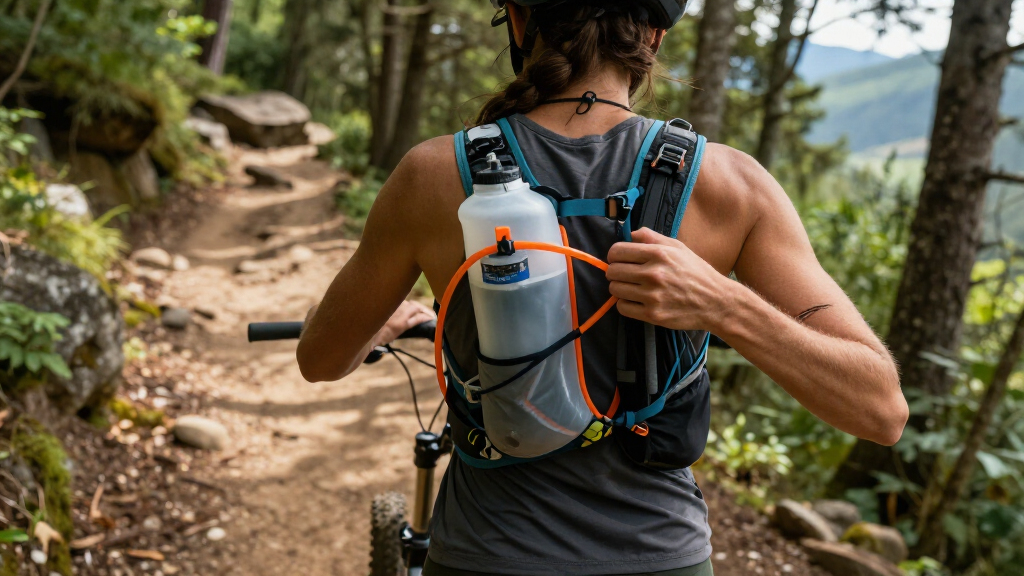

The right mountain biking hydration pack has to do three things at once: carry enough water for a hard ride, stay stable over rough singletrack without bouncing, and keep tools, tubes, and layers organized without turning into a sweaty brick on your back. After comparing 11 popular packs, the CamelBak M.U.L.E. 12 stands out as the best overall pick thanks to its trail-tuned stability and smart cargo layout, while the Osprey Raptor 14 is the stronger choice for big backcountry days and the Zavothy hydration backpack wins on value for riders who just want water and a few basics. The main tradeoff in this category is capacity versus comfort — bigger packs haul more but trap heat and shift on descents — followed closely by reservoir quality, where Osprey’s Hydraulics bladders clearly outperform generic 2L inserts. Read on for the full breakdown of what separated the top picks and which pack fits your riding style.
Complete the kit


Key Takeaways
- The CamelBak M.U.L.E. 12 earned the top spot because it balances a stable, close-to-the-body fit with just enough cargo for all-day trail rides — most competitors force you to choose between carrying capacity and bounce-free comfort.
- Osprey‘s Hydraulics reservoirs (in the Raptor 14 and Berm) are the clear quality benchmark: easier to fill, cleaner to dry, and less plastic-tasting than the generic 2L bladders bundled with budget packs like the Unigear, Zavothy, and MIYCOO.
- The budget packs in this lineup cluster around the same $30–40 price with nearly identical 2L bladders and minimalist storage — the Zavothy edges ahead on strap quality, which is what actually determines whether a cheap pack survives a season.
- The NOOLA‘s 3L bladder is the only option here for long, waterless backcountry routes, but its tactical styling adds weight and bulk that most trail riders will find excessive.
- The Osprey Berm is the friendliest entry point for newer riders: it carries the essentials, keeps the price below the Raptors, and inherits the same premium reservoir as its bigger siblings.
| Osprey Raptor 10L Men’s Mountain Bike Hydration Pack, Gray |  | Best Overall | Capacity: 10L | Reservoir Included: Yes, 2.5L | Dimensions: 18.9H x 9.8W x 9.1D inches | VIEW LATEST PRICE | See Our Full Breakdown |
| CamelBak M.U.L.E. 12 Mountain Bike Hydration Pack |  | Best for All-Day Epic Rides | Capacity: 12 liters | Reservoir Size: 100 oz | Brand: CamelBak | VIEW LATEST PRICE | See Our Full Breakdown |
| MIYCOO Hydration Backpack with 2L Water Bladder for Hiking, Cycling, and Running |  | Best Value | Water Capacity: 2L | Bladder Material: Food-grade BPA-free | Insulation: Yes | VIEW LATEST PRICE | See Our Full Breakdown |
| Unigear Hydration Pack Backpack with 2L Water Bladder for Hiking & Cycling |  | Best for Beginners | Brand: Unigear | Water Capacity: 2L / 70oz | Material: Splash-resistant nylon | VIEW LATEST PRICE | See Our Full Breakdown |
| Lightweight Hydration Backpack with 2L Water Bladder for Running and Hiking |  | Best Ultralight Pick | Material: 100% Nylon | Capacity: 12 L | Water Bladder Capacity: 2 L | VIEW LATEST PRICE | See Our Full Breakdown |
| Zavothy Hydration Backpack with 2L Water Bladder |  | Best Featherweight Pick | Brand: Zavothy | Material: Waterproof, anti-scratch oxford polyester | Weight: 0.73 lbs | VIEW LATEST PRICE | See Our Full Breakdown |
| Lightweight Hydration Backpack with 2L Water Bladder for Running and Hiking |  | Best Budget All-Rounder | Material: 100% nylon | Capacity: 12L | Water Bladder Capacity: 2L, BPA-free | VIEW LATEST PRICE | See Our Full Breakdown |
| Unigear Hydration Pack Backpack with 2L Water Bladder | 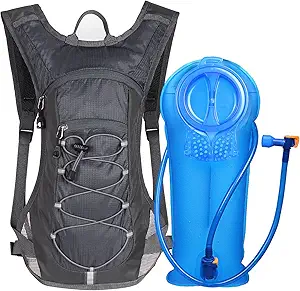 | Best for Beginners | Material: 100% nylon, splash resistant | Dimensions: 16.5 x 8 x 6.0 inches | Weight: 1.1 lbs | VIEW LATEST PRICE | See Our Full Breakdown |
| NOOLA Hydration Backpack with 3L Water Bladder |  | Best for Maximum Capacity | Material: 900D nylon, abrasion resistant | Water Capacity: 3L BPA-free TPU bladder | Number of Pockets: 9 | VIEW LATEST PRICE | See Our Full Breakdown |
| Osprey Berm Biking Backpack with Hydraulics Reservoir |  | Best Premium Bike-Specific Design | Reservoir Capacity: 2.5L Hydraulics reservoir | Weight: 1.27 lb / 574 g | Dimensions: 16.1 x 8.3 x 7.9 in / 41 x 21 x 20 cm | VIEW LATEST PRICE | See Our Full Breakdown |
| Osprey Raptor 14L Men’s Mountain Biking Backpack with Hydraulics Reservoir |  | Best for Big Days in the Saddle | Brand: Osprey | Capacity: 14L | Reservoir Included: Yes — Osprey Hydraulics | VIEW LATEST PRICE | See Our Full Breakdown |
| mountain biking hydration pack | Weight | Capacity | Material |
|---|---|---|---|
| Osprey Raptor 10L Men’s Mounta | 2.09 lbs | 10L | — |
| CamelBak M.U.L.E. 12 Mountain | — | 12 liters | — |
| MIYCOO Hydration Backpack with | — | — | — |
| Unigear Hydration Pack Backpac | 1.1 lbs | — | Splash-resistant nylon |
| Lightweight Hydration Backpack | 8.5 oz | 12 L | 100% Nylon |
| Zavothy Hydration Backpack wit | 0.73 lbs | — | Waterproof, anti-scratch oxford polyester |
| Lightweight Hydration Backpack | 8.5 oz | 12L | 100% nylon |
| Unigear Hydration Pack Backpac | 1.1 lbs | 2L / 70 oz | 100% nylon, splash resistant |
| NOOLA Hydration Backpack with | — | — | 900D nylon, abrasion resistant |
| Osprey Berm Biking Backpack wi | 1.27 lb / 574 g | — | — |
| Osprey Raptor 14L Men’s Mounta | 2.22 lb | 14L | — |
More Details on Our Top Picks
Osprey Raptor 10L Men’s Mountain Bike Hydration Pack, Gray
This option stands out for being the only pack in this lineup that was purpose-built for mountain biking, and it shows in the details. The bike-specific harness keeps the load from bouncing through rock gardens, and the included tool roll means a flat tire doesn’t require digging through a jumbled main compartment. Compared with the budget options like the Unigear pack, the Raptor’s 2.5L reservoir gives you an extra half liter plus noticeably better organization. The tradeoff is weight and price: at 2.09 lbs, it is nearly double the featherweight generic packs here, and the 10L of storage is overkill for a quick after-work loop. This pick makes the most sense for riders who treat the pack as a rolling toolshed.
Pros:- Secure, stable fit from a bike-specific harness that stays put on rough descents
- Included 2.5L reservoir offers more capacity than the 2L bladders in this roundup
- Dedicated tool roll and internal compartments keep repair kit separate from snacks and layers
- Stretch mesh front pocket for stashing a shell or knee pads mid-ride
Cons:- At 2.09 lbs, it is far heavier than minimalist options like the MIYCOO or generic 8.5 oz packs
- Bulky for short rides where minimal storage is needed
- Limited color options
Best for: Regular trail and all-mountain riders who carry tools, layers, and spare tubes on multi-hour rides
Not ideal for: Casual riders or short-loop riders who will find the bulk and weight wasted on a 45-minute spin
- Capacity:10L
- Reservoir Included:Yes, 2.5L
- Dimensions:18.9H x 9.8W x 9.1D inches
- Weight:2.09 lbs
- Harness:Bike-specific
- Storage Features:Tool roll, internal compartments, stretch mesh front pocket
Our verdict“If mountain biking is your primary activity and you ride long enough to need tools and layers, this is the pack that justifies its price.”
CamelBak M.U.L.E. 12 Mountain Bike Hydration Pack
Where the Osprey Raptor 10L splits the difference between capacity and weight, the M.U.L.E. 12 goes all-in on endurance. Its 100oz reservoir is the largest in this batch by a wide margin — you can ride all day without rationing sips, something the MIYCOO and Unigear packs simply cannot match with their 2L bladders. The magnetic tube management is a genuine quality-of-life upgrade on technical terrain, snapping the bite valve back into place without taking a hand off the bars. Ventilation and the removable waist strap help on long, sweaty climbs. The cost is bulk: this is the pack you wear for six-hour missions, not for flowy lunch laps, where it feels like carrying a small suitcase.
Pros:- Massive 100oz reservoir carries roughly 25% more water than the next-closest option here
- Magnetic tube management keeps the bite valve reachable on technical descents
- Ergonomic fit and back ventilation reduce fatigue and sweat buildup on long climbs
- Smart storage with tool organization and an overflow pocket for layers
Cons:- Bulky and over-provisioned for shorter rides
- Heavier and pricier than minimalist packs like the 8.5 oz generic option
- Limited color options
Best for: Endurance riders and bikepackers tackling all-day epics where refill opportunities are rare
Not ideal for: Riders who mostly do short or moderate loops — the capacity and bulk will feel excessive
- Capacity:12 liters
- Reservoir Size:100 oz
- Brand:CamelBak
- Model Number:265400
- Tube Management:Magnetic
- Fit Features:Ergonomic fit, ventilation system, removable waist strap
- Storage:Tool organization, overflow pocket
Our verdict“The clear choice when ride length measured in hours, not minutes, is the deciding factor.”
MIYCOO Hydration Backpack with 2L Water Bladder for Hiking, Cycling, and Running
For the price of a couple of energy gels at some premium brands, the MIYCOO covers the basics better than its budget competition. What separates it from the similar Unigear pack is the insulated bladder compartment — on hot summer rides, that is the difference between pleasant water and drinking something the temperature of bathwater by noon. Five pockets give it more organization than the generic 12L pack, and the leak-proof refill design is genuinely frustration-free. The honest tradeoff: this is still a generic multisport pack, not a bike-specific one. It lacks the stable, bounce-free harness of the Osprey Raptor, and 2L of capacity caps your ride length. Riders who need more water should look at the CamelBak M.U.L.E. 12 instead.
Pros:- Insulated bladder compartment keeps water cold for hours in summer heat
- Five pockets offer more organization than comparable budget packs
- Leak-proof, easy-refill bladder with food-grade BPA-free materials
- Breathable mesh shoulder straps with silica gel padding stay comfortable on long wear
Cons:- Capped at 2L water capacity, limiting ride length
- Generic multisport design lacks the bike-specific stability of the Osprey Raptor
- Basic styling and build may not satisfy design-conscious buyers
Best for: Budget-conscious riders and multi-sport users who want insulated water and decent storage without paying premium prices
Not ideal for: Long-distance riders or anyone who needs more than 2L of water between refills
- Water Capacity:2L
- Bladder Material:Food-grade BPA-free
- Insulation:Yes
- Number of Pockets:5
- Shoulder Straps:Breathable mesh with silica gel
- Warranty:1 year
Our verdict“The smartest spend in this lineup for casual riders who want cold water and storage without premium-pack pricing.”
Unigear Hydration Pack Backpack with 2L Water Bladder for Hiking & Cycling
Beginners need a pack that is cheap enough to buy before committing to the sport, forgiving enough to share between family members, and simple enough to figure out in a parking lot. The Unigear nails all three. Compared with the MIYCOO, you give up insulation — water will warm up faster on hot days — but you gain ice-cube compatibility in the bladder and adjustable straps that fit everyone from teens to adults, which makes it ideal as a shared family pack. Its slim profile cuts wind drag and bounce noticeably compared to boxier options like the CamelBak M.U.L.E. 12. The limitations are real: the front pocket is small, and splash resistance only handles light rain, so this is fair-weather kit rather than all-conditions gear.
Pros:- Adjustable straps fit a wide range of body sizes, from teens to adults
- Slim, stable profile minimizes bounce and wind drag during fast riding
- Replaceable 2L BPA-free bladder accepts ice cubes for hot days
- Lightweight 1.1 lb build is easy for beginners to wear all day
Cons:- Small front pocket limits how much gear you can carry
- Splash-resistant rather than waterproof — light rain only
- Single size may not fit all body types comfortably
Best for: New riders, teens, and families who need one adjustable, affordable pack shared across multiple users
Not ideal for: All-weather riders or anyone carrying substantial gear — the small pockets and splash-only resistance fall short
- Brand:Unigear
- Water Capacity:2L / 70oz
- Material:Splash-resistant nylon
- Weight:1.1 lbs
- Dimensions:16.5 x 8 x 6 inches
- Model Number:03088
- Included Components:Backpack, bladder
Our verdict“A low-risk entry point that lets new riders figure out what they actually need before upgrading.”
Lightweight Hydration Backpack with 2L Water Bladder for Running and Hiking
At 8.5 oz, this pack weighs less than half the Unigear and roughly a quarter of the Osprey Raptor — for riders and runners who count grams, that difference is the whole story. The breathable mesh back does a better job than most at keeping sweat from pooling, and the fast-flow hose delivers water without the sucking effort some budget bladders demand. The 12L capacity punches above its weight class for storage, too. But ultralight always costs something: the strap adjustment tops out at 34 inches, so very tall riders may struggle for a proper fit, and the 2L bladder matches the smallest in this roundup. Compared with the CamelBak M.U.L.E. 12, this is the anti-thesis — minimal weight over maximal capacity.
Pros:- Featherweight 8.5 oz build is the lightest in this roundup by a wide margin
- Breathable mesh back panel prevents sweat buildup on hot climbs
- Leakproof bladder with a fast-flow hose for effortless drinking
- 12L of storage despite the minimal weight
Cons:- Strap adjustment limited to 34 inches — poor fit for very tall or very small users
- 2L bladder capacity falls short for long rides compared to the CamelBak M.U.L.E.
- Limited color options
Best for: Weight-obsessed riders, trail runners, and fast climbers who prioritize a barely-there pack over capacity
Not ideal for: Very tall or very small riders who fall outside the 34-inch strap range, or anyone needing more than 2L of water
- Material:100% Nylon
- Capacity:12 L
- Water Bladder Capacity:2 L
- Weight:8.5 oz
- Adjustable Straps:Yes, up to 34 inches
- Waterproof:Yes
- BPA-Free:Yes
- Warranty:1 year
Our verdict“The pick for riders who believe the best pack is the one they forget they are wearing.”
Zavothy Hydration Backpack with 2L Water Bladder
At 0.73 lbs, the Zavothy is the lightest pack in this entire roundup, and that’s its whole pitch: riders who forget they’re wearing a pack ride better. Compared with the Unigear Hydration Pack, which weighs noticeably more at 1.1 lbs, the Zavothy trades away nearly all cargo room to hit that number — there’s essentially one main sleeve and a spot for a helmet, nothing more. The anti-leak 2L bladder performs well for the price, and the breathable mesh back panel keeps sweat buildup manageable on climbs. The main compromise is organization: if you carry a tube, pump, layers, and snacks, this pack will frustrate you quickly. This option makes the most sense for short, fast trail rides where hydration is the priority and gear stays minimal.
Pros:- Lightest pack in the roundup at 0.73 lbs
- 2L BPA-free bladder with reliable anti-leak sealing
- Breathable mesh back panel reduces sweat buildup
- Helmet-carry capability adds versatility
Cons:- Almost no storage organization beyond the main sleeve
- No dedicated compartments for tools, tubes, or layers
- Ratings show uneven quality consistency between units
Best for: Weight-obsessed riders and racers doing short, fast trail laps who only need water and a phone
Not ideal for: All-day riders or bikepackers — the near-total lack of storage compartments means gear has to ride elsewhere
- Brand:Zavothy
- Material:Waterproof, anti-scratch oxford polyester
- Weight:0.73 lbs
- Water Capacity:2L BPA-free bladder
- Back Panel:Breathable mesh
- Helmet Carry:Yes
- Included Components:Hydration backpack, water bladder
Our verdict“Buy it if low weight matters more than cargo capacity; skip it the moment you need to carry real gear.”
Lightweight Hydration Backpack with 2L Water Bladder for Running and Hiking
This unbranded pack quietly undercuts better-known options like the CamelBak M.U.L.E. 12 on price while covering the basics surprisingly well: a 2L leakproof bladder, multiple storage compartments, and a genuinely adjustable harness with shoulder straps up to 34 inches. Compared with the Zavothy, you gain real cargo organization — pockets for tools, snacks, and a phone — at the cost of a few extra ounces (8.5 oz pack weight). The 12L total capacity hits a sweet spot for two- to three-hour rides, though riders planning full-day epics will find it cramped next to larger packs. The fast-flow bite valve is a nice touch at this price, where sputtery delivery is common. Just don’t expect premium materials — this is value engineering, not heirloom construction.
Pros:- Multiple storage compartments for tools and accessories
- Highly adjustable shoulder and chest straps for a dialed fit
- Leakproof 2L bladder with fast water flow
- Full 12L capacity for multi-hour rides
Cons:- 12L max capacity limits full-day or overnight use
- Breathability suffers during high-intensity climbing
- Generic brand means less warranty and parts support
Best for: Budget-conscious riders who want bladder plus gear storage without paying Osprey or CamelBak prices
Not ideal for: Tall or broad-shouldered riders needing precise sizing — one adult size with a 34-inch strap ceiling may not dial in perfectly
- Material:100% nylon
- Capacity:12L
- Water Bladder Capacity:2L, BPA-free
- Weight:8.5 oz
- Adjustability:Shoulder straps up to 34 in; chest strap 2.4–7.9 in
- Waterproof:Yes
- Sizing:One adult size
Our verdict“The smartest spend in this batch for riders who want a complete, functional pack at a fraction of brand-name pricing.”
Unigear Hydration Pack Backpack with 2L Water Bladder
The Unigear earns the beginner slot because it solves the fit problem that scares off new riders: shoulder, chest, and waist straps all adjust independently, so an unstable, bouncing pack never becomes the reason someone quits mountain biking. It sits between the Zavothy (lighter but far less stable) and the Osprey Berm (more refined but pricier). The splash-resistant nylon shrugs off wet trails and light rain, and the bladder accepts ice cubes — a small luxury on hot summer rides that cheaper bladders can’t manage. The honest weakness is storage: the front pocket swallows a phone and keys but not much else, so intermediate riders planning longer trips will outgrow it. For a first season of trail riding, though, the balance of price, stability, and comfort is hard to beat.
Pros:- Three-point strap system keeps the pack stable on rough descents
- Ice-cube-compatible 2L BPA-free bladder for hot-weather rides
- Splash-resistant nylon protects contents in wet conditions
- Compact profile stays out of the way during aggressive riding
Cons:- Front pocket too small for tools, tubes, and layers together
- Very limited color options
- At 1.1 lbs it’s heavier than several budget competitors
Best for: New mountain bikers who want a secure, stable fit and simple operation before committing to an expensive pack
Not ideal for: Riders carrying tools, spare layers, and food for long backcountry routes — the single small pocket fills up fast
- Material:100% nylon, splash resistant
- Dimensions:16.5 x 8 x 6.0 inches
- Weight:1.1 lbs
- Capacity:2L / 70 oz
- Adjustability:Shoulder, chest, and waist straps
- Bladder Features:BPA-free, ice cube compatible
- Included Components:Backpack, bladder
Our verdict“The right first hydration pack: stable, simple, and forgiving, as long as your gear list stays short.”
NOOLA Hydration Backpack with 3L Water Bladder
Where every other pack here tops out at 2–2.5L, the NOOLA carries a 3L TPU bladder plus nine pockets and MOLLE webbing — it’s the only option in this roundup built for rides where resupply isn’t an option. Compared with the Osprey Berm, which prioritizes a featherlight, bike-specific feel, the NOOLA leans tactical and overbuilt: 900D nylon that shrugs off abrasion when a pack scrapes rock or gets tossed in a truck bed. The tradeoff is real weight — fully loaded, this thing is heavy on your back, and the bulk makes it a poor match for hot, fast pedaling. Riders who loved the Unigear but outgrew its single pocket will find the organizational leap dramatic here. For long mountain days, bikepacking-adjacent missions, or doubling as a general outdoor pack, the capacity justifies the heft.
Pros:- Largest water capacity in the roundup at 3L BPA-free TPU
- Nine pockets for full gear and tool organization
- MOLLE webbing allows expansion with external pouches
- Abrasion-resistant 900D nylon handles rough treatment
Cons:- Heaviest pack here when fully loaded
- Tactical bulk causes sweat buildup and bounce on aggressive rides
- Black-only colorway absorbs heat in summer sun
Best for: All-day backcountry riders and bikepackers who need maximum water and gear capacity in one pack
Not ideal for: Minimalist cross-country riders — the bulk and loaded weight cause bounce and overheating on fast rides
- Material:900D nylon, abrasion resistant
- Water Capacity:3L BPA-free TPU bladder
- Number of Pockets:9
- Molle Compatible:Yes
- Padding:Padded straps and breathable back panel
- Color:Black
- Included Components:Backpack, water bladder
Our verdict“Capacity king for long, remote rides — accept the weight penalty, or choose a leaner pack.”
Osprey Berm Biking Backpack with Hydraulics Reservoir
The Berm is the only pack in this batch designed from the ground up for mountain biking, and it shows: the ventilated back panel with ridged foam keeps air moving on climbs, the 2.5L Hydraulics reservoir offers tool-free filling, and tool and accessory storage is organized the way riders actually use it. Next to budget picks like the Lightweight Hydration Backpack, the difference is refinement — load stability, hose routing, and back ventilation all feel a class above. Compared with the NOOLA, it carries far less, but it does so without the bounce and heat buildup. The recycled EVA foam construction is a plus for sustainability-minded buyers. The honest drawbacks: one-size unisex fit won’t suit every torso, and you pay an Osprey-level premium for the polish. This model makes the most sense for committed riders who ride often enough to justify it.
Pros:- Purpose-built biking design with stable, ventilated back panel
- 2.5L Hydraulics reservoir with easy-fill access
- Organized storage sized for tools, tubes, and ride essentials
- 50% recycled EVA foam construction
Cons:- One-size unisex fit won’t dial in for all torso lengths
- Premium price well above generic competitors
- Capacity too modest for full-day or bikepacking use
Best for: Frequent trail riders who want premium load stability, ventilation, and bike-specific tool organization
Not ideal for: Casual or occasional riders — the premium price buys refinements a twice-a-month rider won’t notice
- Reservoir Capacity:2.5L Hydraulics reservoir
- Weight:1.27 lb / 574 g
- Dimensions:16.1 x 8.3 x 7.9 in / 41 x 21 x 20 cm
- Back Panel:Mesh-covered ridged foam (50% recycled EVA)
- Fit:One size, unisex
- Type:Biking backpack
Our verdict“The premium choice for regular riders who value ride-quality refinements over raw capacity or low price.”
Osprey Raptor 14L Men’s Mountain Biking Backpack with Hydraulics Reservoir
When a ride stretches past the four-hour mark, most packs start to feel like a compromise — either too small for extra layers and food, or too floppy to stay put on technical descents. The Raptor 14L is built specifically to solve that tension. Its 2.5L Hydraulics reservoir out-carryies the standard 2L bladders found in the Unigear and Zavothy packs, and the winged harness with wrap hipbelt keeps the load locked down in a way generic hiking-to-hiking crossover packs simply don’t match. Compared with the smaller Osprey Raptor 10L, this version trades a bit of weight — 2.22 lb versus noticeably lighter — for meaningful cargo room: enough for tools, a spare tube, a shell, and lunch. The tradeoff is real, though. Riders who mostly do ninety-minute loops will find it overkill, and multi-day bikepackers will still want something bigger.
Pros:- 2.5L Hydraulics reservoir carries more water than the 2L bladders in most competing packs
- Winged harness and wrap hipbelt keep the load stable on rough, technical terrain
- Internal organization keeps tools, tubes, and snacks from rattling around
- Genuinely bike-specific fit that hiking-crossover packs can’t replicate
Cons:- At 2.22 lb it’s one of the heavier options in this roundup
- 14L is still too small for multi-day or bikepacking trips
- Premium price compared with budget options like the Unigear or MIYCOO packs
Best for: Mountain bikers who regularly ride four-plus hours and need to carry layers, tools, and food alongside a large reservoir
Not ideal for: Short-loop riders and bikepackers — it’s heavier and pricier than minimalist packs for quick spins, and too small for overnight gear
- Brand:Osprey
- Capacity:14L
- Reservoir Included:Yes — Osprey Hydraulics
- Hydration Capacity:2.5 L
- Weight:2.22 lb
- Dimensions:18.5H x 11W x 10.6D in
- Model Number:10006445
Our verdict“Buy this if your rides are long enough that stability, storage, and extra water capacity genuinely matter — skip it if your typical loop is under two hours.”
How We Picked
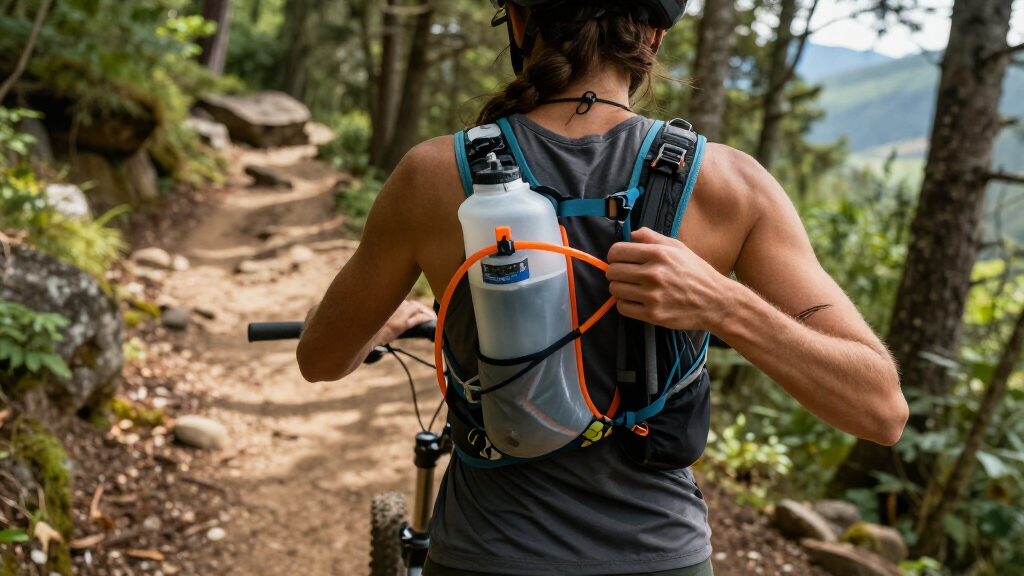
I evaluated each pack through the lens of actual trail riding rather than casual hiking, since most of these products are marketed for multiple sports. The criteria that mattered most: ride stability (does the pack bounce or sway on descents and jumps), reservoir quality (fill, clean, dry, taste), cargo organization (tool compartments, tube storage, helmet carry), ventilation (how much heat builds up on climbs), and value for money (what you actually get at each price point).
Ranking was driven by how well each pack solves the core mountain biking problem — hauling water and gear without compromising bike handling. Packs with bike-specific features like tool organization, compression, and back protection against body armor ranked above general-purpose hiking designs. Duplicates in the lineup (the Lightweight and Unigear packs appear twice) were treated as a single evaluation with their role assigned once, which is why the final ordering favors packs that differentiate themselves rather than blend into the budget pack crowd.
Factors to Consider When Choosing Mountain Biking Hydration Packs
Beyond the individual reviews, there are broader patterns in this category that shape whether a pack works out on the trail. These are the factors I would weigh before spending anything.Reservoir Quality Matters More Than Pack Quality
The single biggest quality gap in this category isn’t the pack fabric — it’s the bladder. Generic 2L bladders bundled with sub-$50 packs tend to retain plastic taste, are harder to dry fully between rides, and often use stiffer hoses and cheaper bite valves that leak under pressure. Osprey’s Hydraulics reservoirs and CamelBak’s Crux bladders solve these problems with wide-fill openings, antimicrobial treatments, and magnetic or self-sealing valves. If you ride weekly, the difference shows up within a month. A common mistake is buying a budget pack and assuming you can upgrade the bladder later — you often can, but by then you’ve spent enough to have bought the better pack outright.
Capacity: Match Liters to Ride Length, Not Ambition
Most riders overestimate how much storage they need. A 2L reservoir plus 5–8L of cargo covers tools, a tube, a layer, and snacks for rides up to three hours. Packs in the 10–14L range, like the Raptor 10 and 14, make sense for all-day rides, bikepacking-adjacent routes, or riders who carry body armor and spare parts. Going bigger means more heat on your back, more sway on technical descents, and more temptation to carry things you won’t use. The NOOLA’s 3L bladder is worth it only when refill points are genuinely unavailable — otherwise the weight penalty works against you on climbs.
Fit and Stability: Where Cheap Packs Fall Apart
On flowy trails almost anything works. On rock gardens, drops, and steep descents, the difference between a shaped back panel with a hip belt and a flat generic pack becomes obvious fast. Look for sternum straps that sit above your breathing, compression that pulls the load toward your spine, and a back panel that doesn’t collapse when half-empty. The budget packs in this roundup share a common weakness here: thin straps and no load-lifting structure, which means the water sloshes and the pack migrates. If your riding includes jumps or chunky terrain, this is the category where spending more pays off immediately.
Ventilation and Hot-Weather Riding
Every pack in this category puts a water-filled panel against your back, but the designs differ meaningfully. Channeled or suspended mesh back panels, like Osprey’s AirScape, let air move and keep sweat from soaking the pack contents. Flat foam panels, common on budget models, turn into a sauna above 80°F. If you ride mostly in summer heat, ventilation should weigh as heavily as capacity in your decision — a slightly smaller, better-vented pack beats a bigger one you take off at every climb. Also check whether the back panel is rigid enough to keep tools from poking your spine, a surprisingly common complaint with soft-sided packs.
Organization: Think About Access While Riding
The real test of a bike-specific pack is whether you can reach a snack, pump, or jacket without dismounting and dumping everything out. Look for external stretch pockets, dedicated tool compartments with internal organization, and a hose attachment point that keeps the bite valve within reach. Hip belt pockets are underrated for small items you want without stopping. General-purpose packs like the tactical-styled NOOLA and the hiking-oriented budget models typically bury everything in one or two cavernous compartments, which is fine for a walk but frustrating mid-ride. Osprey and CamelBak justify their pricing largely through this organizational layer.
When to Pay More — and When Not To
Premium packs cost two to four times the budget options, and the money buys reservoir quality, fit systems, and durability — not more water. Pay up if you ride more than once a week, ride technical terrain, or expect the pack to last several seasons of crash-adjacent use. Skip the premium tier if you’re a casual rider, buying for a growing teenager, or mainly riding short loops where a basic 2L setup does everything. One honest caveat: expensive packs don’t come with better hydration habits. A $40 pack you actually wear beats a $180 pack that’s too hot and ends up at home.
Frequently Asked Questions
Is a 2L bladder enough for mountain biking, or should I get a 3L pack?
For most riders in moderate climates, 2L covers one to two hours of hard riding — roughly what you’d drink on a typical after-work loop or half-day trail session. A 3L bladder like the NOOLA’s makes sense for hot climates, high-output climbing days, or routes without refill opportunities, but it adds roughly a kilogram of water weight and increases pack sway on technical descents. A smarter approach for longer days is a 2L reservoir plus a filter bottle in a side pocket, which gives you refill flexibility without carrying all your water at once. Choose capacity based on your actual longest regular ride, not the one epic trip you plan annually.
Why are Osprey and CamelBak packs so much more expensive than the $30–40 options?
The price gap comes down to three things: the reservoir, the fit system, and durability. Osprey’s Hydraulics and CamelBak’s Crux bladders are easier to fill and dry, resist mold better, and don’t impart plastic taste the way generic bladders often do — and a replacement name-brand bladder alone costs $35–45. The fit systems on premium packs use shaped back panels, real hip belts, and load compression that keep the pack stable on rough terrain, where budget packs bounce and migrate. Finally, premium fabrics and zippers routinely survive multiple seasons of crashes, wash cycles, and UV exposure, while budget packs often show strap fraying within a year of regular use. If you ride occasionally, the budget tier is genuinely fine; frequent riders get the money back in lifespan and comfort.
Do I need a bike-specific pack, or will a running or hiking hydration pack work?
Running packs prioritize minimal bounce at a jog and often lack the structure or storage mountain biking demands — no tool organization, no tube pocket, and fabric too light to survive a crash scrape. Hiking-oriented packs like several budget options in this roundup carry more but tend to ride higher and shift more on descents, and their back panels aren’t designed for a bent-over riding posture. Bike-specific packs sit lower on the back, keep the load close to your spine, and organize ride-critical items for access with gloves on. If you already own a hiking hydration pack, it will work for gentle gravel and green trails — but once you ride anything technical, the fit difference justifies a bike-specific design.
How do I stop the water from tasting like plastic or the bladder from getting moldy?
Taste and mold problems trace back to two habits: incomplete drying and sugary drink use. After every ride, empty the bladder, rinse it, and hang it wide open to air-dry — generic bladders with narrow openings dry poorly, which is a real quality difference worth paying for. Freeze the bladder between rides if you have space; it kills mold spores and keeps water colder on the next ride. Stick to water only, since electrolyte powders and mixes feed mold in the hose and valve. If taste persists, a baking soda soak overnight usually resolves it, but if a bladder came strongly flavored out of the box, that’s a sign of cheaper materials that will fight you forever — replacing it with a name-brand reservoir is the better fix.
What’s the difference between the Osprey Raptor 10 and Raptor 14, and which should I choose?
Both share the same chassis, Hydraulics reservoir, and fit system — the difference is purely cargo volume and ride character. The Raptor 10 carries tools, a tube, a layer, and food for rides up to about three hours while staying lighter and more compact on your back, which most trail riders will appreciate on descents. The Raptor 14 adds room for a full day out: extra layers, more food, a first-aid kit, or armor, at the cost of a warmer back and slightly more sway. Choose the 10 if most of your rides are under three hours or you prefer a minimal feel; choose the 14 if you ride all-day routes, carry camera gear, or want one pack that doubles for hikes. Riders who own both report reaching for the 10 far more often than expected.
Conclusion
Matching the right pack to your riding comes down to how often you ride, how technical your trails are, and how long you’re out. For the best overall choice, the CamelBak M.U.L.E. 12 hits the sweet spot of stability, storage, and reservoir quality that works for the widest range of riders. For the best value, the Zavothy hydration backpack delivers a functional 2L setup at a budget price, with the MIYCOO as a near-equal alternative. For the best premium option, the Osprey Raptor 14 is the pick for big days and serious riders, with the Raptor 10 as its lighter sibling for shorter sessions. For beginners and casual riders, the Osprey Berm gets you into the premium reservoir and fit system at the lowest entry price in the Osprey lineup. And for specific needs: the NOOLA 3L tactical pack for waterless backcountry routes, and the Unigear for riders who want slightly better-than-budget storage without stepping up in price. Whatever you choose, size the capacity to your real rides rather than your aspirational ones — the pack you forget you’re wearing is the one you’ll actually use.