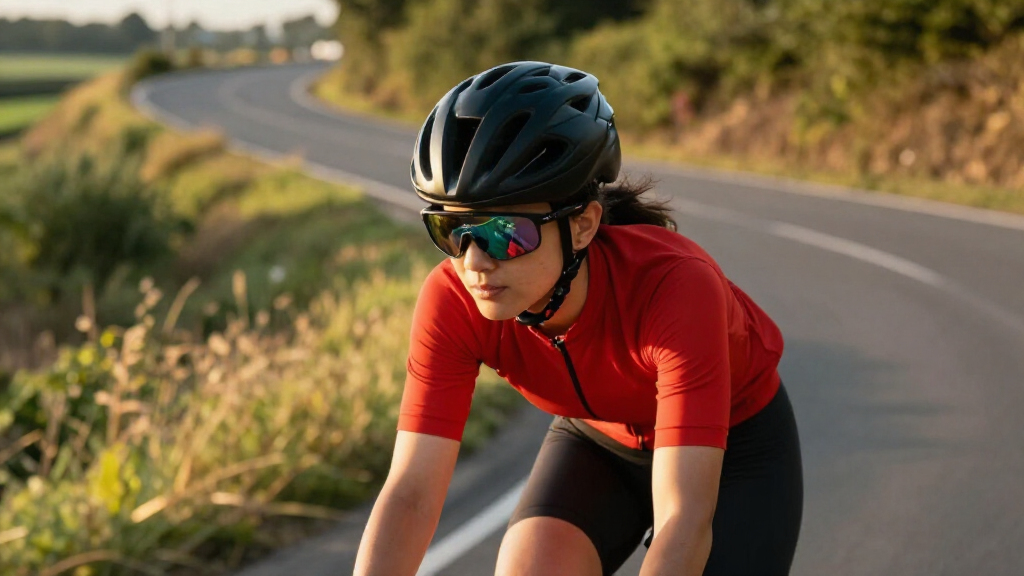

The best cycling sunglasses balance stable coverage, clear vision, and a fit that stays comfortable when you ride. My best overall pick is the Tifosi Vogel SL Shield for riders who want a sport-focused shield design, while the ROCKBROS Photochromic Wraparound with Myopia Frame and KAPVOE K63 Photochromic stand out for changing light. The main tradeoffs are fixed versus adaptable lenses, broad coverage versus ventilation, and lightweight simplicity versus interchangeable-lens flexibility. The right choice depends on your route, face fit, and whether you need prescription support. Read on for the full comparison and a guide to choosing a pair for your riding.

Get sports gear delivered free with Prime
- Fast, free delivery on millions of items
- Prime Video, Amazon Music and more included
- Member-only deals all year
Complete the kit


Key Takeaways
- Lens adaptability is the clearest point of difference: photochromic models such as the ROCKBROS wraparound and KAPVOE K63 suit rides with changing light, while fixed polarized lenses favor more consistent conditions.
- The Tifosi Vogel SL and Vogel XC serve different priorities: the SL is the shield-style overall pick, while the XC’s rimless design is a distinct option for riders who want a less enclosed feel.
- Prescription needs narrow the field: the ROCKBROS photochromic wraparound specifically includes a myopia frame, giving it a role the standard sport-sunglasses options do not fill.
- Interchangeable-lens kits trade simplicity for flexibility: Banglong’s five-lens set and ROCKBROS’s four-lens set can suit riders who want several lens choices, but swapping and storing lenses takes more attention.
- Low weight and lens type are separate decisions: the 22 g ROCKBROS and Lamicall models emphasize lightness, while polarized or photochromic features address different light-management needs.
| Tifosi Vogel SL Shield Sunglasses for Sports |  | Best for a Secure, Lightweight Fit | Frame style: Rimless shield | Frame material: Grilamid TR-90 | Weight: 26 g | VIEW LATEST PRICE | See Our Full Breakdown |
| ROCKBROS Photochromic Wraparound Sports Sunglasses with Myopia Frame |  | Best for Prescription-Compatible Adaptability | Lens type: Photochromic | Light transmittance: 83% to 16% | Lens material: Polycarbonate | VIEW LATEST PRICE | See Our Full Breakdown |
| KAPVOE K63 Photochromic Cycling Sunglasses |  | Best for Changing Light and Airflow | Lens type: Fixed photochromic | Lens category: CAT.0–CAT.2 | Lens material: PC | VIEW LATEST PRICE | See Our Full Breakdown |
| Lamicall Polarized Sports Sunglasses with UV400 Protection |  | Best for Glare Reduction | Model: BCPE07 | Frame material: TR90 plastic | Lens material: TAC | VIEW LATEST PRICE | See Our Full Breakdown |
| Lamicall 24 g Polarized Sports Sunglasses |  | Best for Ventilated Polarized Riding | Frame material: TR90 | Lens material: TAC | Lens coating: Polarized | VIEW LATEST PRICE | See Our Full Breakdown |
| ROCKBROS Photochromic Sports Sunglasses with Removable Elastic Band |  | Best for a Secure, Adjustable Fit | Lens type: Photochromic | Lens material: Polycarbonate | Frame material: Composite | VIEW LATEST PRICE | See Our Full Breakdown |
| Tifosi Vogel XC Rimless Sunglasses – Running, Baseball, Cycling & Golf |  | Best for Bright, Sunny Rides | Lens color: Smoke with sky-blue mirror | Light transmission: 13% | Lens: Rimless shield; shatterproof polycarbonate | VIEW LATEST PRICE | See Our Full Breakdown |
| ROCKBROS Polarized Sports Sunglasses | 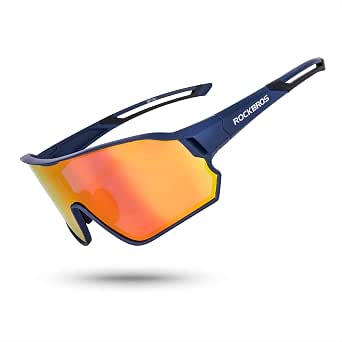 | Best for Glare Reduction | Lens type: Polarized | Lens protection: UV400; blocks 100% of UVA/UVB rays | Frame material: Polycarbonate | VIEW LATEST PRICE | See Our Full Breakdown |
| ROCKBROS Photochromic Sports Sunglasses, 22 g |  | Best Lightweight Photochromic Pick | Weight: 22 g per pair | Lens: Photochromic, thickened polycarbonate | Lens protection: UV400 | VIEW LATEST PRICE | See Our Full Breakdown |
| Banglong Polarized Sports Sunglasses with 5 Interchangeable Lenses |  | Best for Changing Conditions | Frame material: TR90 | Included lens types: Polarized gray, light blue, yellow night vision, transparent, and one additional interchangeable lens | Lens height: 1.88 in | VIEW LATEST PRICE | See Our Full Breakdown |
| Lamicall Polarized Sports Sunglasses, 22 g, Gray Lens |  | Best Lightweight Polarized Pick | Frame material: TR90 plastic | Lens material: TAC | Lens type and color: Polarized, gray | VIEW LATEST PRICE | See Our Full Breakdown |
| ROCKBROS Polarized Sports Sunglasses with 4 Replaceable Lenses |  | Best for Changing Light | Frame material: TR90 | Frame design: Full-frame, wraparound | Lens count: 4 interchangeable lenses | VIEW LATEST PRICE | See Our Full Breakdown |
| cycling sunglasse | Frame material | Weight | UV protection | Lens material |
|---|---|---|---|---|
| Tifosi Vogel SL Shield Sunglas | Grilamid TR-90 | 26 g | 100% UVA/UVB | Shatterproof polycarbonate |
| ROCKBROS Photochromic Wraparou | Plastic | — | UV400 | Polycarbonate |
| KAPVOE K63 Photochromic Cyclin | TR90 | — | UV400; 99.99% UVA/UVB filtering | PC |
| Lamicall Polarized Sports Sung | TR90 plastic | 22 g | UV400; blocks 99.9% of UVA/UVB rays | TAC |
| Lamicall 24 g Polarized Sports | TR90 | 24 g | UV400 | TAC |
| ROCKBROS Photochromic Sports S | Composite | 30 g | — | Polycarbonate |
| Tifosi Vogel XC Rimless Sungla | Grilamid TR-90 | 24 g | 100% UVA/UVB | — |
| ROCKBROS Polarized Sports Sung | Polycarbonate | — | — | — |
| ROCKBROS Photochromic Sports S | — | 22 g per pair | — | — |
| Banglong Polarized Sports Sung | TR90 | — | — | — |
| Lamicall Polarized Sports Sung | TR90 plastic | 22 g | UV400; blocks 99.9% of UVA and UVB rays | TAC |
| ROCKBROS Polarized Sports Sung | TR90 | 27.22 g | UV400 | — |
More Details on Our Top Picks
Tifosi Vogel SL Shield Sunglasses for Sports
The Tifosi Vogel SL Shield is a strong choice for riders who want a lightweight, one-piece shield and a fit designed to stay put as they sweat. Its 26-gram Grilamid TR-90 frame and hydrophilic rubber nose and earpads prioritize grip without adding much weight. The shatterproof polycarbonate lens has a water-repellent coating and full UVA/UVB protection, useful when changing weather brings spray or light rain. Compared with the Lamicall 24 g Polarized Sports Sunglasses, the Vogel SL is slightly heavier and does not specify polarization, but its water-repellent lens coating and shield format suit riders who value broad coverage. The tradeoff is care: the rimless lens calls for careful cleaning and storage, and its bold shield shape will not appeal to everyone. I would choose it for active rides, not for buyers seeking a conventional frame or glare-cutting polarization.
Pros:- Hydrophilic rubber nose and earpads are designed to improve grip with sweat.
- Shatterproof polycarbonate shield has a water-repellent coating.
- Provides 100% UVA/UVB protection.
- 26-gram Grilamid TR-90 frame keeps weight modest.
Cons:- Rimless shield styling may not suit riders who prefer conventional frames.
- Careful cleaning and storage are recommended.
- Polarization is not specified.
Best for: Cyclists who want a grippy, lightweight shield for sweaty rides and occasional wet conditions.
Not ideal for: Riders who prefer a traditional framed look, need polarized lenses, or want a lens that is less demanding to handle and store.
- Frame style:Rimless shield
- Frame material:Grilamid TR-90
- Weight:26 g
- Lens material:Shatterproof polycarbonate
- Lens color:Smoke with bright blue mirror
- UV protection:100% UVA/UVB
- Grip features:Hydrophilic rubber nose pads and earpads
- Lens coating:Water-repellent
Our verdict“Choose the Tifosi Vogel SL if a secure, water-repellent shield matters more than polarization or a traditional frame.”
ROCKBROS Photochromic Wraparound Sports Sunglasses with Myopia Frame
The ROCKBROS Photochromic Wraparound stands out for combining a wide-view cycling shape with a photochromic lens and an included myopia frame. Its stated 83% to 16% light transmittance range lets the lens adapt as light changes, so riders can use one pair across brighter and more shaded parts of a route. The insert can accommodate prescription lenses, unlike the fixed-lens KAPVOE K63, but those prescription lenses must be purchased separately; the stated limits are myopia below 400° and astigmatism below 200°. UV400 protection is specified, while polarization is not. That makes this a better fit for prescription-wearing riders who value adaptable coverage than for anyone seeking glare reduction from polarized lenses. Its plastic frame also lacks the specified TR90 construction of the Tifosi Vogel SL.
Pros:- Photochromic lens adjusts across a stated 83% to 16% light-transmittance range.
- Wraparound design offers a wide field of view.
- Included myopia frame can accommodate separately purchased prescription lenses.
- UV400 protection is specified.
Cons:- Prescription lenses are not included.
- Lenses are non-polarized.
- Recommended prescription limits may not suit every wearer.
Best for: Prescription-wearing cyclists within the stated correction limits who want photochromic coverage and a wraparound field of view.
Not ideal for: Riders who want prescription lenses included, polarized glare reduction, or a clearly specified TR90 frame.
- Lens type:Photochromic
- Light transmittance:83% to 16%
- Lens material:Polycarbonate
- Frame material:Plastic
- Frame style:Wraparound, half frame
- UV protection:UV400
- Polarization:Non-polarized
- Prescription guidance:Myopia below 400° and astigmatism below 200°
Our verdict“Pick the ROCKBROS if you need an adaptable wraparound and prescription insert, provided you are prepared to source lenses separately.”
KAPVOE K63 Photochromic Cycling Sunglasses
The KAPVOE K63 makes the most sense for cyclists who move between shade and open roads and want ventilation built into a dedicated cycling shape. Its UV-responsive lens shifts from clear to gray across CAT.0–CAT.2, while lens vents are intended to limit fog buildup during effort. A flexible TR90 frame and soft rubber nose pad add comfort-focused details. Compared with the ROCKBROS Photochromic Wraparound, the K63 lists a clear-to-gray category range and vent openings, but the ROCKBROS gives a specific light-transmittance range and includes a myopia frame. The KAPVOE lens is fixed and not interchangeable, so riders cannot swap in another tint for conditions outside its stated range. Its inner-frame accessory also comes without lenses, leaving prescription setup incomplete.
Pros:- Photochromic lens shifts from clear to gray across CAT.0–CAT.2.
- UV400 protection with stated 99.99% UVA/UVB filtering.
- Lens vents are designed to help reduce fog buildup.
- Flexible TR90 frame and soft rubber nose pad support a comfortable fit.
Cons:- Fixed lens cannot be swapped for a different tint.
- Included inner-frame accessory does not include lenses.
- No specific light-transmittance percentages are provided.
Best for: Cyclists riding mixed sun and shade who value photochromic coverage, airflow, and a flexible frame over interchangeable lenses.
Not ideal for: Riders who want multiple lens tints, a complete prescription setup, or a specified light-transmittance percentage.
- Lens type:Fixed photochromic
- Lens category:CAT.0–CAT.2
- Lens material:PC
- UV protection:UV400; 99.99% UVA/UVB filtering
- Frame material:TR90
- Fit feature:Soft rubber nose pad
- Ventilation:Lens vent openings
- Included accessory:Inner frame accessory; lenses not included
Our verdict“Choose the KAPVOE K63 for changing-light rides where ventilation matters more than lens-swapping or prescription convenience.”
Lamicall Polarized Sports Sunglasses with UV400 Protection
For riders who spend long stretches in bright conditions, the Lamicall Polarized Sports Sunglasses put glare reduction ahead of tint flexibility. Their polarized gray TAC lenses are listed as blocking 99.9% of UVA/UVB rays and carrying UV400 protection; the wraparound shape also helps shield against side light and wind. At 22 g, they are lighter than the 24 g Lamicall Polarized Sports Sunglasses model in this roundup, while both offer adjustable fit features. The difference is that the 24 g version specifies lens ventilation holes, which may better suit riders concerned about fogging. This model instead gives a straightforward polarized setup with adjustable silicone nose pads and temple tips. Its drawback is fit uncertainty: the wraparound may not work for every face, and no lens dimensions or prescription compatibility are given.
Pros:- Polarized gray TAC lenses reduce glare.
- UV400 protection and stated 99.9% UVA/UVB blocking.
- 22 g weight supports extended wear.
- Adjustable silicone nose pads and temple tips help tailor the fit.
Cons:- Wraparound fit may not suit every face shape.
- Prescription compatibility is not specified.
- Lens dimensions are not provided.
Best for: Road cyclists riding in bright, glare-prone conditions who want a lightweight polarized lens and adjustable contact points.
Not ideal for: Riders who need photochromic lenses, prescription compatibility, or detailed lens sizing before choosing a fit.
- Model:BCPE07
- Frame material:TR90 plastic
- Lens material:TAC
- Lens color:Gray
- Lens type:Polarized
- UV protection:UV400; blocks 99.9% of UVA/UVB rays
- Weight:22 g
- Fit:Adjustable wraparound; silicone nose pads and temple tips
Our verdict“Choose this Lamicall for bright rides where low weight and polarized glare reduction matter more than photochromic range or prescription details.”
Lamicall 24 g Polarized Sports Sunglasses
The Lamicall 24 g Polarized Sports Sunglasses suit riders who want polarized glare reduction but also care about airflow around the lenses. The cylindrical TAC lenses have ventilation holes intended to reduce fogging, and the TR90 frame pairs adjustable nose pads with silicone temple tips for a more adaptable fit. Compared with the 22 g Lamicall Polarized Sports Sunglasses, this model is two grams heavier but adds specified lens vents; that distinction may matter on hard efforts or humid rides. Its semi-rimless construction is less enclosing than a full shield, which can mean less coverage for riders seeking maximal protection from wind and debris. The product also advises avoiding high heat and direct sunlight during care, so it is not the pick for riders who want to leave eyewear exposed between rides.
Pros:- Polarized TAC lenses provide UV400 protection.
- Lens ventilation holes are designed to help reduce fogging.
- Adjustable nose pads and silicone temple tips support a tailored fit.
- TR90 frame weighs 24 g.
Cons:- Semi-rimless design may provide less coverage than a fully rimmed style.
- Heavier than the 22 g Lamicall polarized model.
- Care instructions advise avoiding high heat and direct sunlight.
Best for: Cyclists who want polarized lenses with built-in ventilation and adjustable fit points for active, potentially humid rides.
Not ideal for: Riders seeking the lightest option, maximum full-frame coverage, or eyewear with fewer care restrictions.
- Frame material:TR90
- Lens material:TAC
- Lens coating:Polarized
- UV protection:UV400
- Frame type:Semi-rimless
- Weight:24 g
- Lens design:Cylindrical with ventilation holes
- Fit:Adjustable nose pads; silicone temple tips
Our verdict“Choose this model over the lighter Lamicall if lens ventilation is a higher priority than saving two grams or maximizing frame coverage.”
ROCKBROS Photochromic Sports Sunglasses with Removable Elastic Band
The removable elastic band gives this ROCKBROS model a different focus from the ROCKBROS Photochromic Sports Sunglasses, 22 g: it prioritizes keeping the glasses in place over the lightest possible build. Its photochromic polycarbonate lenses adapt to changing light, which can suit rides that move between open roads and shaded stretches without swapping lenses. Non-slip nose pads add another point of contact, while the band offers extra retention for riders who find ordinary temples shift during movement. The tradeoff is that the band may feel unnecessary on casual rides, and the stated 30 g weight is heavier than the 22 g frameless alternative. The one-size fit may also miss some face shapes. I’d choose it for adjustability and security, not for polarization or the lowest weight.
Pros:- Photochromic lenses adapt to changing light conditions.
- Removable elastic band and non-slip nose pads support a secure fit.
- Polycarbonate lenses include UV protection and a scratch-resistant coating.
- Composite frame is designed for use across several sports.
Cons:- At 30 g, it is heavier than the 22 g ROCKBROS frameless photochromic model.
- Non-polarized lenses do not provide the glare reduction polarized options can offer.
- One-size sizing may not fit every face comfortably.
Best for: Cyclists who ride mixed-light routes and want extra help keeping sunglasses secure during vigorous activity.
Not ideal for: Riders who prioritize a very light, minimalist fit, need polarized glare reduction, or have had trouble finding one-size eyewear that fits.
- Lens type:Photochromic
- Lens material:Polycarbonate
- Frame material:Composite
- Weight:30 g
- Polarization:Non-polarized
- Fit:Unisex, one size
- Retention:Removable elastic band and non-slip nose pads
- Lens coating:Scratch-resistant
Our verdict“Choose this ROCKBROS pair if a secure, band-supported fit matters more than low weight or polarized glare control.”
Tifosi Vogel XC Rimless Sunglasses – Running, Baseball, Cycling & Golf
Bright-light performance is the defining strength of the Tifosi Vogel XC: its smoke lens has 13% light transmission, making it a more focused sun option than the photochromic ROCKBROS models, which are designed to adapt as conditions change. The rimless shield keeps the view open, while its 24 g Grilamid TR-90 frame and hydrophilic nose and ear pads target comfort and grip when sweat builds. Shatterproof polycarbonate lenses provide full UVA/UVB protection, and water-repellent treatment plus bottom vents help limit visibility problems in wet conditions. That specialization comes with limits: the dark lens is less suited to overcast stretches, and the listed small-to-medium fit may feel cramped on larger faces. I’d pick it for sustained sunny rides, not as a one-lens answer to every forecast.
Pros:- 13% light transmission is suited to bright, full-sun conditions.
- Shatterproof polycarbonate lenses provide 100% UVA/UVB protection.
- At 24 g, the Grilamid TR-90 frame is lightweight.
- Hydrophilic grip pads, water-repellent lenses, and bottom vents support steadier visibility during sweaty or wet rides.
Cons:- The dark lens is less versatile in low light than photochromic alternatives such as the ROCKBROS models.
- Small-to-medium fit may be uncomfortable for larger faces.
- A fixed smoke lens does not offer the interchangeable-lens flexibility of the Banglong.
Best for: Cyclists with small-to-medium faces who ride mostly in bright, exposed conditions and want a lightweight shield with secure grip.
Not ideal for: Riders who need eyewear for frequently changing or dim light, or whose larger faces may not suit the stated fit range.
- Lens color:Smoke with sky-blue mirror
- Light transmission:13%
- Lens:Rimless shield; shatterproof polycarbonate
- UV protection:100% UVA/UVB
- Frame material:Grilamid TR-90
- Weight:24 g
- Fit:Small to medium
- Grip:Hydrophilic rubber nose and ear pads
Our verdict“Pick the Tifosi Vogel XC for bright-weather rides and a small-to-medium fit, but choose a photochromic option for changing light.”
ROCKBROS Polarized Sports Sunglasses
Polarized lenses make this ROCKBROS pair the lineup’s straightforward pick for riders bothered by glare from pavement, water, or bright surroundings. Its curved lenses also provide a wide field of vision and wind protection, while adjustable rubber nose and ear pads help tune the fit. Compared with the Tifosi Vogel XC, this model puts less emphasis on a tightly specified bright-sun lens and sweat-grip details, and more on glare reduction and fit adjustment. It is also a different choice from the photochromic ROCKBROS options: polarization addresses reflected glare, while photochromic lenses respond to changing light. The available data does not specify lens darkness or a weight, so riders seeking those details should look elsewhere. I’d shortlist it for glare control, but not for changing-light versatility.
Pros:- Polarized lenses reduce glare and can improve perceived clarity and contrast.
- UV400 lenses block 100% of UVA/UVB rays.
- Curved lenses offer a wide field of vision and wind protection.
- Rubber nose pads and adjustable rubber ear pads help secure the fit.
Cons:- Polarization does not adapt the lens tint to changing light as photochromic lenses do.
- The product data does not specify weight or a face-fit range.
- Care guidance calls for cleaning with a glasses cloth.
Best for: Road and recreational cyclists who often ride in bright conditions and want polarized lenses with adjustable contact points.
Not ideal for: Cyclists who need lenses that adapt to changing light, or who want detailed sizing and weight information before choosing.
- Lens type:Polarized
- Lens protection:UV400; blocks 100% of UVA/UVB rays
- Frame material:Polycarbonate
- Fit features:Rubber nose pads and adjustable rubber ear pads
- Lens design:Curved lenses
- Intended benefit:Glare reduction, wide field of vision, and wind protection
- Care:Clean with a glasses cloth
Our verdict“Choose these ROCKBROS sunglasses if glare reduction is your priority and you do not need photochromic adjustment.”
ROCKBROS Photochromic Sports Sunglasses, 22 g
At 22 g, this frameless ROCKBROS model is the lightest clearly specified option in this batch, making it a natural choice for riders who dislike the feel of heavier eyewear. Its photochromic polycarbonate lens adjusts to changing light, and the frameless construction leaves peripheral vision less obstructed. Compared with the ROCKBROS photochromic pair with a removable elastic band, this one favors lower weight and a simpler profile rather than extra retention; an adjustable rubber nose bridge helps with fit, but there is no band. The lens is described as shatterproof and scratch-resistant, though it still calls for careful storage and cleaning. The listing advises avoiding chemicals and using a protective case, which may be a drawback for riders who want less-fussy gear. I’d choose it for lightness and changing-light flexibility.
Pros:- Weighs 22 g per pair.
- Photochromic lenses adjust to changing light.
- Frameless construction supports clear peripheral vision.
- Adjustable soft-rubber nose bridge helps tailor fit.
Cons:- No elastic retention band is listed, unlike the other ROCKBROS photochromic option in this batch.
- Non-polarized lenses do not offer polarized glare reduction.
- Care guidance advises avoiding chemicals and storing the glasses in a protective case.
Best for: Cyclists seeking lightweight, frameless photochromic eyewear for mixed-light rides and an unobstructed peripheral view.
Not ideal for: Riders who want a retention band, polarized glare reduction, or eyewear that can be stored without careful handling.
- Weight:22 g per pair
- Lens:Photochromic, thickened polycarbonate
- Lens protection:UV400
- Lens features:Shatterproof and scratch-resistant
- Frame:Frameless
- Nose bridge:Adjustable soft rubber
- Care:Clean with a soft cloth; avoid chemicals; store in a protective case
- Suggested activities:Includes cycling, golf, running, tennis, and other outdoor sports
Our verdict“Choose this pair if low weight and photochromic versatility matter more than a band, polarization, or low-maintenance storage.”
Banglong Polarized Sports Sunglasses with 5 Interchangeable Lenses
Five interchangeable lenses give the Banglong the broadest stated lighting range in this batch: the set includes polarized gray, light blue, yellow night-vision, transparent, and another interchangeable lens. That makes it more adaptable by swapping lenses than the Tifosi Vogel XC, whose 13% light-transmission lens is aimed at bright sun. The lightweight TR90 frame has soft rubber nose pads, and a detachable insert frame offers a route for prescription lenses. The tradeoff is that versatility requires carrying and changing lenses rather than relying on photochromic adjustment, as with the ROCKBROS models. The transparent lens is described as protection from objects, but no impact rating is provided; prescription lenses are also not included. I’d choose it for riders who value options and carry storage over a simple single-lens setup.
Pros:- Five interchangeable lenses cover several light and weather conditions, including a polarized lens.
- Lightweight, flexible TR90 frame is designed for active use.
- Detachable inner frame can accommodate prescription lenses.
- Includes a box, protection pouch, cleaning cloth, and lanyard.
Cons:- Changing conditions require manual lens swaps rather than photochromic adjustment.
- Prescription lenses are not included.
- The transparent lens has no specified impact rating.
Best for: Cyclists who ride in varied light or weather, prefer swapping lenses, and want an insert frame option for prescription lenses.
Not ideal for: Riders who want automatic tint adjustment, need prescription lenses included, or require a stated impact rating for the transparent lens.
- Frame material:TR90
- Included lens types:Polarized gray, light blue, yellow night vision, transparent, and one additional interchangeable lens
- Lens height:1.88 in
- Temple length:5.82 in
- Nose bridge:0.78 in
- Frame width:5.98 in
- Prescription option:Detachable insert frame; prescription lenses not included
- Included accessories:Cleaning cloth, glasses box, inner frame, protection pouch, lanyard, and polarizing test card
Our verdict“Pick the Banglong if you want a multi-lens kit and prescription insert option, and are willing to swap lenses as conditions change.”
Lamicall Polarized Sports Sunglasses, 22 g, Gray Lens
At 22 g, this Lamicall is the lighter choice for riders who want a simple, glare-cutting lens rather than a collection of lens options. Its polarized gray TAC lens can help reduce bright reflections, while UV400 protection addresses UVA and UVB exposure on sunny rides. The flexible TR90 frame, silicone nose pads, and adjustable temple tips are designed to keep the glasses steady without much weight. Compared with the ROCKBROS Polarized Sports Sunglasses with 4 Replaceable Lenses, this model is lighter and more straightforward, but it cannot adapt its lens to changing conditions. The 6.9 cm lens width and half-frame wraparound look may also fit some faces better than others. Choose it for uncomplicated sunny-day riding; skip it if you need interchangeable lenses or a more adjustable fit range.
Pros:- 22 g TR90 frame keeps weight low for extended rides.
- Polarized gray TAC lenses reduce glare and provide UV400 protection.
- Silicone nose pads and adjustable temple tips support a more secure fit.
- Includes a hard case, cleaning cloth, storage bag, and polarization test card.
Cons:- A single gray lens cannot be swapped for different lighting conditions.
- The 6.9 cm lens width may not suit every face shape.
- Half-frame wraparound styling may not appeal to riders who prefer full-frame coverage.
Best for: Road and recreational cyclists who want lightweight, polarized gray lenses for predominantly bright conditions.
Not ideal for: Riders whose routes shift between bright sun and shade, or buyers unsure about a 6.9 cm lens width and half-frame style.
- Frame material:TR90 plastic
- Lens material:TAC
- Lens type and color:Polarized, gray
- UV protection:UV400; blocks 99.9% of UVA and UVB rays
- Weight:22 g
- Lens width:6.9 cm
- Size:141 mm
- Frame style:Wraparound, half frame
Our verdict“Choose this Lamicall for lightweight, polarized riding in steady bright conditions; pick the ROCKBROS four-lens option if lighting versatility matters more.”
ROCKBROS Polarized Sports Sunglasses with 4 Replaceable Lenses
Four interchangeable lenses make this ROCKBROS the adaptable pick for cyclists who encounter changing light and want more than one tint available. All lenses have UV400 protection, but only the black lens is polarized, so the set is not four interchangeable glare-cutting options. Its full-frame wraparound shape offers broad coverage, while airflow vents are designed to help limit fogging and wind exposure. At 27.22 g, it is heavier than the Lamicall 22 g Polarized Sports Sunglasses, which is the simpler choice for riders who mainly need one lightweight polarized lens. The adjustable anti-slip nose pads add fit flexibility, though the stated universal fit may still miss some face shapes. Pick the ROCKBROS for lens choice; skip it if low weight or polarization across lenses is your priority.
Pros:- Four interchangeable lenses offer options for different lighting conditions.
- All lenses provide UV400 protection against UVA and UVB rays.
- Full-frame wraparound design adds coverage, with vents intended to help reduce fogging.
- TR90 frame and adjustable anti-slip nose pads are designed for outdoor comfort.
Cons:- Only the black lens is polarized.
- At 27.22 g, it is heavier than the 22 g Lamicall option.
- Universal fit may not provide a secure or comfortable fit for every face shape.
Best for: Cyclists who ride through a mix of lighting conditions and want interchangeable lens options in one set.
Not ideal for: Riders who want every lens polarized, prioritize the lightest possible frame, or need a fit tailored to a specific face shape.
- Frame material:TR90
- Frame design:Full-frame, wraparound
- Lens count:4 interchangeable lenses
- Polarized lens:Black lens only
- UV protection:UV400
- Weight:27.22 g
- Fit:Universal
- Target audience:Adult, unisex
Our verdict“Choose this ROCKBROS set if changing light calls for interchangeable lenses, but opt for the Lamicall if you want a lighter, consistently polarized setup.”
How We Picked
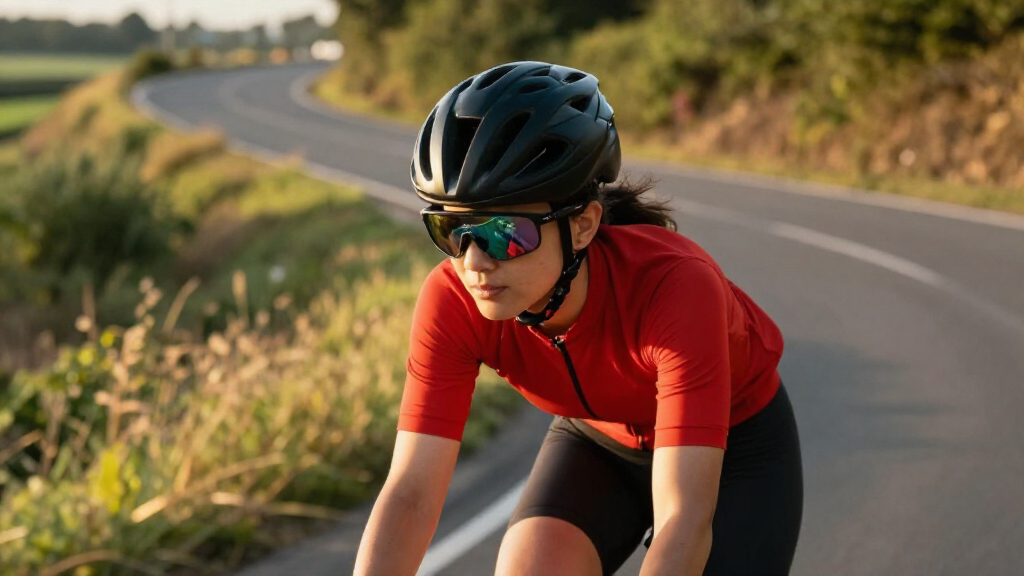
I ranked these sunglasses around the demands of cycling: steady fit, useful field coverage, lens choices for real riding conditions, and practical comfort over longer outings. I also weighed build and maintenance factors, including whether the lens is fixed, photochromic, or part of an interchangeable set, and whether a model offers a feature that meaningfully serves a specific rider, such as a myopia frame. Names and listed features alone do not establish lens clarity, UV performance, impact protection, or fit for every face, so buyers should check the manufacturer’s specifications for those details.
The order favors options with a clear cycling use case and a useful balance of coverage, adaptability, and straightforward wear. The Tifosi Vogel SL leads as the general sport-shield choice; the photochromic options follow for riders who value changing-light flexibility. Lightweight, polarized, and multi-lens models earn places for narrower priorities, but rank lower when their advantages depend more heavily on a particular route or a buyer’s willingness to manage extra lenses. I treated each model as a distinct choice rather than assuming that similar names indicate identical fit or performance.
| cycling sunglasse | Frame material | Lens material |
|---|---|---|
| Tifosi Vogel SL Shield Sunglas | Grilamid TR-90 | Shatterproof polycarbonate |
| ROCKBROS Photochromic Wraparou | Plastic | Polycarbonate |
| KAPVOE K63 Photochromic Cyclin | TR90 | PC |
| Lamicall Polarized Sports Sung | TR90 plastic | TAC |
| Lamicall 24 g Polarized Sports | TR90 | TAC |
| ROCKBROS Photochromic Sports S | Composite | Polycarbonate |
| Tifosi Vogel XC Rimless Sungla | Grilamid TR-90 | — |
| ROCKBROS Polarized Sports Sung | Polycarbonate | — |
| ROCKBROS Photochromic Sports S | — | — |
| Banglong Polarized Sports Sung | TR90 | — |
| Lamicall Polarized Sports Sung | TR90 plastic | TAC |
| ROCKBROS Polarized Sports Sung | TR90 | — |
Factors to Consider When Choosing Best Cycling Sunglasses
Before choosing from this group, match the sunglasses to the conditions you actually ride in. A useful lens feature on a shaded trail may be less useful on an open road, and a secure fit matters more than a long feature list if frames shift when you look down. These broader checks can help you avoid buying around a spec that does not solve your riding problem.
Match Lens Behavior to Your Routes
Think about how often your rides move between bright sun, tree cover, and overcast stretches. Photochromic lenses adjust to changing light, which can reduce the need to carry a second pair, but their behavior and tint range vary by model. A fixed lens may be simpler when your routes have steady lighting, and a polarized lens may suit bright conditions where glare is a concern. Do not assume that a feature label tells you how dark a lens gets or how quickly it changes. Check the maker’s lens specifications against your usual conditions. If you ride before sunrise or after dusk, confirm that the lens remains suitable for low light rather than relying on the category name alone.
Prioritize Fit and Coverage Over Frame Style
Coverage should protect your eyes from wind, dust, and insects without blocking your view when you look through the upper or side portions of the lens. A large shield can provide a broad visual area, while a rimless design may feel less enclosed; neither shape will fit every face equally well. Check bridge width, temple length, and whether the frame is described as adjustable, then look for a return policy that lets you confirm the fit. A frame that touches your cheeks or presses at the temples can become distracting on longer rides. Helmet compatibility matters too: temple arms should sit comfortably under your helmet straps without being pushed out of position. Choose the shape that stays stable in your riding posture, not just the one that looks most aerodynamic.
Treat Prescription Support as a Compatibility Check
A myopia insert or inner frame can make sport sunglasses workable for some prescription wearers, but it is not automatically compatible with every prescription. Check the insert’s dimensions, supported lens range, and whether an optician can make lenses for that mount. Strong prescriptions may create weight or edge-distortion concerns in compact inserts, so ask an eye-care professional before choosing. If you wear contact lenses, a standard wraparound pair may be simpler, though airflow and dryness can still affect comfort. Do not confuse UV protection with prescription suitability: they solve different needs. Confirm both before committing to a pair for regular rides.
Decide Whether Interchangeable Lenses Will Get Used
Multiple lenses can make one frame useful across bright, cloudy, and low-light rides, but only if you are willing to change them and keep the extras safe. Lens swaps add handling, storage, and cleaning tasks, and careless changes can leave fingerprints or scratches. A fixed lens is often the lower-fuss choice for riders who use one pair of glasses across most outings. Before choosing a kit, check how the lenses attach and whether replacement lenses are available separately. Also consider where you will store the unused lenses during a ride. Extra options are useful only when they match conditions you encounter often enough to justify the added upkeep.
Check Weight, Ventilation, and Helmet Interaction Together
A low listed weight can reduce the sense of pressure on long rides, but it does not tell you whether a frame will stay put or ventilate well. Wraparound coverage can help block wind, yet a close fit may increase fogging if airflow is limited or the pace changes frequently. Look for ventilation details and consider whether the glasses will sit close to your face in your riding position. Try them with your helmet, since strap pressure can alter fit around the temples and nose. For humid climbs or stop-start commuting, airflow may matter more than shaving a few grams. Choose the combination that remains comfortable in your climate and riding style.
Verify Safety and Care Details Before Buying
Product labels and included features do not replace checking the manufacturer’s documented specifications. Confirm the stated UV protection, lens material, impact-related claims, and any relevant care instructions before using sunglasses for fast or rough riding. Polarization can change how some digital screens appear, so riders who rely on a bike computer should check screen visibility in advance. Use a soft lens cloth and the recommended cleaning method rather than wiping grit across the lens. Keep spare lenses in a protective case if your kit includes them. Clear product documentation and accessible replacement parts can matter more over time than an extra feature you rarely use.
Frequently Asked Questions
Are photochromic cycling sunglasses a better choice than polarized sunglasses?
Neither lens type is better for every ride because they address different conditions. Photochromic lenses change tint as light shifts, which can help on routes that move between sun and shade. Polarized lenses reduce reflected glare, which some riders may prefer on bright, open roads. Check whether the photochromic model reaches a useful tint for your brightest rides and whether its lightest state works for dim sections. If you use a bike computer, test screen visibility with polarized lenses before relying on them.
Can I use the ROCKBROS myopia-frame sunglasses with any prescription?
No: a myopia frame is a mounting option, not a guarantee that every prescription will fit or perform well. Check the insert’s size and the manufacturer’s prescription limits, then ask an optician whether your lenses can be made for that shape. High prescriptions may add weight or cause peripheral distortion in a small insert. Fit also matters: the prescription frame should sit securely without touching the main lens. If the details are unclear, confirm compatibility before purchase rather than assuming the insert will work with your glasses prescription.
Should I choose a multi-lens kit if I ride in different weather?
A multi-lens kit can be useful when your rides span distinct light conditions and you are comfortable changing lenses before a ride. It may be less convenient if conditions shift mid-ride or you do not want to carry spare lenses. Compare the available tints with the weather you actually encounter instead of counting the number of lenses. Check how securely they attach and how easy replacements are to source. For frequent changes between sun and shade, a photochromic pair may be simpler, though it may not cover every extreme condition.
How can I tell whether cycling sunglasses will fit with my helmet?
Check temple-arm shape and length, then try the glasses with your helmet on and its straps adjusted as you ride. The arms should not create pressure points or force the frame away from your nose. Look down into a riding posture to see whether the lens remains in your field of view. Also check that the frame does not collide with the helmet edge when you move your head. If you cannot try them in person, review fit dimensions and choose a seller with a clear return policy.
Is a lightweight pair always more comfortable on long rides?
Low weight can reduce pressure, but comfort also depends on nose support, temple fit, balance, and whether the frame stays stable over bumps. A very light pair that slips may need frequent adjustment, which can be more distracting than a small difference in weight. Coverage and ventilation also affect comfort, especially in heat or on long climbs. Compare the listed weight with frame shape and fit details rather than using grams as the only measure. A secure, well-fitting pair is usually a better long-ride choice than the lightest option alone.
Conclusion
For the broadest starting point in this roundup, I would choose the Tifosi Vogel SL Shield as the best overall sport-shield option. Riders seeking a flexible choice for variable light should compare the ROCKBROS Photochromic Wraparound with Myopia Frame and KAPVOE K63, with the ROCKBROS model making the most sense when prescription support is part of the decision. The best value-style pick is the ROCKBROS Photochromic Sports Sunglasses, 22 g for riders prioritizing a lightweight photochromic design; verify fit and lens specifications before choosing. For a beginner, the Lamicall Polarized Sports Sunglasses offer a straightforward fixed-lens direction without starting with a lens-changing kit. Riders seeking a more premium-feeling sport design can look to the Tifosi Vogel XC Rimless, while those who want several tint options should compare the Banglong five-lens and ROCKBROS four-lens sets. Match the final choice to your face, helmet, prescription, and usual light—not the feature list alone.