
Complete the kit


Get sports gear delivered free with Prime
- Fast, free delivery on millions of items
- Prime Video, Amazon Music and more included
- Member-only deals all year
Key Takeaways
- Lightweight race vests like the MSR Low-Profile eliminate bulk but sacrifice storage, forcing riders to carry phone and snacks in jersey pockets.
- The Osprey Raptor 14L remains the benchmark for stability, utilizing a rigid back panel that prevents the pack from bouncing during aggressive descents.
- Budget options like Unigear and Teton often feature softer back panels that shift weight forward, impacting handling on technical singletrack.
- Bladder capacity alone is misleading; effective hydration depends on hose routing and bite valve accessibility while wearing a helmet.
- Lumbar-specific packs like the Arctos Lumbar offer a unique alternative for riders who prefer zero shoulder pressure, though they limit upper-back storage.
| Teton Oasis/Trailrunner Hydration Backpack |  | Best All-Rounder for Versatility | Water Capacity: 2L/3L bladder | Storage Capacity: 18L/22L | Material: High-density foam, breathable mesh | VIEW LATEST PRICE | See Our Full Breakdown |
| Unigear Hydration Pack Backpack | 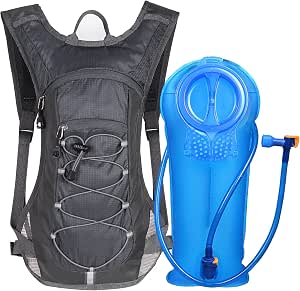 | Best Lightweight Minimalist | Weight: 1.1 lbs | Bladder Capacity: 2 Liters | Material: 100% Nylon | VIEW LATEST PRICE | See Our Full Breakdown |
| Water Buffalo Sherpa 22L Hiking Hydration Backpack |  | Best for Gear Organization | Capacity: 22L | Water Bladder: 2L | Material: Waterproof fabric | VIEW LATEST PRICE | See Our Full Breakdown |
| MARCHWAY Tactical Molle Hydration Pack |  | Best for Modular Customization | Material: 1000D water repellent nylon | Water Capacity: 3L | Dimensions: 19.5”x8.7”x2.6” | VIEW LATEST PRICE | See Our Full Breakdown |
| Tactical Hydration Backpack with 3L Bladder |  | Best High-Volume Tactical | Material: 900D nylon | Water Capacity: 3L | Pockets: 9 (4 zippered, 5 multi-compartment) | VIEW LATEST PRICE | See Our Full Breakdown |
| Osprey Berm Lightweight Hydration Biking Backpack |  | Best for Gear-Light Trail Riders | Weight: 0.97 lb (440 g) | Reservoir Capacity: 2.5 Liters | Backpanel: AirScape mesh-covered ridged foam | VIEW LATEST PRICE | See Our Full Breakdown |
| CamelBak Zoid Snow Hydration Pack |  | Best for Winter Riding | Insulated Tube: Yes | Material: Snow-repelling fabric | Design Profile: Slim, low profile | VIEW LATEST PRICE | See Our Full Breakdown |
| Nepest Lightweight Hydration Backpack |  | Best Budget Entry Point | Weight: 0.64 lbs | Bladder Capacity: 2 Liters | Material: 100% Nylon | VIEW LATEST PRICE | See Our Full Breakdown |
| Arctos Lumbar Mountain Bike Hydration Pack |  | Best for Technical Descents | Weight: 2.18 pounds | Bladder Capacity: 3 Liters | Capacity: 10 Liters | VIEW LATEST PRICE | See Our Full Breakdown |
| N NEVO RHINO Lightweight Hydration Backpack |  | Best Value All-Rounder | Weight: 8.5 oz | Capacity: 12 Liters | Bladder Capacity: 2 Liters | VIEW LATEST PRICE | See Our Full Breakdown |
| Arctos Lumbar MTB Hydration Backpack with Water Bladder |  | Best for Hip-Loaded Comfort | Fit Range: One size (5’5″ to 6’5″) | Weight: 1.85 lbs | Dimensions: 8.5″ H x 11″ W x 5.5″ D | VIEW LATEST PRICE | See Our Full Breakdown |
| Osprey Raptor 14L Men’s Mountain Biking Backpack with Hydraulics Reservoir |  | Best Premium Bike-Specific Design | Capacity: 14 Liters | Reservoir Capacity: 2.5 Liters | Item Weight: 2.22 lbs | VIEW LATEST PRICE | See Our Full Breakdown |
| MSR Low-Profile Race Hydration Pack |  | Best Minimalist Race Pack | Weight: 1.4 lbs | Bladder Capacity: 2 Liters | Pockets: 1 | VIEW LATEST PRICE | See Our Full Breakdown |
| Water Buffalo Hydration Backpack – Lightweight 2L Water Bladder |  | Best Versatile Entry-Level Pack | Total Capacity: 12 Liters | Water Capacity: 2 Liters | Material: Water-resistant Fabric | VIEW LATEST PRICE | See Our Full Breakdown |
| mountain bike hydration pack | Material | Weight |
|---|---|---|
| Teton Oasis/Trailrunner Hydrat | High-density foam, breathable mesh | — |
| Unigear Hydration Pack Backpac | 100% Nylon | 1.1 lbs |
| Water Buffalo Sherpa 22L Hikin | Waterproof fabric | — |
| MARCHWAY Tactical Molle Hydrat | 1000D water repellent nylon | — |
| Tactical Hydration Backpack wi | 900D nylon | Not specified |
| Osprey Berm Lightweight Hydrat | — | 0.97 lb (440 g) |
| CamelBak Zoid Snow Hydration P | Snow-repelling fabric | — |
| Nepest Lightweight Hydration B | 100% Nylon | 0.64 lbs |
| Arctos Lumbar Mountain Bike Hy | 210D Ripstop Nylon | 2.18 pounds |
| N NEVO RHINO Lightweight Hydra | 100% Nylon (PU Coated) | 8.5 oz |
| Arctos Lumbar MTB Hydration Ba | 210D Ripstop Nylon | 1.85 lbs |
| Osprey Raptor 14L Men’s Mounta | — | — |
| MSR Low-Profile Race Hydration | Synthetic Fabric | 1.4 lbs |
| Water Buffalo Hydration Backpa | Water-resistant Fabric | — |
More Details on Our Top Picks
Teton Oasis/Trailrunner Hydration Backpack
This pack stands out for its integrated weather protection, offering a sewn-in rain cover that many competitors like the Unigear lack. While it shares a similar 2L bladder capacity with the Unigear, the Teton provides significantly more storage volume at 18L/22L, making it better suited for carrying layers and tools. The insulated bladder pocket is a smart feature, keeping water cooler than the standard nylon construction found on the Water Buffalo Sherpa. However, the bulkier profile means it is less aerodynamic than the lightweight Unigear, potentially feeling heavier on fast-paced trail rides. It balances utility and protection well, but those seeking a minimalist vibe might find the extra fabric unnecessary.
Pros:- Sewn-in rain cover offers immediate protection without extra gear
- Insulated bladder pocket helps maintain water temperature
- Adjustable fit accommodates a wide range of body sizes
- Organized storage prevents gear from shifting during movement
Cons:- Heavier and bulkier than minimalist competitors
- Rain cover deployment can be fiddly while riding
- Limited capacity for multi-day bikepacking trips
Best for: Riders who encounter variable weather and need to carry extra layers or tools alongside water.
Not ideal for: Speed-focused racers who prioritize minimal weight and aerodynamics over storage capacity.
- Water Capacity:2L/3L bladder
- Storage Capacity:18L/22L
- Material:High-density foam, breathable mesh
- Rain Protection:Sewn-in rain cover
- Bladder Feature:Insulated pocket
- Fit Range:Men, women, and youth
- Storage System:Bungee cord system and weather-guarded zippers
Our verdict“This is the smart choice for riders who want one pack that handles rain, sweat, and moderate gear loads without needing separate accessories.”
Unigear Hydration Pack Backpack
At just 1.1 lbs, this pack feels almost invisible on the back, a stark contrast to the heavier Teton Oasis. The splash-resistant nylon handles light drizzle well, though it lacks the full waterproofing of the Water Buffalo Sherpa’s zippers. Its primary strength is the secure, bounce-free fit provided by adjustable chest and waist straps, which keeps the pack stable during technical descents. Compared to the MARCHWAY Tactical, the Unigear offers far less storage, with only a tiny front pocket for essentials. This makes it ideal for short, intense rides where gear weight is the enemy, but it fails if you need to carry snacks, tools, or a jacket.
Pros:- Extremely lightweight at 1.1 lbs reduces fatigue
- Secure strap system prevents bouncing on rough terrain
- Splash-resistant material handles light rain effectively
- Compact profile reduces wind drag
Cons:- Front pocket is too small for most essential items
- Not fully waterproof, only splash-resistant
- Lacks storage for layers or tools
Best for: Cross-country racers and short-trail riders who refuse to carry extra ounces and only need water.
Not ideal for: Riders who need to carry jackets, tools, or snacks, as the storage space is virtually non-existent.
- Weight:1.1 lbs
- Bladder Capacity:2 Liters
- Material:100% Nylon
- Dimensions:16.5 x 8 x 6.0 inches
- Fit Range:Chest size 27-50 inches
- Bladder Feature:Air flow system for cooling
- Water Resistance:Splash-resistant
Our verdict“Choose this if your priority is speed and minimalism, accepting that you will be riding with nothing but water and keys.”
Water Buffalo Sherpa 22L Hiking Hydration Backpack
This 22L pack is built for riders who treat their bike like a mobile command center. With six pockets and waterproof zippers, it offers superior protection for electronics and maps compared to the open bungee systems on the Teton. The trekking pole holders are a unique addition, though less critical for pure mountain biking, they hint at its dual-hiking design. Unlike the tactical MARCHWAY, which focuses on external modularity, the Sherpa prioritizes internal organization. However, the heavier build when fully loaded can feel cumbersome on steep climbs, and the lack of reflective elements is a safety concern for early morning or evening rides that the Teton addresses with better visibility features.
Pros:- Waterproof zippers protect sensitive gear from heavy rain
- Six distinct pockets allow for precise gear organization
- Leakproof 2L bladder ensures reliable hydration
- Trekking pole holders add versatility for mixed terrain
Cons:- Can become heavy and bulky when fully loaded
- No reflective elements for low-light visibility
- Design leans more toward hiking than aggressive MTB
Best for: Adventure riders and bikepackers who need to organize multiple items securely and protect them from rain.
Not ideal for: Night riders or those who prioritize lightweight agility over storage capacity and organization.
- Capacity:22L
- Water Bladder:2L
- Material:Waterproof fabric
- Storage:Six pockets
- Hardware:Waterproof zippers
- Extras:Trekking pole holders
- Fit:Adjustable straps
Our verdict“This is the best pick for riders who value keeping their gear dry, separated, and accessible over shaving off grams.”
MARCHWAY Tactical Molle Hydration Pack
The MOLLE webbing is the defining feature here, allowing riders to attach pouches, lights, or tools externally, a level of customization the Water Buffalo Sherpa lacks. Constructed from 1000D nylon, it is significantly more abrasion-resistant than the thinner fabrics found on the Unigear. The 3L bladder provides a longer hydration window than the 2L options on most competitors, ideal for remote trails. However, the tactical design adds bulk and weight, making it feel less ergonomic than the Teton’s tailored fit. Internal space is limited, forcing users to rely on external attachments, which can catch on branches if not secured tightly.
Pros:- MOLLE webbing allows for extensive external gear customization
- Durable 1000D nylon resists abrasion and tears
- 3L bladder capacity reduces refill frequency
- Padded straps provide comfort under heavy loads
Cons:- Bulky design increases wind resistance and snag risk
- Limited internal storage space for loose items
- Heavier than standard hydration packs
Best for: Tactical enthusiasts or riders who want to attach specific gear like lights or first-aid kits externally.
Not ideal for: Riders who prefer a sleek profile, as the external webbing can snag on vegetation.
- Material:1000D water repellent nylon
- Water Capacity:3L
- Dimensions:19.5”x8.7”x2.6”
- System:MOLLE compatible
- Bladder Type:TPU
- Fit:Adjustable padded straps
- Durability:High abrasion resistance
Our verdict“This pack is for those who want to build their own configuration with external gear, sacrificing sleekness for modularity.”
Tactical Hydration Backpack with 3L Bladder
With nine compartments and a 3L bladder, this pack rivals the MARCHWAY in hydration capacity but offers vastly superior internal organization. The 900D nylon is tough, though slightly lighter than the MARCHWAY’s 1000D fabric. It appeals to riders who need to carry food, tools, and navigation gear internally, avoiding the snag risk of the MARCHWAY’s external MOLLE. However, like its tactical cousin, it lacks reflective elements, posing a visibility risk. The weight is unspecified, which is a red flag for weight-conscious buyers comparing it to the featherlight Unigear. It is a robust, high-capacity option, but its bulk makes it feel more like a hiking pack than a dedicated MTB vest.
Pros:- Nine compartments offer extensive internal organization
- 3L BPA-free bladder provides long-lasting hydration
- Durable 900D nylon withstands rough trail conditions
- MOLLE compatible for optional external attachments
Cons:- Unspecified weight makes comparison difficult for lightpackers
- No reflective elements for low-light safety
- Bulkier than streamlined MTB-specific vests
Best for: Riders who need maximum internal storage and high hydration capacity without external attachments.
Not ideal for: Lightweight purists or night riders, due to unspecified weight and lack of visibility features.
- Material:900D nylon
- Water Capacity:3L
- Pockets:9 (4 zippered, 5 multi-compartment)
- Bladder Safety:BPA-free
- System:MOLLE compatible
- Comfort:Padded straps and breathable back
- Weight:Not specified
Our verdict“This is the go-to for riders who prioritize internal organization and high water capacity over weight savings and visibility.”
Osprey Berm Lightweight Hydration Biking Backpack
This pack stands out for riders who prioritize minimal weight and ventilation over carrying capacity. At just 0.97 lb, it feels almost nonexistent on your back, a stark contrast to the heavier Arctos Lumbar which adds significant bulk for its hip-mounted design. The AirScape backpanel is highly breathable, keeping sweat at bay during steep climbs where the Nepest might trap more heat due to its simpler padding. However, the 2.5L reservoir is on the smaller side compared to the Arctos, meaning you might need to refill more often on long loops. The magnetic bite valve is a nice touch for quick sips, but the one-size fit can feel loose on smaller torsos, whereas the Osprey Raptor offers a more tailored harness. Choose this if you ride fast and light; skip it if you carry tools or extra layers.
Pros:- Extremely lightweight at 440g
- Highly breathable AirScape backpanel
- Magnetic bite valve for easy hydration access
- Reflective details enhance low-light visibility
Cons:- Limited storage space for gear
- One-size fit may be loose for smaller riders
- Blinker light accessory sold separately
Best for: Road cyclists and XC racers who need a barely-there pack for short, intense rides
Not ideal for: Enduro riders or commuters who need to carry jackets, tools, or snacks in dedicated pockets
- Weight:0.97 lb (440 g)
- Reservoir Capacity:2.5 Liters
- Backpanel:AirScape mesh-covered ridged foam
- Dimensions:15.4 x 7.5 x 5.5 in
- Fit:One size, unisex
- Special Features:Magnetic bite valve, blinker light attachment
Our verdict“A superb choice for speed-focused riders who want maximum airflow and minimum weight.”
CamelBak Zoid Snow Hydration Pack
While most packs in this list fail in freezing temperatures, the CamelBak Zoid is engineered specifically to keep water flowing when the mercury drops. Its insulated tubing is the key differentiator here; unlike the standard Nepest or Osprey Berm, where tubes can freeze and block flow, the Zoid maintains accessibility in snow. The snow-repelling materials also protect your inner layers from wet gear, a feature absent in the lighter summer-focused models like the Osprey Berm. However, its slim, low-profile design sacrifices storage, making it less versatile for summer trail riding where you might need to stash a windbreaker. It is a niche tool: essential if you ride in winter, but over-specialized for three-season use compared to the more adaptable Arctos Lumbar.
Pros:- Insulated tube prevents water from freezing
- Water-repellent exterior materials
- Secure, slim fit for active movement
- Quick-access harness design
Cons:- Very limited storage capacity
- Specialized for winter, less useful in warm weather
Best for: Mountain bikers who ride in sub-freezing temperatures and need reliable hydration access
Not ideal for: Summer riders who need larger storage compartments for gear and snacks
- Insulated Tube:Yes
- Material:Snow-repelling fabric
- Design Profile:Slim, low profile
- Straps:Adjustable sternum strap
- Intended Use:Winter sports
Our verdict“The definitive solution for cold-weather riders who refuse to let frozen tubes ruin their ride.”
Nepest Lightweight Hydration Backpack
If you are new to mountain biking and want to test the waters without investing in premium gear, the Nepest offers a compelling, low-cost entry. At 0.64 lbs, it is lighter than the Arctos Lumbar and even lighter than the Osprey Berm, making it surprisingly competitive on weight for its price bracket. The 100% nylon construction is tear-resistant, though it lacks the refined ergonomic shaping found in the Osprey Berm’s AirScape panel. You get basic functionality: a 2L bladder and simple pockets. However, the padding is thinner, meaning comfort may suffer on longer, rougher descents compared to the heavily padded straps of the CamelBak Zoid. It is a utilitarian choice: functional and light, but it lacks the durability and ergonomic refinement of the higher-tier packs like the Arctos.
Pros:- Extremely affordable entry price
- Ultralight at 0.64 lbs
- Includes a 2L water bladder
- Adjustable straps for a basic custom fit
Cons:- Basic padding may cause discomfort on long rides
- Limited pocket organization compared to premium packs
Best for: Beginners or casual riders looking for an affordable, lightweight starter pack
Not ideal for: Riders tackling technical terrain who need robust padding and secure gear storage
- Weight:0.64 lbs
- Bladder Capacity:2 Liters
- Material:100% Nylon
- Straps:Adjustable shoulder, sternum, waist
- Safety:Reflective stripes
- Closure:Two-way zippers
Our verdict“A no-frills, lightweight option that gets the job done for new riders on a tight budget.”
Arctos Lumbar Mountain Bike Hydration Pack
This pack redefines stability by moving the water weight to your hips via a lumbar design, a significant upgrade over the shoulder-mounted Nepest or Osprey Berm. By lowering the center of gravity, the Arctos Lumbar prevents the pack from bouncing or pulling you backward during steep, technical descents. The oversized wing pockets allow for one-handed access to phones or snacks, a convenience the Osprey Berm’s smaller zip pocket cannot match. The trade-off is weight and bulk; at 2.18 pounds, it is substantially heavier than the ultra-light Osprey Berm. It is also less versatile for casual riding, as the hip-belt design can feel restrictive on flat terrain. This is a performance tool for gravity riders who value balance over minimalism.
Pros:- Lumbar design reduces shoulder fatigue
- Excellent stability on technical descents
- Large wing pockets for easy gear access
- Durable 210D ripstop nylon construction
Cons:- Heavier than standard backpacks (2.18 lbs)
- Single size may not fit shorter riders well
Best for: Enduro and downhill riders who need maximum stability and easy gear access on rough trails
Not ideal for: XC racers or road cyclists who prioritize ultra-low weight and minimal profile
- Weight:2.18 pounds
- Bladder Capacity:3 Liters
- Capacity:10 Liters
- Material:210D Ripstop Nylon
- Fit Range:5’5″ to 6’4″
- Zippers:Heavy-duty YKK
- Pockets:5 total pockets
Our verdict“The ideal choice for technical riders who need a stable, hip-mounted system for rough terrain.”
N NEVO RHINO Lightweight Hydration Backpack
The N NEVO RHINO strikes a rare balance between ultralight weight and substantial capacity. At just 8.5 oz, it is lighter than the Nepest and comparable to the Osprey Berm, yet it offers a 12-liter total capacity with a 2L bladder. This makes it more versatile for carrying a light jacket or extra layers than the smaller Osprey Berm. The breathable air mesh back panel provides decent ventilation, though it lacks the structured rigidity of the Osprey’s AirScape system. While it doesn’t offer the specialized stability of the Arctos Lumbar for downhill riding, it serves as a robust, low-cost option for general trail riding. It is less refined than the premium picks but offers better utility per ounce than the basic Nepest.
Pros:- Extremely lightweight at 8.5 oz
- Good 12L capacity for a light pack
- Breathable air mesh back panel
- Durable, tear-resistant nylon fabric
Cons:- Storage compartments are small
- Not suitable for multi-day expeditions
Best for: Trail riders who want a lightweight pack with enough room for a layer and snacks
Not ideal for: Winter riders or those needing specialized stability for high-speed descents
- Weight:8.5 oz
- Capacity:12 Liters
- Bladder Capacity:2 Liters
- Material:100% Nylon (PU Coated)
- Warranty:365 Days
- Dimensions:11.8″ W x 16.5″ H
- Sport Types:Cycling, Hiking, Running
Our verdict“A highly versatile, featherweight pack that offers more utility than most competitors in its weight class.”
Arctos Lumbar MTB Hydration Backpack with Water Bladder
This pack stands out because it shifts the load to your hips, a distinct advantage over standard shoulder-only designs like the MSR Low-Profile Race Hydration Pack. By keeping weight on the lumbar region, it reduces shoulder fatigue significantly during technical descents or long climbs. The large wing pockets offer quick access to snacks and tools, though they lack the rigid structure found in premium bike-specific bags. While the 210D Ripstop Nylon feels durable, the 1.85-pound weight is heavier than minimalist competitors, which might bother riders seeking the lightest possible setup. It is a solid choice for those who prioritize stability over minimalism, but the one-size-fits-most approach means petite riders may find the torso length too long.
Pros:- Lumbar fit effectively reduces shoulder strain
- Large wing pockets allow easy access to gear
- Durable 210D Ripstop Nylon construction
- Stable fit minimizes bounce during active riding
Cons:- Limited fit range excludes shorter riders
- Shoulder strap adjustments are restrictive
- Heavier than minimalist hydration vests
Best for: Riders with longer torsos who suffer from shoulder strain and prefer hip-supported weight distribution.
Not ideal for: Petite riders under 5’5″ or those seeking a sub-1-pound ultra-lightweight pack.
- Fit Range:One size (5’5″ to 6’5″)
- Weight:1.85 lbs
- Dimensions:8.5″ H x 11″ W x 5.5″ D
- Material:210D Ripstop Nylon
- Bladder Included:Yes
Our verdict“Choose this if you need hip-supported stability and have a standard-to-tall torso.”
Osprey Raptor 14L Men’s Mountain Biking Backpack with Hydraulics Reservoir
The Osprey Raptor 14L is engineered specifically for the demands of mountain biking, offering a level of organization and stability that general-purpose packs like the Water Buffalo Hydration Backpack cannot match. Its winged harness and dedicated tool roll keep gear secure and accessible, preventing the rattling common in softer packs. The 2.5L Hydraulics reservoir provides ample hydration for all-day rides, though the 2.22-pound weight reflects its robust build. While it excels on the trail, its specialized design means it lacks the versatility for hiking or running found in cross-category options. This is a serious tool for serious riders who value trail-ready organization over lightweight simplicity.
Pros:- Bike-specific winged harness ensures stability
- Includes a built-in tool roll for repairs
- Large 2.5L reservoir supports long rides
- Multiple pockets for organized gear storage
Cons:- Heavier than general-purpose hydration vests
- Design is too specialized for non-biking activities
Best for: Dedicated mountain bikers who need dedicated tool storage and a secure, high-capacity hydration system.
Not ideal for: Multi-sport athletes who need a pack that transitions easily to hiking or running.
- Capacity:14 Liters
- Reservoir Capacity:2.5 Liters
- Item Weight:2.22 lbs
- Dimensions:18.5″ H x 11″ W x 10.6″ D
- Reservoir Type:Hydraulics
- Harness Type:Winged with Hipbelt
Our verdict“The go-to choice for riders who want a complete, organized bike-ready system.”
MSR Low-Profile Race Hydration Pack
If the Osprey Raptor 14L is a utility truck, the MSR Low-Profile Race Hydration Pack is a race car. At just 1.4 pounds, it is significantly lighter than the Arctos or Osprey options, prioritizing speed and minimal drag. The slim silhouette and self-sealing bite valve reduce bounce and leak risks, which is critical during high-intensity efforts. However, this minimalism comes at a cost: with only one pocket, you must carry essentials in your jersey or pants. It lacks the storage volume of the Water Buffalo Hydration Backpack, making it unsuitable for day trips requiring extra layers or tools. This pack is strictly for riders who want nothing but water and a place to stash a single energy gel.
Pros:- Extremely lightweight at 1.4 pounds
- Low-profile design minimizes bounce
- Self-sealing bite valve prevents leaks
- Breathable back panel enhances comfort
Cons:- Only one pocket limits storage capacity
- No dedicated tool or gear organization
Best for: Competitive racers or minimalist riders who carry almost no gear besides water.
Not ideal for: Riders who need to carry tools, jackets, or snacks in the pack itself.
- Weight:1.4 lbs
- Bladder Capacity:2 Liters
- Pockets:1
- Material:Synthetic Fabric
- Fit System:Adjustable Chest/Shoulder Straps
- Brand:MSR
Water Buffalo Hydration Backpack – Lightweight 2L Water Bladder
The Water Buffalo Hydration Backpack occupies the middle ground, offering 12 liters of capacity and multiple storage compartments that the MSR Low-Profile lacks. It is designed for multi-sport use, making it a better choice than the bike-specific Osprey Raptor for someone who also hikes or runs. The ventilated mesh shoulder straps and water-resistant fabric provide decent comfort and weather protection, though it lacks the advanced stability features of premium MTB packs. While the 2L bladder is standard, it may feel insufficient for very long endurance events compared to the Arctos Lumbar‘s larger options. This is a solid, no-frills option for beginners or casual riders who need one pack for various outdoor activities.
Pros:- Versatile design for multiple sports
- Multiple storage compartments for gear
- Water-resistant and durable fabric
- Comfortable ventilated shoulder straps
Cons:- 2L capacity may be low for long rides
- Lacks bike-specific stability features
Best for: Casual outdoor enthusiasts who want one pack for biking, hiking, and running.
Not ideal for: Technical mountain bikers who need specialized gear organization and stability.
- Total Capacity:12 Liters
- Water Capacity:2 Liters
- Material:Water-resistant Fabric
- Features:Leakproof bite valve, Wide opening
- Comfort:Ventilated mesh straps, Padded back panel
Our verdict“A reliable, all-rounder for riders who don’t want to buy a dedicated bike pack.”

How We Picked
I evaluated these packs based on stability during high-intensity movement, ease of hydration access while wearing a helmet, and material durability against abrasion. Products were ranked by their ability to stay secure on the back without restricting shoulder movement, a critical factor for maintaining control on rough trails.
Additional criteria included bladder quality (leak resistance and taste neutrality), pocket accessibility for essentials like tools and phones, and ventilation features that prevent overheating. Packs that failed to secure the hose effectively or created excessive noise were ranked lower, regardless of price.
Factors to Consider When Choosing Mountain Bike Hydration Packs
Selecting a hydration pack is not just about water capacity; it is about how the pack interacts with your body and bike. These factors determine whether you will enjoy the ride or fight your gear.Fit and Stability Dynamics
A pack that bounces is a pack that ruins your flow. Look for designs with adjustable sternum straps and hip belts that lock the load onto your core. Low center of gravity designs, where the bladder sits low on the back, improve bike handling by keeping weight close to the spine. Avoid packs with excessive side pockets if you ride technical terrain, as they catch on branches and throw off balance. The fit should feel like an extension of your body, not a loose cargo bag.
Bladder Capacity vs. Weight Penalty
Carrying 3 liters of water adds 6.6 pounds to your load, which is significant on climbs. Match capacity to your typical ride duration and access to refill points. 2-liter bladders are sufficient for most half-day rides, while 3-liter options suit remote trails with no water sources. Remember that a full bladder shifts weight dynamically; packs with internal dividers help minimize this sloshing effect. Do not oversize your bladder just because you might need extra water; the constant weight penalty outweighs the occasional benefit.
Ventilation and Back Panel Design
Sweat accumulation leads to discomfort and skin irritation. Mesh-covered foam channels or tensioned mesh panels allow air to circulate between the pack and your back. Solid foam panels trap heat, making hot-weather riding miserable. Consider packs with removable back panels that allow you to adjust ventilation based on weather conditions. If you ride in humid climates, prioritize airflow over maximum storage space to maintain comfort over long distances.
Hose Routing and Bite Valve Accessibility
The hose should stay within reach without requiring you to look down or adjust your grip. Left-side routing is standard, but some packs offer shoulder strap clips that allow switching sides. A bite valve that is too high or low causes neck strain; adjustable clips are essential. Check if the hose connects securely to the shoulder strap to prevent it from dangling into your face or getting caught in handlebars. Poor hose management is a leading cause of frustration during technical sections.
Durability and Abrasion Resistance
Mountain biking involves crashes and brush contact. Look for high-denier nylon or reinforced ripstop fabrics on high-wear areas like the bottom and sides. Zippers should be YKK or equivalent heavy-duty models that resist jamming with dirt. Seams must be double-stitched or welded to prevent blowouts under load. Budget packs often use thinner materials that tear easily, leading to frequent replacements that cost more than buying a durable model upfront.
Storage Organization and Tool Access
Essential items like multi-tools, pumps, and snacks need dedicated, quick-access pockets. Zippered pockets protect valuables from rain and mud, while open mesh pockets dry faster but offer less protection. Consider how easy it is to access tools while wearing gloves. Packs with modular storage allow you to remove pockets for weight savings, but integrated designs often provide better structural integrity. Evaluate your typical carry list to ensure the pack’s layout matches your organizational habits.
Frequently Asked Questions
Do I need a hip belt on my hydration pack?
For most mountain bikers, a hip belt is optional but recommended for rides over two hours. It transfers weight from the shoulders to the hips, reducing fatigue on long climbs. However, if you ride aggressively and need maximum freedom of movement, a minimal strap-only design like the MSR Low-Profile prevents the belt from interfering with pedaling or wearing knee pads. Choose based on whether comfort or mobility is your priority for specific trails.How do I prevent the hydration hose from freezing in winter?
Insulated hose sleeves are the most effective solution, keeping the water moving and warm. Alternatively, blowing back into the tube after each sip clears the valve of residual water, preventing it from freezing. Some packs, like the CamelBak Zoid, offer built-in insulation or compatibility with thermal covers. In extreme cold, carrying a spare hand warmer in a pocket near the hose connection can also help keep the line clear.Can I use a hydration pack for road cycling?
While possible, mountain bike packs are generally too bulky and heavy for road cycling. Road cyclists prefer slim, jersey-stuffing approaches or small waist packs to maintain aerodynamics. The rigid back panels and large storage compartments of MTB packs create excessive drag and heat. If you need one pack for both, choose a minimalist vest-style model like the Osprey Berm, but expect compromises in storage for road use.What is the best way to clean a hydration bladder?
Regular cleaning prevents mold and bacterial growth. Use a dedicated cleaning brush and mild soap or baking soda solution to scrub the interior, focusing on corners where residue accumulates. Air dry completely by hanging it with the opening wide; using a blow dryer on cool setting helps. Never leave a wet bladder sealed in a pack, as this creates an ideal environment for mold. Replace bladders annually if they develop persistent odors or stains.Is a 2L or 3L bladder better for day rides?
For most day rides, 2 liters is sufficient and reduces carry weight by nearly 2 pounds compared to 3 liters. Only choose 3 liters if you are riding in remote areas without reliable water sources or in extremely hot, dry conditions. The extra weight of a full 3-liter pack significantly impacts climbing efficiency and handling. Start with 2 liters and add a small soft-flask backup if you find yourself running short.Conclusion
The Osprey Raptor 14L is the best overall choice for most mountain bikers, offering superior stability and storage without excessive weight. For budget-conscious riders, the Teton Oasis provides reliable hydration at a lower price point, though with less refined fit. Beginners should start with the Nepest Lightweight for its simplicity and ease of use, while serious racers will appreciate the MSR Low-Profile for its minimal footprint. If you suffer from shoulder fatigue, the Arctos Lumbar offers a unique waist-mounted solution. Match the pack to your riding frequency and terrain, and prioritize fit over capacity for the best experience.