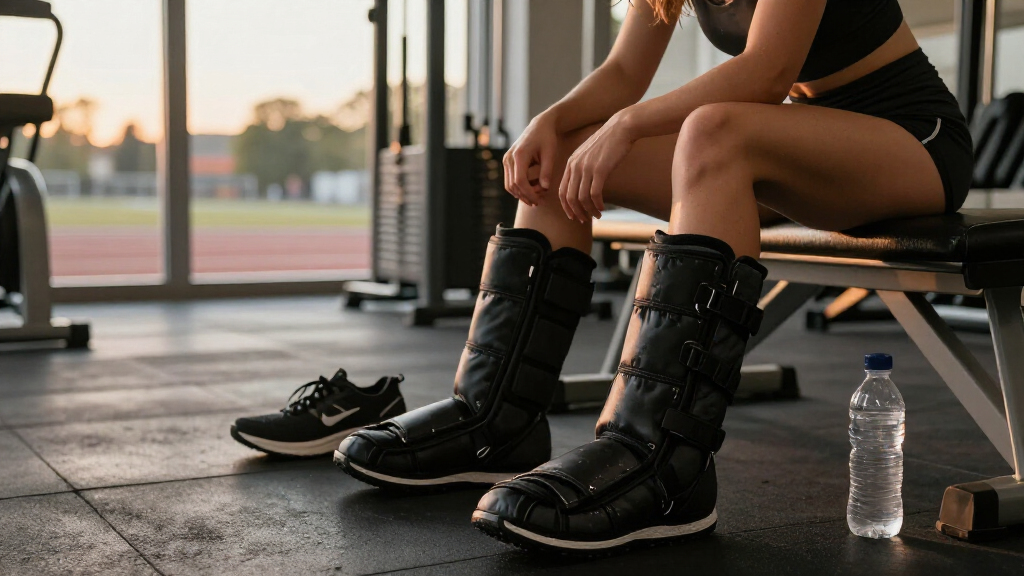

The best recovery boots balance useful compression, a comfortable fit, and controls that suit your routine. My best overall pick is the Hyperice Normatec 3 for its established full-leg compression system, while the Therabody JetBoots Prime stands out for wireless use and the QUINEAR Cordless Recovery Boots for a more accessible cordless option. The main tradeoffs are wired versus portable operation, simple versus more adjustable controls, and standard compression versus added heat. Fit matters as much as features: a boot that does not match your leg length may apply pressure unevenly. Read on for the full breakdown and a guide to choosing by recovery routine and budget.

Get sports gear delivered free with Prime
- Fast, free delivery on millions of items
- Prime Video, Amazon Music and more included
- Member-only deals all year
Complete the kit


Key Takeaways
- Normatec 3 leads for a structured full-leg routine, while the Normatec Elite prioritizes a wireless premium setup.
- Wireless designs trade cord-free convenience for charging and portability considerations; compare the JetBoots Prime, FIT KING cordless models, and QUINEAR cordless options by fit and controls.
- Heat is a separate preference, not a substitute for compression quality; the two heated listings suit buyers who specifically want warmth around the legs or knees.
- More modes and intensity levels do not automatically mean a better fit; the MUSUGY and heated-knee model may appeal to people who want adjustment, but usability still matters.
- QUINEAR and FIT KING appear in both corded and cordless styles, giving buyers a useful way to compare convenience against a simpler system within familiar brand lineups.
| QUINEAR Leg Recovery System with Air Compression Boots |  | Best Value for Feet and Calves | Type: Air compression leg massager | Massage areas: Feet and calves | Air channels: 3 | VIEW LATEST PRICE | See Our Full Breakdown |
| Hyperice Normatec 3 Full-Leg Compression Boots, Standard Size |  | Best for Targeted Full-Leg Compression | Product type: Full-leg compression boots | Compression levels: 7 | Treatment zones: 5 overlapping zones | VIEW LATEST PRICE | See Our Full Breakdown |
| Air Compression Leg Massager Boots with Heat, Medium |  | Best Full-Leg Pick with Heat | Chambers: 5 air chambers | Heat: Yes | Massage modes: 6: AUTO, CYC, PIN, Foot, Calf, Thigh | VIEW LATEST PRICE | See Our Full Breakdown |
| Leg Compression Massager with Heated Knee, 6 Modes and 12 Intensity Levels |  | Best for Heated Knees and Adjustable Fit | Air chambers: 4 independent chambers | Compression zones: Feet, calves, and thighs | Knee function: Heat only; no compression | VIEW LATEST PRICE | See Our Full Breakdown |
| Hyperice Normatec Elite Wireless Compression Boots, Standard Size |  | Best Premium Wireless Pick | Design: Wireless and hose-free | Compression levels: 7 | Compression zones: 5 overlapping zones | VIEW LATEST PRICE | See Our Full Breakdown |
| MUSUGY Full-Leg Air Compression Massager Boots, 9 Pressure Levels, 6 Modes, 3 Timers, Medium |  | Best for Targeted Full-Leg Control | Air chambers: 5: foot, lower calf, upper calf, knee, and thigh | Pressure levels: 9 levels; 40–120 mmHg | Modes: 6 | VIEW LATEST PRICE | See Our Full Breakdown |
| Therabody JetBoots Prime Wireless Compression Boots, Regular, 30–34 in Inseam |  | Best for Travel | Inseam: 30–34 inches | Design: Wireless and foldable | Pressure chambers: 4 overlapping chambers | VIEW LATEST PRICE | See Our Full Breakdown |
| FIT KING FT-115A Cordless Leg Compression Recovery Boots |  | Best for Customizable Cordless Sessions | Model: FT-115A | Compression system: Five air chambers with five-zone precision control | Pressure levels: 11; 50–150 mmHg | VIEW LATEST PRICE | See Our Full Breakdown |
| Anaconda Wireless Leg Compression Boots, Medium |  | Best for Straightforward Wireless Coverage | Compression pressure: 200 mmHg | Compression zones: 4: foot, calf, knee, and thigh | Modes: 3 | VIEW LATEST PRICE | See Our Full Breakdown |
| QUINEAR Air Compression Recovery Boots for Athletes |  | Best for Simple Timed Sessions | Air chambers: 4 | Pressure intensities: 8; 50–120 mmHg | Compression modes: 3: sequence, circulation, and combination | VIEW LATEST PRICE | See Our Full Breakdown |
| Sharper Image Powerboost Compression Leg Massager Boots, S/M |  | Best for Targeted Zone Control | Size: S/M | FDA clearance: 510(k) K251531 | Air chambers: 5 | VIEW LATEST PRICE | See Our Full Breakdown |
| QUINEAR Cordless Leg Compression Recovery Boots |  | Best for Cordless Flexibility | Air chambers: 4 | Targeted zones: Foot, lower calf, upper calf, thigh | Pressure levels: 12 (40–150 mmHg) | VIEW LATEST PRICE | See Our Full Breakdown |
| FIT KING Air Compression Recovery Boots for Full Legs, Medium |  | Best for Straightforward At-Home Sessions | Size: Medium | Air chambers: 4 | Air channels: 4 independent channels | VIEW LATEST PRICE | See Our Full Breakdown |
| FIT KING Cordless Air Compression Leg Massager Recovery System |  | Best Cordless Pick with Session Controls | Model: FT-091A | Compression chambers: 4 | Pressure settings: 12 settings, 40–150 mmHg | VIEW LATEST PRICE | See Our Full Breakdown |
More Details on Our Top Picks
QUINEAR Leg Recovery System with Air Compression Boots
The QUINEAR Leg Recovery System is the simplest fit for buyers who want adjustable compression on the lower legs without full-leg coverage. Its three air channels work across the feet and calves, while three modes and pressure settings give more flexibility than a basic single-program massager. The handheld LED controller shows the active massage location and pressure, making adjustments straightforward. Compared with the full-leg Hyperice Normatec 3, this model leaves the thighs untreated and offers fewer compression zones, but its more focused coverage may suit people who mainly want foot-and-calf sessions. Zippered sleeves are intended to make putting the boots on and cleaning them easier. The tradeoff is limited adjustability for fit: the one-size-fits-most design may not suit every leg shape.
Pros:- Three-channel compression covers both feet and calves.
- Three modes and adjustable pressure settings support different session preferences.
- LED controller displays the massage location and pressure.
- Zippered TBP fabric sleeves are designed for easier wearing and cleaning.
Cons:- Does not cover the thighs.
- One-size-fits-most construction may not fit every leg comfortably.
Best for: Buyers who mainly want adjustable foot-and-calf compression and prefer a simpler setup to full-leg boots.
Not ideal for: People seeking thigh coverage, more segmented targeting, or a fit tailored to specific leg measurements.
- Type:Air compression leg massager
- Massage areas:Feet and calves
- Air channels:3
- Massage modes:Sequence, circulation, combination
- Pressure range:0–140 mmHg
- Pressure settings:MIN up to 60 mmHg; MID up to 90 mmHg; MAX up to 140 mmHg
- Sleeve design:Zippered TBP fabric
- Controller:Handheld LED digital display
Our verdict“Choose the QUINEAR for adjustable foot-and-calf sessions; choose the Hyperice Normatec 3 if you want compression that extends up the full leg.”
Hyperice Normatec 3 Full-Leg Compression Boots, Standard Size
The Hyperice Normatec 3 earns its place for buyers who want detailed control across the full leg. Its five overlapping zones and ZoneBoost feature let users focus compression on selected areas, while seven levels allow a broad range of settings. Compared with the foot-and-calf-only QUINEAR Leg Recovery System, the Normatec 3 reaches farther up the leg and offers more segmented targeting. Bluetooth app connectivity adds customization, though it also means some features depend on using a connected phone. The refreshed, lighter design and intuitive interface make the system more approachable than its feature set might suggest. Its main limitation is fit: the standard size is specified for a 31–35-inch inseam and thigh circumference up to 30 inches, so buyers outside those measurements should look elsewhere.
Pros:- Five overlapping zones support targeted full-leg compression.
- ZoneBoost lets users focus treatment on selected areas.
- Seven compression levels provide adjustable sessions.
- Bluetooth app adds customization, and the refreshed design is lighter with an intuitive interface.
Cons:- Standard size is limited to a 31–35-inch inseam.
- Maximum thigh circumference is 30 inches.
- Additional features and customization require Bluetooth app connectivity.
Best for: Users who want full-leg coverage, targeted zone control, and app-based customization in a standard-size system.
Not ideal for: Buyers outside the stated inseam or thigh measurements, or anyone who wants all controls without a phone app.
- Product type:Full-leg compression boots
- Compression levels:7
- Treatment zones:5 overlapping zones
- Technology:Pulse technology and ZoneBoost
- Connectivity:Bluetooth app
- Size:Standard
- Inseam range:31–35 inches
- Maximum thigh circumference:30 inches
Our verdict“Pick the Normatec 3 for targeted, app-customizable full-leg compression if its standard sizing matches your measurements.”
Air Compression Leg Massager Boots with Heat, Medium
These Air Compression Leg Massager Boots stand out for combining sequential compression with heat from the foot to the thigh. Six modes include whole-leg programs and separate foot, calf, and thigh options, so buyers can choose broad coverage or focus on one area. The 11 intensity levels and adaptive pressure sensor offer finer adjustment than the four-chamber heated-knee model, while the stated pressure range reaches 150 mmHg. Heat is included across the full-leg design, rather than being limited to the knee area. The tradeoffs are practical: these boots need wired power, and the medium fit has defined leg-length and circumference limits. Their quiet wired pump and carry bag help with home use and storage, but they are less convenient to move around in than the wireless Hyperice Normatec Elite.
Pros:- Sequential compression and heat cover the leg from foot to thigh.
- Six modes include full-leg and targeted foot, calf, and thigh options.
- Eleven intensity levels and an adaptive pressure sensor allow fine adjustment.
- Side zippers and a carry bag support easier dressing and storage.
Cons:- Requires wired power, limiting use away from an outlet.
- Medium sizing has specific leg-length and circumference limits.
Best for: Home users who want full-leg compression, heat, and separate foot, calf, and thigh programs in one wired system.
Not ideal for: People who need cordless sessions or whose measurements exceed the medium boot’s stated length and circumference limits.
- Chambers:5 air chambers
- Heat:Yes
- Massage modes:6: AUTO, CYC, PIN, Foot, Calf, Thigh
- Compression intensity:11 levels, 50–150 mmHg
- Noise level:Under 55 dB
- Leg length range:29.5–33.5 inches
- Maximum thigh circumference:28 inches
- Maximum calf circumference:22 inches
- Power and accessories:Wired; portable carry bag included
Our verdict“Choose this model for heated, adjustable full-leg sessions at home, and choose the wireless Normatec Elite if freedom from cords matters more.”
Leg Compression Massager with Heated Knee, 6 Modes and 12 Intensity Levels
This leg massager is a distinctive choice for buyers who want knee-area heat alongside compression for the feet, calves, and thighs. Its four independent chambers handle sequential compression, while six heating zones, four temperature settings, and six modes give users several ways to tailor a session. Adjustable Velcro straps at the knees and thighs offer more fit flexibility than the fixed standard sizing of the Hyperice Normatec 3. The backlit LCD controller also includes a memory function and three auto-shutoff timer choices. The key distinction is that the knee receives heat only—there is no knee compression. Unlike the five-chamber heated boots, this model uses four chambers and does not list full-leg heating. Buyers should check the sizing guide, since exact leg measurements are not supplied here.
Pros:- Four independent chambers provide sequential compression across feet, calves, and thighs.
- Knee-area heat has four temperature settings.
- Adjustable straps, zippered cuffs, and a memory-equipped backlit LCD support flexible setup.
- Six modes, 12 intensity levels, and three timer options allow varied sessions.
Cons:- The knee area offers heat only, with no compression.
- Exact boot sizing and circumference limits require checking the sizing guide.
- Corded power limits use away from an outlet.
Best for: Users who want adjustable cuffs, multiple session timers, and warmth focused on the knee alongside leg compression.
Not ideal for: People seeking compression directly around the knee, cordless operation, or stated sizing limits before purchase.
- Air chambers:4 independent chambers
- Compression zones:Feet, calves, and thighs
- Knee function:Heat only; no compression
- Heating zones:6
- Temperature settings:Off, 113°F, 122°F, 131°F
- Modes and intensity:6 modes; 12 intensity levels
- Timers:10, 20, and 30 minutes
- Fit:Zippered foot and calf cuffs; adjustable Velcro straps at knees and thighs
- Power and accessories:Corded with power adapter; storage bag included
Our verdict“Choose this model if adjustable leg fit and heated knees matter more than knee compression or a cordless design.”
Hyperice Normatec Elite Wireless Compression Boots, Standard Size
The Hyperice Normatec Elite is the clearest choice here for buyers who want full-leg compression without hoses connecting the boots to a separate pump. Its wireless design pairs seven intensity levels with five overlapping zones, while Bluetooth app controls let users adjust pressure, targeted areas, and session length. Pulse, HyperSync, and ZoneBoost technology support synchronized, zone-focused sessions. Compared with the corded Normatec 3, the Elite favors portability and a self-contained setup; the tradeoff is reliance on a rechargeable battery, which lasts up to four hours depending on intensity. The app is also central to customization. Standard sizing is specified for a 31–35-inch inseam and a height range of 5 feet 7 inches to 6 feet 4 inches, so fit should be checked before choosing this premium wireless option.
Pros:- Wireless, hose-free design supports use without a separate pump setup.
- Seven compression levels and five overlapping zones allow targeted adjustments.
- App controls cover pressure, zones, and session length.
- HyperSync supports synchronized compression for both legs.
Cons:- Higher intensity settings use more battery power.
- Standard size is specified for a 31–35-inch inseam and heights of 5 feet 7 inches to 6 feet 4 inches.
- Customization depends on Bluetooth and the Hyperice App.
Best for: Frequent users who want app-customizable, synchronized full-leg compression without hoses or a separate pump.
Not ideal for: Buyers who prefer corded equipment, do not want app controls, or fall outside the standard inseam and height range.
- Design:Wireless and hose-free
- Compression levels:7
- Compression zones:5 overlapping zones
- Battery life:Up to 4 hours, depending on intensity
- Connectivity:Bluetooth; compatible with the Hyperice App
- Technology:Pulse, HyperSync, and ZoneBoost
- Standard size inseam:31–35 inches
- Standard size height:5 feet 7 inches–6 feet 4 inches
Our verdict“Choose the Normatec Elite for a cordless, app-controlled full-leg system, and favor the corded Normatec 3 if battery dependence is a drawback.”
MUSUGY Full-Leg Air Compression Massager Boots, 9 Pressure Levels, 6 Modes, 3 Timers, Medium
The MUSUGY gives buyers more ways to shape a session than the QUINEAR Air Compression Recovery Boots for Athletes: its five chambers cover the feet through the thighs, and its six programs include targeted foot, calf, and thigh options. A pressure sensor adjusts output across the chambers, which can help the fit feel more even when leg sections differ in size. Its nine pressure levels and three timers make it a flexible pick for people who want to adjust sessions without a complicated list of separate settings. The tradeoff is fit: this medium size calls for a 36-inch minimum inseam, with specified thigh and calf circumference limits. Unlike the portable Therabody JetBoots Prime, the MUSUGY’s listed features do not include cordless operation. I’d choose it for at-home customization, not travel or uncertain sizing.
Pros:- Five chambers provide sequential coverage from foot to thigh.
- Six programs include targeted-zone and full-leg options.
- Pressure sensor and auto-balancing adjust air output across chambers.
- Reinforced nylon and double-stitched seams support repeated use.
Cons:- The listed fit requires an inseam of at least 36 inches.
- Maximum thigh and calf circumferences are limited to 31 and 22 inches.
- Cordless operation is not listed, making it less suited to travel than the Therabody JetBoots Prime.
Best for: At-home users with an inseam of at least 36 inches who want targeted foot, calf, or thigh sessions and several pressure choices.
Not ideal for: Shorter users or anyone whose thigh exceeds 31 inches or calf exceeds 22 inches; skip it if cordless use is a priority.
- Air chambers:5: foot, lower calf, upper calf, knee, and thigh
- Pressure levels:9 levels; 40–120 mmHg
- Modes:6
- Timers:15, 20, or 25 minutes
- Fit:Medium; inseam 36 inches or longer
- Maximum circumference:Thigh 31 inches; calf 22 inches
- Material:Reinforced nylon with double-stitched seams
- Features:Pressure sensor, auto-balancing air output, and memory function
- Warranty:12 months
Our verdict“Choose the MUSUGY for customizable, targeted sessions at home if its specific medium fit matches your legs.”
Therabody JetBoots Prime Wireless Compression Boots, Regular, 30–34 in Inseam
The JetBoots Prime makes portability its main advantage: these wireless, foldable boots pack into the included drawstring backpack, unlike the at-home-focused MUSUGY, which lists more pressure levels and targeted programs but no cordless design. Four overlapping chambers provide compression, while the built-in controls keep operation simple with four pressure levels and four treatment durations. The non-porous interior is designed for easier cleaning, a useful detail for frequent use or shared storage. Its limits are the narrower adjustment range and a battery rated for up to three hours; the FIT KING FT-115A lists 3–4 hours and more pressure levels. The regular fit is specified for a 30–34-inch inseam, so leg length needs checking before purchase. I’d favor this model when packability matters more than extensive customization.
Pros:- Wireless, foldable design and included backpack support travel.
- Can be used while charging, reducing interruptions when an outlet is available.
- Non-porous interior is designed for easier cleaning.
- Built-in controls provide four pressure levels and four treatment durations.
Cons:- Battery life is limited to up to three hours per charge.
- Four pressure levels offer less adjustment than the FIT KING FT-115A’s 11.
- Regular sizing is specified only for a 30–34-inch inseam.
Best for: Frequent travelers and gym users with a 30–34-inch inseam who want cordless compression that folds into a supplied bag.
Not ideal for: Buyers seeking many pressure settings, longer listed battery runtime, or a fit outside the specified regular inseam range.
- Inseam:30–34 inches
- Design:Wireless and foldable
- Pressure chambers:4 overlapping chambers
- Pressure levels:4
- Treatment durations:4 intervals
- Battery life:Up to 3 hours
- Charging use:Can be used while charging
- Interior:Medical-grade, non-porous material
- Included accessory:Drawstring backpack
Our verdict“Pick the JetBoots Prime if you want a compact wireless set for travel and its regular inseam range fits.”
FIT KING FT-115A Cordless Leg Compression Recovery Boots
The FIT KING FT-115A balances portability with a broad set of adjustments. Its five-zone controls support single-zone, multi-zone, or full-leg sessions, while 11 pressure levels and 10 timer settings give more fine-tuning than the Therabody JetBoots Prime’s four pressure levels and four durations. That makes the FIT KING a better match for users who want to shape both the coverage and length of a cordless session. It also includes a carry bag and lists 3–4 hours of battery use, though actual convenience depends on charging between sessions. The main uncertainty is fit: unlike the MUSUGY, which publishes inseam and circumference limits, this product data gives no boot sizing or leg measurements. I’d put it ahead of simpler travel options for control, but only after confirming fit with the seller.
Pros:- Five-zone control supports single-zone, multi-zone, and full-leg sessions.
- Eleven pressure levels offer finer adjustment than the Therabody JetBoots Prime.
- Ten timer settings cover sessions from 15 to 60 minutes.
- Cordless design, carry bag, and easy-clean construction support use away from home.
Cons:- The product data does not specify boot sizes or leg measurements.
- Battery runtime is listed at 3–4 hours, so regular cordless use requires charging.
- Its many adjustment choices may be more than buyers seeking simple controls need.
Best for: Cordless users who want to choose individual leg zones, fine-tune session length, and have confirmed that the boots fit.
Not ideal for: Buyers who need published leg measurements before ordering or who want longer sessions without managing battery charging.
- Model:FT-115A
- Compression system:Five air chambers with five-zone precision control
- Pressure levels:11; 50–150 mmHg
- Timer settings:10 settings; 15–60 minutes
- Massage modes:3
- Battery capacity:2500 mAh
- Battery runtime:3–4 hours
- Included accessory:Compact carry bag
- Warranty:2 years
Our verdict“Choose the FIT KING FT-115A for cordless, zone-by-zone flexibility if you can confirm the boot fit before buying.”
Anaconda Wireless Leg Compression Boots, Medium
The Anaconda keeps the feature set focused: it gives you wireless, foot-to-thigh coverage across four zones, with three modes and targeted zone control through a dedicated controller. Compared with the FIT KING FT-115A, it lists fewer customization details—no timer settings or multiple pressure levels are specified—but the Anaconda’s controls may suit buyers who want a simpler cordless setup. Its listed 200 mmHg pressure is higher than the stated ranges for the MUSUGY and QUINEAR models in this batch, so I’d avoid choosing it on that number alone if you are unsure what intensity suits you. The medium fit also lacks detailed leg measurements in the supplied product data. A travel bag and up-to-four-hour battery rating make it portable, but charging remains part of ownership.
Pros:- Cordless design supports use at home, at the gym, or while traveling.
- Four zones cover the foot, calf, knee, and thigh.
- Three modes and targeted zone control allow some session customization.
- Includes a portable travel bag and lists up to four hours of battery life.
Cons:- Medium sizing is not accompanied by leg measurements in the supplied data.
- Only three modes are specified; pressure-level and timer choices are not listed.
- The rechargeable battery needs charging between uses.
Best for: Buyers who want cordless, four-zone leg coverage with a simple controller and a travel bag for moving between home and gym.
Not ideal for: Users who need precise published sizing, multiple documented pressure settings, or detailed timer options before choosing.
- Compression pressure:200 mmHg
- Compression zones:4: foot, calf, knee, and thigh
- Modes:3
- Battery life:Up to 4 hours
- Control:Controller; no app required
- Size:Medium
- Included accessory:Portable travel bag
- Design:Wireless
Our verdict“Pick the Anaconda for simple wireless, four-zone coverage if medium sizing works and extensive setting details are not a priority.”
QUINEAR Air Compression Recovery Boots for Athletes
The QUINEAR is a straightforward choice for buyers who want sequential compression without a long menu of controls. Its four air chambers cover the feet, calves, and thighs, while a digital controller offers three modes, eight pressure intensities, and preset 20-, 25-, or 30-minute sessions. Compared with the MUSUGY, it has one fewer chamber and fewer modes, but its pressure sensor adjusts for different leg sizes—a useful feature when fit varies across the leg. The supplied description does not list cordless operation, so it is less convenient for travel than the wireless Therabody JetBoots Prime. Its 30-minute maximum also limits session length compared with the FIT KING FT-115A, whose timer extends to 60 minutes. I’d choose it for uncomplicated, timed sessions at home, not for buyers who need cordless use or longer settings.
Pros:- Four chambers provide sequential compression across the feet, calves, and thighs.
- Eight pressure intensities allow adjustment across a useful range.
- Pressure sensor adjusts output for different leg sizes.
- Carry bag supports storage and transport.
Cons:- Maximum timer setting is 30 minutes, shorter than the FIT KING FT-115A’s listed maximum.
- Cordless operation is not specified, making it less travel-ready than the Therabody JetBoots Prime.
- The boots must be zipped on before use.
Best for: Athletes and home users who want sequential foot-to-thigh compression with a small set of clear, preset session lengths.
Not ideal for: Travelers who need cordless boots or users who want sessions longer than 30 minutes or extensive zone-by-zone control.
- Air chambers:4
- Pressure intensities:8; 50–120 mmHg
- Compression modes:3: sequence, circulation, and combination
- Timer settings:20, 25, or 30 minutes
- Control:Digital controller
- Pressure adjustment:Sensor adjusts for different leg sizes
- Included accessory:Carry bag
Our verdict“Choose the QUINEAR for clear, preset at-home sessions if a 30-minute limit and non-cordless setup suit your routine.”
Sharper Image Powerboost Compression Leg Massager Boots, S/M
The Sharper Image Powerboost stands out for shoppers who want to direct compression to specific parts of the leg rather than rely only on a preset full-leg cycle. Its five air chambers, five modes, and zone controls let you select up to five areas, while five intensity levels reach a stated maximum of 120 mmHg. That gives it more mode and zone flexibility than the FIT KING Air Compression Recovery Boots, which offers three modes and eight pressure levels. The tradeoff is that this model is AC-powered, so it needs an outlet during a session; it cannot match the portability of the cordless QUINEAR or FIT KING cordless options. Active deflation and foldable boots help with packing away, though the supplied product information specifies only an S/M size.
Pros:- Five modes and five intensity levels offer several ways to tailor a session.
- Zone controls allow compression to focus on selected areas.
- Can be used on one leg or both legs.
- Active deflation and foldable construction simplify storage.
Cons:- Direct AC power limits use to places with an accessible outlet.
- Only S/M sizing is specified, making fit harder to judge for other leg sizes.
Best for: Buyers who want adjustable, area-specific leg compression at home and whose leg measurements suit the S/M size.
Not ideal for: People who want to use recovery boots away from an outlet or need clearly documented sizing options beyond S/M.
- Size:S/M
- FDA clearance:510(k) K251531
- Air chambers:5
- Maximum compression:120 mmHg
- Intensity levels:5
- Compression modes:Pulse, Gradual, Sequence, Zones, Manual
- Targeted zones:Up to 5
- Power:Direct AC
- Storage:Foldable; can be hung
Our verdict“Choose the Powerboost if targeted zone control matters more than cordless use and the S/M fit works for you.”
QUINEAR Cordless Leg Compression Recovery Boots
The QUINEAR Cordless Recovery Boots are a practical fit for buyers who want a broad range of pressure choices without staying beside a wall outlet. They pair 12 pressure levels with three modes and a timer adjustable from 15 to 60 minutes, covering the foot, calves, and thigh. Compared with the AC-powered Sharper Image Powerboost, the QUINEAR is easier to move between rooms or pack for travel; its included travel bag supports that use. The compromise is battery management: a charge provides approximately 2–4 hours of use, so frequent or extended sessions mean recharging. Three available sizes also give buyers more fit options than the Powerboost’s specified S/M, but leg length and circumference can still affect how the boots feel.
Pros:- Cordless controller and travel bag support use away from an outlet.
- Twelve pressure levels provide detailed intensity adjustment.
- Three modes and an adjustable 15–60-minute timer offer session flexibility.
- Three available sizes provide more sizing choice than products specified in only one size.
Cons:- Approximately 2–4 hours of use per charge requires periodic recharging.
- Fit may vary with leg length and circumference.
Best for: People seeking adjustable full-leg compression for home or travel who want cordless operation and a choice of three sizes.
Not ideal for: Buyers who need uninterrupted use beyond the stated 2–4-hour battery life or cannot check fit against their leg measurements.
- Air chambers:4
- Targeted zones:Foot, lower calf, upper calf, thigh
- Pressure levels:12 (40–150 mmHg)
- Massage modes:Sequence, Circulation, Combination
- Timer:15–60 minutes in 5-minute increments
- Battery capacity:2500 mAh
- Battery life:Approximately 2–4 hours per charge
- Available sizes:3
- Included accessory:Travel bag
Our verdict“Pick the QUINEAR if cordless convenience and adjustable pressure matter more than avoiding battery limits.”
FIT KING Air Compression Recovery Boots for Full Legs, Medium
The FIT KING Air Compression Recovery Boots focus on a straightforward full-leg setup: four chambers and independent air channels cover the feet, calves, knees, and thighs, while a sensor adjusts inflation based on leg size. That automatic adjustment may suit buyers who want help tailoring compression without the more detailed zone selection offered by the Sharper Image Powerboost. Its controller provides three modes, eight pressure levels, and three timer settings, which is a useful set of controls without an especially elaborate menu. The zipper closure can make putting the boots on simpler, but this version is specified only in Medium, so buyers should check fit before choosing it. Unlike the cordless QUINEAR, it needs its included pump and digital controller to operate, making it better suited to a fixed home setup.
Pros:- Compression covers the feet, calves, knees, and thighs.
- Sensor adjusts inflation based on leg size.
- Three modes, eight pressure levels, and three timer settings provide session control.
- Zipper closure can make the boots easier to put on.
Cons:- Medium sizing may not fit every leg.
- Requires the included air pump and digital controller to operate.
Best for: At-home users who want full-leg coverage, sensor-adjusted inflation, and a zipper closure in a Medium size.
Not ideal for: Travelers who need cordless operation or shoppers whose leg measurements do not suit the specified Medium size.
- Size:Medium
- Air chambers:4
- Air channels:4 independent channels
- Coverage:Feet, calves, knees, and thighs
- Modes:3
- Pressure levels:8
- Timer settings:3
- Closure:Zipper
- Warranty:2 years
Our verdict“Choose this FIT KING model for sensor-adjusted full-leg sessions at home if Medium is the right fit.”
FIT KING Cordless Air Compression Leg Massager Recovery System
This FIT KING Cordless Recovery System suits buyers who want to adjust not just pressure, but also treatment zones and session length without being tethered to an outlet. It offers 12 pressure settings, three massage modes, and ten session-duration settings spanning 15–60 minutes. Smart pressure sensors adapt to different leg sizes, while a carry bag makes transport easier than with the plug-in FIT KING Air Compression Recovery Boots. The two cordless options here have similar core pressure ranges and four-zone coverage; the QUINEAR specifies three sizes, while FIT KING lists a two-year warranty and describes easy-to-clean materials and smooth zippers. FIT KING’s main fit drawback is that the product information gives no leg-size range or measurements. Its stated 3–4 hours per charge also makes battery life a factor for frequent use.
Pros:- Cordless rechargeable design includes a carry bag for portability.
- Pressure, session duration, zones, and massage modes are adjustable.
- Smart pressure sensors adapt to different leg sizes.
- Easy-to-clean materials and smooth zippers simplify routine handling.
Cons:- A full charge provides up to 3–4 hours of use.
- Leg-size range and fit measurements are not specified.
Best for: Cordless users who want adjustable zones and session lengths, a carry bag, and a stated two-year warranty.
Not ideal for: Buyers who need documented leg measurements before ordering or want to avoid recharging after several hours of use.
- Model:FT-091A
- Compression chambers:4
- Pressure settings:12 settings, 40–150 mmHg
- Session duration:10 settings, 15–60 minutes
- Treatment zones:Foot, lower calf, upper calf, thigh
- Massage modes:3
- Battery capacity:2500 mAh
- Battery life:Up to 3–4 hours per charge
- Warranty:2 years
Our verdict“Choose this FIT KING if you want cordless zone and timer controls, but check fit carefully because measurements are not supplied.”
How We Picked
I ranked these boots around the decisions that most affect everyday use: compression approach, leg coverage, fit guidance, control simplicity, portability, and added features. I gave more weight to clear recovery-use benefits than to a long list of modes, since settings only help when they are easy to understand and suited to the wearer. I also treated wireless operation and heat as meaningful preferences rather than automatic upgrades: each adds convenience or comfort, but can bring its own compromises.
The order reflects how broadly useful each option appears for a typical buyer, then how well it serves a more specific need. The Normatec 3 ranks first as a full-leg system from a recovery-focused brand; the JetBoots Prime and QUINEAR cordless option follow for buyers who put portability higher. Heated and feature-heavy models sit lower because those extras serve narrower preferences, while the remaining QUINEAR and FIT KING systems offer alternatives for shoppers comparing straightforward coverage, cordless use, or familiar controls. Product names and supplied specifications guided this comparison; I do not claim hands-on testing or medical outcomes.
Factors to Consider When Choosing Best Recovery Boots
Before choosing recovery boots, I would start with how and where they will be used rather than the longest feature list. These factors help separate a practical daily system from one that is inconvenient to store, difficult to fit, or equipped with extras you may not use.
Match Coverage and Sizing to Your Legs
Full-leg coverage only helps if the boot length and circumference suit the wearer. Check the maker’s sizing details against your inseam and leg measurements, not just a broad label such as medium or regular. A boot that is too short may leave areas untreated, while a loose fit can make pressure feel inconsistent. If more than one person will share the system, prioritize clearly available sizing and adjustability over a feature that benefits only one user. Do not assume that a higher intensity setting can correct a poor fit. When sizing information is unclear, that uncertainty is a meaningful drawback.
Choose Corded or Cordless for Your Routine
A corded system can make sense when sessions happen in one spot and you want to avoid planning around battery charge. Cordless boots are easier to move around in and simpler to set up away from an outlet, but wireless does not necessarily mean light, compact, or suitable for walking. Check how the system charges, how long a session can run between charges, and whether the controller is built into the boots or carried separately. A common mistake is paying extra for mobility that stays unused because sessions happen on the couch beside an outlet. If you travel or share a room, portability may matter more than a broad menu of settings.
Prioritize Useful Controls Over Setting Counts
Modes and intensity levels are valuable only when their differences are understandable and easy to select. A simple control layout can be a better fit for someone who wants to start a session without tuning several variables. Buyers who enjoy adjusting pressure may prefer models with more settings, but should check whether timers and modes are also straightforward. Avoid treating the highest available pressure as a target; a comfortable, controllable session is a more sensible priority. If controls are confusing, extra options can make the boots less convenient rather than more capable. Look for clear instructions and an easy way to stop or adjust a session.
Decide Whether Heat Is Worth Adding
Heat is a comfort feature, not a replacement for air compression, so decide whether warmth is something you will actually use. Heated leg or knee designs may suit people who prefer warmth during recovery, while buyers focused only on compression may be better served by a simpler boot. Check where heat is applied and whether it can be adjusted independently from compression. That distinction matters if you want pressure without warmth, or warmth without a particular compression setting. More features can mean more controls and more questions about care. Choose heat for a clear personal preference, not because it sounds like a guaranteed recovery advantage.
Think About Setup, Storage, and Sharing
Recovery boots take up space and require a little setup, so consider where the system will live between sessions. Large full-leg pieces may be less convenient to put away than a compact setup, even when their coverage suits you. If several people will use the boots, check whether changing fit and settings is easy enough to do regularly. Look at the controller, hoses, charging accessories, and any cleaning instructions as part of the ownership experience. A system that is quick to put on may get used more consistently than one with a longer setup. Do not overlook storage just because the product is described as portable.
Set Expectations for Recovery Use
Compression boots are a recovery accessory, not a diagnosis or treatment plan for an injury or medical condition. Buyers should distinguish a relaxing post-activity routine from a promise to speed healing or prevent soreness. If you have circulation concerns, a history of blood clots, reduced sensation, or another relevant health condition, ask a qualified clinician whether compression is appropriate for you. Stop use if it causes pain, numbness, or unusual discomfort. A more expensive system does not remove the need to follow its instructions and use comfortable settings. Make the purchase around fit and routine, not claims of guaranteed results.
Frequently Asked Questions
Are cordless recovery boots worth choosing over a corded system?
They are a better match if you want to use the boots away from an outlet or value a less tethered setup. The JetBoots Prime, QUINEAR cordless model, and FIT KING cordless options make portability a visible point of comparison in this lineup. A corded system may be the more straightforward choice when sessions happen in the same place and charging is an unnecessary step. Check battery and charging details before treating cordless operation as a practical advantage. Also remember that wireless operation does not automatically make a full-leg boot compact or easy to carry.
Should I choose recovery boots with heat?
Choose heat if warmth is a feature you know you enjoy during a session, not because you expect it to improve compression. This roundup includes a heated air-compression boot and a model with a heated knee, so the location of the warmth differs. Check whether heat can be controlled separately from pressure, since that affects how flexibly you can use the system. If your priority is full-leg compression without warmth, a non-heated design may be simpler. For medical concerns or unusual discomfort, ask a clinician rather than relying on a heat setting.
How do I know whether recovery boots will fit my height?
Use the manufacturer’s sizing chart and compare its measurements with your inseam and leg circumference before ordering. Labels such as medium, standard, or regular do not mean the same thing across brands. Full-leg boots that are too short or loose may not feel evenly positioned, regardless of how many intensity options they offer. If your measurements fall between sizes, look for clear guidance from the maker instead of assuming that tighter is better. For shared use, confirm that the available fit range works for every intended user.
Do more pressure levels and modes make a recovery boot better?
Not by themselves. The MUSUGY model and the heated-knee option list several adjustments, which may suit buyers who want to tailor sessions, but a large menu can add complexity. A straightforward system may be more satisfying if you prefer to select a setting and begin without experimentation. Focus on whether the controls are clear, whether the boot fits, and whether the available adjustments address a real preference. Do not assume that the highest setting is the most effective or suitable. Comfort and ease of use are more useful buying tests than a setting count.
Which recovery boots are the best starting point for a first-time buyer?
A first-time buyer should favor a clear fit guide, simple controls, and a setup that suits the place where sessions will happen. The Normatec 3 is my overall pick for a full-leg system, while the QUINEAR and FIT KING lineups offer corded and cordless alternatives to compare. If you are unsure whether you will use wireless features, a simpler system can keep the choice focused. Avoid paying for heat or many modes unless you already know those features matter to you. Anyone with a relevant health condition should check with a clinician before using compression boots.
Conclusion
For the broadest full-leg recovery setup, I recommend the Hyperice Normatec 3 as best overall. The QUINEAR Air Compression Recovery Boots for Athletes are my best value-style pick for buyers seeking a more direct compression option, while the Hyperice Normatec Elite is the best premium choice for shoppers who want a wireless system from the same brand family. For beginners, I would start with the FIT KING full-leg model if its sizing and controls suit your needs, rather than paying for extras before you know what you will use. Choose the Therabody JetBoots Prime for a cordless routine, or a heated model if warmth is a specific preference. Before deciding, check fit, charging or cord requirements, and the controls you will use most.