
The best cycling computer for most riders is the Wahoo ELEMNT BOLT V3, which balances navigation, ride data, and a compact format. The Garmin Edge 840 is a stronger fit for riders who want extensive training tools and touchscreen controls, while the CatEye Padrone keeps things simple with a large, easy-to-read display. The key tradeoff is between straightforward ride tracking and richer mapping, training, and connected features, which can add setup complexity. Battery life, screen size, navigation style, and compatibility with your sensors all affect the right choice. Read on for the full breakdown of 15 cycling computers and guidance on which features are worth prioritizing.

Get sports gear delivered free — and shop member deals
- Fast, free delivery on millions of items
- Access to Prime Big Deal Days deals on October 6–7
- Prime Video, Amazon Music and more included
Complete the kit


Key Takeaways
- Wahoo ELEMNT BOLT V3 leads for balanced everyday riding: it offers a compact GPS-focused option without the premium positioning of Garmin’s flagship models.
- Garmin’s range separates by control and capability: the Edge 540 favors button operation, the Edge 840 adds touchscreen flexibility, and the Edge 1050 targets riders seeking a larger premium interface.
- Simple wireless units still have a clear purpose: the CatEye Urban and Padrone suit riders who mainly want speed and distance, without paying for GPS mapping they may not use.
- Navigation is not one feature: the Edge Explore 2 emphasizes route guidance, while options such as the iGPSPORT BSC300T and COOSPO CS600 combine mapping or navigation features with different screen and battery priorities.
- Compact size, screen controls, and battery claims involve tradeoffs: smaller models are easier to fit on a crowded cockpit, while touchscreen and larger-display options can make data and maps easier to read.
| Wahoo ELEMNT BOLT V3 GPS Bike Computer, Black |  | Best for Streamlined Navigation | Display: 2.3-inch color LCD | Battery life: Listed as 20 hours | Weight: 84 g | VIEW LATEST PRICE | See Our Full Breakdown |
| CatEye Urban Wireless Bike Computer |  | Best for Simple Ride Tracking | Connectivity: Wireless | Speed data: Current, maximum, and average speed | Distance data: Trip and total distance | VIEW LATEST PRICE | See Our Full Breakdown |
| Garmin Edge 840 GPS Cycling Computer |  | Best for Training and Navigation | Screen: 2.6-inch LCD, 240 × 320 resolution | Controls: Buttons and capacitive touchscreen | Battery life: Up to 26 hours; up to 32 hours in battery-saver mode | VIEW LATEST PRICE | See Our Full Breakdown |
| Garmin Edge 550 Compact GPS Cycling Computer |  | Best for Button-Only All-Road Use | Display: 2.7-inch color LCD, 420 × 600 resolution | Touchscreen: No | Controls: Buttons | VIEW LATEST PRICE | See Our Full Breakdown |
| Garmin Edge 540, Compact GPS Cycling Computer | 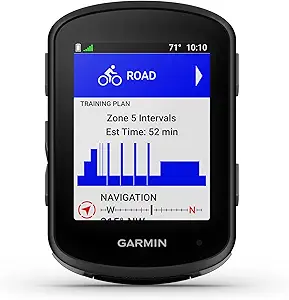 | Best for Long-Distance Training | Battery life: Up to 26 hours in demanding use; up to 42 hours in battery-saver mode | Navigation: Multi-band GNSS | Maps: Ride-type-specific maps with points of interest | VIEW LATEST PRICE | See Our Full Breakdown |
| Garmin Edge 1050 Premium Cycling Computer |  | Best Premium | Screen: 3.5-inch capacitive color touchscreen | Display type: LCD | Battery life: Up to 20 hours in demanding use; up to 60 hours in battery saver mode | VIEW LATEST PRICE | See Our Full Breakdown |
| CATEYE Padrone Wireless Bike Computer |  | Best for Simple, Readable Ride Stats | Display size: 5.5 cm | Display type: LCD | Battery life: Average battery life of 1 year | VIEW LATEST PRICE | See Our Full Breakdown |
| COOSPO CS600 Color Touchscreen GPS Bike Computer |  | Best for Long GPS Rides | Screen: 2.4-inch color touchscreen with auto-backlight | Battery life: Up to 36 hours | Charging: USB-C; 2-hour charge | VIEW LATEST PRICE | See Our Full Breakdown |
| Wahoo ELEMNT ROAM V3 GPS Cycling Computer |  | Best for Reliable Route Guidance | Display: 2.8-inch LCD, 480 × 800 resolution | Battery life: Up to 25 hours | Satellite systems: GPS, GLONASS, BeiDou, Galileo, QZSS, SBAS, NavIC | VIEW LATEST PRICE | See Our Full Breakdown |
| Garmin Edge 850 Compact GPS Cycling Computer | | Best Compact Garmin for Mixed-Terrain Riding | Screen: 2.7-inch LCD capacitive touchscreen | Controls: Touchscreen and buttons | Battery life: 12 hours standard; up to 36 hours in battery saver mode | VIEW LATEST PRICE | See Our Full Breakdown |
| CYCPLUS G1 Wireless GPS Bike Computer |  | Best for Simple, Long-Distance Ride Tracking | Display: 2 inches, backlit | Weight: 70 g | Battery: 1200 mAh Lithium Polymer | VIEW LATEST PRICE | See Our Full Breakdown |
| iGPSPORT BSC300T Wireless GPS Bike Computer with Touchscreen and Offline Maps |  | Best Value for Offline Navigation | Screen: 2.4-inch touchscreen | Controls: Touchscreen and six buttons | Satellite systems: GPS, BeiDou, GLONASS, Galileo, QZSS | VIEW LATEST PRICE | See Our Full Breakdown |
| iGPSPORT BSC500 GPS Bike Computer with 3.3-Inch Touchscreen and Voice Navigation |  | Best for Large-Screen Route Guidance | Screen: 3.3-inch touchscreen | Controls: Touchscreen and buttons | Data display: Up to 12 cycling data points per page | VIEW LATEST PRICE | See Our Full Breakdown |
| Garmin Edge Explore 2 GPS Cycling Navigator |  | Best for Touring and E-Bike Navigation | Display: 3-inch high-resolution touchscreen | GPS: Built-in | Navigation: Preloaded road, off-road, and indoor profiles; ride-specific maps; searchable points of interest; e-bike routing | VIEW LATEST PRICE | See Our Full Breakdown |
| iGPSPORT BSC200S GPS Bike Computer with Route Navigation |  | Best for Balanced Navigation and Battery Detail | Display: 2.4-inch semi-transparent, semi-reflective color screen | Battery: 600 mAh | Battery life: Up to 25 hours | VIEW LATEST PRICE | See Our Full Breakdown |
| cycling computer | Connectivity | Battery life |
|---|---|---|
| Wahoo ELEMNT BOLT V3 GPS Bike | Bluetooth, ANT+, Wi-Fi, and USB | Listed as 20 hours |
| CatEye Urban Wireless Bike Com | Wireless | — |
| Garmin Edge 840 GPS Cycling Co | Bluetooth, USB, and Wi-Fi | Up to 26 hours; up to 32 hours in battery-saver mode |
| Garmin Edge 550 Compact GPS Cy | Bluetooth, USB, and Wi-Fi | Up to 12 hours in demanding use; up to 36 hours in battery-saver mode |
| Garmin Edge 540 | — | Up to 26 hours in demanding use; up to 42 hours in battery-saver mode |
| Garmin Edge 1050 Premium Cycli | Bluetooth, USB, Wi-Fi | Up to 20 hours in demanding use; up to 60 hours in battery saver mode |
| CATEYE Padrone Wireless Bike C | — | Average battery life of 1 year |
| COOSPO CS600 Color Touchscreen | Bluetooth, ANT+, Wi-Fi via app | Up to 36 hours |
| Wahoo ELEMNT ROAM V3 GPS Cycli | Bluetooth, USB, Wi-Fi | Up to 25 hours |
| Garmin Edge 850 Compact GPS Cy | Bluetooth, USB, Wi-Fi | 12 hours standard; up to 36 hours in battery saver mode |
| CYCPLUS G1 Wireless GPS Bike C | Wireless | — |
| iGPSPORT BSC300T Wireless GPS | ANT+, Bluetooth 5.0 | — |
| iGPSPORT BSC500 GPS Bike Compu | — | — |
| Garmin Edge Explore 2 GPS Cycl | — | — |
| iGPSPORT BSC200S GPS Bike Comp | Bluetooth, ANT+ | Up to 25 hours |
More Details on Our Top Picks
Wahoo ELEMNT BOLT V3 GPS Bike Computer, Black
The Wahoo ELEMNT BOLT V3 suits riders who want route guidance and connected ride data without the training-heavy focus of Garmin’s Edge 840. Its turn-by-turn navigation, route syncing, and on-demand route generation can make unfamiliar rides easier to follow, while Bluetooth, ANT+, and Wi-Fi support pairing with sensors and syncing rides. The 2.3-inch color LCD keeps the unit compact, and button controls are practical when gloves or wet conditions make touch input awkward. Compared with the simpler CatEye Urban, it offers much richer mapping and connectivity, but also depends more on a phone for features such as live tracking and smart notifications. The listed 20-hour battery life is useful for long day rides, though the product text reports conflicting display and battery details, so buyers should verify those specifications before choosing it.
Pros:- Turn-by-turn guidance, route syncing, and on-demand route generation support varied rides.
- Bluetooth, ANT+, and Wi-Fi accommodate sensor pairing and ride syncing.
- Compact 2.3-inch color display with tactile button controls.
- IPX7 water resistance and listed 20-hour battery life suit long rides in changeable weather.
Cons:- Live tracking and smart notifications require a paired smartphone.
- Product information gives conflicting display-size and battery-life details.
- Its navigation and connectivity are more than riders need for basic speed and distance tracking.
Best for: Road and gravel riders who want compact turn-by-turn navigation, connected sensors, and route syncing without prioritizing advanced coaching.
Not ideal for: Riders seeking a basic, phone-independent speed and distance display, or buyers who need fully consistent published specifications before purchase.
- Display:2.3-inch color LCD
- Battery life:Listed as 20 hours
- Weight:84 g
- Connectivity:Bluetooth, ANT+, Wi-Fi, and USB
- Sensors:Heart rate, cadence, and speed
- Water resistance:IPX7
- Controls and mount:Buttons; handlebar mount
- Battery type:Lithium-ion
Our verdict“Choose the BOLT V3 for compact, connected route guidance, but check its published display and battery specifications if those details will determine your purchase.”
CatEye Urban Wireless Bike Computer
The CatEye Urban Wireless is the straightforward choice for riders who want useful ride statistics without GPS maps, phone pairing, or a menu of training tools. It records current, average, and maximum speed alongside distance, elapsed time, calories, pace, and clock time. Auto-stop pauses elapsed time and average-speed calculations at stops, giving commuters and casual riders a more representative moving-ride record. Its FlexTight bracket is easy to adjust, and the odometer can be restored manually after a battery change. That simplicity is its advantage over the Wahoo ELEMNT BOLT V3, which adds route guidance and connected features; it is also the limitation. The CatEye offers no listed GPS navigation or sensor connectivity, so it cannot provide the mapping, live tracking, or expandable data options of the Garmin Edge 840. Choose it for basic metrics, not route planning.
Pros:- Tracks speed, trip and total distance, elapsed time, calories, pace, and clock time.
- Auto-stop pauses timing and average-speed calculations when the rider stops.
- Wireless operation avoids a handlebar cable.
- FlexTight bracket is designed for easy mounting and adjustment.
Cons:- No listed GPS navigation, route syncing, or smartphone connectivity.
- Odometer must be set manually after a battery change.
- Provides less expandable ride data than the Wahoo ELEMNT BOLT V3 or Garmin Edge 840.
Best for: Commuters and recreational cyclists who want at-a-glance speed, distance, and ride-time statistics without GPS or smartphone setup.
Not ideal for: Riders who need mapped routes, GPS tracking, connected sensors, or automatic odometer retention after a battery replacement.
- Connectivity:Wireless
- Speed data:Current, maximum, and average speed
- Distance data:Trip and total distance
- Additional tracking:Elapsed time, calories, pace arrow, and clock
- Auto-stop:Pauses elapsed time and average-speed calculations when stopped
- Mount:FlexTight bracket
- Odometer:Can be set manually after battery replacement
Our verdict“Pick the CatEye Urban for simple, wireless ride stats; choose a GPS computer instead if you need maps, route guidance, or connected sensors.”
Garmin Edge 840 GPS Cycling Computer
The Garmin Edge 840 brings navigation and structured training together in one unit, making it a stronger match for riders who want more than route prompts and basic ride recording. Its multi-band GNSS supports positioning, while the 2.6-inch screen combines a capacitive touchscreen with physical buttons. That dual-input design gives riders a choice when conditions make touch controls less convenient. Garmin’s adaptive training guidance and performance insights add a coaching layer missing from the simpler CatEye Urban and more navigation-focused Wahoo ELEMNT BOLT V3. The tradeoff is that some training metrics depend on a compatible heart-rate monitor and power meter, so the computer alone may not deliver the full coaching picture. With up to 26 hours in demanding use and 32 hours in battery-saver mode, it also offers longer stated runtime than the Edge 550 in demanding use.
Pros:- Multi-band GNSS supports enhanced positioning for navigation.
- Adaptive coaching, workout prompts, and performance insights support structured training.
- Touchscreen and physical buttons offer two ways to control the device.
- Battery life is listed at up to 26 hours in demanding use or 32 hours in battery-saver mode.
Cons:- Some training and performance features require a compatible power meter and heart-rate monitor.
- Its coaching and data tools are more involved than the basic CatEye Urban’s ride-stat tracking.
- The touchscreen adds a control option but may be less convenient than buttons alone in some riding conditions.
Best for: Data-focused road and gravel cyclists who want GPS navigation, adaptive training guidance, and both touchscreen and button controls.
Not ideal for: Casual riders seeking a simple speedometer or cyclists who do not plan to use compatible heart-rate and power sensors for training features.
- Screen:2.6-inch LCD, 240 × 320 resolution
- Controls:Buttons and capacitive touchscreen
- Battery life:Up to 26 hours; up to 32 hours in battery-saver mode
- Storage:32 GB
- Navigation:GPS and multi-band GNSS
- Connectivity:Bluetooth, USB, and Wi-Fi
- Map coverage:North America
- Mount:Handlebar mount
Our verdict“Choose the Edge 840 if you want a capable navigation computer with built-in training guidance and will use compatible sensors to support its performance features.”
Garmin Edge 550 Compact GPS Cycling Computer
The Garmin Edge 550 is a compact option for riders who want preloaded road, gravel, and trail maps but prefer physical controls over a touchscreen. Its 2.7-inch color display, 32 GB of storage, and buttons give it a map-focused setup that is easy to distinguish from the touchscreen-and-button Edge 840. The Edge 550 adds training insights and smart fueling alerts, while incident detection and LiveTrack provide connected safety tools when paired with a compatible phone and sensors. Battery life needs a closer look: it is listed at up to 12 hours in demanding use, rising to 36 hours in battery-saver mode. That makes it less compelling than the Edge 540 for riders who want longer stated runtime under demanding use, though the Edge 550’s listed maps and fueling features may suit riders who value on-ride guidance more.
Pros:- Preloaded maps cover road, gravel, and trail riding.
- Button-only controls avoid reliance on a touchscreen.
- Smart fueling alerts and training insights add on-ride guidance.
- Battery-saver mode is listed for up to 36 hours.
Cons:- No touchscreen, unlike the Garmin Edge 840.
- Demanding-use battery life is listed at up to 12 hours, below the Edge 840’s 26 hours.
- Connected safety features require a compatible smartphone and sensors.
Best for: Road, gravel, and trail cyclists who want preloaded maps, training and fueling prompts, and dependable button controls.
Not ideal for: Riders who want a touchscreen, need long runtime with demanding features enabled, or prefer connected functions that work without a smartphone and sensors.
- Display:2.7-inch color LCD, 420 × 600 resolution
- Touchscreen:No
- Controls:Buttons
- Battery life:Up to 12 hours in demanding use; up to 36 hours in battery-saver mode
- Storage:32 GB
- Satellite systems:GPS, GLONASS, and Galileo
- Connectivity:Bluetooth, USB, and Wi-Fi
- Map coverage:North America
Our verdict“Pick the Edge 550 if preloaded all-road maps and button controls matter more than touchscreen operation or longer demanding-use battery life.”
Garmin Edge 540, Compact GPS Cycling Computer
The Garmin Edge 540 makes the strongest case here for riders who prioritize long runtimes and training data in a compact GPS computer. Its listed battery life reaches up to 26 hours in demanding use and up to 42 hours in battery-saver mode, exceeding the Edge 840’s stated runtime in both modes. Multi-band GNSS and ride-specific maps with points of interest support route finding, while ClimbPro, stamina insights, personalized coaching, and ride prompts help turn recorded data into ride decisions. Compared with the Edge 550, the 540’s standout is its longer listed battery life; the 550 instead specifies preloaded road, gravel, and trail maps plus smart fueling alerts. The 540’s feature set may take time to learn, and compatible sensors are needed for full functionality, so its training tools make less sense for riders who only want navigation.
Pros:- Listed battery life reaches up to 26 hours in demanding use and 42 hours in battery-saver mode.
- Multi-band GNSS supports accurate positioning for navigation.
- ClimbPro, stamina insights, personalized coaching, and ride prompts support training decisions.
- Ride-specific maps include points of interest.
Cons:- The feature set may require a learning period for riders new to training computers.
- Compatible sensors are needed for full functionality.
- The supplied specifications do not state display size, resolution, or control type.
Best for: Endurance cyclists and structured-training riders who want long battery life, mapped navigation, climb planning, and coaching prompts.
Not ideal for: Casual riders seeking a simple interface, cyclists who want touchscreen controls, or buyers who will not use compatible sensors for expanded training data.
- Battery life:Up to 26 hours in demanding use; up to 42 hours in battery-saver mode
- Navigation:Multi-band GNSS
- Maps:Ride-type-specific maps with points of interest
- Climb planning:ClimbPro ascent planner
- Training and performance:Stamina insights, personalized coaching, and ride prompts
Our verdict“Choose the Edge 540 if long battery life and training features matter more than a touchscreen or a simpler setup.”
Garmin Edge 1050 Premium Cycling Computer
The Edge 1050 is the premium choice here for riders who want a large, vivid screen and a broad set of navigation, training, and connected-ride tools in one unit. Its 3.5-inch color touchscreen gives maps and ride data more room than the smaller Wahoo ELEMNT ROAM V3 display, which can make route guidance easier to scan. A built-in speaker adds audible prompts and a bike-bell feature, while 64 GB of storage supports its map and ride functions. Battery life reaches 20 hours in demanding use, or up to 60 hours in saver mode. The tradeoff is that its extensive feature set may be more computer than casual riders need, and connected or personalized training functions depend on a smartphone, app, and compatible sensors.
Pros:- Large 3.5-inch color touchscreen gives maps and ride data generous viewing space.
- Navigation, training tools, and connected ride features cover more than basic tracking.
- Battery life reaches up to 60 hours in battery saver mode.
- Built-in speaker provides prompts and a bike-bell feature.
Cons:- Some connected features depend on a compatible smartphone and Garmin Connect app.
- Personalized training features require a compatible power meter and heart rate monitor.
- Its extensive interface and feature set may be unnecessary for riders who only need basic ride metrics.
Best for: Dedicated road and gravel riders who want a large touchscreen, detailed navigation, training tools, and connected ride features in one computer.
Not ideal for: Casual cyclists who mainly want speed and distance, or riders who prefer a small, simple computer without smartphone and sensor dependencies.
- Screen:3.5-inch capacitive color touchscreen
- Display type:LCD
- Battery life:Up to 20 hours in demanding use; up to 60 hours in battery saver mode
- Storage:64 GB
- Satellite systems:GPS, GLONASS, Galileo
- Map coverage:North America
- Connectivity:Bluetooth, USB, Wi-Fi
- Audio:Built-in speaker
Our verdict“Choose the Edge 1050 if you want the roundup’s largest screen and broadest premium feature set, and can make use of its app- and sensor-dependent tools.”
CATEYE Padrone Wireless Bike Computer
The CATEYE Padrone is the straightforward pick for riders who want core ride figures at a glance, not GPS maps or a training dashboard. Its 5.5 cm LCD gives speed, distance, time, and clock readings plenty of room, while the wireless front-wheel sensor avoids a cable running along the fork. Compared with the GPS-equipped COOSPO CS600, the Padrone is far simpler to set up and use, but it cannot record GPS routes or provide navigation. Auto start/stop pauses timing when you stop, and the FlexTight bracket allows tool-free mounting adjustments. That simplicity also sets a firm ceiling: its analog sensor is front-wheel-only, and riders who want route tracking, sensor expansion, or detailed post-ride analysis should choose a GPS computer instead.
Pros:- Large LCD makes several basic ride metrics easy to read while riding.
- Wireless front-wheel sensor avoids a wired installation.
- FlexTight bracket allows tool-free mounting and adjustment.
- Auto start/stop pauses ride timing when the bike stops.
Cons:- No GPS means it cannot record routes or provide navigation.
- Analog sensor is limited to front-wheel use.
- Offers fewer tracking and training options than GPS computers such as the COOSPO CS600.
Best for: Commuters and recreational riders who want an easy-to-read speedometer and odometer without GPS setup or app-based features.
Not ideal for: Riders who need route navigation, GPS ride records, or compatibility with advanced training sensors.
- Display size:5.5 cm
- Display type:LCD
- Battery life:Average battery life of 1 year
- Sensor:Analog wireless, front-wheel use
- Mount:Handlebar mount with FlexTight bracket
- Controls:ClickTec buttons
- Weight:1.12 ounces
- Dimensions:2.66 × 1.69 × 0.57 inches
Our verdict“Pick the Padrone for clear, basic ride stats and low setup complexity, but skip it if you want maps or GPS-based ride records.”
COOSPO CS600 Color Touchscreen GPS Bike Computer
The COOSPO CS600 suits riders who want GPS navigation and a color touchscreen, with stamina for long days away from a charger. Its stated 36-hour battery life outlasts the Wahoo ELEMNT ROAM V3’s 25 hours, making the CS600 a strong fit for extended rides or multi-day outings where charging access is limited. GPS and GLONASS tracking, built-in route navigation, and IPX7 water resistance add useful capability beyond the basic CATEYE Padrone. The 2.4-inch display is smaller than the Garmin Edge 1050’s, though, and the feature set leans on the companion app for syncing and sharing. Cadence, heart-rate, and power sensors are supported but sold separately, so riders building a training setup need to account for those extra components.
Pros:- Up to 36 hours of battery life supports long rides between charges.
- GPS and GLONASS tracking pair with built-in route navigation.
- Color touchscreen includes automatic backlighting.
- IPX7 water resistance and Bluetooth and ANT+ support broaden its riding use.
Cons:- Cadence, heart-rate, and power sensors are sold separately.
- The 2.4-inch screen is smaller than the Garmin Edge 1050 display.
- Full syncing and sharing features rely on the companion app.
Best for: Riders planning long GPS-tracked rides who want a color touchscreen, route navigation, and broad sensor compatibility.
Not ideal for: Cyclists who want sensors included, minimal app involvement, or a larger screen for reading maps and data.
- Screen:2.4-inch color touchscreen with auto-backlight
- Battery life:Up to 36 hours
- Charging:USB-C; 2-hour charge
- Satellite systems:GPS, GLONASS
- Water resistance:IPX7
- Connectivity:Bluetooth, ANT+, Wi-Fi via app
- Supported sensors:Cadence, heart rate, and power sensors; sold separately
- App integration:COOSPO Ride app, Strava, TrainingPeaks
Our verdict“Choose the CS600 if long battery life and GPS navigation matter more than a larger screen or included training sensors.”
Wahoo ELEMNT ROAM V3 GPS Cycling Computer
The Wahoo ELEMNT ROAM V3 is a navigation-focused option for riders who want turn-by-turn directions without stepping up to the larger Garmin Edge 1050. Its 2.8-inch display sits between the CS600’s 2.4 inches and the Edge 1050’s 3.5 inches, balancing map visibility against a more compact handlebar fit. Dual-band GPS and support for a wide range of satellite systems are designed to help track rides in challenging settings, while routes can be imported or selected on the device or in the companion app. At 25 hours of battery life, it falls short of the CS600’s 36 hours but still covers many long rides. Product information is inconsistent about the V2/V3 name and whether listed heart-rate and cadence sensors are included, so buyers should verify what comes in the package.
Pros:- Turn-by-turn directions work with imported routes and selected destinations.
- Dual-band GPS and multiple supported satellite systems suit varied riding environments.
- Routes can be shared with nearby ELEMNT devices.
- Up to 25 hours of battery life supports extended rides.
Cons:- Battery life is shorter than the COOSPO CS600’s stated 36 hours.
- Product content inconsistently identifies the unit as V2 and V3.
- Sensor listings do not clarify whether heart-rate and cadence sensors are included.
Best for: Route-focused riders who want turn-by-turn guidance, broad satellite support, and route sharing with nearby ELEMNT devices.
Not ideal for: Riders who prioritize the longest battery life, a large screen, or certainty about included heart-rate and cadence sensors.
- Display:2.8-inch LCD, 480 × 800 resolution
- Battery life:Up to 25 hours
- Satellite systems:GPS, GLONASS, BeiDou, Galileo, QZSS, SBAS, NavIC
- Navigation:Turn-by-turn directions for imported routes and selected destinations
- Connectivity:Bluetooth, USB, Wi-Fi
- Water resistance:IPX7
- Mounting:Handlebar mount
- Weight:109 g
Our verdict“Choose the ROAM V3 for route guidance and broad satellite support, after confirming the model identity and included accessories with the seller.”
Garmin Edge 850 Compact GPS Cycling Computer
The Garmin Edge 850 brings a compact form to GPS navigation, performance tracking, and smart connectivity. Its 2.7-inch touchscreen with button controls offers a smaller alternative to the Edge 1050’s expansive 3.5-inch display, while preloaded maps for road, gravel, and trail riding give it broader terrain appeal than the basic CATEYE Padrone. For riders who want trail maps, smart alerts, and contactless payments without a large computer on the bars, that balance is the main draw. Battery life is the key compromise: it is rated for 12 hours in standard use and up to 36 hours in saver mode, so demanding rides may require more frequent charging than the CS600’s stated 36-hour run time. Some connected features also depend on a compatible smartphone and app.
Pros:- Compact 2.7-inch color touchscreen combines touch and button controls.
- Preloaded maps cover road, gravel, and trail riding.
- Battery saver mode extends stated battery life to 36 hours.
- Smart connectivity includes alerts and Garmin Pay.
Cons:- Standard battery life is listed at 12 hours, limiting demanding long rides between charges.
- Some features require a compatible smartphone and app.
- Its navigation and smart features may be unnecessary for riders who only want basic ride data.
Best for: Road, gravel, and trail riders who want Garmin mapping and smart features in a more compact unit than the Edge 1050.
Not ideal for: Riders taking frequent long rides in standard mode, or casual cyclists who do not need maps, training data, or smart features.
- Screen:2.7-inch LCD capacitive touchscreen
- Controls:Touchscreen and buttons
- Battery life:12 hours standard; up to 36 hours in battery saver mode
- Map coverage:North America
- Map types:Road, gravel, and trail
- Satellite systems:GPS, GLONASS, Galileo
- Connectivity:Bluetooth, USB, Wi-Fi
- Operating system:Garmin OS
Our verdict“Choose the Edge 850 if you want Garmin mapping and smart features in a compact computer, and can plan around its 12-hour standard battery life.”
CYCPLUS G1 Wireless GPS Bike Computer
I’d choose the CYCPLUS G1 for riders who want GPS-recorded rides and core metrics without paying for advanced route guidance or a large touchscreen. Its 2-inch backlit display shows time, distance, mileage, and altitude, while the stated runtime is unusually long for a straightforward computer. Compared with the navigation-focused iGPSPORT BSC200S, the G1 keeps things simpler but gives up route prompts and app-connected features. Its IPX6 water resistance and automatic sleep mode suit regular outdoor use, though the supplied battery figures conflict: one section says over 55 hours, while another lists 50. The button-based interface is less elaborate than the touchscreens on the Garmin Edge Explore 2 and other iGPSPORT models, but that restraint may appeal to riders who mainly need dependable ride data.
Pros:- GPS tracks routes and displays key ride metrics, including altitude
- Backlit 2-inch screen supports visibility in daytime and at night
- IPX6 water resistance suits rides in wet conditions
- Automatic sleep mode and long stated runtime reduce charging interruptions
Cons:- Battery-life information is inconsistent, listing both 50 hours and over 55 hours
- Does not offer the route guidance and app-linked navigation found on the iGPSPORT BSC200S
- The supplied details do not specify sensor or app connectivity
Best for: Road and recreational riders who want GPS route recording, basic ride metrics, and long stated runtime without advanced navigation features.
Not ideal for: Riders who need turn-by-turn guidance, offline maps, sensor connectivity details, or a large color touchscreen.
- Display:2 inches, backlit
- Weight:70 g
- Battery:1200 mAh Lithium Polymer
- Stated battery life:50 hours in product information; over 55 hours in description
- Water resistance:IPX6
- Connectivity:Wireless
- Mounting:Handlebar mount
- Controls:Buttons
- Warranty:Two years
Our verdict“Choose the CYCPLUS G1 if you want a simple GPS computer with a long stated runtime and can do without advanced navigation.”
iGPSPORT BSC300T Wireless GPS Bike Computer with Touchscreen and Offline Maps
The iGPSPORT BSC300T makes sense for riders who want route guidance and training data in one device. Its offline maps, turn prompts, and off-course warnings provide more navigation support than the simpler CYCPLUS G1, while the 2.4-inch touchscreen and six buttons give riders more than one way to interact. With 130-plus riding metrics and support for speed, cadence, and heart-rate sensors, it can grow with a rider moving from casual outings to more structured training. It also works with road bikes, mountain bikes, and e-bikes and connects to Strava and Komoot. The tradeoff is incomplete practical information: the supplied details give no battery-life figure, and the screen’s resolution or physical dimensions beyond its diagonal are unspecified. Riders who want a larger display and voice navigation may prefer the iGPSPORT BSC500.
Pros:- Offline maps, turn prompts, and off-course alerts support route riding without constant phone guidance
- Tracks more than 130 riding metrics for training and ride analysis
- Supports GPS, BeiDou, GLONASS, Galileo, and QZSS satellite systems
- ANT+ and Bluetooth 5.0 connect compatible sensors and riding apps
Cons:- Battery-life information is not provided
- Screen resolution and full physical dimensions are not specified
- Its 2.4-inch display is smaller than the iGPSPORT BSC500’s 3.3-inch screen
Best for: Riders who want offline route guidance, sensor support, and extensive ride data across road, mountain, or e-bike use.
Not ideal for: Riders who need confirmed battery endurance or prefer a larger screen with voice navigation, such as the iGPSPORT BSC500 offers.
- Screen:2.4-inch touchscreen
- Controls:Touchscreen and six buttons
- Satellite systems:GPS, BeiDou, GLONASS, Galileo, QZSS
- Riding data:More than 130 metrics
- Connectivity:ANT+, Bluetooth 5.0
- Navigation:Offline maps, route preview, turn prompts, off-course warnings
- App compatibility:iGPSPORT app, Strava, Komoot
- Bike compatibility:Road bikes, mountain bikes, e-bikes
- Sensor compatibility:Speed, cadence, and heart-rate sensors; smart trainers
Our verdict“Pick the BSC300T if offline maps and broad sensor support matter more to you than a larger screen or clearly specified battery life.”
iGPSPORT BSC500 GPS Bike Computer with 3.3-Inch Touchscreen and Voice Navigation
For riders who want navigation to be easy to read at a glance, the iGPSPORT BSC500 is the most screen-focused choice in this group. Its 3.3-inch touchscreen can show up to 12 data points per page, giving riders more room to see ride stats without cycling through as many screens. It also adds voice navigation, automatic rerouting, and speed-adaptive turn alerts, a more guided approach than the offline map and prompt setup on the smaller iGPSPORT BSC300T. Dual-band positioning and five satellite systems support route tracking, while hill previews and training analysis broaden its appeal beyond navigation. The tradeoff is missing practical specification detail: battery life and water resistance are not provided. Route imports also depend on compatible apps or route files, so riders seeking a self-contained navigation setup may prefer the Garmin Edge Explore 2.
Pros:- Large 3.3-inch touchscreen and button controls offer flexible interaction
- Displays up to 12 cycling data points per page
- Voice guidance, automatic rerouting, and speed-adaptive turn alerts support route following
- Dual-band positioning, hill previews, and training analysis add navigation and performance tools
Cons:- Battery life and water resistance are not specified
- Route planning and imports rely on compatible apps or files
- Larger screen may be more than riders need for simple ride tracking
Best for: Riders who want a large screen, several ride metrics visible together, and voice-guided routes with rerouting.
Not ideal for: Riders who need stated battery endurance or water-resistance information, or who want route planning independent of apps and files.
- Screen:3.3-inch touchscreen
- Controls:Touchscreen and buttons
- Data display:Up to 12 cycling data points per page
- Positioning:Dual-band L1/L5; GPS, BeiDou, GLONASS, Galileo, QZSS
- Route support:iGPSPORT App, Strava, Komoot, and route files
- Navigation:Speed-adaptive turn alerts, automatic rerouting, voice navigation
- Additional features:Continue Last Ride, iClimb 2.0, training analysis
- Included accessories:Rubber pad, two rubber bands, user manual
Our verdict“Choose the BSC500 if you value a large, data-rich display and guided rerouting more than clearly documented battery and weather specifications.”
Garmin Edge Explore 2 GPS Cycling Navigator
The Garmin Edge Explore 2 puts route planning ahead of dense training metrics, making it a strong fit for riders whose main goal is getting around by bike. Its 3-inch high-resolution touchscreen is designed for sunlight, rain, and glove use, and ride-specific maps include searchable points of interest and e-bike routing. That broader navigation focus sets it apart from the iGPSPORT BSC500: the BSC500 offers voice navigation, rerouting, and many data points per page, while Garmin emphasizes map-led rides and connected safety features. LiveTrack, incident detection, and rider messaging can add reassurance, though several connected tools require a compatible phone or e-bike. Sensor and Varia compatibility also means extra purchases for riders who want those functions. I’d favor this over the more training-oriented computers in the lineup for touring, exploration, and e-bike trips.
Pros:- Glove- and rain-friendly touchscreen is designed for visibility in direct sunlight
- Preloaded road, off-road, and indoor profiles support varied riding
- Ride-specific maps, searchable points of interest, and e-bike routing aid trip planning
- LiveTrack and incident detection add connected safety options
Cons:- Compatible sensors and Varia devices are sold separately
- Several connected features require a compatible smartphone or e-bike
- Its feature mix favors navigation over the dense ride-data presentation of the iGPSPORT BSC500
Best for: Touring cyclists and e-bike riders who prioritize readable maps, searchable destinations, and connected ride-safety tools.
Not ideal for: Riders seeking extensive training analysis or who do not want connected features to depend on a compatible phone or separately purchased accessories.
- Display:3-inch high-resolution touchscreen
- GPS:Built-in
- Navigation:Preloaded road, off-road, and indoor profiles; ride-specific maps; searchable points of interest; e-bike routing
- Touchscreen use:Designed for gloves, rain, and direct sunlight
- Connectivity features:LiveTrack, GroupTrack, smart notifications, rider-to-rider messaging, incident detection
- Compatible sensors:Heart-rate, speed, and cadence sensors
- Compatible accessories:Varia cycling awareness devices, sold separately
Our verdict“Choose the Edge Explore 2 if map-led touring or e-bike routing matters more than a training-focused display of ride metrics.”
iGPSPORT BSC200S GPS Bike Computer with Route Navigation
The iGPSPORT BSC200S suits riders who want route guidance and a strong set of everyday ride tools without stepping up to the larger iGPSPORT BSC500. Its 2.4-inch color display is designed for sunlight visibility, and the stated battery life of up to 25 hours gives buyers a clearer endurance figure than the BSC300T and BSC500 listings provide. Route navigation, turn reminders, one-touch navigation, and Back to Start cover useful ride scenarios, while IPX7 water resistance adds a defined protection rating. It also tracks more than 100 metrics and stores up to 400 hours of ride data. The compromises are app dependence for some route features and limited notifications. Compared with the Garmin Edge Explore 2, it offers a more compact, data-oriented feature set but lacks the listed map and connected safety depth.
Pros:- Up to 25 hours of stated battery life and USB Type-C charging
- Route navigation includes turn reminders, Back to Start, and riding-record navigation
- Tracks over 100 metrics and stores up to 400 hours of ride data
- IPX7 water resistance and ANT+ and Bluetooth connectivity
Cons:- Some route setup and features rely on the iGPSPORT app
- Notifications are limited to calls, SMS, and some apps
- Navigation details are less extensive than the Garmin Edge Explore 2’s maps and searchable points of interest
Best for: Everyday road and recreational riders who want route prompts, a stated battery runtime, and broad ride-data tracking in a compact computer.
Not ideal for: Tourers who need detailed map-led navigation, searchable points of interest, or the connected safety tools offered by the Garmin Edge Explore 2.
- Display:2.4-inch semi-transparent, semi-reflective color screen
- Battery:600 mAh
- Battery life:Up to 25 hours
- Charging:USB Type-C; 1.5-hour charging time
- Water resistance:IPX7
- Connectivity:Bluetooth, ANT+
- Riding data:More than 100 metrics
- Data storage:Up to 400 hours of riding data
- Navigation:Route navigation, one-touch navigation, Back to Start, riding record navigation
Our verdict“Pick the BSC200S if you want practical route guidance, broad ride tracking, and a stated 25-hour runtime without needing touring-focused maps.”
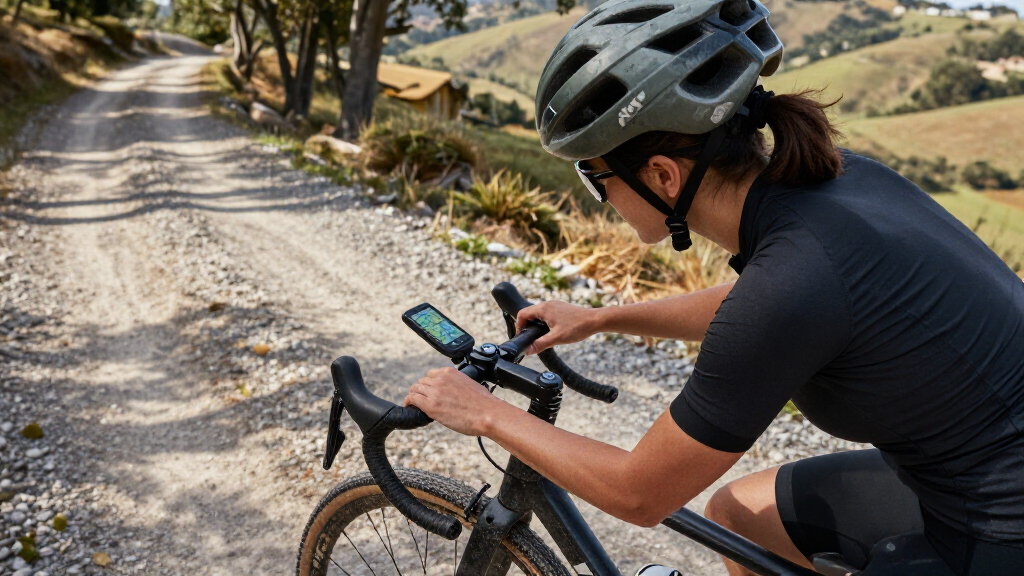
How We Picked
I compared these 15 cycling computers by how well their feature sets match distinct riding needs, rather than treating the longest feature list as an automatic win. The main criteria were navigation usefulness, readability and control layout, ride-data and sensor support, battery-life claims where specified, mounting and weather suitability, and the amount of setup or connected-device complexity a buyer may face.
The ranking gives priority to versatility for regular riding, clear differences in intended use, and practical value in features—not price. That puts the Wahoo ELEMNT BOLT V3 first as a balanced GPS choice, with the Garmin Edge 840 close behind for riders who want broader training and control options. Dedicated navigation, premium screen experiences, compact GPS units, and basic wireless computers rank according to how well they serve a narrower buyer. Product details can vary by package or version, so I would check the manufacturer’s current specifications and included accessories before buying.
Factors to Consider When Choosing Best Cycling Computers
Choose a cycling computer around the rides you actually do, not the feature list you might use someday. These decisions affect whether the device is easy to read, simple to operate, and dependable on your routes.
Match Navigation to Your Routes
A line showing where you are is not the same as a map that can guide you through unfamiliar streets or trails. Riders who repeat familiar loops may be happy with GPS recording and basic route guidance, while touring and exploration put more value on readable maps and clear turn prompts. Before choosing a navigation-focused model, check whether route planning happens on the device, in a companion app, or through an imported route. Offline maps can help where mobile coverage is unreliable, but they still need suitable map coverage and a route prepared ahead of time. A common mistake is paying for elaborate mapping when you only need distance and speed—or assuming every GPS device can reroute in the same way.
Pick Controls for the Conditions You Ride In
Touchscreens can make scrolling maps and changing screens feel direct, but wet weather, gloves, and vibration can make button controls easier to use. Buttons also let you change data screens without relying on finger precision, while touch controls can reduce the number of physical presses. Think about when you will operate the computer: setting it up at home is different from changing a route mid-ride. If you ride in cold weather or often wear gloves, check how the control scheme behaves with them rather than focusing on screen technology alone. The best interface is the one you can operate safely without taking attention away from the road.
Buy the Screen You Can Read, Not Just the One With More Data
A larger display can make maps and several data fields easier to see at a glance, but it takes up more handlebar space. A compact unit may fit neatly beside lights, a phone mount, or an aero bar setup, though crowded data pages can be harder to scan. Decide which fields matter while riding and prioritize legibility over the number of metrics you can display. Brightness, contrast, and screen layout matter alongside diagonal size, especially in changing light. Avoid assuming a bigger screen automatically improves navigation if the interface makes route cues or key numbers difficult to spot.
Check Sensor and Device Compatibility Before You Buy
A cycling computer becomes more useful when it works with the sensors and devices you already own. Check the computer’s support for common connections such as ANT+ and Bluetooth, then confirm compatibility with the specific heart-rate monitor, power meter, cadence sensor, radar, or indoor trainer you plan to pair. Having both connection types can offer flexibility, but it does not guarantee every accessory will work as expected. Also check whether the features you want depend on a phone, an app account, or a particular ecosystem. This step can prevent a capable-looking unit from becoming an awkward fit with your existing setup.
Treat Battery Life as a Route-Planning Requirement
Battery life matters most when your rides are long, navigation stays active, or charging opportunities are scarce. A stated runtime is a reference point, not a promise that every screen, sensor, and wireless connection will be used at the same time. Compare the manufacturer’s stated endurance with your longest typical ride and leave room for aging batteries and unexpected delays. A shorter commute computer may not need a large battery, while a touring or endurance rider should give runtime more weight than extra training screens. Check charging and mounting arrangements too, since a device that is difficult to top up can complicate multi-day trips.
Choose Simplicity Deliberately
A basic wireless computer can be the right choice if speed, elapsed time, and distance are all you need. GPS models usually add route recording and mapping, but they can also mean more menus, setup, and charging. A simple unit is not a weak version of a premium computer if it matches your riding habits; it is a focused tool with fewer distractions. On the other hand, buying a basic display and later adding navigation or sensor support may mean replacing the whole unit. Write down the functions you will use every week, then decide whether features beyond that list solve a real problem or simply make the device more complicated.
Frequently Asked Questions
Is a GPS cycling computer worth choosing over a basic wireless computer?
A GPS computer makes sense if you want ride recording, route guidance, or training data without relying on a speed sensor for every measurement. A basic wireless model is a sensible match for familiar commutes and rides where speed and distance are enough. The difference is not just how much data appears on the screen: GPS models also bring charging, device setup, and potentially more menus. If you rarely ride unfamiliar routes and do not review your activity afterward, a simpler computer may serve you better. Choose GPS when mapping or recorded ride data will change how you plan or understand your rides.
Should I choose a touchscreen or buttons for a cycling computer?
Choose based on the conditions in which you will use the controls, not on which sounds more modern. Touch can make map interaction and screen changes intuitive, while buttons are often easier to operate with gloves or wet hands. Riders who regularly follow routes may value quick access to map controls, but a touchscreen is only helpful if it responds well under their riding conditions. Button-led models can also be easier to use without looking closely at the screen. If possible, try the control layout in person or check the manufacturer’s guidance for glove and wet-weather use.
Can I use these computers with my existing heart-rate monitor or power meter?
Compatibility depends on both the computer and the sensor, so check the exact connection standards supported by each device. ANT+ and Bluetooth are common, but a computer supporting one or both does not guarantee that every sensor feature will appear. Confirm the pairing steps and whether your sensor requires a companion app or firmware update. If your setup includes several accessories, verify that the computer can connect to the combination you plan to use at the same time. This check matters most when you are buying into a particular brand ecosystem or replacing only one part of an established setup.
Do I need offline maps if I already have route navigation?
Offline maps are most useful when you ride outside dependable mobile coverage or want route context without relying on a phone connection. Basic navigation may still provide turn prompts or a route line, but it may show less surrounding detail than a map. Think about the routes you actually ride: familiar roads seldom require extensive mapping, while touring and unfamiliar trails can benefit from more context. Check how maps are installed, which areas are covered, and whether route changes can be handled without a phone. Offline maps are a useful capability, but they do not replace planning a route or checking map coverage before a trip.
Which features should I prioritize if I am new to cycling computers?
Start with an interface you can understand quickly, a readable display, and the ride data you want to see consistently. If you follow planned routes, make navigation clarity a priority; if you ride familiar roads, you may prefer a simpler unit with fewer settings. Check mounting, charging, and phone pairing too, since a computer that is inconvenient to set up can end up unused. You do not need a premium training suite unless you have a plan for using its metrics. A basic wireless computer or a straightforward GPS model can be a better first choice than buying the most feature-dense device.
Conclusion
For an all-around GPS option, I recommend the Wahoo ELEMNT BOLT V3 as the best overall pick in this group. Riders who want a capable computer without complex mapping needs should compare it with the Garmin Edge 540; the simpler CatEye Urban Wireless is my best value-style choice for basic speed and distance tracking. New riders who want a large, uncomplicated display can look at the CatEye Padrone, while riders seeking a premium interface and broader capabilities should consider the Garmin Edge 1050. For route-led riding, the Garmin Edge Explore 2 is the focused pick; for a compact GPS option, compare the Garmin Edge 550 and Edge 540. The right choice comes down to whether your rides need simple metrics, training support, or dependable guidance on unfamiliar routes.
Fall Picks
fall essentials
As an affiliate, we earn on qualifying purchases.