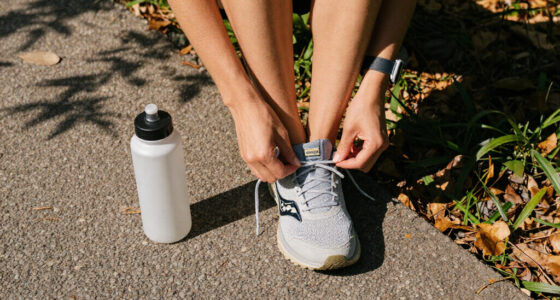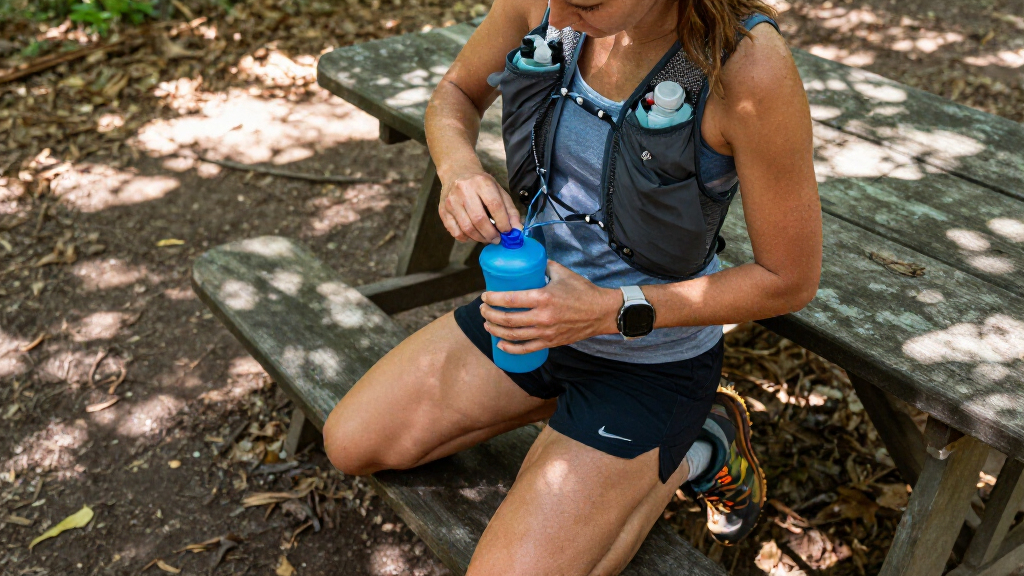
For most runners, I’d start with the Nathan QuickStart 6L: its 1.5-liter bladder and purpose-built vest format make it a strong all-around choice for longer outings. The Osprey Duro LT stands out for runners who prefer soft flasks, while the Nathan Women’s Pinnacle Breeze is a specialized option for women seeking a women’s-specific fit. The main tradeoff across hydration running vests is between a larger water supply and a lighter, less bulky carry. I also weigh fit, storage, and how easy each system is to refill and clean. Read on for the full breakdown and a pick matched to your running needs.

Get sports gear delivered free with Prime
- Fast, free delivery on millions of items
- Prime Video, Amazon Music and more included
- Member-only deals all year
Complete the kit


Key Takeaways
- Carry format is a major dividing line: the roundup includes bladder-first vests, such as the 2-liter Zelvot and Criuage options, plus soft-flask models from Osprey, SWIFTVEST, and others.
- Capacity alone does not define the best long-run vest: a 1.5-liter system, as found in the Nathan QuickStart 6L and INOXTO options, may strike a more manageable balance than a full 2-liter bladder.
- Short-run buyers have lighter choices: the 500 ml soft-flask models prioritize a smaller carry over the extended water supply offered by the bladder-equipped vests.
- Fit features separate similar-looking budget options: adjustable designs and a women’s-specific model address different fit needs, while a fixed or limited adjustment range may be less adaptable across body shapes and layers.
- Storage and water access matter as much as capacity: details such as the MOKURA phone holder and Nathan QuickStart’s 6-liter vest capacity can matter more to some runners than carrying the largest bladder.
| Zelvot Running Hydration Vest with 2L Water Bladder |  | Best for High-Capacity Carry | Bladder capacity: 2 liters | Bladder material: Food-grade, BPA-free, PVC-free | Weight: 0.65 kg | VIEW LATEST PRICE | See Our Full Breakdown |
| Zacro Running Hydration Vest with 2L Water Bladder |  | Best Lightweight 2-Liter Pick | Bladder capacity: 2 liters | Bladder material: TPU | Weight: 190 g | VIEW LATEST PRICE | See Our Full Breakdown |
| Zelvot Running Hydration Vest with 500 ml Soft Flask |  | Best for Pocket Organization | Included flask: 500 ml, BPA-free and PVC-free soft flask | Weight: 7.5 oz | Material: Breathable neoprene | VIEW LATEST PRICE | See Our Full Breakdown |
| SWIFTVEST Running Hydration Vest with 500 ml Soft Flask |  | Best for a Protected Phone Pocket | Included flask: 500 ml (17 oz) soft flask | Material: Neoprene with quick-dry features | Storage: 6 pockets | VIEW LATEST PRICE | See Our Full Breakdown |
| INOXTO Lightweight Running Hydration Vest with 1.5 L Water Bladder |  | Best Lightweight Bladder Vest | Water bladder capacity: 1.5 liters | Weight: 140 g | Material: Polyester | VIEW LATEST PRICE | See Our Full Breakdown |
| Runlight Lightweight Hydration Vest with 1.5 L Water Bladder |  | Best for a Simple Bladder Setup | Material: Nylon and breathable mesh | Overall capacity: 2 L | Water bladder: 1.5 L | VIEW LATEST PRICE | See Our Full Breakdown |
| SWIFTVEST Adjustable Running Hydration Vest with 500 ml Soft Flask |  | Best for Pocket Organization | Material: Neoprene | Weight: 285 g | Capacity: 500 ml | VIEW LATEST PRICE | See Our Full Breakdown |
| MOKURA Running Hydration Vest with 500 ml Soft Flask and Phone Holder |  | Best for Phone Access on Short Runs | Fit: Unisex | Weight: Under 10 oz | Material: Soft neoprene and breathable mesh | VIEW LATEST PRICE | See Our Full Breakdown |
| INOXTO Running Hydration Vest with 1.5 L Water Bladder | 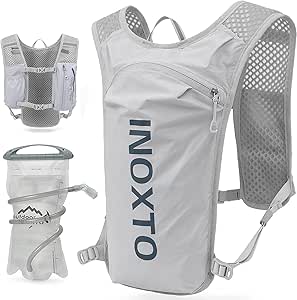 | Best Lightweight Bladder Pick | Material: Polyester with breathable mesh | Weight: 140 g | Water bladder: 1.5 L | VIEW LATEST PRICE | See Our Full Breakdown |
| Nathan QuickStart 6L Hydration Vest with 1.5L Bladder |  | Best for Gear-Carrying Runs | Vest capacity: 6 L | Bladder volume: 1.5 L | Main material: 100% polyester | VIEW LATEST PRICE | See Our Full Breakdown |
| Criuage Running Hydration Vest with 2.0 L Water Bladder |  | Best for Bladder Capacity | Brand and model: Criuage HVC-01 | Total capacity: 5 L | Bladder volume: 2 L | VIEW LATEST PRICE | See Our Full Breakdown |
| Zelvot Running Hydration Vest with 1L Water Bladder |  | Best for Organized Gear Carry | Brand and model: Zelvot TACV-201-NEW | Bladder capacity: 1 L (33.81 fl oz) | Bladder material: Food-grade, BPA-free, PVC-free | VIEW LATEST PRICE | See Our Full Breakdown |
| Nathan Women’s Pinnacle Breeze Hydration Vest |  | Best for Women Seeking a Flask-First Fit | Brand and model: Nathan 30890N-50215-S/M | Included hydration: Two 14 oz soft flasks | Additional flask storage: Up to 20 oz soft flasks | VIEW LATEST PRICE | See Our Full Breakdown |
| Osprey Duro LT Men’s Running Hydration Vest with Hydraulics Soft Flasks |  | Best Lightweight Flask Setup | Brand and model: Osprey 10007343 | Fit: Men’s; available in three sizes | Included flasks: Two 500 mL Hydraulics soft flasks | VIEW LATEST PRICE | See Our Full Breakdown |
| Nathan Women’s Pinnacle Breeze Hydration Vest | | Best for Women Needing an L/XL Fit | Brand and model: Nathan 30890N-50215-L/XL | Included hydration: Two 14 oz soft flasks | Additional flask capacity: Up to 20 oz soft flasks | VIEW LATEST PRICE | See Our Full Breakdown |
| hydration running vest | Warranty | Weight | Material | Storage |
|---|---|---|---|---|
| Zelvot Running Hydration Vest | — | 0.65 kg | — | 3 waterproof zippered front pockets and 2 large back pockets |
| Zacro Running Hydration Vest w | — | 190 g | — | 6 pockets, including 2 zippered pockets |
| Zelvot Running Hydration Vest | — | 7.5 oz | Breathable neoprene | 9 pockets: 7 front and 2 large back pockets |
| SWIFTVEST Running Hydration Ve | 1-year manufacturing defect warranty | — | Neoprene with quick-dry features | 6 pockets |
| INOXTO Lightweight Running Hyd | 3 years | 140 g | Polyester | 4 front pockets and bottle pockets on waist straps |
| Runlight Lightweight Hydration | — | Listed as 0.29 kg; description states 155 g | Nylon and breathable mesh | — |
| SWIFTVEST Adjustable Running H | 1 year against manufacturing defects | 285 g | Neoprene | — |
| MOKURA Running Hydration Vest | 2 years | Under 10 oz | Soft neoprene and breathable mesh | Phone holder with coiled lanyard, two front pockets, and rear mesh pocket |
| INOXTO Running Hydration Vest | 3 years | 140 g | Polyester with breathable mesh | — |
| Nathan QuickStart 6L Hydration | 2 years | — | — | Four expandable front pockets, large rear pocket, rear stretch mesh pocket, elastic bungee, and pole keeper |
| Criuage Running Hydration Vest | 2 years | 750 g | — | — |
| Zelvot Running Hydration Vest | 2 years | — | — | — |
| Nathan Women’s Pinnacle Breeze | Lifetime | — | Single-layer breathable mesh panels | — |
| Osprey Duro LT Men’s Running H | — | — | — | — |
| Nathan Women’s Pinnacle Breeze | Lifetime | — | Single-layer breathable mesh panels | Front zippered pocket, lower front pockets, and large back pocket |
More Details on Our Top Picks
Zelvot Running Hydration Vest with 2L Water Bladder
I’d choose the Zelvot TACV-001 when carrying more water and extra layers matters more than keeping a running kit minimal. Its 2-liter bladder holds more than the INOXTO vest’s 1.5-liter reservoir, while three waterproof zippered front pockets and two large rear pockets give gear separate places to go. Adjustable shoulder straps and a waist belt can help steady that load, though the listed 0.65 kg weight makes this a much heavier option than the 190 g Zacro vest. The wide bladder opening is useful for filling and cleaning, and the high-flow bite valve supports drinking without stopping. I’d skip it for short runs where its bulk and weight outweigh the extra capacity; the detachable holster is also a specialized feature, not a running essential.
Pros:- Included 2-liter bladder has a wide opening for filling and cleaning.
- Three waterproof zippered front pockets and two large rear pockets separate essentials from extra gear.
- Adjustable shoulder straps and waist belt help secure a fuller load.
- Breathable mesh and reflective details support airflow and visibility.
Cons:- At 0.65 kg, it is substantially heavier than the 190 g Zacro vest.
- Listed chest-size ranges cover XS/S and M/L only, which may leave some buyers without clear sizing guidance.
- The detachable holster is described for small- to mid-sized pistols, a feature many running buyers may not need.
Best for: Trail runners and outdoor athletes who want a 2-liter reservoir, substantial pocket space, and room to carry extra gear.
Not ideal for: Runners prioritizing a very light, streamlined vest for short outings; the listed 0.65 kg weight and larger storage setup add bulk.
- Bladder capacity:2 liters
- Bladder material:Food-grade, BPA-free, PVC-free
- Weight:0.65 kg
- Vest material:900D Oxford fabric and breathable mesh
- Storage:3 waterproof zippered front pockets and 2 large back pockets
- Fit:Adjustable shoulder straps and waist belt
- Chest adjustability:XS/S: 25–35 in; M/L: 29–41 in
- Included component:2-liter water bladder
Our verdict“Choose the Zelvot if you need a roomy 2-liter running vest for longer outings and accept extra weight in return.”
Zacro Running Hydration Vest with 2L Water Bladder
The Zacro pairs a 2-liter TPU bladder with a listed weight of just 190 g, making it the clearest choice here for runners who want substantial reservoir capacity without the Zelvot TACV-001’s 0.65 kg listed weight. Its quick-drying nylon, ventilated mesh, and adjustable chest and waist straps suit movement in warm conditions and help keep the load in place. Six pockets provide useful separation, although only two are specified as zippered, so I wouldn’t assume every item is secured. The tradeoff is that the reservoir’s 2-liter capacity may still fall short for very long outings, and the product notes bladder performance can depend on proper use to avoid clogging. Compared with the 500 ml flask in the Zelvot RUNV-3, this is better for carrying more water, but less focused on minimizing slosh as you drink.
Pros:- Listed 190 g weight is low for a vest that includes a 2-liter bladder.
- Adjustable fit covers a stated chest circumference of 25–51 inches.
- Six pockets offer space for essentials, including two zippered pockets.
- Quick-drying nylon, ventilated mesh, and reflective details suit outdoor use.
Cons:- The 2-liter reservoir may not provide enough capacity for especially long outings.
- Only two of the six pockets are specified as zippered.
- Bladder flow may depend on correct use to avoid clogging.
Best for: Runners who want a light vest with a 2-liter reservoir for training, trail runs, or cycling, and need a broad adjustable chest range.
Not ideal for: Runners seeking a soft flask that shrinks as they drink, or those who need more than 2 liters of water for extended outings.
- Bladder capacity:2 liters
- Bladder material:TPU
- Weight:190 g
- Vest material:Quick-drying nylon with ventilated mesh
- Storage:6 pockets, including 2 zippered pockets
- Fit:Adjustable chest and waist straps
- Chest circumference:25–51 in
- Included components:2-liter TPU water bladder, vest, and user manual
Our verdict“Pick the Zacro if you want a light, adjustable vest with a 2-liter bladder rather than a small, compressible flask.”
Zelvot Running Hydration Vest with 500 ml Soft Flask
For runners who carry a phone, gels, keys, and small extras, the Zelvot RUNV-3 makes a stronger case on storage and organization than on water volume. It has nine pockets, including a hidden zippered phone pocket, and its 500 ml soft flask is designed to shrink as you drink to help reduce sloshing. That setup contrasts with the 2-liter bladders in the Zacro and Zelvot TACV-001: those are better suited to carrying more water, while this vest favors a lighter, front-accessible flask arrangement. At 7.5 oz, it is also far lighter than the TACV-001’s listed 0.65 kg. The compromises are the limited 500 ml capacity and overlapping chest-size ranges, which call for careful measuring before choosing a size.
Pros:- Nine pockets include a hidden zippered phone pocket and two large back pockets.
- Included 500 ml flask is designed to shrink as you drink, helping reduce sloshing.
- Listed weight is 7.5 oz, well below the Zelvot TACV-001’s 0.65 kg.
- Three adjustable chest straps and reflective details support fit and visibility.
Cons:- The 500 ml flask carries much less water than the 1.5-liter INOXTO bladder or 2-liter Zacro bladder.
- Overlapping chest-size ranges may make size selection less clear.
- The soft flask’s limited capacity may require frequent refills on longer runs.
Best for: Runners who want a lightweight vest with dedicated storage for a phone and small essentials, and who can manage hydration with a 500 ml flask.
Not ideal for: Runners who need a large water reserve or straightforward sizing guidance; its flask holds 500 ml and its listed size ranges overlap.
- Included flask:500 ml, BPA-free and PVC-free soft flask
- Weight:7.5 oz
- Material:Breathable neoprene
- Storage:9 pockets: 7 front and 2 large back pockets
- Phone pocket:Hidden zippered pocket
- Chest straps:3 adjustable straps
- Chest size range:XS/S: 27–34 in; M/L: 30–40 in; L/XL: 38–46 in; XL/XXL: 45–52 in
- Reflective details:Reflective logo and strips on front and back
Our verdict“Choose the Zelvot RUNV-3 if pocket organization and a low-slosh 500 ml flask matter more than carrying a large water supply.”
SWIFTVEST Running Hydration Vest with 500 ml Soft Flask
The SWIFTVEST is the more focused choice for runners who want a flask vest with a clearly sized, water-resistant phone pouch. It holds phones up to 18 × 10 cm, while the Zelvot RUNV-3 offers nine pockets and a hidden zippered phone pocket but does not specify a device limit. SWIFTVEST includes six pockets, adjustable straps, quick-dry material, reflective details, and neoprene padding intended to reduce bounce and chafing. Its 500 ml flask keeps the setup compact, but that capacity is far below the 1.5-liter INOXTO bladder or the 2-liter options from Zacro and Zelvot. The pouch’s protection applies to that pocket, not the entire vest, so I would not treat it as full-weather protection for everything carried. Check phone dimensions before buying.
Pros:- Water-resistant zippered phone pouch is specified for devices up to 18 × 10 cm.
- Six pockets provide space for running essentials.
- Adjustable straps and neoprene padding are designed to help limit bounce and chafing.
- Includes a compressible 500 ml soft flask with quick-dry material and reflective details.
Cons:- Phone pouch dimensions exclude devices larger than 18 × 10 cm.
- Water resistance is specified for the phone pouch, not the whole vest.
- The 500 ml flask offers much less capacity than the INOXTO 1.5-liter bladder.
Best for: Runners carrying a phone up to 18 × 10 cm who want a compact soft-flask vest with a specified water-resistant phone pouch.
Not ideal for: Runners with larger phones, those needing whole-vest waterproofing, or anyone who wants more than 500 ml of included water capacity.
- Included flask:500 ml (17 oz) soft flask
- Material:Neoprene with quick-dry features
- Storage:6 pockets
- Phone pouch capacity:Up to 18 × 10 cm
- Fit:Adjustable
- Available sizes:XS-S, M-L, L-XL
- Features:Water-resistant phone pouch, reflective detailing, neoprene padding
- Warranty:1-year manufacturing defect warranty
Our verdict“Choose SWIFTVEST if your phone fits the stated pouch dimensions and you prefer a compact flask over a larger reservoir.”
INOXTO Lightweight Running Hydration Vest with 1.5 L Water Bladder
The INOXTO stands out for runners who want a bladder-based vest without much listed weight: it weighs 140 g and includes a 1.5-liter reservoir. That is less water than the 2-liter Zacro and Zelvot TACV-001, but more than either 500 ml soft-flask option here. Ventilated mesh and adjustable shoulder straps and hip belt help tailor the fit and promote airflow, while four front pockets and bottle pockets on the waist straps add carrying flexibility. The simpler storage setup is a tradeoff against the Zelvot RUNV-3’s nine pockets, and the product does not state a chest-size range. I’d shortlist it for runners who prefer a back reservoir and a light pack, but not for those who need the greatest water capacity or highly detailed sizing guidance.
Pros:- Listed weight is 140 g, with a 1.5-liter bladder included.
- Ventilated mesh supports airflow across the back.
- Adjustable shoulder straps and hip belt allow fit adjustment.
- Four front pockets, waist-strap bottle pockets, and reflective trim support carrying and visibility.
Cons:- The 1.5-liter bladder holds less than the 2-liter Zacro and Zelvot TACV-001 reservoirs.
- Four front pockets provide less specified organization than the Zelvot RUNV-3’s nine pockets.
- No chest-size range is provided in the product data.
Best for: Runners and hikers who want a low-weight vest with a 1.5-liter bladder, ventilated mesh, and adjustable torso straps.
Not ideal for: Runners who need a 2-liter water supply, many dedicated pockets, or a stated chest-size range to guide fit.
- Water bladder capacity:1.5 liters
- Weight:140 g
- Material:Polyester
- Storage:4 front pockets and bottle pockets on waist straps
- Fit:Adjustable shoulder straps and hip belt
- Features:Ventilated mesh and reflective trim
- Included component:1.5-liter water bladder
- Warranty:3 years
Our verdict“Pick the INOXTO if you want a very light, 1.5-liter bladder vest and do not need maximum capacity or extensive pocket organization.”
Runlight Lightweight Hydration Vest with 1.5 L Water Bladder
The Runlight is a straightforward choice for runners who want a bladder-fed vest without a larger storage system. Its included 1.5 L bladder gives it more onboard water than the SWIFTVEST SV01 and MOKURA, both of which rely on a 500 ml soft flask. Breathable mesh, adjustable chest and shoulder straps, and reflective trim cover the basics for warm-weather outings and low-light runs.
The tradeoff is modest capacity beyond the water: three pockets are enough for small essentials, but offer less organization than the SWIFTVEST’s six pockets or the Nathan QuickStart’s expanded storage. The listing also gives conflicting weight figures—0.29 kg in the specs and 155 g in the description—so I would not choose it based on a precise weight comparison. Its 1.5 L bladder is also less than the listed 2 L overall capacity.
Pros:- Includes a 1.5 L bladder, offering more water than the 500 ml flask setups from SWIFTVEST and MOKURA.
- Breathable mesh and nylon construction supports airflow across the back.
- Adjustable chest and shoulder straps allow fit tuning.
- Reflective trim adds visibility in low light.
Cons:- Three pockets provide less storage and organization than the SWIFTVEST SV01 or Nathan QuickStart.
- The 1.5 L bladder falls short of the listed 2 L overall capacity.
- Weight is inconsistent across the provided product data.
Best for: Runners who prefer a hydration bladder over a soft flask and need a few pockets for short to moderate outings.
Not ideal for: Runners carrying several layers, food, or gear, or anyone who needs more than 1.5 L of bladder capacity.
- Material:Nylon and breathable mesh
- Overall capacity:2 L
- Water bladder:1.5 L
- Pockets:3
- Fit adjustment:Adjustable chest and shoulder straps
- Dimensions:11 × 13 in
- Color:Black
- Weight:Listed as 0.29 kg; description states 155 g
Our verdict“Choose the Runlight if you want a basic, bladder-based vest with breathable construction and light storage rather than extensive cargo space.”
SWIFTVEST Adjustable Running Hydration Vest with 500 ml Soft Flask
Among the soft-flask options here, the SWIFTVEST stands out for carrying small essentials: six pockets and a water-resistant zippered phone pouch make it easier to separate a phone, keys, and fuel than the more basic MOKURA. Its included 500 ml flask suits shorter runs or routes with refill points, while adjustable straps and neoprene padding help keep the vest settled as you move.
That storage comes with two limits. The phone pouch only fits devices up to 18 × 10 cm, and 500 ml is far less water than the 1.5 L bladder in the Runlight or INOXTO. The SWIFTVEST makes more sense for runners who value accessible organization over long stretches between water stops. Its specified neoprene material may also feel less airy than a vest built primarily from mesh, despite the listed quick-dry and heat-dissipation features.
Pros:- Six pockets offer more organization than the MOKURA’s listed storage layout.
- Includes a compressible 500 ml soft flask.
- Water-resistant zippered phone pouch fits devices up to 18 × 10 cm.
- Adjustable straps, neoprene padding, and reflective details support a secure, visible setup.
Cons:- The 500 ml flask provides substantially less water than the 1.5 L bladder options.
- Phone pouch dimensions exclude larger devices.
- Neoprene construction may feel warmer than a vest centered on breathable mesh.
Best for: Short-distance runners who carry a phone, keys, and gels and want separate pockets plus a soft flask.
Not ideal for: Runners doing long, remote routes or carrying a phone larger than 18 × 10 cm.
- Material:Neoprene
- Weight:285 g
- Capacity:500 ml
- Included hydration:500 ml compressible soft flask
- Pockets:6
- Phone pouch:Up to 18 × 10 cm; water-resistant zippered closure
- Available sizes:XS-S, M-L, L-XL
- Warranty:1 year against manufacturing defects
Our verdict“Pick the SWIFTVEST for organized pocket storage on shorter runs, but choose a bladder vest for longer stretches without refills.”
MOKURA Running Hydration Vest with 500 ml Soft Flask and Phone Holder
The MOKURA is aimed at runners who want their phone close at hand without relying on a conventional enclosed pocket. Its sweatproof phone holder and retractable coiled lanyard provide a different setup from the SWIFTVEST’s zippered phone pouch, while two front pockets and a rear mesh pocket leave room for a few essentials. A 500 ml flask with a high-flow bite valve keeps hydration easy to reach during shorter efforts.
Compared with the Runlight and INOXTO, this vest carries much less water, so it is better matched to short routes or dependable refill access than longer outings. Its soft neoprene, breathable mesh, stretch waist panels, and three adjustable chest straps offer several ways to steady the load, but sizing and fit measurements are not provided. That makes fit harder to judge before purchase than on the SWIFTVEST, which lists size ranges.
Pros:- Phone holder with retractable coiled lanyard keeps a phone accessible while running.
- Includes a 500 ml flask with a leakproof, high-flow bite valve.
- Three adjustable chest straps and stretch waist panels provide multiple fit adjustments.
- Reflective accents appear on both the front and back.
Cons:- The 500 ml flask holds much less than the Runlight or INOXTO 1.5 L bladder systems.
- Sizing and fit measurements are not specified.
- The phone holder differs from the enclosed zippered pouch on the SWIFTVEST and may not suit buyers seeking that style of storage.
Best for: Runners on short routes who want quick phone access, a small amount of storage, and a soft flask.
Not ideal for: Runners who need substantial water capacity or want published sizing measurements to guide their fit choice.
- Fit:Unisex
- Weight:Under 10 oz
- Material:Soft neoprene and breathable mesh
- Included flask:500 ml; BPA-free and PVC-free
- Flask valve:Leakproof, high-flow bite valve
- Adjustment:Stretch waist panels and three adjustable chest straps
- Storage:Phone holder with coiled lanyard, two front pockets, and rear mesh pocket
- Warranty:2 years
Our verdict“Choose the MOKURA for easy phone access and a simple soft-flask setup on short runs, not for high-volume hydration.”
INOXTO Running Hydration Vest with 1.5 L Water Bladder
At a listed 140 g, the INOXTO is the lightest clearly specified bladder vest in this group, pairing a 1.5 L reservoir with breathable mesh and adjustable shoulder and hip straps. That combination makes it more suitable for runners who want water carried on their back without the larger cargo arrangement of the Nathan QuickStart. Four pockets and belt pockets for 250 ml PET bottles add ways to split up water and small items.
The extra bottle storage gives the INOXTO more flexibility than the Runlight, but its main bladder still holds only 1.5 L, and the product data does not state a total usable water volume with bottles included. The listed 140 g weight is compelling, though the supplied information does not clarify whether that includes the bladder. Its age restriction also rules it out for children 12 and under.
Pros:- Listed weight of 140 g is lower than the Runlight’s stated weight figures.
- Includes a 1.5 L bladder and left- and right-side pockets for 250 ml PET bottles.
- Breathable mesh and adjustable shoulder and hip straps support airflow and fit adjustment.
- Four pockets and reflective trim provide practical storage and low-light visibility.
Cons:- The 1.5 L bladder may be limiting on long routes without refills.
- The product data does not clarify whether the 140 g weight includes the bladder.
- Not intended for children 12 and under.
Best for: Adult runners seeking a low-listed-weight bladder vest with adjustable straps and the option to carry small belt bottles.
Not ideal for: Runners who need a large cargo vest, clearly documented total water capacity, or gear for children 12 and under.
- Material:Polyester with breathable mesh
- Weight:140 g
- Water bladder:1.5 L
- Pockets:4
- Additional bottle storage:Left and right belt pockets for 250 ml PET bottles
- Straps:Adjustable shoulder and hip straps
- Warranty:3 years
- Age restriction:Not intended for children 12 and under
Our verdict“Pick the INOXTO if low listed weight and a 1.5 L bladder matter more than the expanded storage of the Nathan QuickStart.”
Nathan QuickStart 6L Hydration Vest with 1.5L Bladder
The Nathan QuickStart is the storage-led choice in this group. Its 6 L capacity, four expandable front pockets, rear compartments, pole keeper, and elastic bungee give runners room for more than the basics. A separate bladder compartment with hose exits at either shoulder also makes its 1.5 L reservoir easier to route than the simpler Runlight setup. Compared with the lighter, more minimal INOXTO, the QuickStart is built for outings where carrying layers or extra gear matters as much as hydration.
That capacity does not increase the bladder volume: it remains 1.5 L, the same as the Runlight and INOXTO, so longer remote routes may still call for refills or another water source. The additional pockets and rear storage also make this a less minimal choice than the flask-based SWIFTVEST or MOKURA. I would choose it for organized cargo space, not simply for carrying more water.
Pros:- Six-liter vest capacity and expandable pockets accommodate more gear than the Runlight or INOXTO.
- Separate bladder compartment includes hose exits at either shoulder.
- Four expandable front pockets, rear storage, bungee cord, and pole keeper offer versatile organization.
- Adjustable straps, breathable mesh, and reflective details support fit, airflow, and visibility.
Cons:- The 1.5 L bladder does not hold more water than the smaller bladder-based options.
- Its cargo-focused storage may be unnecessary for short, minimalist runs.
- The listed capacity describes the vest, not additional bladder volume.
Best for: Runners and hikers who carry layers, fuel, poles, and small essentials alongside a 1.5 L bladder.
Not ideal for: Minimalist runners who want the lightest, simplest setup or need more than 1.5 L of bladder capacity.
- Vest capacity:6 L
- Bladder volume:1.5 L
- Main material:100% polyester
- Mesh pocket material:72% nylon, 28% spandex
- Storage:Four expandable front pockets, large rear pocket, rear stretch mesh pocket, elastic bungee, and pole keeper
- Bladder compartment:Separate compartment with hose exit points at either shoulder
- Straps:Adjustable shoulder and chest straps
- Warranty:2 years
Our verdict“Choose the Nathan QuickStart when carrying gear is a priority; look to the INOXTO for a more minimal bladder vest.”
Criuage Running Hydration Vest with 2.0 L Water Bladder
The Criuage is the bladder-first pick here: its 2.0 L reservoir holds more than the 1 L bladder in the Zelvot Running Hydration Vest, which suits longer outings when refill points are sparse. Eight pockets and adjustable cross-body straps add room to organize essentials and help secure the load, while wide mesh shoulder pads are intended to spread pressure. The tradeoff is a 750 g listed weight, heavier than the Osprey Duro LT’s 159 g vest weight before flasks, so runners prioritizing a light, fast setup may prefer that model. Criuage lists five liters of total capacity, which limits bulky extra layers or substantial trail gear. The material is described as water-resistant, but its composition is not specified.
Pros:- Includes a 2.0 L bladder for longer stretches between refills.
- Eight pockets help separate a phone, keys, snacks, and other essentials.
- Adjustable cross-body straps support a closer, more secure fit.
- Wide mesh shoulder pads are designed to spread shoulder pressure.
Cons:- Listed weight of 750 g is heavier than the Osprey Duro LT vest weight before flasks.
- Five-liter total capacity may constrain extra clothing and larger gear.
- Material composition is not specified, limiting detail about the water-resistant shell.
Best for: Runners and hikers planning longer outings who prefer a 2 L bladder and need pockets for everyday essentials.
Not ideal for: Runners focused on minimizing carried weight or packing extra layers, since the listed vest weight is 750 g and total capacity is 5 L.
- Brand and model:Criuage HVC-01
- Total capacity:5 L
- Bladder volume:2 L
- Weight:750 g
- Dimensions:9 in W × 18.5 in H
- Pockets:8
- Straps:Adjustable, cross-body
- Material feature:Water-resistant
- Warranty:2 years
Our verdict“Choose the Criuage if a 2 L bladder and organized pockets matter more than a low carry weight or extra packing room.”
Zelvot Running Hydration Vest with 1L Water Bladder
The Zelvot stands apart from simpler bladder vests with zippered pockets, MOLLE webbing, and D-rings, giving runners more ways to arrange or attach small gear. Its 1 L bladder is smaller than the Criuage’s 2 L reservoir, a sensible compromise for shorter runs where carrying less water can keep the setup more compact. A 29–41 in chest range, adjustable waist belt, and shoulder straps offer fit adjustment, while reflective details add visibility in low light. The tradeoff is that the chest range may exclude runners outside those measurements, and the 1 L capacity calls for more frequent refills on long routes. Compared with the Osprey Duro LT, this Zelvot emphasizes attachment points and compartment variety rather than a stated lightweight vest weight.
Pros:- Includes a 1 L BPA-free, PVC-free bladder with a high-flow bite valve.
- MOLLE webbing, D-rings, and multiple compartments support organized gear carry.
- Adjustable shoulder straps and waist belt allow fit tuning.
- Reflective details support visibility in low-light conditions.
Cons:- The 1 L bladder holds less than the Criuage vest’s 2 L reservoir.
- Chest adjustability is limited to 29–41 inches.
- The many attachment and storage features may be unnecessary for runners carrying only hydration and a phone.
Best for: Runners and cyclists who carry small accessories or attached gear and whose chest measurement falls within 29–41 inches.
Not ideal for: Runners on long routes without refill access or those outside the stated chest range.
- Brand and model:Zelvot TACV-201-NEW
- Bladder capacity:1 L (33.81 fl oz)
- Bladder material:Food-grade, BPA-free, PVC-free
- Vest material:Water-resistant, scratch-resistant nylon with breathable mesh
- Chest adjustability:29–41 in
- Straps:Adjustable shoulder straps and waist belt
- Storage features:Zippered front pockets, mesh compartments, rear pockets, hidden rear zip pocket, D-rings, and MOLLE webbing
- Visibility:Reflective details
- Warranty:2 years
Our verdict“Pick the Zelvot if organizing and attaching small gear matters more than carrying a large water supply.”
Nathan Women’s Pinnacle Breeze Hydration Vest
This S/M Pinnacle Breeze is the women’s-size option for runners who prefer front-mounted flasks over a reservoir as their main water source. Two 14 oz flasks with extended straws make sipping accessible without reaching around to a back bladder, and the Quick-Fit system with adjustable sternum cords gives more fit adjustment than a fixed-size vest. Single-layer mesh and 360-degree reflective details suit warm-weather or low-light training. It can also store extra soft flasks or a bladder, though the bladder capacity is not specified and no bladder is listed as included. Compared with the Osprey Duro LT, this Nathan offers a stated women’s S/M fit and more listed front storage, but its size may not suit every runner.
Pros:- Includes two 14 oz soft flasks with extended straws for accessible sipping.
- Quick-Fit sizing and adjustable sternum cords allow fit adjustment.
- Single-layer breathable mesh panels support airflow.
- Reflective details provide 360-degree visibility.
Cons:- The listed S/M size may not fit every runner.
- No bladder is listed among the included components, and compatible bladder capacity is unspecified.
- Front-flask hydration may not suit runners who prefer a single reservoir.
Best for: Women seeking an S/M running vest with front-accessible flasks, adjustable sternum cords, and breathable mesh.
Not ideal for: Runners who need a confirmed bladder capacity, want a bladder included, or fall outside the listed S/M size.
- Brand and model:Nathan 30890N-50215-S/M
- Included hydration:Two 14 oz soft flasks
- Additional flask storage:Up to 20 oz soft flasks
- Bladder storage:Large back pocket; bladder capacity not specified
- Fit features:Quick-Fit sizing system and adjustable sternum slider cords
- Material:Single-layer breathable mesh panels
- Pockets:Front zippered pocket, lower front pockets, and large back pocket
- Visibility:Reflective details with 360-degree visibility
- Warranty:Lifetime
Our verdict“Choose this Pinnacle Breeze if you want an adjustable S/M women’s vest built around two easy-to-reach flasks.”
Osprey Duro LT Men’s Running Hydration Vest with Hydraulics Soft Flasks
The Duro LT is the clearest choice here for runners who want a low-weight vest with two front soft flasks. Its vest weighs 159 g in medium without flasks, and the included pair adds 1 L of total hydration; the listed flask weight is 40 g each. Dual sternum straps, a stretch backpanel, and removable flask stabilizers are designed to limit bounce as the load shifts. Compared with the Criuage, it trades a 2 L bladder and eight pockets for a lighter, simpler flask setup with four pockets. That makes it better suited to carrying run essentials than extra gear or long stretches between refills. The listed weight excludes the flasks, and its men’s fit requires choosing among three sizes.
Pros:- Includes two 500 mL Hydraulics soft flasks for 1 L of hydration.
- 159 g medium vest weight before flasks supports a lighter carry.
- Dual sternum straps, stretch backpanel, and removable stabilizers are designed to reduce bounce.
- Materials and components meet bluesign PRODUCT requirements.
Cons:- The 1 L flask capacity is less than the Criuage vest’s 2 L bladder.
- The 159 g vest weight excludes the included flasks.
- Men’s fit comes in three sizes, so runners need to check sizing.
Best for: Men who want a lighter running vest with two front flasks and enough storage for core run essentials.
Not ideal for: Runners who need more than 1 L of included hydration, extensive gear storage, or a bladder-first setup.
- Brand and model:Osprey 10007343
- Fit:Men’s; available in three sizes
- Included flasks:Two 500 mL Hydraulics soft flasks
- Tank volume:1 L
- Vest weight:159 g (medium, without flasks)
- Flask weight:40 g each
- Pockets:4
- Features:Breathable mesh, 360-degree stretch backpanel, dual sternum straps, removable flask stabilizers, and bladder holder
- Sustainability:Meets bluesign PRODUCT requirements
Our verdict“Choose the Duro LT for a lighter, flask-based setup; skip it if you need a larger reservoir or substantial cargo space.”
Nathan Women’s Pinnacle Breeze Hydration Vest
This L/XL Pinnacle Breeze brings the same flask-first design as the S/M Nathan model to a different size range: two 14 oz flasks with extended straws, breathable single-layer mesh, and adjustable sternum cords. The useful distinction is fit, not a different hydration package, so I’d choose this listing over the S/M version only if its size is the closer match. Like the S/M model, it has front pockets, a large rear pocket for a bladder, and reflective details, but no bladder is listed as included. Its space for additional soft flasks offers flexibility, though the listing does not specify a bladder capacity. Compared with the Osprey Duro LT, it provides a stated L/XL option and more described front-pocket storage, while the Osprey lists a vest weight and men’s sizing.
Pros:- Includes two 14 oz soft flasks with extended straws.
- L/XL listing provides a larger size option than the S/M Nathan model.
- Adjustable sternum cords and Quick-Fit sizing support fit adjustment.
- Breathable mesh and 360-degree reflective details suit varied running conditions.
Cons:- The L/XL size may not fit runners who need a smaller vest.
- A hydration bladder is not listed as included, and its compatible capacity is unspecified.
- Its hydration and storage features closely match the S/M Nathan listing, making size the main distinction.
Best for: Women who need an L/XL running vest with two front flasks, adjustable sternum cords, and reflective details.
Not ideal for: Runners who need a bladder included, require a specified bladder capacity, or need a smaller fit.
- Brand and model:Nathan 30890N-50215-L/XL
- Included hydration:Two 14 oz soft flasks
- Additional flask capacity:Up to 20 oz soft flasks
- Bladder storage:Large back pocket; bladder capacity not specified
- Fit features:Quick-Fit sizing system and adjustable sternum slider cords
- Material:Single-layer breathable mesh panels
- Storage:Front zippered pocket, lower front pockets, and large back pocket
- Visibility:Reflective details with 360-degree visibility
- Warranty:Lifetime
Our verdict“Pick this version over the S/M Pinnacle Breeze if you need the L/XL fit and want accessible front flasks.”
How We Picked
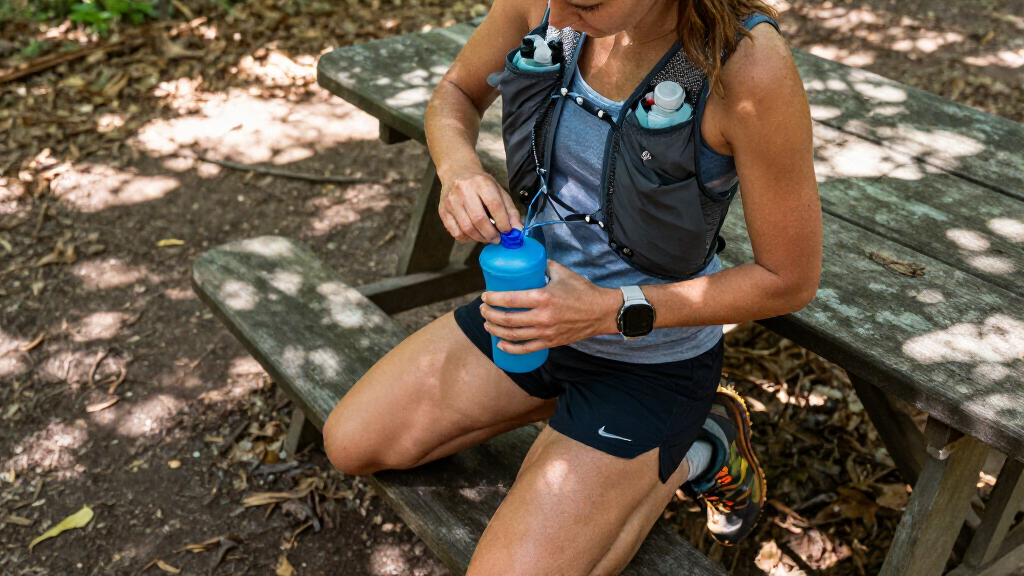
I compared these 15 hydration running vests around the needs that shape everyday use: how they carry water, how much they hold, how the vest can be adjusted, and whether their design suits short runs, long training sessions, or race-day use. I also considered practical details such as phone storage, overall carry capacity, and the likely effort involved in cleaning a bladder or flask. Models with a clearer use case and a useful balance of hydration, fit, and storage ranked ahead of options that appear to serve a narrower need.
The ranking reflects relative versatility, not a claim that every runner needs the same vest. The Nathan QuickStart leads as a balanced bladder-based option; the Osprey Duro LT and Nathan Women’s Pinnacle Breeze serve more specific fit and carry preferences. The 500 ml flask options make more sense for shorter outings or runners who value a lighter setup, while 2-liter bladder models suit buyers who prioritize water capacity. Where product details are limited or models overlap, I avoid assuming differences that are not clear from their stated features.
Factors to Consider When Choosing Hydration Running Vests
Before choosing a vest, match the carry system to your routes and habits rather than buying by capacity alone. These are the tradeoffs I’d settle first.
Choose a water system you will actually use
A bladder carries water behind you and lets you drink through a hose, which can be convenient when you want frequent access without reaching for a bottle. Soft flasks sit at the front, making it easier to see how much remains and refill at a stop. Neither format is automatically more comfortable: a bladder adds weight to the back, while front flasks can feel crowded against the chest. Cleaning is another difference, since a bladder and hose can take more work to dry than a flask. If possible, choose the format you already know you will maintain and refill consistently.
Size capacity for the route, not the longest run you might do
A larger reservoir can reduce refill stops, but carrying unused water adds weight for the entire run. Start with your typical outing, access to fountains or aid stations, and the weather you expect to encounter. A 500 ml flask setup can suit shorter routes with reliable water access, while 1.5- and 2-liter bladders give more reserve for longer or more remote runs. Capacity labels do not account for individual sweat rates or conditions, so use your own training to learn how much you need. Avoid choosing the biggest option simply because it sounds safer; a heavy, overfilled vest can be uncomfortable.
Treat fit as a moving target
A vest should stay stable while you run, not just feel comfortable while standing still. Chest straps and adjustment points help reduce bounce, but the fit can change when pockets are loaded or when you wear a thicker layer. Check how the vest sits around your shoulders, ribs, and underarms, and leave room for breathing deeply. Women’s-specific designs may suit some body shapes better, but they are not a guarantee of fit for every runner. If you fall between sizes or plan to layer, prioritize a return policy and a chance to test the fit with the gear you intend to carry.
Count usable storage, not just liters
Water capacity and storage volume measure different things. A vest’s stated capacity may include the reservoir, while the space for a phone, keys, nutrition, and a light layer can be more limited. Think through what you carry on a normal run and check whether pockets are reachable without taking the vest off. A dedicated phone holder can be useful, but only if it fits your phone and keeps it secure during movement. Carrying more gear than you need can make a vest feel bulky, so favor accessible, well-placed storage over a large number of pockets.
Pay for specific fit or construction when it solves a real problem
A more specialized vest can be worthwhile if its fit, materials, or carry layout addresses a recurring issue you have with basic designs. If you are new to running with hydration, a straightforward vest with enough adjustment and storage may be a better starting point than a highly specialized setup. Premium positioning by itself does not tell you how a vest will fit or whether its features match your routes. Compare the details that affect use, such as flask compatibility, reservoir access, and storage placement. Spend more when a feature changes how comfortably or reliably you can carry what you need, not just because the feature list is longer.
Plan for cleaning and refills before race day
Hydration gear needs regular cleaning, and leftover moisture can make a reservoir or flask unpleasant to reuse. Check whether the opening is wide enough to clean and dry, and whether the tube or bite valve can be reached easily. For a race, practice filling and drinking from the system you plan to carry before relying on it at an aid station. A bladder can offer hands-free sipping, while front flasks can be simpler to refill or swap. Pick the setup you can manage when tired, not only the one that looks most convenient at home.
Frequently Asked Questions
Should I choose a 500 ml soft-flask vest or a bladder vest?
Choose based on how much water you need between reliable refill points and how you prefer to drink while running. A 500 ml flask setup keeps the carry smaller and makes remaining water easy to see, but it may require refills on longer or hotter routes. A bladder can carry more and supports hands-free sipping, though it adds weight at the back and takes more effort to clean and dry. If you are unsure, use a familiar route to estimate your typical consumption before buying. The roundup’s soft-flask options suit lighter carry preferences, while its 1.5- and 2-liter models provide more capacity.
Is a 2-liter hydration vest too much for everyday training?
Not necessarily, but it can be more capacity than you need for short runs with easy access to water. A full reservoir adds weight, so the extra supply makes the most sense for longer routes, hot conditions, or outings where refills are limited. For regular shorter training, a 500 ml flask or a 1.5-liter system may be easier to carry. Remember that capacity is not a hydration plan: your needs depend on pace, weather, route, and your own sweat rate. Try to match the amount you carry to the specific run rather than filling every reservoir by default.
How should a running vest fit when it is loaded?
Load it with the water and essentials you expect to carry, then check for bouncing, rubbing, and pressure around the chest and shoulders. A vest that feels secure when empty may move differently once a bladder or flask is full. The straps should keep the load stable without restricting a deep breath or pulling uncomfortably across your ribs. Wear the shirt or layers you usually run in, since fabric changes can affect the fit. If adjustment cannot control movement without excessive tightness, try another size or a different cut.
Will a 6-liter vest carry enough gear for a long run?
The number describes the vest’s stated carry capacity, not a guarantee that every runner’s gear will fit comfortably. Your needs depend on whether you carry only a phone and nutrition or also a shell, keys, and other supplies. The Nathan QuickStart 6L combines that capacity with a 1.5-liter bladder, which gives it a versatile role in this roundup, but you should still check pocket layout and access. A larger vest can feel unnecessarily bulky on short runs, especially when its storage is mostly unused. List your usual gear before deciding whether the added space will be useful.
How do I decide between a standard vest and a women’s-specific design?
Start with how the vest sits on your body rather than relying on the label alone. A women’s-specific design may offer a shape or strap layout that works better for some runners, while another runner may prefer the adjustment range of a standard cut. Fit also depends on torso length, chest shape, layering, and where the vest places its weight. Compare sizing guidance and return options, then test the vest loaded if you can. In this lineup, the Nathan Women’s Pinnacle Breeze is the dedicated women’s-specific pick, but a comfortable, stable fit matters more than the category name.
Conclusion
Best overall: I’d choose the Nathan QuickStart 6L for runners who want a balanced bladder-based vest with room for essentials. Best value: the 1.5-liter INOXTO or Runlight options are sensible starting points for buyers who want bladder capacity without moving to a more specialized model. Best premium and fit-focused choice: the Osprey Duro LT suits runners who prefer soft flasks, while the Nathan Women’s Pinnacle Breeze is the women’s-specific option. Best for beginners: a 500 ml soft-flask model makes sense for shorter runs and a lighter first setup. For long or remote routes, look instead at the 2-liter Zelvot or Criuage options; for phone-forward storage, consider the MOKURA. I’d make the final choice by matching capacity and fit to your actual routes, not by choosing the vest with the largest number.