Choosing the right GPS device for cycling is rarely about picking the most expensive option; it is about matching technology to your specific riding habits and security needs. My analysis reveals that the market splits sharply between dedicated anti-theft trackers and advanced navigation computers. For most cyclists who prioritize security above all else, the Orbit Velo Bike Tracker stands out as the best overall choice due to its seamless integration with the Apple Find My network and exceptional battery life. However, if you are a data-driven rider who needs detailed navigation and performance metrics, the Garmin Edge 1050 offers a superior experience, despite its larger form factor.

Get sports gear delivered free with Prime
- Fast, free delivery on millions of items
- Prime Video, Amazon Music and more included
- Member-only deals all year
The core tradeoff here is between passive security and active utility. The Orbit Velo and Knog Scout are silent guardians that do not require daily charging, whereas the Garmin Edge series are active tools that demand regular attention but provide rich data. I have evaluated these devices based on tracking accuracy, battery endurance, mounting practicality, and ecosystem compatibility to help you determine which device aligns with your lifestyle.
Complete the kit


Key Takeaways
- The Orbit Velo offers the best balance of security and maintenance-free operation for Apple users.
- The Knog Scout uniquely combines an audible alarm with GPS tracking, making it a dual-purpose deterrent.
- Garmin Edge devices are navigation computers first, with safety alerts as a secondary, smartphone-dependent feature.
- The Invoxia GPS Tracker Pro Max provides cellular independence, eliminating reliance on nearby smartphones for tracking.
- Battery life varies drastically: trackers last months or years, while cycling computers last hours to days.
| Orbit Velo Bike Tracker with Apple Find My, IP67 Waterproofing, and Secure Bottle-Cage Mount |  | Best Overall for Security-Conscious Apple Users | Tracking Network: Apple Find My | Battery Life: Up to 3 years (Replaceable) | Water Resistance: IP67 | VIEW LATEST PRICE | See Our Full Breakdown |
| Knog Scout Bike Alarm and Finder with Apple Find My |  | Best Dual-Purpose Deterrent | Alarm Volume: 85 dB | Tracking: Apple Find My | Battery Life: 2–6 months | VIEW LATEST PRICE | See Our Full Breakdown |
| Garmin Edge 850 Compact GPS Cycling Computer |  | Best Compact Navigation Computer | Display: 2.7-inch color LCD touchscreen | Battery Life: Up to 12 hours (standard); 36 hours (saver) | Satellite Systems: GPS, GLONASS, Galileo | VIEW LATEST PRICE | See Our Full Breakdown |
| Garmin Edge 1050 Premium Cycling Computer |  | Best Premium Navigation and Safety Hub | Screen Size: 3.5 inches | Battery Life: Up to 20 hours (standard); 60 hours (saver) | Storage: 64 GB | VIEW LATEST PRICE | See Our Full Breakdown |
| Invoxia GPS Tracker Pro Max 4G for Motorcycles, Bikes, Vans, and Caravans |  | Best Cellular Independence | Connectivity: 4G LTE-M | Battery Life: Up to 6 months | Water Resistance: IP67 | VIEW LATEST PRICE | See Our Full Breakdown |
| cyclist alert GPS device | Battery Life | Weight | Connectivity | Water Resistance |
|---|---|---|---|---|
| Orbit Velo Bike Tracker with A | Up to 3 years (Replaceable) | 60 g | Bluetooth | IP67 |
| Knog Scout Bike Alarm and Find | 2–6 months | 25 g | — | IP66 |
| Garmin Edge 850 Compact GPS Cy | Up to 12 hours (standard); 36 hours (saver) | 3.9 ounces | Bluetooth, Wi-Fi, USB | — |
| Garmin Edge 1050 Premium Cycli | Up to 20 hours (standard); 60 hours (saver) | 5.7 ounces | Bluetooth, Wi-Fi, USB | — |
| Invoxia GPS Tracker Pro Max 4G | Up to 6 months | 28 g | 4G LTE-M | IP67 |
More Details on Our Top Picks
Orbit Velo Bike Tracker with Apple Find My, IP67 Waterproofing, and Secure Bottle-Cage Mount
The Orbit Velo occupies a unique niche by leveraging the massive Apple Find My network. Unlike standalone trackers that require a separate subscription or cellular plan, this device piggybacks on the millions of iPhones, iPads, and Macs in your vicinity to relay its location. This makes it exceptionally effective in urban environments where Apple device density is high. Its IP67 rating ensures it can withstand heavy rain and dust, which is a common point of failure for cheaper trackers.
Compared to the Knog Scout, the Orbit Velo lacks an audible alarm. It is a silent tracker. If your primary concern is recovering a stolen bike rather than preventing the theft in the first place, this is the superior choice. The three-year replaceable battery is a significant advantage over rechargeable models like the Knog or Garmin devices, meaning you can install it and forget it for years. However, this convenience comes with the limitation that it is useless for Android users or those in rural areas with sparse Apple device coverage.
Pros:- Leverages the extensive Apple Find My network for broad coverage.
- Extremely long battery life with a replaceable coin-cell battery.
- Robust IP67 waterproofing and secure mounting hardware included.
- No subscription fees or cellular plans required.
Cons:- Exclusively compatible with the Apple ecosystem.
- No audible alarm to deter thieves during the act of theft.
- Relies on nearby Apple devices for location updates.
Best for: iPhone users who want a ‘set it and forget it’ theft recovery solution with minimal maintenance.
Not ideal for: Android users, cyclists in remote rural areas, or those who want an active theft deterrent alarm.
- Tracking Network:Apple Find My
- Battery Life:Up to 3 years (Replaceable)
- Water Resistance:IP67
- Weight:60 g
- Mounting:Bottle-cage mount
- Connectivity:Bluetooth
- Compatibility:iPhone, iPad, Mac, Apple Watch
- Warranty:2 years
Our verdict“The Orbit Velo is the most practical anti-theft tracker for Apple users due to its zero-maintenance design and widespread network coverage.”
Knog Scout Bike Alarm and Finder with Apple Find My
The Knog Scout distinguishes itself by combining two critical functions: an 85 dB motion-sensitive alarm and Apple Find My tracking. This dual functionality addresses both prevention and recovery. While the Orbit Velo is silent, the Knog Scout aims to scare off casual thieves before they can ride away. The alarm is triggered by motion, making it effective in scenarios where a bike is parked in a public rack.
However, this added complexity impacts battery life and maintenance. Unlike the Orbit’s three-year battery, the Knog Scout requires USB-C recharging every few months. The IP66 rating is slightly lower than the Orbit’s IP67, meaning it is water-resistant but not fully dust-proof or submersible. Compared to the Garmin Edge devices, the Knog is far less intrusive on the handlebar, but it lacks any navigation or performance data. It is purely a security device. For riders who prioritize active deterrence over long-term battery convenience, the Knog Scout is the logical choice, provided they are comfortable with the periodic charging routine.
Pros:- Combines a loud 85 dB alarm with GPS tracking.
- Compact, low-profile design fits discreetly on the frame.
- USB-C charging is convenient and widely supported.
- Apple Find My integration allows for easy location checking.
Cons:- Battery life is limited to 2-6 months, requiring regular charging.
- Lower IP66 rating compared to IP67 competitors.
- Requires an iOS device for full functionality.
Best for: Cyclists who park in high-theft areas and want an audible deterrent alongside location tracking.
Not ideal for: Riders who dislike frequent charging or those who need detailed navigation data.
- Alarm Volume:85 dB
- Tracking:Apple Find My
- Battery Life:2–6 months
- Water Resistance:IP66
- Weight:25 g
- Charging Port:USB-C
- Mounting:Bottle cage braze-ons
- Security:Anti-tamper screws
Our verdict“The Knog Scout is the ideal choice for urban commuters who need an active alarm to prevent theft, accepting shorter battery life as the tradeoff.”
Garmin Edge 850 Compact GPS Cycling Computer
The Garmin Edge 850 represents a shift in the cycling computer market, moving toward a hybrid interface that combines a 2.7-inch touchscreen with physical buttons. This design choice is critical for cyclists who ride in wet or cold conditions, where touchscreens can become unreliable. Unlike the dedicated trackers in this list, the Edge 850 is a full-featured navigation and performance device. Its safety alerts, such as hazard warnings and incident detection, are robust but rely heavily on a paired smartphone connection.
Compared to the larger Garmin Edge 1050, the 850 is significantly lighter and more compact, making it less intrusive on the handlebars. However, this compactness comes at the cost of screen real estate and battery life. The 12-hour battery life in demanding use is adequate for most rides but falls short for multi-day bikepacking trips without external power. The multi-band GPS provides excellent accuracy, surpassing the basic location pings of the Orbit or Knog. This device is for the cyclist who views their bike as a performance machine first and a secured asset second.
Pros:- Hybrid touchscreen and button interface for all-weather usability.
- Multi-band GPS ensures high-accuracy positioning.
- Compact form factor reduces handlebar clutter.
- Preloaded maps support road, gravel, and trail navigation.
Cons:- Safety alerts require a paired smartphone and active Bluetooth connection.
- Battery life is limited compared to larger models.
- Higher cost than dedicated security trackers.
Best for: Performance-focused cyclists who want a compact, accurate navigation computer with safety connectivity features.
Not ideal for: Those seeking a standalone anti-theft tracker or riders who dislike frequent charging.
- Display:2.7-inch color LCD touchscreen
- Battery Life:Up to 12 hours (standard); 36 hours (saver)
- Satellite Systems:GPS, GLONASS, Galileo
- Weight:3.9 ounces
- Controls:Touchscreen and buttons
- Connectivity:Bluetooth, Wi-Fi, USB
- Maps:Preloaded road, gravel, and trail
- Mounting:Handlebar mount
Our verdict“The Garmin Edge 850 is the best compact computer for riders who prioritize navigation accuracy and data over standalone security tracking.”
Garmin Edge 1050 Premium Cycling Computer
The Garmin Edge 1050 is the flagship of this lineup, offering a 3.5-inch high-resolution touchscreen that makes map reading effortless. It is designed for serious cyclists who demand the highest level of detail in their navigation and training data. The device’s safety features, including group ride messaging and detailed hazard alerts, are among the most comprehensive available. Unlike the dedicated trackers, the Edge 1050’s security is largely tied to its ability to notify emergency contacts in the event of a crash or incident, rather than passive anti-theft tracking.
Compared to the Edge 850, the 1050 offers superior battery life, lasting up to 20 hours in demanding use. This makes it suitable for long-distance rides where navigation reliability is non-negotiable. The larger screen is a double-edged sword; it provides better visibility but adds weight and bulk to the handlebars. For riders who already carry a smartphone for security, the Edge 1050 serves as the primary cockpit for data and navigation, with safety alerts acting as a secondary layer of protection. It is overkill for casual commuters but indispensable for endurance athletes.
Pros:- Large, vivid 3.5-inch touchscreen for easy map navigation.
- Extended battery life supports long-distance rides.
- Advanced safety features like incident detection and group messaging.
- High storage capacity for detailed maps and training files.
Cons:- Bulky and heavier than compact alternatives.
- Premium price point.
- Relies on smartphone connectivity for many safety features.
Best for: Endurance cyclists and data enthusiasts who need a large screen and extended battery life for navigation.
Not ideal for: Casual riders or those looking for a lightweight, simple anti-theft solution.
- Screen Size:3.5 inches
- Battery Life:Up to 20 hours (standard); 60 hours (saver)
- Storage:64 GB
- Weight:5.7 ounces
- Connectivity:Bluetooth, Wi-Fi, USB
- Satellite Systems:GPS, GLONASS, Galileo
- Display Type:Capacitive Touchscreen
- Maps:North America
Our verdict“The Garmin Edge 1050 is the ultimate tool for performance cyclists who need extensive navigation and safety connectivity, but it is not a dedicated anti-theft device.”
Invoxia GPS Tracker Pro Max 4G for Motorcycles, Bikes, Vans, and Caravans
The Invoxia GPS Tracker Pro Max stands apart from the other entries because it uses 4G LTE-M cellular technology. This means it does not need to be near an iPhone or a paired smartphone to report its location. It sends real-time updates via the cellular network, making it highly reliable in rural areas or regions with low smartphone density. The IP67 rating matches the Orbit Velo, ensuring durability against the elements.
Compared to the Bluetooth-based Orbit and Knog, the Invoxia offers greater autonomy but introduces a dependency on cellular coverage. While it includes a SIM card with one year of service, the long-term cost of data plans must be considered. The battery life is impressive, lasting up to six months depending on settings, which is far superior to the Garmin devices but shorter than the Orbit’s multi-year lifespan. This tracker is the best choice for cyclists who park in isolated areas or travel frequently and need a device that works regardless of their phone’s location or battery status.
Pros:- Uses 4G LTE-M for tracking independent of nearby devices.
- Long battery life of up to 6 months.
- IP67 waterproof and dustproof housing.
- Includes one year of cellular service.
Cons:- Requires cellular coverage to function.
- Potential ongoing subscription costs after the first year.
- Larger than Bluetooth-only trackers.
Best for: Riders in rural areas or those who want cellular-based tracking independent of their smartphone.
Not ideal for: Users who want a zero-subscription model or those who primarily ride in dense urban centers.
- Connectivity:4G LTE-M
- Battery Life:Up to 6 months
- Water Resistance:IP67
- Weight:28 g
- Tracking Frequency:Up to 1 position per second
- Included Service:1-year SIM included
- Coverage:More than 40 countries
- Warranty:2 years
Our verdict“The Invoxia Pro Max is the most versatile tracker for cyclists who need reliable, long-range location updates without relying on the Apple network.”
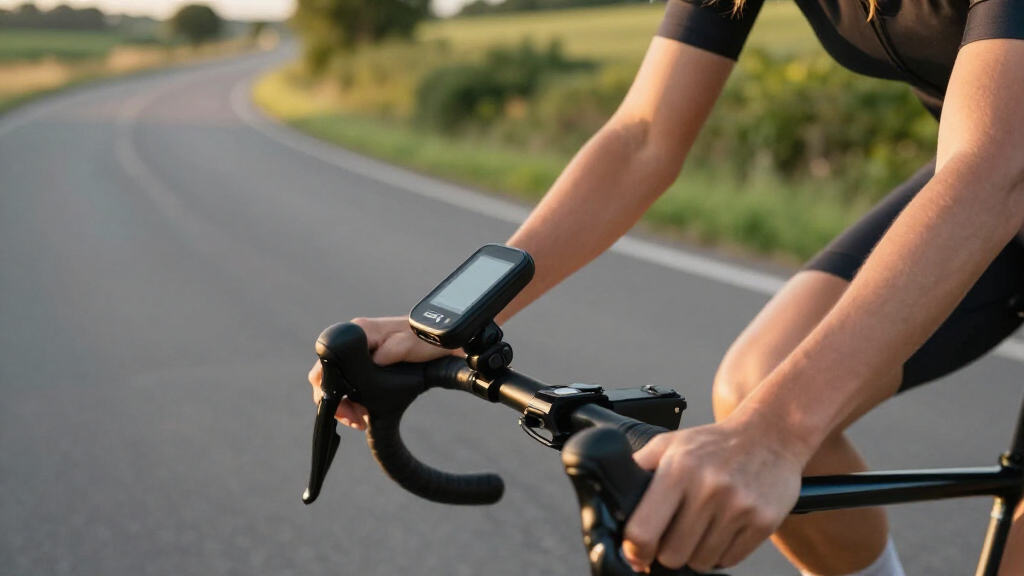
How We Picked
I selected these five devices by filtering for distinct use cases within the broader category of cyclist alert GPS technology. I excluded generic Bluetooth trackers that lack specific bicycle mounting solutions or ruggedized casing. My selection criteria focused on three pillars: reliability of the tracking network, ease of installation, and longevity of power.
I prioritized devices that offer clear differentiation. For instance, I included the Invoxia to represent cellular-based tracking, which functions independently of the owner’s phone proximity, unlike Bluetooth-based options like the Orbit or Knog. I also included two Garmin models to illustrate the spectrum of cycling computers, showing how screen size and battery life trade off against portability. I evaluated each product’s ability to serve as a reliable alert system, whether through audible alarms, push notifications, or real-time location updates.
| cyclist alert GPS device | Water Resistance | Mounting |
|---|---|---|
| Orbit Velo Bike Tracker with A | IP67 | Bottle-cage mount |
| Knog Scout Bike Alarm and Find | IP66 | Bottle cage braze-ons |
| Garmin Edge 850 Compact GPS Cy | — | Handlebar mount |
| Garmin Edge 1050 Premium Cycli | — | — |
| Invoxia GPS Tracker Pro Max 4G | IP67 | — |
Factors to Consider When Choosing Best Cyclist Alert GPS Devices
Selecting the right cyclist alert GPS device requires understanding the fundamental difference between security trackers and cycling computers. While both use GPS, their primary objectives and operational requirements differ significantly. My guide below breaks down these categories to help you align your purchase with your actual riding needs.Bluetooth vs. Cellular vs. Wi-Fi Tracking
The technology powering the location update is the most critical factor in reliability. Bluetooth trackers like the Orbit Velo and Knog Scout rely on nearby devices to relay their position. They are cost-effective and battery-efficient but fail in areas with no nearby smartphones. Cellular trackers like the Invoxia use their own network connection, offering greater independence but often requiring a subscription. Cycling computers like the Garmin Edge series primarily use GPS for navigation but rely on Bluetooth to sync data to your phone for safety alerts. If you ride in remote areas, cellular is superior. If you ride in cities, Bluetooth is sufficient and cheaper.
Battery Life and Maintenance
Battery endurance dictates how often you interact with the device. Dedicated trackers like the Orbit Velo can last years on a single coin-cell battery, making them ideal for ‘install and forget’ security. The Invoxia lasts months and requires recharging. In contrast, cycling computers like the Garmin Edge 1050 last hours to days and require charging after every few rides. If you are prone to forgetting to charge devices, a dedicated tracker with replaceable or long-life batteries is the more practical choice for peace of mind.
Deterrence vs. Recovery
Some devices aim to prevent theft, while others aim to help you recover a stolen bike. The Knog Scout is designed for deterrence, using a loud 85 dB alarm to scare off thieves. The Orbit Velo and Invoxia are designed for recovery, silently tracking the bike’s location. If you park in high-risk areas, an audible alarm adds a layer of active security. If you park in secure garages but worry about travel theft, silent recovery devices are more appropriate.
Ecosystem Lock-in
Many modern GPS devices are tied to specific ecosystems. The Orbit and Knog require an Apple ID and iOS device. Garmin devices work with both iOS and Android but offer the best experience within the Garmin Connect app. Cellular trackers are generally platform-agnostic, working with any smartphone that has the manufacturer’s app. If you are an Android user, your options for Bluetooth-based Apple Find My devices are non-existent, pushing you toward cellular or Garmin solutions.
Frequently Asked Questions
Do I need a subscription for a cyclist alert GPS device?
It depends on the technology used. Bluetooth-based trackers like the Orbit Velo and Knog Scout do not require a monthly subscription because they use the existing network of nearby smartphones to relay location data. However, cellular trackers like the Invoxia GPS Tracker Pro Max typically require a data plan to connect to cellular towers, although some models include a trial period or one year of service in the purchase price. Cycling computers like the Garmin Edge series do not require subscriptions for basic GPS navigation, but advanced safety features that rely on live data often need a paired smartphone with an active data connection.Can I use an Apple Find My device if I have an Android phone?
No, devices that rely exclusively on the Apple Find My network, such as the Orbit Velo and Knog Scout, are not compatible with Android smartphones. These devices use Apple’s proprietary encryption and network infrastructure, which is only accessible through iOS devices like iPhones, iPads, and Macs. If you are an Android user, you should look for cellular-based trackers like the Invoxia or cycling computers from brands like Garmin or Wahoo that offer cross-platform app compatibility.How accurate is the GPS tracking for anti-theft purposes?
Accuracy varies by device type and environment. Dedicated cycling computers like the Garmin Edge 1050 use multi-band GPS, which provides high precision for navigation and performance metrics, often within a few meters. Security trackers like the Orbit Velo may have slightly lower accuracy for real-time movement but are sufficient for locating a stationary stolen bike. Cellular trackers like the Invoxia can offer very frequent updates, sometimes as often as once per second, which is crucial for tracking a moving stolen vehicle, though their accuracy can be affected by cellular tower density.Are these devices waterproof enough for daily commuting?
Most of the devices reviewed here are designed for outdoor use. The Orbit Velo and Invoxia have an IP67 rating, meaning they are dust-tight and can withstand immersion in water up to 1 meter for 30 minutes, making them suitable for heavy rain and splashes. The Knog Scout has an IP66 rating, which protects against powerful water jets but not submersion. The Garmin Edge devices are also highly water-resistant, typically rated for swimming and heavy rain, but manufacturers generally advise against charging them while wet to prevent corrosion of the ports.Can a cycling computer serve as a sufficient anti-theft tracker?
A cycling computer like the Garmin Edge 1050 can provide some theft deterrence through features like incident detection and location history, but it is not a dedicated anti-theft device. It relies on a paired smartphone to send alerts, meaning if the thief disables your phone’s Bluetooth or the computer runs out of battery, you lose connectivity. Dedicated trackers like the Orbit Velo are designed specifically for long-term, low-power location tracking and are more reliable for recovery. For maximum security, many cyclists use both: a computer for data and a hidden tracker for insurance.Conclusion
My analysis of the best cyclist alert GPS devices reveals that the ideal choice depends entirely on your primary concern: security, navigation, or data. For the security-conscious Apple user, the Orbit Velo is the clear winner due to its maintenance-free design and robust network. If you need active deterrence in urban environments, the Knog Scout offers the best balance of alarm and tracking. For performance cyclists who prioritize navigation, the Garmin Edge 850 provides the best compact experience, while the Garmin Edge 1050 is unmatched for those who need extensive data and battery life. Finally, for riders in rural areas or those who want independence from smartphone proximity, the Invoxia GPS Tracker Pro Max is the most reliable cellular option.
I recommend assessing your typical riding environment before purchasing. If you ride in dense cities with many Apple devices, a Bluetooth tracker is efficient and cost-effective. If you ride alone in remote areas, cellular tracking is a safety necessity. By matching the technology to your context, you ensure that your device serves its purpose when you need it most.