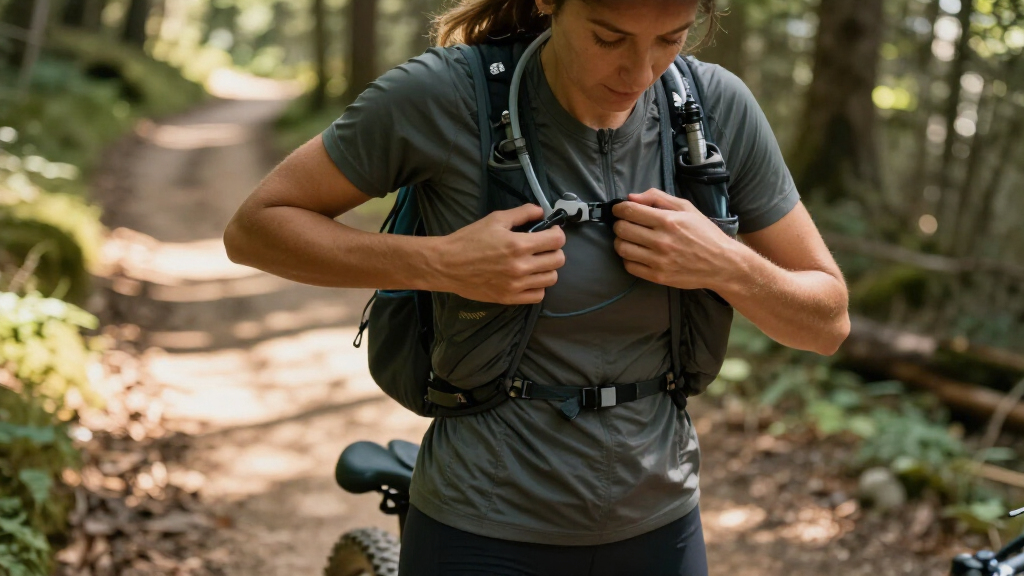

The right mountain bike hydration pack balances three things that pull against each other: enough water for your ride, enough storage for tools and layers, and a fit that doesn’t bounce on rough descents. My top pick, the Osprey Raptor 14L, wins because it handles all three better than anything else here — the Hydraulics reservoir is the best in the lineup and the 14L capacity covers all-day rides. If you race or ride fast and hot, the USWE Airborne is the bounce-free specialist, while the Unigear 2L pack is the standout budget option that beats packs costing twice as much. The main tradeoff to understand before buying: dedicated MTB packs fit better on technical terrain but cost more, while generic multi-sport packs save money but often slosh and shift when the trail gets rowdy. Keep reading for the full breakdown of all nine.

Get sports gear delivered free — and shop member deals
- Fast, free delivery on millions of items
- Access to Prime Big Deal Days deals on October 6–7
- Prime Video, Amazon Music and more included
Complete the kit


Key Takeaways
- Reservoir quality separated the top tier more than anything else — the Osprey Hydraulics and CamelBak Crux bladders offer noticeably cleaner taste, easier filling, and better bite valves than the generic bladders bundled with budget packs like the NOOLA and Unigear.
- Bounce control is where race-focused designs earn their price: the USWE Airborne’s harness system eliminates shoulder slop entirely, while multi-sport packs like the Teton Oasis shift noticeably on technical descents despite their larger capacity.
- CamelBak‘s three entries cover three distinct buyers — the M.U.L.E. 12 for all-round trail riding, the Classic for short spins, and the Hydrobak as the bare-minimum option — so choosing between them is really about ride length, not quality.
- The Zelvot vest proves that running-vest geometry can work on a bike for riders who hate traditional backpacks, but its minimal storage means it only suits short, fast rides.
- Capacity ratings are misleading across brands: the Teton’s 18L/22L options are hiking-scale volume that most mountain bikers will never fill, while 10-14L proved the sweet spot for trail riding.
| Osprey Raptor 14L Men’s Mountain Biking Backpack with Hydraulics Reservoir |  | Best Overall | Capacity: 14L | Reservoir Included: Yes | Reservoir Capacity: 2.5L | VIEW LATEST PRICE | See Our Full Breakdown |
| Zelvot Running Vest with 2L Water Bladder, Hydration Backpack, Reflective Chest Pack |  | Best Budget Multisport Pick | Water Capacity: 2L bladder included | Material: 900D Oxford fabric | BPA-Free: Yes | VIEW LATEST PRICE | See Our Full Breakdown |
| CamelBak M.U.L.E. 12 Mountain Bike Hydration Pack |  | Best for Long Rides | Capacity: 12 liters | Reservoir Volume: 100oz (approx. 3L) | Back Panel: Air Support ventilation | VIEW LATEST PRICE | See Our Full Breakdown |
| USWE Airborne Limited Race Edition Hydration Backpack |  | Best for Racing and Minimalists | Total Storage Capacity: 3 liters | Hydration Bladder Capacity: 2 liters | Pack Weight: 415 g (excluding bladder) | VIEW LATEST PRICE | See Our Full Breakdown |
| CamelBak Classic Bike Hydration Pack |  | Best for Beginners | Reservoir Capacity: 85oz (approx. 2.5L) | Reservoir Type: Crux | Back Panel: Breathable air mesh | VIEW LATEST PRICE | See Our Full Breakdown |
| Unigear Hydration Pack Backpack with 2L Water Bladder | 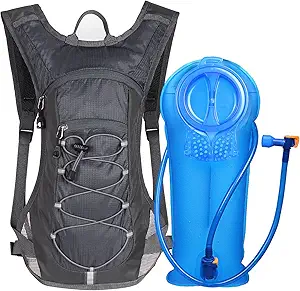 | Best Budget Starter Pick | Material: 100% Nylon | Dimensions: 16.5 x 8 x 6 inches | Water Capacity: 2 liters | VIEW LATEST PRICE | See Our Full Breakdown |
| CamelBak Hydrobak Hydration Reservoir Bike Pack |  | Best Minimalist Commuter Pack | Reservoir Capacity: 50oz | Design: Lightweight, minimalist | Back Panel: Air mesh | VIEW LATEST PRICE | See Our Full Breakdown |
| Teton Oasis/Trailrunner Hydration Backpack 18L/22L |  | Best for All-Day Ride Capacity | Water Capacity: 2L/3L bladder | Storage Capacity: 18L/22L | Material: High-density foam, breathable mesh | VIEW LATEST PRICE | See Our Full Breakdown |
| NOOLA Hydration Backpack with 3L Water Bladder |  | Best Heavy-Duty Utility Pick | Material: 900D nylon | Hydration Capacity: 3L | Bladder Material: BPA-free TPU | VIEW LATEST PRICE | See Our Full Breakdown |
More Details on Our Top Picks
Osprey Raptor 14L Men’s Mountain Biking Backpack with Hydraulics Reservoir
This option stands out for riders who want a pack that disappears on the bike while carrying a genuine trail toolkit. The winged harness and wrap hipbelt keep the load locked down on rough descents, something the CamelBak Classic simply can’t match with its minimal harness. The integrated tool roll is a differentiator: instead of rummaging through a main compartment mid-ride, tubes, levers, and a pump each get a dedicated home. Compared with the CamelBak M.U.L.E. 12, the Raptor trades a slightly larger reservoir for better organization and a more stable fit. The tradeoff is weight — at 2.22 lb empty, it’s the heaviest pack here, and riders who mostly do short loops will feel that heft for gear they never touch.
Pros:- Bike-specific winged harness keeps the pack stable on technical descents
- Integrated tool roll keeps trail repair kit organized and accessible
- Hipbelt pockets allow on-the-move access to snacks and phone
- 2.5L Hydraulics reservoir included with good flow rate
Cons:- At 2.22 lb empty, it’s noticeably heavier than minimalist competitors
- 14L capacity still falls short for all-day or bikepacking-style rides
Best for: All-mountain and trail riders doing 3-5 hour rides who carry tools, layers, and spare tubes
Not ideal for: Weight-conscious riders or those doing short fitness loops where a minimal pack like the USWE Airborne makes more sense
- Capacity:14L
- Reservoir Included:Yes
- Reservoir Capacity:2.5L
- Dimensions:18.5H x 11W x 10.6D in
- Weight:2.22 lb
- Harness:Winged harness with wrap hipbelt
- Organization:Internal organization, tool roll, hipbelt pockets
Our verdict“If you ride real trails long enough to need tools and layers, this is the most complete package in the lineup.”
Zelvot Running Vest with 2L Water Bladder, Hydration Backpack, Reflective Chest Pack
The Zelvot makes the most sense for riders (and runners) who want hydration on a tight budget without a fully bike-specific design. Its vest-style front pockets are borrowed from running, so snacks and a phone sit on your chest rather than behind you — faster access than the CamelBak M.U.L.E. 12 offers, at a fraction of the complexity. The 900D Oxford fabric and waterproof pockets punch above the price point, though the fit logic is different from dedicated MTB packs: the adjustable range (25-41 inches depending on size) is torso-based, so riders between sizes may struggle to dial in a bounce-free fit the way the USWE Airborne’s patented harness manages. Reflective detailing adds low-light visibility that the USWE lacks. It’s a solid value, but not a trail-tool hauler.
Pros:- Front chest pockets give instant access to nutrition and phone
- Waterproof compartments protect electronics from sweat and rain
- BPA-free and PVC-free 2L bladder with high-flow bite valve
- Reflective accents improve visibility for road-adjacent or dusk rides
Cons:- Running-vest fit doesn’t stabilize as well over body armor or loose jerseys
- Riders outside the 25-41 inch adjustment range won’t get a secure fit
- Limited color options and no tool organization
Best for: Budget-minded riders and multisport users who want one pack for cycling, running, and short hikes
Not ideal for: Mountain bikers carrying tools, pads, or layers — there’s no dedicated organization for trail gear
- Water Capacity:2L bladder included
- Material:900D Oxford fabric
- BPA-Free:Yes
- PVC-Free:Yes
- Adjustable Range:XS/S: 25-35 in; M/L: 29-41 in
- Pockets:Multiple waterproof compartments
- Visibility:Reflective details
Our verdict“A smart buy if you split time between running and casual riding, but serious trail riders should spend up for a bike-specific pack.”
CamelBak M.U.L.E. 12 Mountain Bike Hydration Pack
With a 100oz (3L) reservoir — the largest in this batch — the M.U.L.E. 12 is built for rides where the next water source is hours away. The quick-fill system makes refilling at a trailhead faucet far less fiddly than standard bladders, and the Air Support back panel does a credible job of cutting the sweaty-back problem the Osprey Raptor’s smaller sibling packs share. Magnetic tube management means the bite valve is always within a glance, a small feature that matters more the longer you ride. Compared with the Osprey Raptor 14, the M.U.L.E. carries more water but slightly less organizational refinement — no tool roll equivalent — and the bulk is real. For sub-90-minute rides, this pack is simply more than you need, and the removable waist strap is best stripped off to save weight.
Pros:- Class-leading 100oz reservoir with quick-fill opening
- Air Support back panel reduces heat buildup on long climbs
- Helmet carry and tool organization handle trail essentials
- Magnetic tube management keeps the hose secured and reachable
Cons:- Feels bulky and over-equipped for short rides
- Heavier and less svelte than minimalist options like the USWE Airborne
- Premium feature set comes at a premium price
Best for: Endurance riders and all-day adventurers who need maximum water capacity plus gear storage
Not ideal for: Short-ride riders — the bulk and weight are wasted on 60-90 minute loops; a Hydrobak-style pack is the better fit
- Capacity:12 liters
- Reservoir Volume:100oz (approx. 3L)
- Back Panel:Air Support ventilation
- Tube Management:Magnetic attachment
- Carry Features:Helmet carry, tool organization
- Waist Strap:Removable
Our verdict“The clear choice when ride length and water needs rule the decision — big capacity, big comfort, big footprint.”
USWE Airborne Limited Race Edition Hydration Backpack
At 415 grams excluding the bladder, the Airborne is the featherweight of this lineup, and its patented bounce-free harness is the reason it earns a spot rather than just being small. The harness effectively strangles the pack to your back — a genuine advantage over the Zelvot vest, which relies on simple strap adjustment for stability. This model is better suited to enduro racers and fast riders who want water, a tube, and little else; the 3L total storage is barely a third of what the Osprey Raptor 14 offers, so this is a deliberate trade of capacity for agility. The torso sizing range (33-43.3 inches) is another constraint — riders outside it should look elsewhere — and the absence of reflective detailing makes it a poor commuter choice. As a race-day tool, though, it’s hard to beat.
Pros:- Patented harness eliminates bounce even at race pace
- Featherweight 415g construction (without bladder)
- 2L bladder included with multiple storage pockets
- Low-profile fit works under or over most body armor
Cons:- Only fits torsos between 33-43.3 inches — no size workarounds
- 3L storage is the smallest in this roundup by far
- No reflective features for low-light visibility
Best for: Enduro and XC racers, plus fast trail riders who prioritize zero bounce over carrying capacity
Not ideal for: All-day riders or anyone needing layers, tools, and food — 3L of storage fills up almost immediately
- Total Storage Capacity:3 liters
- Hydration Bladder Capacity:2 liters
- Pack Weight:415 g (excluding bladder)
- Torso Size Range:33-43.3 in (84-110 cm)
- Harness:Patented bounce-free system
- Activities:Mountain biking, cycling, outdoor sports
Our verdict“Buy this if speed and stability top your list; skip it the moment your gear list outgrows a tube and a snack.”
CamelBak Classic Bike Hydration Pack
The Classic lives up to its name by doing the essentials without overwhelming a new rider. The 85oz Crux reservoir delivers more water than most beginners will drink in a two-hour ride, and the breathable mesh back panel keeps comfort levels reasonable without the complexity (or price) of the M.U.L.E. 12’s Air Support system. Reflective accents are a thoughtful touch for riders who end up finishing near dusk — a detail the race-focused USWE Airborne omits entirely. The honest limitation is storage: one zippered pocket means a tube, keys, and a phone are competing for the same space, with nothing like the Osprey Raptor’s tool roll or hipbelt pockets. This pick makes the most sense as a first hydration pack or a spare; riders who’ve already logged a season of trails will outgrow it fast.
Pros:- 85oz Crux reservoir offers generous hydration for beginner-length rides
- Breathable air mesh back panel and ventilated harness reduce sweat buildup
- Reflective accents improve safety for evening rides
- Simple design is easy to use and clean for first-time owners
Cons:- Minimal storage — one zippered pocket with no organization
- No capacity for tools, layers, or larger items
- Lacks the stability features of bike-specific packs like the Raptor
Best for: New mountain bikers and casual riders who want reliable hydration and ventilation without paying for features they won’t use
Not ideal for: Trail riders carrying tools, spare layers, or food — a single pocket fills up before the ride starts
- Reservoir Capacity:85oz (approx. 2.5L)
- Reservoir Type:Crux
- Back Panel:Breathable air mesh
- Harness:Ventilated harness
- Storage:Zippered pocket for small essentials
- Visibility:Reflective accents
Our verdict“A dependable, no-fuss first hydration pack that newer riders will love until their gear needs grow.”
Unigear Hydration Pack Backpack with 2L Water Bladder
For riders who want hydration without a big spend, this option stands out as the cheapest way into a full 2L setup. Compared with the CamelBak Hydrobak, it actually carries more water — 2 liters versus roughly 1.5 — and includes shoulder, chest, and waist straps that keep the load from bouncing on rough singletrack. The splash-resistant nylon shell handles drizzle and spray well enough for typical trail days, and the whole package works for teens and adults alike thanks to the generous adjustability. The tradeoff is minimal cargo space: that small front pocket barely fits a tube and a multi-tool, so anyone carrying layers or spare parts should look at the Teton Oasis instead. This pick makes the most sense for casual riders testing whether a hydration pack suits them at all.
Pros:- Full 2L BPA-free bladder included at a budget price
- Three-point strap system (shoulder, chest, waist) keeps the pack stable on rough trails
- Lightweight at 1.1 lbs, comfortable for teens and smaller adults
- Splash-resistant nylon shrugs off trail spray and light rain
Cons:- Tiny front pocket limits cargo to bare essentials
- No dedicated organization — gear ends up loose in one compartment
- Bladder and materials feel less refined than CamelBak or Osprey equivalents
Best for: Beginner mountain bikers and teens who want an affordable, full-featured 2L hydration setup for short-to-moderate rides
Not ideal for: Riders who carry tools, layers, or snacks regularly — the single small pocket won’t hold a full trail kit
- Material:100% Nylon
- Dimensions:16.5 x 8 x 6 inches
- Water Capacity:2 liters
- Weight:1.1 lbs
- Included Components:Backpack, Bladder
- Adjustable Straps:Shoulder, Chest, Waist
Our verdict“A low-risk entry point for new riders who need water on their back more than storage on their bike.”
CamelBak Hydrobak Hydration Reservoir Bike Pack
Where the Unigear tries to do a bit of everything, this model commits to doing one thing exceptionally well: staying out of your way. The Hydrobak is the lightest-feeling option in this batch thanks to its minimalist cut, and the Crux reservoir delivers noticeably faster flow than generic bladders — a real advantage when you’re drinking between effort bursts on a climb. The air mesh back panel and ventilated harness mean less of that soaked-shirt feeling on hot commutes, which the budget packs here can’t match. The compromise is blunt: one zippered pocket and roughly 50oz of capacity make this a short-ride specialist. Compared with the CamelBak M.U.L.E. 12, it carries far less gear but rides nearly invisible on your back. This pick makes the most sense for riders who already store tools on their bike frame.
Pros:- Crux reservoir offers faster, easier sipping than generic bladders
- Ventilated harness and air mesh back reduce sweat buildup in hot weather
- Barely-there weight makes it easy to forget you’re wearing it
- CamelBak’s proven build quality and replacement-part ecosystem
Cons:- 50oz capacity is the smallest in this roundup
- One small pocket leaves no room for layers, tools, or food
- Poor value if you need anything beyond hydration
Best for: Commuters and fitness riders doing short-to-moderate rides who store tools and spares on the frame, not their back
Not ideal for: All-day trail riders — the 50oz capacity and single pocket run dry and run out of space quickly
- Reservoir Capacity:50oz
- Design:Lightweight, minimalist
- Back Panel:Air mesh
- Harness:Ventilated, breathable
- Storage:Zippered essentials pocket
- Intended Use:Short rides, commutes
Our verdict“The right choice when your only goal is water delivery on short rides, and everything else lives on your bike.”
Teton Oasis/Trailrunner Hydration Backpack 18L/22L
This is the cargo hauler of the budget tier. With 18L or 22L of organized storage, it swallows everything the Unigear and CamelBak Hydrobak force you to leave behind — layers, lunch, tools, pads — and the sewn-in rain cover and weather-guarded zippers give it genuine bad-weather credibility that neither cheaper pack offers. The insulated bladder sleeve is another differentiator, keeping water drinkable on hot days instead of sun-warmed. The tradeoff is bulk: this is more backpack than hydration vest, so riders who want a barely-there feel on fast laps should look at the USWE Airborne or Hydrobak instead. Fit also demands some patience — the comfort-fit straps work well once dialed, but expect fine-tuning before it disappears on your back. This model makes the most sense for riders mixing long climbs with full days in the saddle.
Pros:- Huge organized storage (18L/22L) at a midrange price
- Sewn-in rain cover and weather-guarded zippers handle real storms
- Insulated bladder compartment keeps water cold for hours
- Bungee cord system adds external carry for pads or a shell
Cons:- Bulkier and warmer on your back than slim packs like the Hydrobak
- Strap system needs patient adjustment before it fits well
- 2L bladder may need the 3L upgrade for the longest outings
Best for: All-day riders and bikepack-curious mountain bikers who need serious storage plus weather protection without a premium price
Not ideal for: Weight-obsessed riders chasing fast laps — 18-22L of capacity rides bulkier than minimalist packs
- Water Capacity:2L/3L bladder
- Storage Capacity:18L/22L
- Material:High-density foam, breathable mesh
- Weather Protection:Sewn-in rain cover, weather-guarded zippers
- External Carry:Bungee cord system
- Insulation:Insulated bladder sleeve
Our verdict“Buy it when the ride is long enough that storage matters as much as water; skip it for quick laps.”
NOOLA Hydration Backpack with 3L Water Bladder
Built like gear rather than sportswear, this option trades the ounce-counting mentality of the CamelBak Hydrobak for outright toughness. The 900D nylon shell is far more abrasion-resistant than the standard nylon on the Unigear, which matters if your pack routinely grinds against rock, brush, or the ground. With a 3L TPU bladder — the largest here — plus nine pockets and MOLLE webbing, it doubles as a genuine utility pack for rides that blur into camping or hiking. The catch is weight and bulk: this is the least bike-specific shape in the batch, and double-fastened shoulder and waist straps feel overbuilt compared with the sleeker Teton Oasis. Compared to a purpose-built mountain bike pack like the CamelBak M.U.L.E. 12, it lacks the refined riding fit but wins on raw durability and modularity.
Pros:- 900D nylon construction shrugs off abrasion and hard use
- 3L BPA-free TPU bladder is the largest capacity in this roundup
- Nine pockets plus MOLLE webbing for modular gear attachment
- Padded, breathable back with secure double-fastened straps
Cons:- Heavier and bulkier than bike-specific packs, tiring on long pedaling days
- Tactical design lacks the riding-specific fit of CamelBak or Teton packs
- Limited color choices
Best for: Riders and overlanders who abuse their gear and want maximum water, MOLLE expandability, and tank-like construction
Not ideal for: Minimalist trail riders — the bulk, weight, and tactical styling work against fast, athletic riding
- Material:900D nylon
- Hydration Capacity:3L
- Bladder Material:BPA-free TPU
- Number of Pockets:9
- Straps:Double fastened shoulder and waist
- Molle Compatibility:Yes
Our verdict“Choose it when durability and hauling capacity outrank riding comfort — not for anyone chasing Strava times.”

How We Picked
I evaluated these nine packs against five criteria that actually matter on the trail. Fit and bounce control came first — a pack that slaps against your back on rock gardens is a safety issue, not just an annoyance, so harness design and load stabilization weighed heavily. Reservoir quality came second: bladder taste, fill ease, bite valve shut-off, and how well the system drains and dries between rides differentiate premium packs from bundle-included bladders. Third, capacity and organization — I looked for tool rolls, pump sleeves, and dedicated pockets that keep a tube from rattling loose, not just raw liter counts.
Fourth, ventilation and comfort on long climbs, since a pack that turns your back into a swamp ruins summer riding. Finally, value: what each pack costs relative to what it replaces, because a $35 pack that leaks in month two is worse value than a $140 pack that lasts a decade. Packs designed specifically for mountain biking ranked above general-purpose hydration backpacks when fit and stability were close, because the demands of technical descending are unforgiving of compromises.
Factors to Consider When Choosing Mountain Bike Hydration Packs
Before you pick a pack from the list above, it helps to understand what actually drives performance differences in this category — and where buyers most often go wrong. These are the factors I’d weigh before spending anything.
Reservoir Size and How You Actually Ride
Most riders overestimate how much water they need. A 2L bladder covers roughly 90 minutes of hard summer riding, and 3L suits all-day epics or hot desert conditions — but a half-full 3L bladder sloshes more than a full 2L one unless the pack has a compression design. The common mistake is buying a 3L pack for two-hour rides, then carrying dead weight and bulk every time out. Also check whether the bladder is included at all and, more importantly, whether it’s any good: replacement bladders from Osprey and CamelBak cost $35-45 on their own, which can erase the savings on a cheap pack with a poor-quality bladder that makes your water taste like plastic.
Capacity: Don’t Buy a Hiking Pack by Accident
This is the single most common mistake I see. Hiking-oriented packs like 18L and 22L models are built for carrying layers, food, and survival gear on foot, with tall, floppy profiles that shift around when you’re descending at speed. Mountain biking demands a low, narrow profile that keeps the weight close to your spine — which is why dedicated MTB packs max out around 14L even for big days. As a rule, 5-9L suits short trail rides with room for tools and a snack, 10-14L covers all-day rides with layers, and anything above that belongs on a bikepacking trip, not a trail ride. Volume you don’t use is volume that flops, so size down if you’re torn.
Harness Design and Bounce Control
The harness is what you’re actually paying for when you move from budget to premium packs. Standard shoulder straps work fine for smooth flow trails, but technical terrain exposes every fit compromise through shoulder slap and pack sway. Race-style harnesses that wrap around your ribcage — like USWE’s no-dance-numbers design — lock the pack to your body completely but take longer to put on and can feel restrictive. Look for sternum straps that adjust vertically, load-lifter straps that pull the weight off your shoulders, and back panels with ventilation channels if you sweat heavily. If your riding is mostly lift-accessed or enduro-style descending, prioritize stability over everything; XC riders pedaling all day can favor ventilation instead.
Ventilation and Back Panel Design
A sweaty back is the most common complaint about hydration packs, and it’s worse in summer and on sustained climbs. Suspended mesh back panels create an air gap that dramatically reduces sweat, but they push the load slightly away from your spine, which marginally increases bounce. Flat foam panels sit closer and more stable but soak your jersey. Riders in hot climates should treat ventilation as a top-three factor; riders in cool or dry climates can safely deprioritize it for fit and capacity. Also check whether the back panel has any spine protection or reinforcement — some packs include a padded panel that offers incidental protection in a fall, though none of these replace a proper back protector for aggressive riding.
Organization and Trail-Side Access
What separates a good MTB pack from a generic one is whether you can reach your tools, snacks, and phone without taking it off. Look for hip-belt pockets for gels and a phone, a dedicated tool sleeve that keeps your multi-tool and tube from migrating to the bottom of the main compartment, and external compression straps for kneepads or a layer. Zipper pulls you can operate with gloves on are a small detail that matters constantly in winter. The failure mode of cheap packs is one big undifferentiated cavity — everything rattles together, and you’re digging for your tube while your friends wait. Count the external pockets before you buy, not the total capacity.
When to Pay More — and When Not To
Premium packs justify their price through bladder quality, harness engineering, and durability — Osprey’s lifetime warranty and CamelBak’s replacement-part ecosystem mean a $130-150 pack can outlast three $40 packs. Pay more if you ride weekly or more, ride technical terrain, or hate a sweaty, bouncing back enough that it affects your riding. Skip the premium tier if you ride occasionally on mellow trails, are buying for a growing teenager, or mainly want water for gravel and fire-road riding — a $35-60 budget pack with a decent 2L bladder does that job without compromise. The one place I’d never economize is the bite valve and feed tube: cheap ones leak, and a wet chamois on every ride gets old fast.
Frequently Asked Questions
Is a hydration pack better than a water bottle on my mountain bike?
It depends on your bike and terrain. Full-suspension frames with shock linkages often can’t fit bottle cages, which makes a pack the only practical option, and rough descents can eject bottles from cages entirely. Packs also carry your tools, tube, and layers in one place, which bottles obviously can’t. On the other hand, if your frame fits a bottle and your rides are under 90 minutes, a bottle is lighter, cheaper, and keeps your back cool and free. Many riders end up using both: a bottle for short spins, the pack for all-day or remote rides where walking out isn’t an option.
How do I stop my hydration pack from bouncing on descents?
Bounce usually comes from three fixable causes: a bladder that’s half empty and sloshing, loose shoulder and sternum straps, or a pack with too much unused volume. Fill the bladder completely, then flip it and suck the air out through the tube before sealing — this removes the air pocket that causes most sloshing. Cinch the sternum strap snugly across your chest and tighten the shoulder straps until the pack sits flat against your back without gaps. If you’ve done all that and it still moves, the pack itself is the problem — that’s where race-harness designs like the USWE Airborne justify their price, because they physically cannot sway the way standard-strap packs do.
Why does my water taste like plastic, and can I fix it?
New bladders almost always taste plasticky at first, and cheaper bladders keep that taste longer because of lower-grade materials. The fix is to soak the bladder in warm water with baking soda for a few hours, then rinse and repeat once or twice before first use — this removes manufacturing residues. Freezing the empty bladder overnight also helps neutralize odor. If the taste persists after several rides and cleanings, the bladder material itself is the issue and upgrading to an Osprey Hydraulics or CamelBak Crux replacement is the realistic solution; both are sized to standard packs and cost $35-45. That ongoing taste problem is a hidden cost of very cheap packs that the sticker price doesn’t show.
What size hydration pack do I need for mountain biking?
For most trail riders, 9-14L is the sweet spot: enough for a tube, pump, multi-tool, layer, and snacks without excess bulk that flops on descents. Short sub-two-hour rides on familiar trails work fine with a minimalist 5-8L pack like the CamelBak Hydrobak or Classic. All-day rides, bikepacking-adjacent adventures, or riding with kids (who always need your snacks) justify the Osprey Raptor 14L or the larger Teton options. Avoid the trap of buying hiking-scale 18-22L capacity ‘just in case’ — unused volume is the main cause of pack sway, and you can always strap kneepads or a jacket externally. Size for your typical ride, not your once-a-year epic.
How do I clean and store the bladder so it doesn’t grow mold?
Mold in the tube is the number-one way hydration systems die, and it’s entirely preventable. After every ride, drain the bladder, then flush it with clean water and scrub the interior with a soft brush or a handful of uncooked rice with water as an agitator. Dry it fully open — draping it over a water bottle or using a cheap bladder hanger keeps the sides apart so air circulates, and run the tube dry by blowing through it. For the bite valve, pop it apart weekly and rinse the internals. Store it dry and open in the freezer if you ride infrequently, since mold can’t grow on a frozen, dry surface. Packs with wide-mouth or fold-open bladders like the Osprey Hydraulics make all of this dramatically easier, which is a real long-term ownership advantage.
Conclusion
Here’s how the field shakes out by buyer type. For the best overall, the Osprey Raptor 14L is the most complete package — best-in-class reservoir, excellent organization, and capacity for any ride, and its price is justified by durability. The best value pick is the Unigear 2L pack, which delivers a serviceable fit and bladder for a fraction of premium pricing and is the smart entry point for occasional riders. The best premium option is the USWE Airborne: if you ride fast, technical terrain and hate bounce more than anything, its race harness is in a different league from standard-strap packs. Beginners should start with the CamelBak Classic — simple, comfortable, affordable, and it teaches you what you actually need before you spend more. For specific needs: the CamelBak M.U.L.E. 12 for all-round trail riders who want proven design, the Zelvot vest for riders who can’t stand backpacks, the Hydrobak for bare-minimum short rides, the Teton for riders who genuinely need big capacity for mixed hiking and biking, and the NOOLA for buyers prioritizing maximum water volume per dollar. Match the pack to your actual riding, not your aspirational riding, and you’ll get years of use from whichever you choose.
Fall Picks
fall essentials
As an affiliate, we earn on qualifying purchases.