TL;DR

Get sports gear delivered free with Prime
- Fast, free delivery on millions of items
- Prime Video, Amazon Music and more included
- Member-only deals all year
An Outdoor Life report published Oct. 9, 2026, recounts the author’s missed chance at a large mountain whitetail in northwest Montana. The account describes how difficult terrain and brief shooting opportunities reward slow movement, close attention and readiness; it does not identify the buck’s fate.
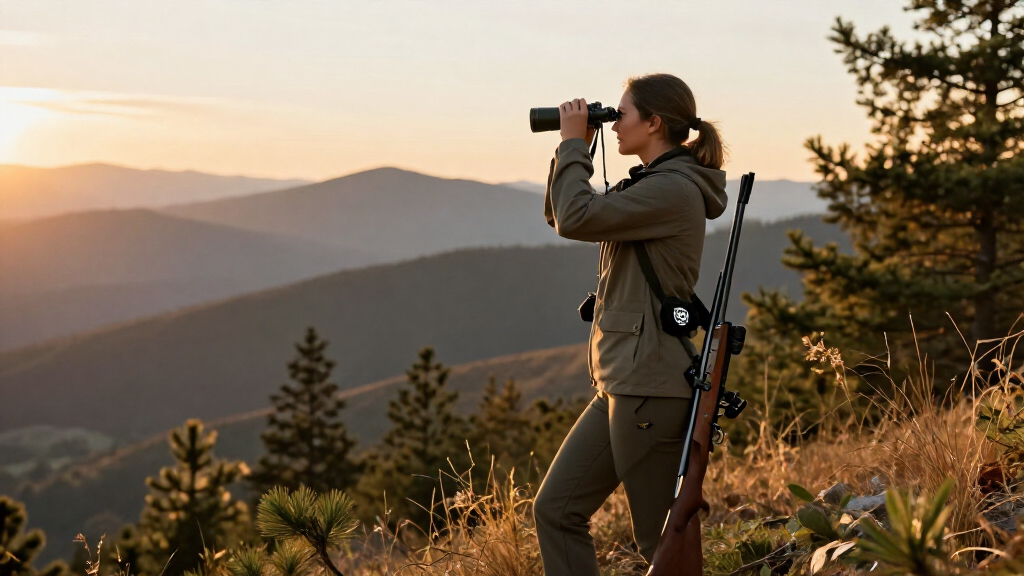
Outdoor Life published a first-person account on Oct. 9 describing a missed opportunity at a large whitetail buck in mountain country in northwest Montana, using the encounter to explain the demands of hunting in steep, thickly wooded terrain. The author says the deer crossed an open logging road about 60 yards away and stood broadside briefly, but the author had only raised the rifle halfway when the opportunity passed.
The account describes mountain whitetail hunting as a slow search through conifer forests, steep slopes and dense thickets, where deer sightings can be days apart. The author says a hunter may cover eight to 10 miles a day without seeing a buck, even in an area where tracks are present. Deer are described as concentrated in pockets of habitat rather than spread evenly across the landscape.
In the author’s Montana hunting area, blocked-off logging roads provide practical routes through terrain that can be difficult to cross on foot. The roads lead toward clearcuts, where new growth and brush can provide food. The report identifies draws, finger ridges, saddles, clearcut edges and road margins as places where deer sign or travel may be found.
The missed buck illustrates the report’s central practical point: sightings may be brief, and road openings can be among the few clear shooting lanes. The author says having the rifle ready, moving slowly and watching nearby cover as well as distant slopes can matter when a deer appears. The author also describes leaving the sling in a backpack while hunting and favoring shooting sticks over a bipod in this terrain, based on personal experience and equipment preferences.
Why Brief Sightings Shape the Hunt
The account matters to hunters because it connects terrain and access to the pace of a hunt. In dense cover, hunters may have little time to identify a deer and prepare for a shot; the report’s missed opportunity shows how a buck can cross a narrow opening before a hunter is ready. The lesson the author draws is not that any single setup guarantees success, but that awareness and preparation need to match the conditions.
It also describes a particular form of western whitetail hunting that can differ from hunting in hardwoods or along fields. Logging roads may make travel possible, while clearcuts and new growth shape where food and open sightlines occur. Readers should treat the gear choices and tactics as the author’s experience in a specific area, not as universal instructions for every hunter or landscape.
As an affiliate, we earn on qualifying purchases.
Logging Roads and Mountain Whitetails
The author says they grew up hunting deer in the Northeast’s hardwoods and field edges and had to adjust to steep, conifer-covered western terrain. The report suggests that logging-road edges, clearcuts and later regrowth may help explain how whitetails use some high-country locations, while noting that this country is not necessarily deer-rich. The account does not present a broader ecological study.
For the Montana area described, the author favors hunting later in the season, when bucks are rutting and snow is on the ground. These are details of the author’s approach, not a claim that the same timing or conditions apply across the West. The report was published as practical hunting coverage, combining a personal episode with observations about access, deer sign and equipment.
““You’re not hunting if your rifle is hanging from your shoulder.””
— Orv Kuester, described in the report as a former outfitter and the author’s friend
compact shooting sticks for hunting
As an affiliate, we earn on qualifying purchases.
As an affiliate, we earn on qualifying purchases.
What the Encounter Leaves Unknown
The report does not say whether the buck was wounded, where it went after crossing the road or whether the author saw it again. It also provides no date for the encounter and does not identify the specific hunting location beyond mountain country in northwest Montana. The account is a first-person hunting report, not an independently documented record of the animal or the circumstances.
The author’s descriptions of deer distribution, habitat and effective equipment reflect experience in the area they hunt. The report does not provide survey data or comparative results that would establish how common these conditions are across western whitetail range.
As an affiliate, we earn on qualifying purchases.
Lessons for Future Mountain Hunts
The report does not announce a follow-up hunt or a new development. Its practical conclusion is that hunters returning to similar terrain can apply the author’s observations by moving deliberately, scanning close cover, and staying prepared for short-lived openings. Any hunt must still follow local laws and safe firearm practices, and the report does not promise that these methods will lead to a sighting or a successful shot.
For readers, the next question is whether the author will revisit the area and provide an update on the missed buck; the published account gives no indication. Until then, the confirmed takeaway is limited to the author’s experience: a brief encounter became a lasting lesson in how quickly conditions can change on a mountain road.
high-visibility hunting clothing for steep terrain
As an affiliate, we earn on qualifying purchases.
As an affiliate, we earn on qualifying purchases.
Key Questions
What happened in the report?
The author recounts seeing a large whitetail cross a logging road about 60 yards away. It stood broadside briefly, but the author did not raise the rifle fully in time.
Where was the hunt?
The report describes mountain hunting in northwest Montana, but does not give a more precise location or the date of the encounter.
Why does the author focus on logging roads?
The author says blocked-off Forest Service and timber-company roads offer relatively level ways through steep terrain and provide access to clearcuts and other areas where deer sign may be found.
Does the article say what happened to the buck?
No. It does not say whether the buck was hit, where it went afterward or whether the author encountered it again.
Are the gear recommendations universal?
No. The sling, bipod and shooting-stick comments are the author’s personal choices for the terrain and hunting style described, not universal recommendations.
Source: rss
NFL season / tailgating Picks
team gear
As an affiliate, we earn on qualifying purchases.