
TL;DR

Get sports gear delivered free with Prime
- Fast, free delivery on millions of items
- Prime Video, Amazon Music and more included
- Member-only deals all year
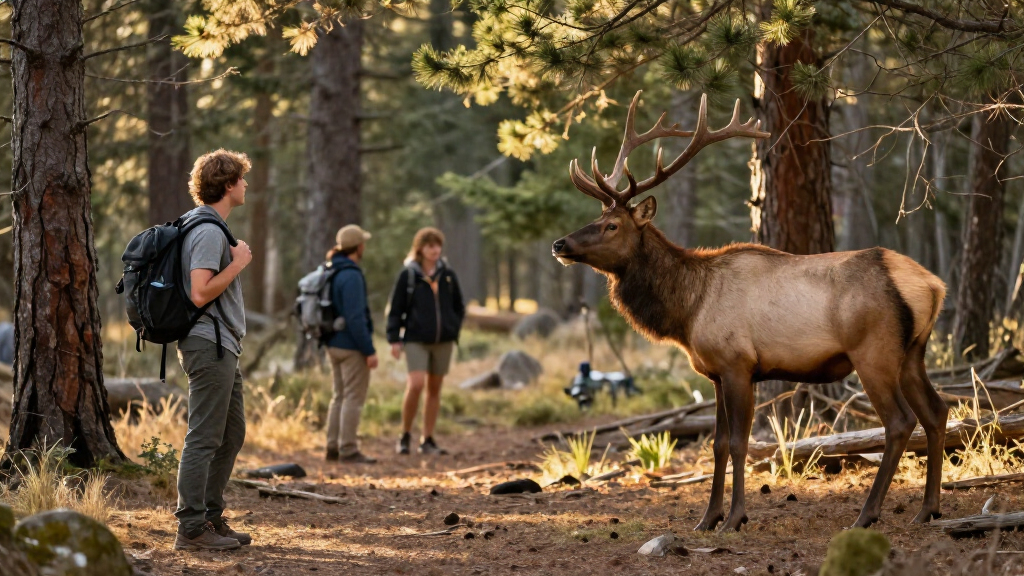
An Outdoor Life report published Oct. 9 questions the long-standing reputation of elk as exceptionally difficult to kill. Writer Tyler Freel describes three bulls killed during a crop-damage hunt, including two taken with a 6mm Creedmoor, while stressing that shot placement matters and his experience is not a scientific test.
Outdoor Life published a report on Oct. 9 arguing that elk may be less difficult to kill than their reputation suggests, with writer Tyler Freel describing three bulls taken during a crop-damage hunt. Freel says two of his bulls were killed with a 6mm Creedmoor, but the account is personal experience, not a controlled comparison of cartridges or a scientific study of elk resilience.
Freel recounts taking part in a hunt on land where elk were damaging crops, with a two-bull limit for the hunt. He says he shot two bulls and his hunting partner, Frank, shot one. The animals were taken at distances from 150 to 350 yards, and, according to Freel, none traveled more than about 10 yards after the fatal shot or shots.
Freel used a 6mm Creedmoor loaded with 93-grain copper bullets. He says one bull was hit through the near shoulder, lungs and opposite side, while another was shot through both shoulders and the lungs. He describes the first shot at Frank’s bull as a low hit that broke a front leg without striking the brisket; a later shot hit the ribs and stopped in the opposite shoulder. That account shows why the number of shots alone cannot establish that an animal is unusually hard to kill: where a bullet strikes matters.
The writer also describes taking his first elk in New Mexico in 2021 with a .300 Win. Mag. He hit the bull in the lungs twice before it stopped near a property boundary. Freel says that experience initially left him with the impression that elk were tough, but argues that anecdotes can be misleading when the precise location and effect of a shot are not known.
Shot Placement Shapes the Debate
The article speaks to a recurring hunting debate over whether elk require particularly powerful cartridges and heavy bullets. Freel’s account challenges the idea that a larger cartridge alone is needed to kill an elk quickly, while also underscoring that poorly placed shots can lead to an animal traveling or requiring follow-up shots. That distinction matters to hunters weighing equipment and to anyone assessing claims about an animal’s durability.
Freel does not present his hunt as proof that a particular cartridge is appropriate in every circumstance. The three animals, the hunt conditions, bullet construction, distances and shot angles are part of a limited set of observations. His central point is narrower: in his experience, a properly placed bullet through vital organs can be effective, and stories of elk surviving severe wounds may sometimes leave out important details about shot placement.
As an affiliate, we earn on qualifying purchases.
A Reputation Built on Anecdotes
Freel writes that elk have long been described by hunters as among North America’s toughest big-game animals. The reputation, he says, has fueled decades of arguments about cartridges and bullets, and can lead some hunters to believe they need very large rifles. He contrasts that lore with his own experience hunting elk and other large animals.
The report also acknowledges a basic limit: animal toughness is not a precise scientific measure in the article. Freel says stories about animals traveling long distances after being shot may be repeated without reliable information about where they were hit. He suggests that hunters may sometimes blame an animal’s supposed resilience for a failed or uncertain outcome. That is his interpretation, rather than a conclusion established by data in the report.
““Animal ‘Toughness’ Isn’t an Exact Science.””
— Tyler Freel, Outdoor Life writer
As an affiliate, we earn on qualifying purchases.
What Three Bulls Cannot Establish
The report does not provide a controlled comparison of rifles, bullet types or shot placements, and it does not establish how representative the three-bull hunt was. Its observations cannot determine which cartridge is suitable for all elk hunts or replace guidance on lawful, ethical hunting and equipment. The specific hunt’s date, location and broader conditions are not detailed in the supplied report excerpt.
It is also not possible from the account to verify the many older stories Freel references, including reports of elk traveling long distances after being shot. The article argues that some such stories may involve poorly placed hits, but does not document individual cases. The extent to which elk differ from other deer species in their ability to withstand injury remains unquantified here.
As an affiliate, we earn on qualifying purchases.
No Follow-Up Study Announced
The report presents Freel’s hunting observations and interpretation; it does not announce a follow-up study or a new test of cartridges. Readers should treat its conclusion as a first-person account unless further reporting supplies broader evidence, such as carefully documented comparisons across animals and conditions.
For now, the practical takeaway in Freel’s account is that shot placement and bullet performance were central to the outcomes he describes. The report does not set out a universal equipment recommendation, and hunters must follow local regulations and make decisions suited to their circumstances.
As an affiliate, we earn on qualifying purchases.
Key Questions
What is the report’s main conclusion about elk?
Freel argues that elk are not as difficult to kill as some hunters believe, particularly when a suitable bullet is placed through vital organs. He presents that as an experience-based conclusion, not a scientific finding.
What rifle did Freel use on the crop-damage hunt?
He says he used a 6mm Creedmoor loaded with 93-grain copper bullets to take two bulls. The report does not claim that this cartridge is appropriate for every hunter or situation.
How many elk were described in the hunt?
Freel reports that he killed two bulls and his hunting partner killed one. The hunt had a two-bull limit for the place and hunt described.
Does the article prove elk are not unusually resilient?
No. It is a first-person report based on a small number of animals and other hunting experiences. It does not provide a controlled study or quantify elk resilience compared with other species.
Source: rss
Columbus Day / Indigenous Peoples' Day Picks
long weekend sales
As an affiliate, we earn on qualifying purchases.