
TL;DR

Get sports gear delivered free with Prime
- Fast, free delivery on millions of items
- Prime Video, Amazon Music and more included
- Member-only deals all year
An Outdoor Life report published Oct. 16, 2026, offers guidance on using grunt tubes to attract whitetail bucks, based on hunting experience and earlier research on deer vocalizations. It says calls can draw a buck’s attention in some situations, but results are uncertain and calling at the wrong time may hurt a hunt.
Outdoor Life published a report on Oct. 16, 2026, explaining when and how hunters might use a grunt tube to attract whitetail bucks. The guidance draws on hunters’ experiences and a summary of deer vocalizations, while warning that calling is not a reliable lure and can work against a hunter when the situation is wrong.
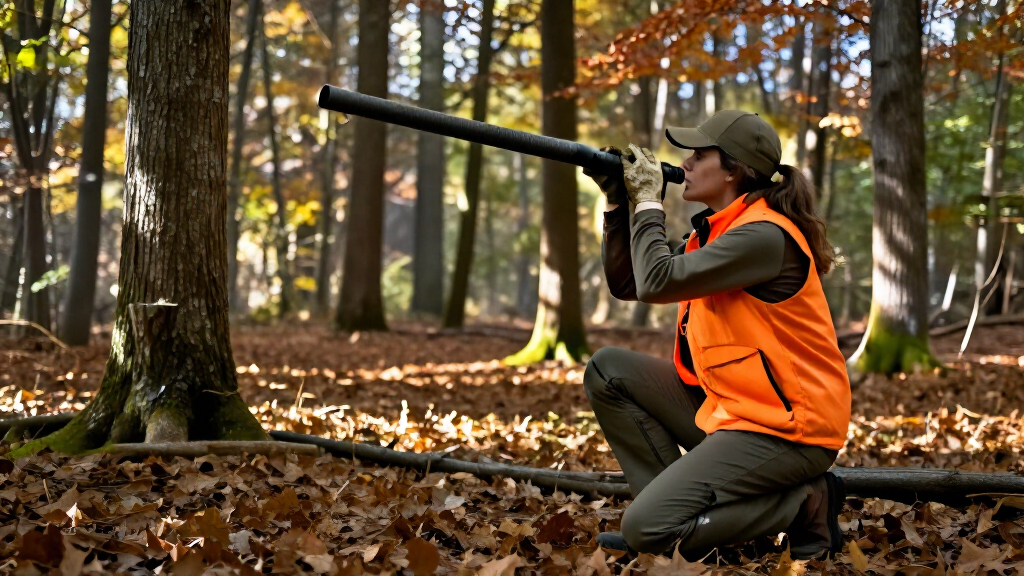
The report’s central advice is to treat a grunt tube as one tool among several, not as a guaranteed way to bring in a deer. A call may get a buck to investigate a sound he otherwise would not have heard, including when a hunter has not spotted him. But deer may ignore it, and calling can alert or discourage an animal. Hunters should consider what deer are nearby and whether the sound fits the moment before making a call.
The article describes different deer sounds, including bleats and grunts, and says their meaning can vary with the animal and situation. Bleats are made by fawns, does and bucks; the report says a buck may associate a bleat with a group of does and investigate. Softer grunts from does or young bucks can serve as locator calls, while a buck may grunt as it moves or interacts with another deer.
For a buck seen moving at a distance, the report’s contributor describes grunting to get its attention, then waiting to see how it responds. If it begins coming in, the advice is to avoid calling again unless it stops; another call can then be used to try to regain its attention. These are field recommendations, not controlled evidence that a particular sequence will produce a response.
Calling Without Spooking a Buck
The report matters to deer hunters because a grunt tube is easy to carry, but using it involves a judgment call: a sound can draw an unseen or distant buck closer, or signal the hunter’s presence to an animal that would otherwise pass by. The article’s emphasis on restraint gives readers a practical counterweight to the idea that more calling is always better.
Its examples also distinguish between getting a deer’s attention and bringing it within range. A buck that turns toward a call may not approach, and a response does not guarantee a safe or ethical shot opportunity. Hunters still need to account for wind, visibility, terrain, local regulations and a clear shot before acting.
As an affiliate, we earn on qualifying purchases.
The Calls Behind the Advice
The report places grunt-tube guidance within a broader account of whitetail vocalizations. It cites a 1988 University of Georgia study that identified and recorded approximately 400 vocalizations in a captive deer herd and grouped them into 12 types. The report describes this as the largest published study of whitetail vocalizations; that characterization is attributed to the article, not independently verified here.
Outdoor Life says its guidance draws on earlier contributions from whitetail hunters as well as newer advice. The article is focused mainly on calling bucks with a grunt tube, rather than offering a complete guide to every deer call or a guarantee of results in a particular season or location.
““That grunt tube isn’t magic, but it can be deadly in the right situation.””
— Outdoor Life report
As an affiliate, we earn on qualifying purchases.
How Reliable Are the Calls?
The report does not establish how often grunt calls attract deer or compare success rates across call types, seasons or settings. Its examples are based substantially on hunting experience, and individual deer may respond differently. The described 1988 research involved a captive herd; the source material does not provide enough detail to assess how its findings apply to wild deer in varied hunting conditions.
The article’s supplied material also does not include the full descriptions of all four vocalizations it says rank among the most important. Specific call sequences, distances and timing should not be treated as universally effective rules. Hunters should consult current local hunting regulations and use calls only where and when permitted.
As an affiliate, we earn on qualifying purchases.
Apply the Advice in the Field
The report offers no scheduled follow-up study or official test of grunt-tube effectiveness. Hunters considering the advice can start by observing deer activity and using a call only when it fits the situation, then pause to watch for a response rather than repeating it automatically. Whether a buck responds remains unpredictable; the article presents calling as an optional tactic, not a substitute for sound hunting judgment or a safe shot.
As an affiliate, we earn on qualifying purchases.
Key Questions
What is a grunt tube used for?
A grunt tube imitates deer grunts. Hunters use it in an attempt to get a buck’s attention or encourage it to investigate, but it does not guarantee a response.
Should I keep calling when a buck starts coming toward me?
The report’s contributor advises not calling again while the buck is approaching. If it stops, another call may be used to try to regain its attention.
Can a grunt call scare deer away?
Yes. The report warns that calling at the wrong time can hurt a hunt. Deer may ignore the sound or react in a way that does not bring them closer.
Are bleats and grunts interchangeable?
No. The report describes bleats as sounds made by fawns, does and bucks, while grunts vary by deer and situation. The source does not suggest that one call works in every circumstance.
Source: rss
Evergreen bestsellers Picks
bestsellers
As an affiliate, we earn on qualifying purchases.