TL;DR

Get sports gear delivered free with Prime
- Fast, free delivery on millions of items
- Prime Video, Amazon Music and more included
- Member-only deals all year
An Outdoor Life report published Oct. 30, 2026, compared 6.5 Creedmoor and .300 Winchester Magnum ammunition in ballistic gel at 200 yards. The .300 delivered higher impact velocity and a wider expanded bullet, but the test recorded nearly identical penetration and wound-cavity diameter; the author cautioned that this does not make the cartridges equal in every hunting situation.
Outdoor Life published a comparison of 6.5 Creedmoor and .300 Winchester Magnum loads that found similar penetration and wound-cavity measurements in a ballistic-gel test at 200 yards, despite the magnum’s higher impact velocity. The result challenges a common argument for choosing a larger cartridge as added insurance, but the report says the test is a limited comparison, not proof that the two cartridges perform identically in all hunting conditions.
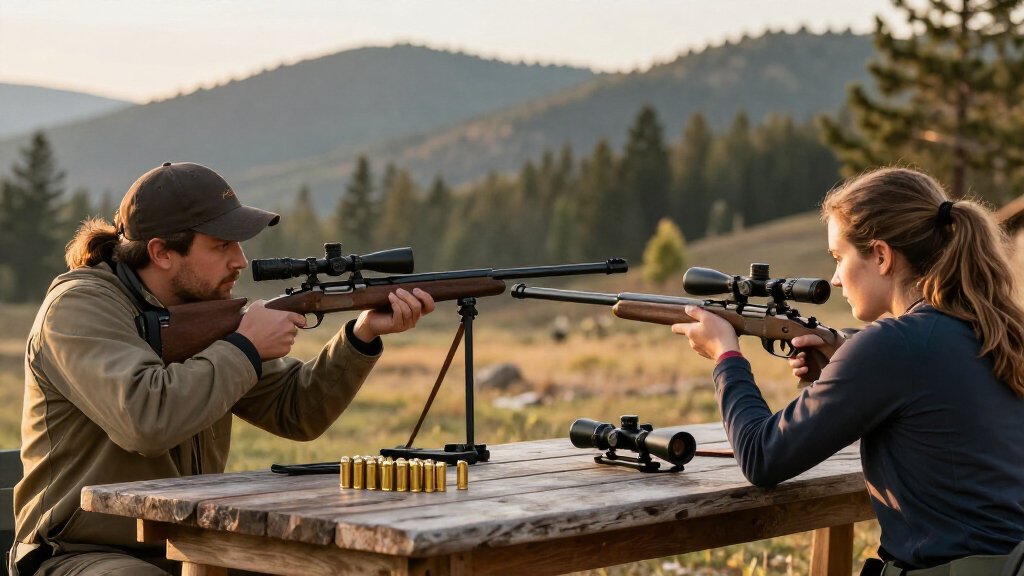
Writer Tyler Freel fired Federal Fusion Tipped ammunition from both rifles into identical Clear Ballistics gel blocks placed 200 yards away. A Garmin chronograph about 15 yards in front of the targets recorded impact velocity. The 6.5 Creedmoor used a 140-grain bullet and the .300 Win. Mag. a 180-grain bullet. The rifles differed in barrel length: 18 inches for the 6.5 and 22 inches for the .300.
The recorded impact velocities were 2,233 feet per second for the 6.5 Creedmoor and 2,526 feet per second for the .300 Win. Mag. The recovered bullets measured .446 inch and .554 inch in expanded diameter, respectively. Penetration was 20.75 inches for the 6.5 and 20 inches for the .300; both produced a reported wound-cavity diameter of 2.25 inches.
Freel described the magnum’s impact as visibly harder and said it delivered more energy to the target. However, the test showed nearly identical penetration and measured cavity diameter. The author also reported a slightly wider overall wound cavity from the .30-caliber bullet, while noting that wound channels are not perfectly cylindrical. Clear Ballistics gel, he cautioned, is a consistent comparison medium, not an exact stand-in for animal tissue.
What the Gel Test Can Show
The test offers hunters a measured comparison of one specific pairing of factory loads, rather than relying only on the assumption that higher velocity and energy necessarily produce a much larger wound. In this setup, the .300’s measurable advantage in speed did not translate into greater penetration or a wider reported cavity diameter.
That finding does not establish which cartridge is the better choice for a particular hunt. The report frames the selection as a trade-off: magnums can provide more power, while milder cartridges generally produce less recoil and may be easier for some shooters to practice with and shoot accurately. Bullet construction, shot placement, distance and the animal all matter; the gel result alone cannot settle those questions.
Products Worth Considering

Therabody Theragun Prime 6th Generation Deep Tissue Massage Gun, Navy

Garmin GPSMAP 79sc Marine GPS Handheld

Coleman 6-Person Instant Camping Tent with 1-Minute Setup
As an affiliate, we earn on qualifying purchases.
Why Hunters Compare These Loads
Hunters often favor a magnum such as the .300 Win. Mag. because its higher velocity, heavier bullet and greater energy are thought to offer a margin for error on imperfect shots or challenging angles. Freel presents that as a common argument, not as a guarantee that a more powerful cartridge will compensate for poor placement.
The opposing case favors cartridges such as the 6.5 Creedmoor, which generally produce less recoil and can be more comfortable for repeated practice. Freel says his comparison was intended to examine the claimed difference in terminal effect under controlled conditions. It did not test every bullet type, rifle configuration, range or hunting scenario.
“This gel isn’t a one-to-one representation of flesh, but it is a homogeneous, consistent medium in which we can get a side-by-side comparison of two bullets.”
— Outdoor Life writer Tyler Freel
Limits of the Single Test
The report describes one test using two factory loads, different bullet weights and rifles with different barrel lengths. It does not establish how other ammunition would perform, nor does it measure outcomes in live animals. The gel was used for a controlled comparison, but its wound channels cannot be assumed to match those in every animal or shot.
The supplied results also do not quantify how recoil affected shooter accuracy or compare the cartridges across different distances, shot angles or game species. The test therefore cannot determine whether either cartridge provides a practical advantage for a particular hunter. Those conclusions depend on factors beyond the measurements reported.
Choosing Beyond the Gel Results
The report’s practical takeaway is to weigh the cartridge’s performance against the hunter’s use case, including the game being hunted, expected distances, suitable bullet selection and ability to shoot the rifle accurately. The test does not prescribe one cartridge for all hunters. Readers looking for a broader comparison would need evidence across more loads and conditions, including field performance rather than gel alone.
No follow-up test or additional results are specified in the report. Until broader evidence is available, the published figures should be read as a specific 200-yard comparison, not a final verdict on cartridge selection.
Key Questions
Which cartridge had the higher impact velocity in the test?
The .300 Win. Mag. load recorded 2,526 feet per second at impact, compared with 2,233 feet per second for the 6.5 Creedmoor load.
Did the .300 Win. Mag. penetrate farther?
No. In this test, the 6.5 Creedmoor load penetrated 20.75 inches, while the .300 Win. Mag. load penetrated 20 inches.
Did both loads create the same measured wound-cavity diameter?
Both were reported at 2.25 inches in the gel test. Freel also noted a slightly wider overall wound cavity from the .30-caliber bullet, so the shared measurement does not mean every aspect of the wound channels was identical.
Does the test prove the two cartridges are equal for hunting?
No. It compared two specific factory loads in ballistic gel at 200 yards. It does not establish results for other ammunition, live animals, distances or hunting conditions.
Source: outdoorlife.com