TL;DR

Get sports gear delivered free with Prime
- Fast, free delivery on millions of items
- Prime Video, Amazon Music and more included
- Member-only deals all year
Outdoor Life published an interview with deer habitat consultant Jeff Sturgis on Nov. 1, 2026, outlining what he calls common “huntisms” — misconceptions about hunting mature whitetails and managing habitat. He argues that hunting less in poor conditions, managing summer food carefully and hunting travel routes rather than automatically sitting over food plots can improve a hunter’s chances, though outcomes depend on property and conditions.
Whitetail habitat consultant Jeff Sturgis says hunters can undermine their chances of taking mature bucks by hunting small properties too often, planting too much summer food or assuming food plots are the best place to hunt. In a report published by Outdoor Life on Nov. 1, 2026, Sturgis described these recurring assumptions as “huntisms” and offered advice drawn from his work with clients and his experience hunting public land.
Sturgis, founder of Whitetail Habitat Solutions, said he interviews clients about their hunting goals and problems before assessing their properties. Over time, he said, patterns emerge in the misconceptions hunters bring to deer hunting and habitat management. The Outdoor Life report presents several of those ideas, while stressing that the best approach can vary with property size, hunting access and conditions.
One of Sturgis’ main points is that more time in the woods is not always better. On a small parcel, repeated visits in poor conditions may alert deer to a hunter’s presence and reduce the usefulness of stand locations. He said a hunter may be better off staying out when wind or other conditions are unfavorable, especially if the alternative risks disturbing bedding areas or primary food sources.
That advice differs for hunters with many public-land locations and time to move between them, Sturgis said. For a planned stretch of seven to nine consecutive hunting days, he recommends limiting disturbance by choosing locations where wind carries scent away from deer or by hunting transition areas rather than pushing into a core area. The aim, as he described it, is to preserve opportunities instead of treating every day as a reason to enter the most sensitive parts of a property.
How Hunting Pressure Shapes Buck Use
The advice matters because hunting pressure and habitat choices affect where deer spend time, but a strategy that helps on one property may not translate to another. Sturgis’ distinction between small parcels and flexible public-land hunting is a reminder that access, wind, cover and the ability to rotate locations can change the cost of a hunt.
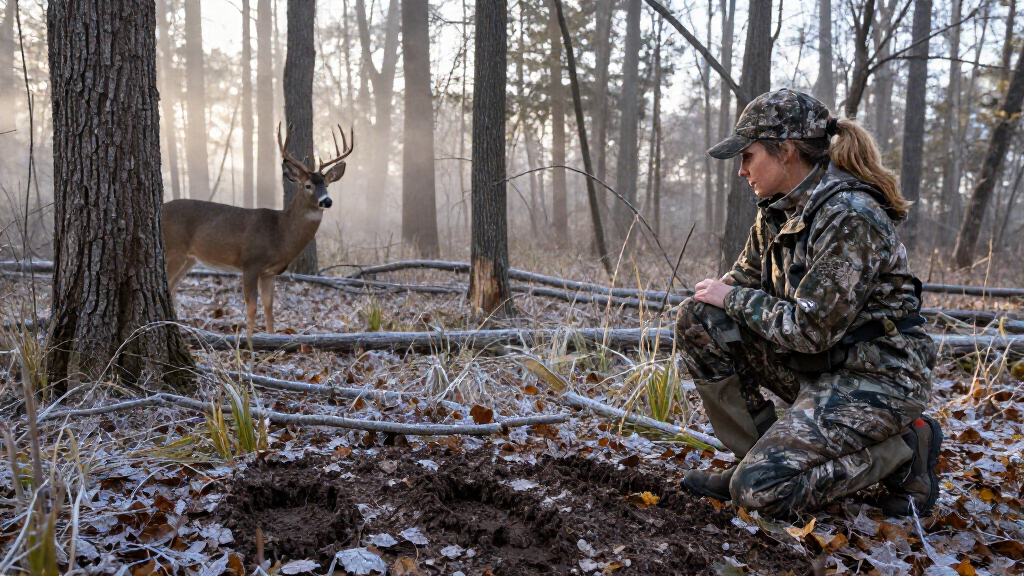
His food-plot argument also challenges a simple equation between more planted acreage and more mature bucks. Sturgis said extensive summer food can support larger numbers of does and fawns, which may make a property busier and less attractive as a core area for older bucks. For landowners, that means evaluating the full habitat plan — including cover, sanctuary areas, water and seasonal food — rather than judging success by food-plot acreage alone.
The report does not establish that these practices will produce a particular harvest result. Instead, it offers Sturgis’ professional judgment and observations, which hunters can weigh against their own property conditions and local deer behavior.
Products Worth Considering

YETI Carbon Steel Griddle, Pre-Seasoned Nonstick, 12 x 22 x 4.2, Black

Therabody Theragun Elite 5th Gen Deep Tissue Massage Gun

BowFlex Results Series SelectTech Adjustable Dumbbells (Pair)
As an affiliate, we earn on qualifying purchases.
Sturgis’ Three Hunting Misconceptions
The Outdoor Life article focuses on several “huntisms.” The first is the belief that hunters must keep entering the woods to succeed. Sturgis said that frequent hunting can make sense when a person has many spots and can move freely, but may be counterproductive on a small property where disturbing deer is difficult to avoid.
The second is that more food plots automatically mean more mature bucks. Sturgis said summer clover or bean plots may draw does and fawns, while older bucks may remain on the edges or use other areas. He described management as a broader mix of cover, screening cover, sanctuaries, water and fall food, with summer plots used selectively rather than treated as a stand-alone solution.
The third is the assumption that the best place to kill a buck is always a food plot. Sturgis said he harvested four bucks with a bow in four states in one year without taking any of them on food plots. He also said clients sometimes devote most of their hunting time to those plots. His point was not that food plots have no value: the report notes his work and products in that area, while arguing that hunters should also consider routes deer use to travel between bedding and feeding areas.
“There’s something to be said for minimizing your hunting, taking care of other priorities in life and expecting a higher rate of potential success because you’ve not over-pressured your stand locations.”
— Jeff Sturgis, founder of Whitetail Habitat Solutions, as quoted by Outdoor Life
Where the Advice May Differ
The report offers Sturgis’ views and experience, not a controlled comparison of hunting methods or habitat plans. It does not provide data showing how often the cited approaches lead to a harvest, nor does it establish a universal threshold for how much summer food is too much.
Sturgis’ recommendations are conditional: he distinguishes small properties from public land with multiple hunting locations, and he advises adapting to wind and other conditions. The report does not set out a property-by-property assessment, local deer-density figures or a complete plan for readers to apply without further evaluation. It is also unclear from the article how the advice would vary across regions, seasons and individual properties.
Applying the Advice Next Season
Sturgis’ recommendations point hunters toward reviewing how often they enter a property, which locations they hunt in different winds, and whether their food plots fit a broader habitat plan. The Outdoor Life report encourages readers to use the advice when planning a future season, particularly before committing to repeated hunts on a small parcel.
For landowners, the next step described in the report is to assess food, cover, sanctuaries and deer use together rather than adding plots by default. The article does not announce a new study, policy or scheduled follow-up; it presents Sturgis’ guidance for hunters to evaluate against their own conditions.
Key Questions
What does Jeff Sturgis mean by “huntisms”?
He uses the term for common misconceptions or habits he says he encounters when talking with hunters about deer hunting and habitat management.
Does Sturgis advise hunters not to hunt often?
No. He says the choice depends on access and conditions. Frequent hunting may be workable for someone with several locations, while repeated visits to a small property in poor conditions can risk disturbing deer and stand areas.
Does Sturgis say food plots are bad for whitetails?
No. The report says he has written about food plots and sells related products. His argument is that plots should be part of a broader habitat strategy and are not automatically the best place to hunt.
Why does Sturgis caution against extensive summer food plots?
He says summer food can attract does and fawns, increasing deer activity and competition for space. In his view, mature bucks may stay on the fringes or establish core areas elsewhere.
Is the advice a guarantee of harvesting a mature buck?
No. The Outdoor Life report presents Sturgis’ experience and recommendations, not a guarantee or controlled study showing that these approaches produce a specific result.
Source: outdoorlife.com