
For most trail runners, I’d start with the Nathan QuickStart Hydration Pack Vest: its 1.5L bladder capacity offers a useful middle ground for carrying water without moving to a bulkier 2L setup. The CamelBak Dart is a standout for runners who want a streamlined pack, while the MOKURA vest suits shorter outings where a 500 ml soft flask and phone holder may be enough. The main choice is between a close-fitting vest and a roomier backpack, plus whether you prefer a bladder or front-mounted flask. Fit, bounce, refill access, and how much gear you carry matter as much as capacity. Read on for the full comparison and guidance on matching a pack to your routes.

Get sports gear delivered free with Prime
- Fast, free delivery on millions of items
- Prime Video, Amazon Music and more included
- Member-only deals all year
Complete the kit


Key Takeaways
- The lineup spans 500 ml soft-flask vests, 1.5L bladder models, and packs with 2L bladders, so the right capacity depends on route length and refill access rather than distance alone.
- The Nathan QuickStart and CamelBak Dart stand out as vest-style options, while the TETON Oasis and 12L N NEVO RHINO lean more toward backpack-like storage.
- Soft-flask models such as the MOKURA, Zelvot 500 ml, and SWIFTVEST put drinking access in front; bladder models trade that visibility for greater carried volume.
- Several products share similar capacity labels, including two IX INOXTO 1.5L listings and multiple 2L bladder options, making fit, pocket layout, and pack shape more useful differentiators than the number alone.
- A larger reservoir is not automatically better for trail running: extra water can add weight, while a small flask may require more refill planning on exposed or remote routes.
| IX INOXTO Running Hydration Vest with 1.5L Water Bladder, Black and White |  | Best for Carrying Multiple Drink Options | Weight: 190 g | Stated capacity: 3 L | Included bladder: 1.5 L | VIEW LATEST PRICE | See Our Full Breakdown |
| MOKURA Hydration Running Vest with 500 ml Soft Flask and Phone Holder |  | Best for Short, Phone-Carrying Runs | Fit: Unisex | Weight: Under 10 oz | Materials: Soft neoprene and breathable mesh | VIEW LATEST PRICE | See Our Full Breakdown |
| TETON Sports Oasis Trailrunner Hydration Backpack with Water Bladder |  | Best for Longer Runs with Extra Gear | Pack sizes: 18L and 22L | Included bladder: 2 L; 3 L option for the 22L pack | Weight: 14.4 oz | VIEW LATEST PRICE | See Our Full Breakdown |
| N NEVO RHINO 12L Lightweight Hydration Backpack with 2L Water Bladder |  | Best for Lightweight, Weather-Resistant Carry | Pack capacity: 12 L | Water bladder capacity: 2 L | Weight: 8.5 oz | VIEW LATEST PRICE | See Our Full Breakdown |
| INOXTO Lightweight Running Hydration Vest with 1.5 L Water Bladder | 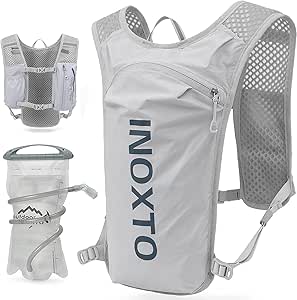 | Best Compact Lightweight Pick | Weight: 140 g | Bladder capacity: 1.5 L | Pocket count: 4 | VIEW LATEST PRICE | See Our Full Breakdown |
| Zacro Lightweight Running Hydration Vest with 2L Water Bladder |  | Best Lightweight 2L Pick | Material: Nylon | Vest weight: 190 g | Bladder capacity: 2 liters | VIEW LATEST PRICE | See Our Full Breakdown |
| Criuage Running Hydration Vest with 2.0L Water Bladder |  | Best for Organized Carrying | Stated capacity: 5 liters | Bladder volume: 2 liters | Bladder material: BPA-free PEVA | VIEW LATEST PRICE | See Our Full Breakdown |
| CamelBak Dart Running Hydration Vest |  | Best Minimalist Trail Pick | Reservoir capacity: 50 oz (1.5 L) | Material: Breathable air mesh | Storage: 1 zippered pocket | VIEW LATEST PRICE | See Our Full Breakdown |
| Zelvot Running Hydration Vest with 500 ml Soft Flask |  | Best for Short, Fast Runs | Included flask capacity: 500 ml | Vest weight: 7.5 oz | Material: Neoprene | VIEW LATEST PRICE | See Our Full Breakdown |
| Zelvot Running Hydration Vest with 2L Water Bladder |  | Best for Gear-Heavy Trail Days | Bladder capacity: 2 liters | Bladder material: Food-grade, BPA-free and PVC-free | Vest material: 900D Oxford fabric and breathable mesh | VIEW LATEST PRICE | See Our Full Breakdown |
| SWIFTVEST Adjustable Running Hydration Vest with 500 ml Soft Flask |  | Best for Short, Fast Runs | Included hydration: 500 ml soft flask | Pockets: 6 | Phone pouch: Waterproof zippered pouch; fits phones up to 18 × 10 cm | VIEW LATEST PRICE | See Our Full Breakdown |
| IX INOXTO Running Hydration Vest with 1.5L Water Bladder |  | Best for Multiple Hydration Options | Bladder capacity: 1.5 liters | Included soft flasks: 2 × 250 ml | Listed pack capacity: 3 liters | VIEW LATEST PRICE | See Our Full Breakdown |
| Fragraim 2L Hydration Running Vest with Bladder |  | Best for Long Runs on a Defined Fit Range | Bladder capacity: 2 liters | Bladder material: Food-grade EVA; BPA-free | Pockets: 6 | VIEW LATEST PRICE | See Our Full Breakdown |
| Nathan QuickStart Hydration Pack Vest with 1.5L Bladder |  | Best for Organized Gear Carry | Pack capacity: 6 liters | Bladder volume: 1.5 liters | Storage: Four expandable front pockets, large rear pocket, rear stretch mesh pocket, and elastic bungee cord | VIEW LATEST PRICE | See Our Full Breakdown |
| IX INOXTO Hydration Pack Backpack with 2L Bladder |  | Best for Gear-Heavy Trail Days | Listed pack capacity: 18 liters in product measurements; feature text also states 12 liters | Bladder capacity: 2 liters | Included soft flasks: 2 × 250 ml | VIEW LATEST PRICE | See Our Full Breakdown |
| hydration packs for trail running | Warranty | Weight | Material |
|---|---|---|---|
| IX INOXTO Running Hydration Ve | Three months | 190 g | Polyester |
| MOKURA Hydration Running Vest | 2 years | Under 10 oz | — |
| TETON Sports Oasis Trailrunner | Limited lifetime | 14.4 oz | 600D honeycomb ripstop and 600D dobby ripstop |
| N NEVO RHINO 12L Lightweight H | 365 days | 8.5 oz | PU-coated nylon |
| INOXTO Lightweight Running Hyd | 3 years | 140 g | Polyester |
| Zacro Lightweight Running Hydr | 1 year | — | Nylon |
| Criuage Running Hydration Vest | 2 years | — | — |
| CamelBak Dart Running Hydratio | — | — | Breathable air mesh |
| Zelvot Running Hydration Vest | 2 years | — | Neoprene |
| Zelvot Running Hydration Vest | — | 0.65 kg | — |
| SWIFTVEST Adjustable Running H | 1 year against manufacturing defects | 285 g | Neoprene |
| IX INOXTO Running Hydration Ve | Three months | 190 g manufacturer-stated; item information also lists 1.1 lb | — |
| Fragraim 2L Hydration Running | 1 year | 15.36 oz (0.96 lb) | — |
| Nathan QuickStart Hydration Pa | 2 years | — | — |
| IX INOXTO Hydration Pack Backp | 1 year | 15.52 oz | — |
More Details on Our Top Picks
IX INOXTO Running Hydration Vest with 1.5L Water Bladder, Black and White
The IX INOXTO Running Hydration Vest stands out for runners who want a bladder and front-accessible flask capacity in one setup: it includes a 1.5L bladder plus two 250ml soft flasks. That gives me more flexibility to separate water from a sports drink or keep a small amount within easy reach, unlike the INOXTO Lightweight Running Hydration Vest, which is listed with a bladder but no extra flasks. Its eight pockets and adjustable chest and waist straps also favor runners carrying small trail essentials. The tradeoff is that the included bladder is smaller than the stated 3L pack capacity, so that figure should not be read as water capacity. The product dimensions also differ between listings, making fit and pack size harder to judge before purchase.
Pros:- Includes a 1.5L bladder and two 250ml soft flasks for flexible hydration.
- Eight pockets spread across the back, waist, and shoulder straps.
- Adjustable chest and waist straps help tune the fit and limit bounce.
- Reflective details and a safety whistle add practical low-light and emergency features.
Cons:- The included bladder holds 1.5L, not the stated 3L total pack capacity.
- Conflicting listed dimensions make the pack’s size difficult to verify.
- Three-month warranty is shorter than the warranties listed for several alternatives.
Best for: Trail runners who want a reservoir plus two front flasks for separate drinks or quick-access sipping, along with several small-item pockets.
Not ideal for: Runners who need a confirmed high-volume reservoir or precise sizing information; the included bladder is 1.5L and the listed dimensions conflict.
- Weight:190 g
- Stated capacity:3 L
- Included bladder:1.5 L
- Included soft flasks:Two 250 ml flasks
- Pocket count:8
- Material:Polyester
- Tube length:40 in
- Warranty:Three months
Our verdict“Choose this vest if you value a bladder-and-flask combination more than a clearly documented pack size or longer warranty.”
MOKURA Hydration Running Vest with 500 ml Soft Flask and Phone Holder
The MOKURA Hydration Running Vest is the most phone-focused choice here, pairing a sweatproof phone holder with a retractable lanyard and front storage. Its included 500ml flask suits shorter outings or runners who plan to refill, but it offers far less onboard water than the 1.5L bladder in the INOXTO Lightweight Running Hydration Vest. The soft flask compresses as it empties, which can reduce sloshing and keep it manageable in a pocket. Three adjustable chest straps and stretch waist panels give runners several ways to secure the fit, though that adjustment takes more setup than a simpler strap layout. I’d favor this for phone access and light carry, not for long, remote trail days where extra water capacity matters most.
Pros:- Sweatproof phone holder includes a retractable coiled lanyard.
- 500ml soft flask has a high-flow bite valve and compresses as it empties.
- Stretch waist panels and three chest straps allow a customizable fit.
- Reflective accents appear on both the front and back.
Cons:- The included 500ml flask offers less capacity than the 1.5L and 2L bladder options in this roundup.
- Three chest straps require more adjustment than a simpler vest design.
- No larger reservoir is listed as included.
Best for: Runners on shorter, supported trails who want a dedicated sweatproof phone holder and a compact soft flask.
Not ideal for: Runners heading out for long or remote routes without refill points; the included flask holds only 500ml.
- Fit:Unisex
- Weight:Under 10 oz
- Materials:Soft neoprene and breathable mesh
- Included flask:500 ml, BPA- and PVC-free
- Adjustment:Stretch waist panels and three adjustable chest straps
- Storage:Phone holder, two front pockets, and rear mesh pocket
- Visibility:Reflective accents on front and back
- Warranty:2 years
Our verdict“Pick the MOKURA for short runs where phone security and low-bulk flask carry matter more than water capacity.”
TETON Sports Oasis Trailrunner Hydration Backpack with Water Bladder
The TETON Sports Oasis Trailrunner is the gear-hauling choice in this group: its daypack format, six pockets, bungee cord, and sewn-in rain cover suit routes where a running vest’s compact storage may feel limiting. The included 2L bladder has a wide opening for adding ice and cleaning, plus a kink-resistant tube and push-lock bite valve. Compared with the lighter, vest-style INOXTO Lightweight Running Hydration Vest, this pack gives me more room for layers and trail supplies but is less specialized for a close, minimal running fit. It weighs 14.4 ounces, and the available 18L and 22L sizes are substantial for fast outings. The 3L bladder is associated with the 22L version, so buyers should check which configuration they are selecting.
Pros:- 2L bladder has a wide opening for adding ice and easier cleaning.
- Kink-resistant sip tube and push-lock bite valve support reliable drinking.
- Six pockets, a bungee cord, and a sewn-in rain cover broaden its trail utility.
- Adjustable chest and waist straps, padded shoulders, and breathable mesh support load comfort.
Cons:- The daypack format is bulkier than the vest-style IX INOXTO options.
- The 3L bladder applies to the 22L version, while the listed included bladder is 2L.
- Listed dimensions omit depth, limiting a clear sense of packed shape.
Best for: Trail runners who carry extra layers, food, or safety gear and prefer a daypack layout with a 2L reservoir.
Not ideal for: Minimalist runners focused on low-bulk, close-fitting hydration; its 18L or 22L pack format carries more gear than many short runs require.
- Pack sizes:18L and 22L
- Included bladder:2 L; 3 L option for the 22L pack
- Weight:14.4 oz
- Pocket count:6
- Material:600D honeycomb ripstop and 600D dobby ripstop
- Bladder opening:2 in
- Listed dimensions:10 in W x 3 in H
- Warranty:Limited lifetime
Our verdict“Choose the TETON if carrying trail gear is as important as hydration, and skip it if you want a minimal running vest.”
N NEVO RHINO 12L Lightweight Hydration Backpack with 2L Water Bladder
At a listed 8.5 ounces, the N NEVO RHINO pairs a 2L bladder with a 12L storage compartment, making it a useful middle ground between small running vests and the larger TETON Sports Oasis daypack. Its PU-coated, tear-resistant nylon offers more weather and abrasion protection than the polyester vests in this batch, while the breathable mesh back helps reduce the feel of a solid fabric panel against the runner. Four pockets keep organization straightforward rather than extensive. The listed shoulder and chest adjustment ranges provide useful fit information, but they may not suit every body shape; this is a more relevant concern than on models with less specific strap data. I’d choose it for runners carrying a light layer or essentials, though the 12L format still exceeds what minimalists need.
Pros:- Listed weight is 8.5 ounces with a 12L storage capacity.
- PU-coated nylon is described as waterproof and tear-resistant.
- Includes a 2L BPA-free PEVA bladder with a leak-resistant bite valve.
- Breathable mesh back and adjustable shoulder and chest straps support fit and airflow.
Cons:- The 12L pack format may feel excessive for short, gear-light runs compared with compact vests.
- Four pockets offer less compartmentalized storage than the eight-pocket IX INOXTO vest.
- Listed strap adjustment ranges may not fit every wearer.
Best for: Trail runners who want a 2L reservoir, room for a light layer, and more weather-resistant fabric without a heavier daypack.
Not ideal for: Runners seeking a close-fitting, minimal vest or those whose body measurements fall outside the listed strap adjustment ranges.
- Pack capacity:12 L
- Water bladder capacity:2 L
- Weight:8.5 oz
- Material:PU-coated nylon
- Pocket count:4
- Dimensions:11.8 in W x 16.5 in H
- Shoulder strap adjustment:19–34 in
- Warranty:365 days
Our verdict“This is a sensible pick for runners who want a lightweight 2L pack with more protective fabric and space for extra gear.”
INOXTO Lightweight Running Hydration Vest with 1.5 L Water Bladder
The INOXTO Lightweight Running Hydration Vest is the simplest choice for runners who want to keep carried weight down: it is listed at 140g and includes a 1.5L bladder. Its breathable mesh back, adjustable shoulder and hip straps, and four front pockets make it better suited to essentials than a storage-heavy pack such as the TETON Sports Oasis Trailrunner. Reflective trim adds visibility, though the product data does not list a whistle or extra flasks like the other IX INOXTO vest in this batch. That distinction matters: the other model brings eight pockets and two 250ml flasks, while this one prioritizes a lighter, more straightforward setup. The 1.5L capacity can limit long, dry routes, and the stated age restriction means it is not intended for children 12 and under.
Pros:- Listed weight of 140g favors a lightweight setup.
- Breathable mesh back and adjustable shoulder and hip straps support a customizable fit.
- Four front pockets keep small essentials accessible while running.
- Reflective trim adds visibility in low light.
Cons:- The 1.5L bladder offers less capacity than the 2L options in this roundup.
- No soft flasks are listed, unlike the other IX INOXTO vest reviewed here.
- Not intended for children 12 and under.
Best for: Adult trail runners who prioritize a low listed weight, a 1.5L bladder, and front-accessible pockets for a compact kit.
Not ideal for: Runners who need more than 1.5L onboard, want included soft flasks, or are shopping for a child 12 or younger.
- Weight:140 g
- Bladder capacity:1.5 L
- Pocket count:4
- Material:Polyester
- Color:Light gray and dark blue
- Included components:Water bladder
- Intended age:Not intended for children 12 and under
- Warranty:3 years
Our verdict“Pick this vest for a lightweight, uncomplicated 1.5L setup, but choose a larger-capacity option for long routes without refill access.”
Zacro Lightweight Running Hydration Vest with 2L Water Bladder
The Zacro pairs a 190 g vest with a 2-liter bladder, making it a strong fit for trail runners who want substantial water capacity without the stated weight of the Criuage. Adjustable chest and waist straps are intended to limit bounce, while ventilated mesh and six pockets add comfort and room for small trail essentials. Reflective details on the front and back are useful when a run extends into low light. Compared with the CamelBak Dart, Zacro offers more listed storage and a larger reservoir, but the Dart has an optional trekking-pole attachment. The main tradeoffs are a stated chest range of 25–51 inches and a bladder that may clog if it is not used properly. I’d choose it for capacity and low stated vest weight, not fuss-free bladder maintenance.
Pros:- 190 g stated vest weight keeps the pack relatively light.
- 2-liter TPU bladder and hands-free straw support longer outings between refills.
- Six pockets, including two zippered pockets, offer varied storage.
- Adjustable chest and waist straps plus reflective details support a stable, more visible setup.
Cons:- The stated 25–51-inch chest range may not fit every runner.
- The bladder may clog if it is not used properly.
- No trekking-pole attachment is listed, unlike the CamelBak Dart.
Best for: Trail runners seeking a lightweight vest with a 2-liter reservoir and several pockets for essentials.
Not ideal for: Runners outside the stated 25–51-inch chest range or anyone who wants a bladder with no noted clogging concern.
- Material:Nylon
- Vest weight:190 g
- Bladder capacity:2 liters
- Bladder material:TPU
- Chest fit:Adjustable; 25–51 inches
- Storage:6 pockets, including 2 zippered
- Straps:Adjustable chest and waist straps
- Warranty:1 year
Our verdict“Choose the Zacro if you want a light, pocketed vest with a 2-liter bladder and can manage its stated fit range and bladder-care tradeoff.”
Criuage Running Hydration Vest with 2.0L Water Bladder
With eight pockets and a stated 5-liter capacity, the Criuage favors runners who carry more than water: think phone, snacks, and extra small essentials. Its 2-liter BPA-free PEVA bladder matches the Zacro’s stated reservoir capacity, but the Criuage lists a substantially heavier 750 g item weight. That makes it a less appealing pick for runners prioritizing a barely-there feel, even with adjustable straps and wide mesh shoulder pads. Water-resistant construction adds some protection for changeable conditions, though no chest-size range is given, so fit is harder to judge before purchase. Compared with the minimalist CamelBak Dart, this vest offers far more organized storage but gives up simplicity and listed lightness. I’d prioritize its pocket layout only if carrying capacity matters more than weight and precise fit information.
Pros:- Eight pockets provide more organization than the CamelBak Dart’s single listed zippered pocket.
- Includes a 2-liter BPA-free PEVA bladder.
- Wide mesh shoulder pads and adjustable chest straps support a more secure fit.
- Water-resistant design suits variable outdoor conditions.
Cons:- The stated 750 g item weight is substantial for a running vest.
- No sizing range is listed, making fit selection less certain.
- Its storage-forward design may be more pack than minimalist trail runners need.
Best for: Trail runners who want many separate pockets for snacks, a phone, and other small gear alongside a 2-liter bladder.
Not ideal for: Runners seeking a lightweight, close-fitting vest or buyers who need a published chest-size range before choosing.
- Stated capacity:5 liters
- Bladder volume:2 liters
- Bladder material:BPA-free PEVA
- Item weight:750 g
- Storage:8 pockets
- Dimensions:9 in W × 18.5 in H
- Features:Water-resistant, adjustable straps, mesh shoulder pads
- Warranty:2 years
Our verdict“Pick the Criuage if organized storage is your priority and you are willing to accept its heavier stated weight and unspecified sizing.”
CamelBak Dart Running Hydration Vest
The CamelBak Dart is the clearest choice here for runners who prefer a minimalist, breathable vest over abundant storage. Its included 1.5-liter Crux reservoir holds less than the 2-liter bladders in the Zacro and Zelvot packs, but that smaller capacity can suit shorter runs or runners who plan refills. Two adjustable chest straps help stabilize the fit, and the zippered pocket keeps a small essential secure. An optional trekking-pole attachment adds trail-specific utility, though it is not included as standard according to the product details. Against the pocket-heavy Criuage, the Dart is simpler and more focused, but it offers less room for gear. I’d choose it when low-bulk carry matters more than extra water capacity or multiple storage compartments.
Pros:- Breathable air mesh is suited to running comfort.
- Included 1.5-liter Crux reservoir provides hands-free hydration.
- Two adjustable chest straps help stabilize the vest.
- Zippered pocket and quick-stow capability add practical utility.
Cons:- The 1.5-liter reservoir holds less than the Zacro and Zelvot 2-liter options.
- Listed storage is limited to one zippered pocket.
- The trekking-pole attachment is optional.
Best for: Trail runners who want a breathable, streamlined vest for shorter outings or routes with refill options.
Not ideal for: Runners needing a 2-liter reservoir, multiple pockets, or a trekking-pole attachment included in the package.
- Reservoir capacity:50 oz (1.5 L)
- Material:Breathable air mesh
- Storage:1 zippered pocket
- Fit:2 adjustable chest straps
- Trekking-pole feature:Optional attachment
- Additional feature:Quick stow capability
Our verdict“Choose the Dart for a breathable, low-storage setup when 1.5 liters is enough and you value simplicity over carrying capacity.”
Zelvot Running Hydration Vest with 500 ml Soft Flask
Rather than carrying a back reservoir, this Zelvot centers hydration on an included 500 ml soft flask that shrinks as you drink, helping reduce sloshing on shorter, faster runs. Its nine pockets give it more storage flexibility than the minimalist CamelBak Dart, while the flask capacity is much smaller than the Dart’s 1.5-liter reservoir or the 2-liter Zacro. That makes it a better match for brief routes, supported races, or runners who prefer a front flask and can refill. Three adjustable chest straps and several listed size ranges help with fit, though the ranges overlap and call for careful measurement. I’d skip it for long or remote trails where water access is limited; its strengths are low-volume hydration and organized carry, not extended autonomy.
Pros:- Soft flask shrinks as you drink to help reduce sloshing.
- Nine pockets include a zippered phone pocket and two rear bungee-secured bottle pockets.
- Three adjustable chest straps support fit adjustment.
- Reflective details and ventilation holes support visibility and airflow.
Cons:- The included 500 ml flask offers far less capacity than the CamelBak Dart’s 1.5-liter reservoir.
- Overlapping chest-size ranges may make size selection less straightforward.
- Its storage and pocket layout may be unnecessary for runners who want a simple, low-carry setup.
Best for: Runners on shorter or supported trail routes who prefer a front soft flask and need pockets for phone, snacks, and small gear.
Not ideal for: Trail runners on long or remote routes who need more than 500 ml of included hydration without refilling.
- Included flask capacity:500 ml
- Vest weight:7.5 oz
- Material:Neoprene
- Storage:9 pockets: 7 front and 2 rear
- Chest strap adjustment:3 adjustable straps
- Chest sizes:XS/S: 27–34 in; M/L: 30–40 in; L/XL: 38–46 in; XL/XXL: 45–52 in
- Flask material:BPA-free and PVC-free
- Warranty:2 years
Our verdict“Choose this Zelvot for shorter runs where a low-slosh 500 ml flask and ample pocket organization matter more than carrying extra water.”
Zelvot Running Hydration Vest with 2L Water Bladder
This Zelvot is the more gear-oriented 2-liter option: it combines a wide-opening bladder with three waterproof front zippered pockets and two large back pockets. The wide opening should make filling and cleaning easier than the Zacro’s bladder, which carries a stated clogging caveat, while the high-flow bite valve supports hands-free drinking. The tradeoff is bulk: its listed 0.65 kg weight is much higher than the Zacro’s 190 g, making it a harder sell for runners who prioritize a light feel. Adjustable shoulder straps and a waist belt are intended to reduce shifting, and breathable mesh adds ventilation. Fit is listed in two chest ranges, but those ranges may not cover every body. I’d pick it for carrying extra layers or gear, not for minimal race-day carry.
Pros:- 2-liter bladder has a high-flow bite valve and wide opening for filling and cleaning.
- Three waterproof zippered front pockets and two large back pockets offer substantial storage.
- Adjustable shoulder straps and waist belt are designed to reduce shifting.
- Breathable mesh and reflective details support ventilation and visibility.
Cons:- At 0.65 kg, it is substantially heavier than the 190 g Zacro.
- Listed chest sizing covers only XS/S and M/L ranges, which may not suit every runner.
- The 2-liter capacity is no larger than lighter bladder-based alternatives in this lineup.
Best for: Trail runners carrying extra clothing and essentials who want a 2-liter bladder, multiple waterproof front pockets, and rear storage.
Not ideal for: Runners who prioritize low pack weight or whose chest measurement falls outside the two listed fit ranges.
- Bladder capacity:2 liters
- Bladder material:Food-grade, BPA-free and PVC-free
- Vest material:900D Oxford fabric and breathable mesh
- Weight:0.65 kg
- Front pockets:3 waterproof zippered pockets
- Back pockets:2 large pockets
- Fit:Adjustable shoulder straps and waist belt
- Chest adjustability:XS/S: 25–35 in; M/L: 29–41 in
- Temperature range:-20°C to 40°C (-4°F to 104°F)
Our verdict“Choose this Zelvot when waterproof pocket storage and an easy-to-clean 2-liter bladder outweigh the added pack weight.”
SWIFTVEST Adjustable Running Hydration Vest with 500 ml Soft Flask
The SWIFTVEST suits trail runners who want a close-fitting vest for shorter outings rather than a large reservoir for hours on the trail. Its included 500 ml soft flask and six pockets keep water and small essentials accessible, while adjustable straps and neoprene padding are intended to limit bounce and rubbing. Compared with the Fragraim 2L Hydration Running Vest, it carries much less water, but its flask-based setup may feel simpler for runners who prefer front access and do not need a drinking tube. A waterproof zippered phone pouch and reflective details add useful protection and visibility. The tradeoff is limited hydration capacity, and the pouch only fits phones up to 18 × 10 cm; grouped size ranges may also make dialing in fit harder.
Pros:- Includes a compressible 500 ml soft flask for accessible front-of-vest hydration.
- Six pockets separate a phone, nutrition, and small running essentials.
- Adjustable straps and neoprene padding are designed to reduce bounce and chafing.
- Reflective details and quick-dry, breathable features support low-light visibility and comfort.
Cons:- The 500 ml flask offers less water than the 1.5L and 2L bladder options in this lineup.
- The phone pouch only fits devices up to 18 × 10 cm.
- Grouped sizing of XS–S, M–L, and L–XL may make a precise fit harder to choose.
Best for: Trail runners doing shorter outings who want a soft flask, several small-item pockets, and a phone pouch sized for their device.
Not ideal for: Runners planning long or remote routes without reliable refill points, or anyone whose phone exceeds 18 × 10 cm.
- Included hydration:500 ml soft flask
- Pockets:6
- Phone pouch:Waterproof zippered pouch; fits phones up to 18 × 10 cm
- Weight:285 g
- Material:Neoprene
- Sizes:XS–S, M–L, L–XL
- Fit features:Adjustable straps, neoprene padding, and heat-dissipation zones
- Warranty:1 year against manufacturing defects
Our verdict“Choose the SWIFTVEST for shorter trail runs where a soft flask and accessible storage matter more than carrying a large water supply.”
IX INOXTO Running Hydration Vest with 1.5L Water Bladder
The IX INOXTO 577 gives trail runners an unusual choice of drinking setups: a 1.5L bladder plus two 250 ml soft flasks. That flexibility can help on longer runs or when a runner prefers to split water between a tube and front pockets, while eight pockets provide room for nutrition and small gear. Compared with the Nathan QuickStart Hydration Pack Vest, this model includes the soft flasks rather than focusing on expandable storage and pole-carrying details. Adjustable shoulder, chest, and waist straps, stretch mesh, reflective details, and an included whistle add practical trail-oriented touches. There are caveats: the bladder holds 1.5 liters even though the listed total capacity is 3 liters, and the product data gives conflicting dimensions and weight figures. Its three-month warranty is also shorter than several alternatives.
Pros:- Includes a 1.5L bladder and two 250 ml soft flasks for alternate hydration setups.
- Eight pockets provide useful organization for nutrition and small trail essentials.
- Adjustable shoulder, chest, and waist straps support a more secure fit.
- Reflective details and an included safety whistle add practical visibility and safety features.
Cons:- The bladder itself holds 1.5 liters, not the stated 3-liter pack capacity.
- Weight and dimensions differ between the manufacturer-stated and item-information figures.
- The listed three-month warranty is shorter than the one- or two-year coverage on some alternatives.
Best for: Trail runners who want to choose between a bladder and front soft flasks, and value multiple pockets and a safety whistle.
Not ideal for: Buyers who need unambiguous measurements, a longer stated warranty, or a single lightweight setup with minimal components.
- Bladder capacity:1.5 liters
- Included soft flasks:2 × 250 ml
- Listed pack capacity:3 liters
- Pockets:8
- Weight:190 g manufacturer-stated; item information also lists 1.1 lb
- Straps:Adjustable shoulder, chest, and waist straps
- Water tube:40 in long, 0.4 in diameter
- Warranty:Three months
Our verdict“Pick this IX INOXTO if you want both a bladder and soft flasks, and can accept inconsistent product measurements and a short warranty.”
Fragraim 2L Hydration Running Vest with Bladder
With a 2-liter bladder, the Fragraim is aimed at trail runners who want more water on board than the SWIFTVEST’s 500 ml flask provides, without moving to a larger backpack-style pack. Its six pockets, bungee cord, and adjustable vest design leave room for nutrition and a light layer, while the removable hose and bite valve provide hands-free drinking. Breathable mesh and 360-degree reflective trim are useful for warm conditions and low-light starts. Compared with the IX INOXTO 577, it offers a larger single bladder but does not include extra soft flasks. The fit range is a meaningful limitation: the stated chest size is 39–50 inches, so runners outside that range should look elsewhere. At 15.36 ounces, it is not the lightest-feeling option on the list, and its storage and water capacity may be more than short-run users need.
Pros:- 2L BPA-free EVA bladder includes a removable hose and bite valve.
- Six pockets and a bungee cord provide space for essentials and a light layer.
- Breathable mesh panels support airflow during active use.
- 360-degree reflective trim improves visibility from multiple directions.
Cons:- The stated 39–50-inch chest range will not suit every runner.
- Listed weight is 15.36 ounces, heavier than some compact running-vest options.
- Unlike the IX INOXTO 577, it does not include soft flasks as an alternate hydration method.
Best for: Trail runners with a 39–50-inch chest who want a 2L bladder, hands-free drinking, and space for a layer on longer outings.
Not ideal for: Runners outside the listed chest range, or those prioritizing a very light, low-capacity vest for short runs.
- Bladder capacity:2 liters
- Bladder material:Food-grade EVA; BPA-free
- Pockets:6
- Chest size:39–50 in
- Weight:15.36 oz (0.96 lb)
- Dimensions:18.5 × 9 × 5.9 in
- Fit and storage features:Adjustable straps and bungee cord
- Warranty:1 year
Our verdict“Choose the Fragraim for longer runs if your chest falls within its stated range and you prefer one 2L bladder over a flask-and-bladder combination.”
Nathan QuickStart Hydration Pack Vest with 1.5L Bladder
The Nathan QuickStart stands out for trail runners who carry more than water and want dedicated places for gear. Its 6-liter storage capacity is divided across expandable front pockets, rear pockets, a bladder compartment, and an elastic bungee cord; a pole keeper adds a useful option for routes where poles come out only on climbs. The 1.5L bladder is separate from the stated pack capacity, so the vest offers room for equipment rather than 6 liters of water. Compared with the Fragraim 2L Hydration Running Vest, the Nathan carries less water but gives a more clearly described system for organizing extra kit and routing the tube from either shoulder. Adjustable straps and reflective details suit running, though its more elaborate storage can feel unnecessary on short, lightly loaded outings.
Pros:- Six liters of listed pack capacity gives room for gear beyond the 1.5L bladder.
- Expandable front pockets and multiple rear storage areas help separate essentials.
- Separate bladder compartment includes keepers and hose exit points at either shoulder.
- Pole keeper, elastic bungee cord, and reflective details support trail use.
Cons:- The 1.5L bladder capacity is less than the Fragraim’s 2L bladder.
- The 6-liter figure describes pack capacity, not the amount of water it carries.
- The range of storage features may be unnecessary for runners who carry only water and a few essentials.
Best for: Trail runners carrying nutrition, a light layer, or trekking poles who want organized front and rear storage with a bladder compartment.
Not ideal for: Runners who want the most water in a vest, or prefer a simple, minimal setup for short runs.
- Pack capacity:6 liters
- Bladder volume:1.5 liters
- Storage:Four expandable front pockets, large rear pocket, rear stretch mesh pocket, and elastic bungee cord
- Bladder compartment:Separate compartment with keepers and hose exits at either shoulder
- Pole carry:Pole keeper
- Materials:Main: 100% polyester; mesh pockets: 72% nylon, 28% spandex
- Fit:Adjustable shoulder and chest straps
- Warranty:2 years
Our verdict“Choose the Nathan QuickStart if organized gear storage and pole carry matter more to you than maximizing bladder volume.”
IX INOXTO Hydration Pack Backpack with 2L Bladder
This IX INOXTO is better suited to trail runners who need backpack-style room than to those seeking a close, minimal running vest. Its 2L bladder is paired with two 250 ml soft flasks and eight pockets, while the stated 18-liter capacity leaves room for substantial extra gear. That makes it more versatile for long outings or mixed-use days, but bulkier in concept than the Nathan QuickStart, whose 6-liter capacity is more focused on running essentials. The wide bladder opening is a practical advantage for filling and cleaning, and adjustable chest and waist straps with breathable mesh are intended to help stabilize the load. Still, the product description gives conflicting total-capacity figures—12 liters in feature text and 18 liters in measurements. Its water-repellent finish also should not be treated as proof of full waterproofing.
Pros:- Includes a 2L bladder and two 250 ml soft flasks for flexible hydration.
- Wide bladder opening supports easier filling and cleaning.
- Eight pockets, a helmet organizer pocket, and side carry options support varied gear.
- Adjustable chest and waist straps, breathable mesh, and reflective trim add practical trail features.
Cons:- Capacity figures conflict: the feature text lists 12 liters while product measurements list 18 liters.
- Its backpack-style storage may be more volume and bulk than needed for short, fast trail runs.
- A water-repellent finish does not establish that the pack is fully waterproof.
Best for: Trail runners who carry extra layers or equipment and want both a 2L bladder and included soft flasks in a backpack-style pack.
Not ideal for: Runners seeking a compact, close-fitting vest for fast outings, or buyers who need confirmed pack capacity or full waterproof protection.
- Listed pack capacity:18 liters in product measurements; feature text also states 12 liters
- Bladder capacity:2 liters
- Included soft flasks:2 × 250 ml
- Pockets:8
- Weight:15.52 oz
- Dimensions:8.6 in W × 16.9 in H × 7.87 in D
- Fit and lining:Adjustable chest and waist straps; breathable mesh lining and shoulder straps
- Warranty:1 year
Our verdict“Pick this IX INOXTO for gear-heavy trail outings where extra storage and multiple hydration options outweigh the simplicity of a compact vest.”

How We Picked
I compared these 15 hydration packs for trail running by the factors that shape a run: carrying style, stated water capacity, likely fit and stability, access to hydration, and room for essentials. I gave preference to options whose format appears suited to running rather than carrying general day-hike gear, while treating a larger capacity as useful only when a runner’s route and refill plan call for it. Maintenance also mattered: a bladder, hose, and bite valve can hold more water but require more cleaning than a simple soft flask.
The order reflects trail-running practicality and versatility, not a claim that one pack fits every body or route. Vest-style packs with moderate capacity rank ahead of roomier backpack formats for most runners because they are designed around close-to-body carry; compact flask options remain strong for short runs. Since the supplied product information does not establish comparable fit measurements, materials, or pocket layouts for every model, I avoid treating similar specifications as proof of equal comfort or quality. I also distinguish duplicate or closely related listings by their stated setup rather than assuming they are different generations.
Factors to Consider When Choosing Hydration Packs For Trail Running
I’d choose a trail-running pack by starting with the route and the load, then checking how the carrying system handles that load while moving. Capacity figures are only one part of the decision: access, refill opportunities, fit, and cleaning can change what feels practical over a full run.
Match Water Capacity to the Route
Choose capacity around the time between reliable refill points, weather, effort, and your own hydration needs—not a fixed distance rule. A 500 ml flask can suit a short loop with easy access to water, but it leaves little reserve if a fountain is closed or a route takes longer than planned. A 1.5L or 2L bladder gives more carried water, though filling every available liter adds weight from the start. Some runners prefer carrying less and refilling; others value a larger reserve on remote routes. Check whether the pack can carry less than its maximum comfortably, since a half-filled reservoir may shift differently from a full one. If you regularly run in heat or on exposed trails, plan for the least convenient refill point rather than the most convenient one.
Choose Between a Bladder and Soft Flask
A bladder and hose let you sip without reaching for a bottle, and larger reservoirs can reduce how often you need to refill. The tradeoff is that you may have to remove or open the pack to check how much water remains, and the components need careful cleaning and drying. A front-mounted soft flask is easier to see, remove, and refill at a stop, but its smaller capacity can mean more frequent planning. Some runners find a hose easier to use on technical ground; others prefer keeping water in front pockets where it is visible and accessible. Before buying, check whether the pack includes the reservoir or flask described and whether its storage is designed for the drinking system you prefer. The best format is the one you can drink from consistently without disrupting your stride or attention.
Prioritize Stable Fit Over Extra Storage
A pack that bounces or rubs can turn a manageable load into a distraction, especially on descents and uneven trails. Look for several adjustment points and a shape that can be pulled close to the torso without restricting breathing. Capacity and a product’s “lightweight” label do not tell you how it will fit a particular chest, shoulder width, or torso length. When possible, compare sizing guidance with your measurements and check return terms before committing. Do not tighten straps so far that they limit rib movement; a snug fit should still allow deep breaths on climbs. If you carry only water and a phone, a large pack may add unnecessary bulk, while a small vest can feel crowded when you bring layers or food.
Think Through Storage and Access
Trail runs often call for more than water: a phone, keys, nutrition, a light layer, and basic safety items may all need a place. Count the items you actually carry, then check whether they are accessible while wearing the pack rather than relying on a headline capacity figure. A roomier backpack can make sense for longer outings or variable weather, but extra space can encourage a heavier load. Phone placement deserves particular attention: a pocket should hold the device securely and remain reachable without awkward movement. Consider whether you need front pockets for frequent access or a larger rear compartment for items used less often. Avoid choosing storage based only on a long list of pockets; their location and closure matter just as much.
Account for Cleaning and Long-Term Care
Bladders, hoses, and bite valves offer convenient drinking, but they create more surfaces that need cleaning than a single soft flask. After a run, water left in a closed reservoir can become unpleasant, so plan to empty, rinse, and dry the system fully. A wide opening may make a bladder easier to clean, though product descriptions do not always provide enough detail to compare openings or drying accessories. Soft flasks are often simpler to rinse and pack away, but their shape and valve still need regular care. Think about where you can dry the gear at home and how often you are willing to maintain it. If cleaning routines tend to get skipped, a simpler hydration setup may be more practical than a larger reservoir.
Spend for the Problem You Need to Solve
A higher-end or established-brand option makes the most sense when its fit system, construction, or access features address a recurring issue—not merely because it carries a familiar name. For occasional short runs, a straightforward flask vest may cover the essentials without adding unused capacity. Runners tackling long or remote routes may gain more from a reliable larger reservoir and useful storage than from the lightest possible setup. A roomier pack is also easier to justify when it must carry a layer and extra supplies, but it can feel excessive on short training loops. Compare the included hydration component, adjustment range, pocket layout, and care requirements before weighing brand or feature claims. The right spend is the one that removes a specific friction point from your runs.
Frequently Asked Questions
Is a 500 ml soft flask enough for a trail run?
It can be enough for a short outing when you know you can refill or return to your start point, but it offers less reserve than the 1.5L and 2L bladder packs in this lineup. Route exposure, heat, pace, and your personal hydration needs all affect the amount you should carry. A small flask also makes it easy to see how much water remains, which can help with pacing your supply. If a route has uncertain refill access, relying on one 500 ml flask may leave little margin. Choose the smaller setup only after checking the route and planning for delays.
Should I choose a running vest or a hydration backpack?
A close-fitting vest is usually the more natural starting point for running because it places hydration and small essentials near the body. A backpack-style option can be more useful when you need extra space for a layer, food, or other equipment, though a larger carry format may feel less streamlined. This roundup includes both vest-focused options and roomier packs such as the TETON Oasis and 12L N NEVO RHINO. Neither style guarantees a stable fit; adjustment and body shape still matter. Choose by the load you carry regularly, not by storage capacity you might use once.
Are two packs with the same bladder capacity likely to feel the same?
No. The same stated capacity says how much water a reservoir can hold, but it does not describe the pack’s fit, weight distribution, pocket access, or how securely the bladder sits. This roundup includes several 1.5L and 2L options, so capacity alone cannot distinguish them well. Look for adjustment details and storage placement, and try the pack with the water and gear you plan to carry when possible. A full pack can behave differently from an empty one, especially while running downhill. Treat capacity as one filter, not as a complete measure of comfort or performance.
When is a bladder worth the extra cleaning?
A bladder is worthwhile when you want to carry more water or prefer sipping through a hose without reaching for a front flask. That convenience comes with extra cleaning and drying steps for the reservoir, hose, and valve. If you run short routes and value quick cleanup, a soft-flask setup such as the MOKURA, Zelvot 500 ml, or SWIFTVEST may fit your routine better. For longer or more remote outings, the added capacity of a bladder may outweigh the maintenance. Consider how reliably you will clean and dry it after each run before choosing the larger system.
What should I check before buying a pack for a long or remote trail?
Start by checking the route’s refill access, expected conditions, and the water you personally need, then select a capacity that leaves a sensible reserve. Make sure the pack has room for required essentials such as food, a phone, and a layer, without forcing you to carry unnecessary gear. Fit matters more as the load grows, so review sizing and adjustment options and check how the reservoir is secured. Also consider whether you can clean and dry its hydration system between outings. A larger 2L model may suit remote routes, but a high capacity alone does not make a pack ready for every trail or condition.
Conclusion
For the broadest range of trail runs, I’d choose the Nathan QuickStart as my best overall starting point: its 1.5L bladder sits between compact flask setups and larger 2L carries. For a streamlined, established-brand option, the CamelBak Dart is my premium-leaning pick; for beginners on shorter routes, I’d look at the MOKURA 500 ml vest and its simpler flask format. My value pick is the IX INOXTO 1.5L vest, though the two similarly named IX INOXTO listings should be checked for the exact configuration before ordering. For runners who need more water or room for extra gear, compare the Zelvot 2L, Fragraim 2L, and roomier N NEVO RHINO 12L against your fit and storage needs. Pick the smallest, best-fitting setup that covers your route and gear rather than carrying extra capacity by default.