
TL;DR

Get sports gear delivered free with Prime
- Fast, free delivery on millions of items
- Prime Video, Amazon Music and more included
- Member-only deals all year
South Dakota Game, Fish and Parks survey projections put nonresident pheasant hunters at about 82,600 last season, compared with 57,100 residents. The figures reflect a trend reported every year since 2002, while the number of licensed private shooting preserves and preserve bird harvests have also risen. Local hunters say the state’s tourism focus may be sidelining resident hunting, but the report does not establish that commercialization caused the decline.
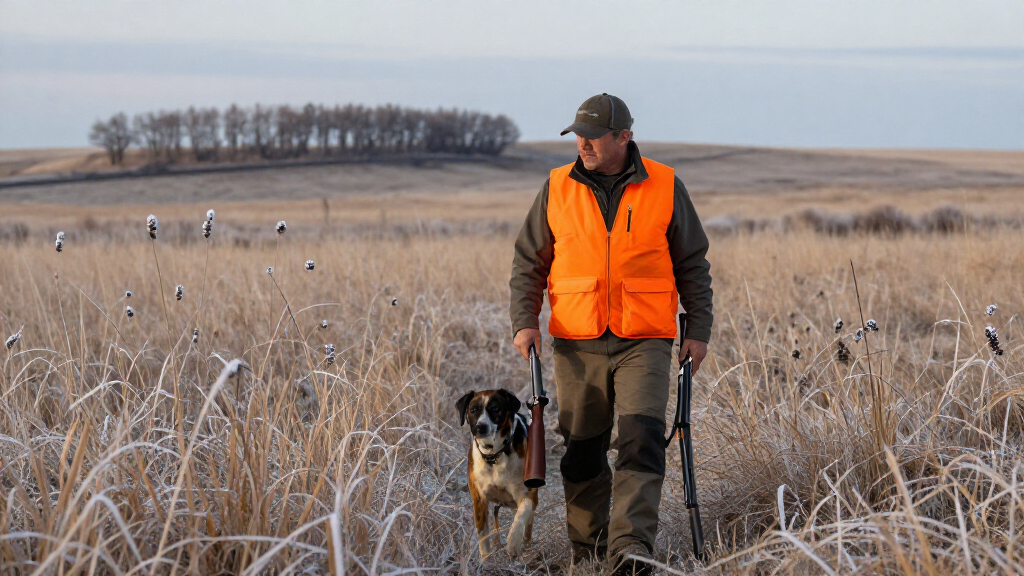
South Dakota’s nonresident pheasant hunters continued to outnumber resident hunters last season, according to state survey projections, renewing concerns among local hunters that the state’s focus on hunting tourism is weakening its homegrown hunting culture. The figures cited in an Outdoor Life report published Nov. 4 estimate about 82,600 nonresident hunters and 57,100 residents.
The estimates come from annual harvest surveys by the South Dakota Department of Game, Fish and Parks. The report says nonresidents have outnumbered residents every year since 2002. These are survey projections, not a direct count of every hunter. On the opening weekend, Oct. 17 and 18, conservation officers spoke with about 1,800 pheasant hunters from 44 states, the report said.
Brad Johnson, a Watertown real-estate appraiser and lifelong hunter, told Outdoor Life that residents welcome visiting hunters but want more attention paid to local participation. He argued the state and its tourism industry put substantial effort into marketing to out-of-state hunters, while comparable efforts to recruit South Dakota residents are lacking. Johnson recently made a related case in a column for South Dakota Searchlight.
The report also documents growth in private shooting preserves, which offer paid hunts, often using released birds. Licensed preserves increased from 157 in 2001 to a record 237 last season. State figures cited by Outdoor Life show that during the 2025-26 season hunters shot about 400,000 pheasants on preserves, a record; the harvest of released captive birds rose 50 percent over the previous nine seasons. That measure excludes incidental harvest of wild birds.
Resident Hunting Faces a Wider Gap
The divide matters because pheasant hunting is both a state tourism draw and a local outdoor tradition. Nonresident license purchases bring in more revenue per hunter: Outdoor Life reports that residents pay $36 for a season-long small-game license and a $10 habitat stamp, while nonresidents pay $142 for a 10-day bird license and a $25 habitat stamp. Johnson described visiting hunters as the program’s financial backbone, while warning that financial dependence should not eclipse resident recruitment.
Growing preserve activity adds another dimension to the debate. Paid operations can bring business to rural communities and provide a different kind of hunting experience, but Johnson says many are geared almost entirely toward visitors and are beyond what most South Dakotans would pay. Local hunters also raise concerns about access. The report presents these as residents’ experiences and views, not as proof that preserve growth has caused fewer residents to hunt.
Products Worth Considering

GoPro Wireless Mic Complete Kit with 2 Transmitters, 2 Receivers, and Charging Case

Therabody Theragun Mini 3rd Generation Massage Gun, Black

TheraGun Therabody PRO Plus 6-in-1 Deep Tissue Massage Gun, Black
As an affiliate, we earn on qualifying purchases.
Tourism, Preserves and Public Ground
South Dakota is known for pheasant hunting that draws visitors from neighboring states and farther away. The Outdoor Life reporter, who traveled from Arkansas, described seeing vehicles with out-of-state plates at public hunting areas during the season. That account is personal observation, while the broader comparison between resident and nonresident participation comes from state survey projections.
The report distinguishes public-land hunting for wild birds from commercial preserve hunts, where released captive pheasants may be shot. Public-land hunters can face demanding conditions and competition for access, the reporter wrote. Preserve acreage is regulated: licensed operations must cover at least 160 acres and no more than 2,560 acres. The two forms of hunting serve different customers and are measured separately in the preserve harvest data described in the report.
““We love out-of-state hunters. And we want everybody to keep coming and enjoying South Dakota’s tradition.””
— Brad Johnson, South Dakota hunter, quoted by Outdoor Life
What the Hunter Counts Cannot Show
The state figures cited are survey projections, and the report does not provide survey margins of error or detailed year-by-year totals. The article also does not establish why resident participation is lower than nonresident participation, or whether the gap reflects changes in resident interest, access, costs, demographics, or other factors.
Local hunters’ concerns about marketing, access and commercialization are attributed views rather than findings from a state study. The preserve figures document expansion and harvest volume, but do not show that preserves have displaced public-land hunting or caused the resident-hunter trend. The report does not provide a specific state response or a newly announced policy aimed at reversing the pattern.
Recruitment and Access Remain Open Issues
The report identifies resident recruitment as a concern raised by local hunters, but does not describe a new state program or decision. The next indication of how participation is changing will come from future South Dakota Game, Fish and Parks hunter surveys and harvest reporting. Those data can show whether the resident-nonresident gap continues, but would not by themselves explain its causes.
For now, the immediate debate is whether South Dakota’s tourism-driven hunting economy can continue to attract visitors while sustaining opportunities and interest among residents. Any policy response, including changes to outreach or access, remains unclear.
Key Questions
How many resident and nonresident pheasant hunters were estimated last season?
South Dakota Game, Fish and Parks survey projections cited by Outdoor Life estimate about 57,100 residents and 82,600 nonresidents.
How long have nonresident hunters outnumbered residents?
The report says nonresidents have outnumbered residents in South Dakota’s annual pheasant-hunter estimates every year since 2002.
Are private shooting preserves growing in South Dakota?
Yes. The report says licensed preserves rose from 157 in 2001 to a record 237 last season. Hunters shot about 400,000 pheasants on preserves in the 2025-26 season, also a record, according to figures cited in the article.
Does the report prove that preserves caused resident participation to fall?
No. It documents preserve growth and a long-running difference in resident and nonresident hunter estimates, while reporting local concerns about commercialization and access. It does not establish a cause for the participation gap.
Source: outdoorlife.com