TL;DR

Get sports gear delivered free with Prime
- Fast, free delivery on millions of items
- Prime Video, Amazon Music and more included
- Member-only deals all year
An Outdoor Life report published Oct. 15, 2026, outlines five practical rules for hunting mature whitetails from ground level: use natural cover, control movement and noise, account for wind and thermals, prepare shooting lanes, and plan for a buck’s approach. The account describes ground hunting as a viable alternative to a tree stand, not a consistently more effective method.
Outdoor Life published a five-rule guide to hunting mature whitetail bucks from ground level on Oct. 15, 2026, presenting it as an alternative for hunters who cannot or do not want to use a tree stand. The report emphasizes natural cover, careful movement, favorable wind and prepared shooting lanes, while acknowledging that ground hunting is not generally more effective than hunting from an elevated stand.
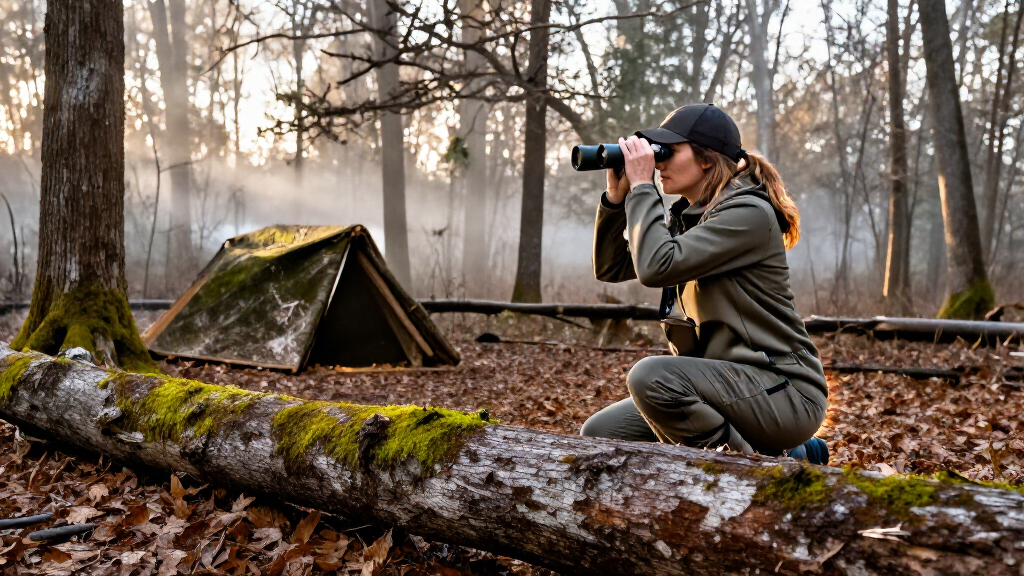
The report’s central advice is to choose a position that hides the hunter while preserving a clear view and a quiet route into shooting position. Fallen trees, root wads and other natural cover can conceal a bowhunter without the mobility limits of a pop-up blind. The author says that movement is the main risk: a deer may detect motion in its peripheral vision, so hunters should wait until a buck looks away or is screened by a tree before shifting position or drawing.
Preparation matters. The author recommends clearing leaves around equipment and identifying likely shooting lanes before settling in, reducing noise during an encounter. Hunters should also set up with the wind in their favor relative to a trail and account for changing air movement. The report describes rutting bucks traveling higher trails in the early afternoon while thermals rise, potentially carrying scent from does below.
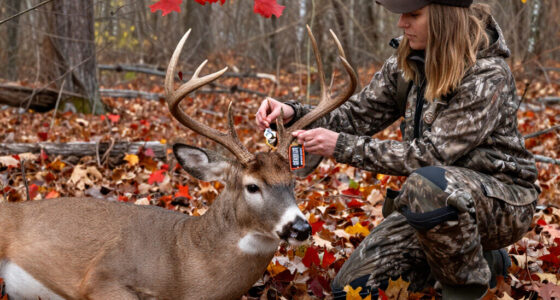
The author recounts taking a bow buck while lying against a fallen tree near a well-used ridge trail. He had placed two estrus-scent drippers at separate points, stayed upwind and waited until the buck approached. He said the deer was later scored at 154 inches and change, and ran about 40 yards after being hit through the lungs. The author presents the outcome as one hunt in which several conditions aligned, not proof that the approach reliably produces a successful hunt.
When Ground Setups Make Sense
The advice is relevant to bowhunters whose chosen area lacks suitable trees for a climbing stand, who have not placed a stand in advance, or who want to remain mobile during the rut. A ground setup can offer access to a trail or travel corridor that a fixed stand does not cover. Natural cover can also preserve mobility when deer movement is unpredictable, unlike a ground blind that may restrict where a hunter can shift position.
But the report does not claim that ground hunting is a shortcut to a mature buck. At ground level, a hunter may be more exposed to a deer’s vision and scent detection, making position and patience especially important. The practical value is in having another option when terrain, available trees or changing deer activity make a stand unsuitable.
ground hunting camouflage clothing
As an affiliate, we earn on qualifying purchases.
As an affiliate, we earn on qualifying purchases.
Ground Hunting Beyond the Stand
Hunting deer from the ground predates modern tree stands. Outdoor Life notes that Native Americans hunted this way and that elevated stands were not common during the early decades of modern bowhunting. The report also describes modern hunters Jim Brush of Wisconsin and George Mann of Alabama, who used ground-level setups in different ways: Brush favored blowdowns and a folding chair, while Mann cleared shooting lanes around a central position.
The author’s example took place during the rut, when bucks may travel while searching for does. He selected a ridge trail with sign including rubs, set scent drippers near the route and used a fallen tree for concealment. Those details describe one specific hunt; terrain, wind, deer behavior and local regulations vary, and the report does not suggest every hunter will be able to reproduce the same conditions.
““It’s not necessarily more effective most of the time.””
— Outdoor Life report author
As an affiliate, we earn on qualifying purchases.
Limits of the Reported Advice
The report is based on hunting experience and individual examples; it does not provide controlled comparisons between ground and tree-stand success rates. No success-rate data or baseline is given, so readers cannot use the account to estimate how often the method works. The author also notes that hunts often do not go as planned, whether the hunter is on the ground or in a tree.
Conditions that affect a specific setup—including local wind and thermal patterns, a buck’s route, visibility and hunting regulations—will differ by location and day. The report does not establish that scent drippers or calling will draw a mature buck, and the featured buck’s scoring figure is reported by the author rather than independently documented in the supplied material.
As an affiliate, we earn on qualifying purchases.
Applying the Rules in the Field
Hunters considering a ground setup can use the report’s principles to assess a site before settling in: identify natural concealment, check wind direction, locate likely trails and prepare quiet shooting lanes. Leave a clear route for movement so equipment can be reached without rustling or sudden motion, and avoid drawing while a deer is watching.
The report does not announce a new hunting regulation, product or study, and it gives no scheduled follow-up. Its practical next step for readers is to match a ground position to local conditions and treat the author’s hunt as an example, not a guarantee. Hunters should check applicable rules and use safe bowhunting practices when selecting a shot and recovering a deer.
As an affiliate, we earn on qualifying purchases.
Key Questions
What are the five main rules for hunting mature bucks from the ground?
Use natural concealment, minimize movement and noise, pay close attention to wind and thermals, prepare shooting lanes in advance, and position yourself around likely deer travel while planning for more than one approach direction.
Does the report say ground hunting is better than using a tree stand?
No. The author says it is not necessarily more effective most of the time, but can be a useful alternative where a stand is unavailable or unsuitable.
Why does the report emphasize movement?
The author says a deer can notice movement in its peripheral vision. Waiting until a buck looks away or is screened by a tree may reduce the chance of being detected while shifting position or drawing a bow.
What does the report say about scent and wind?
The author describes staying upwind of a trail and placing scent drippers at separate points along the route. The account is a single example and does not establish that scent products will attract a buck in other conditions.
Is there evidence that the method has a particular success rate?
No success-rate figures or controlled comparisons are provided. The report offers field advice and personal accounts, not data showing how often ground hunting produces a mature buck.
Source: rss
Halloween Picks
halloween
As an affiliate, we earn on qualifying purchases.