
TL;DR
Outdoor Life’s Jake Dahlke hung treestands at 10, 15, 20 and 25 feet in the same tree and shot a 3D deer target at 18 yards to test conventional advice on stand height. He found shot angles from 10 to 20 feet stay manageable, most hunters overestimate their height, and going higher offers only a marginal scent advantage.
A new Outdoor Life field test puts hard numbers on one of bowhunting’s most debated questions: how high should you hang a treestand? Author Jake Dahlke hung four stands — at 10, 15, 20 and 25 feet — in a single backyard tree, shot a 3D deer target at 18 yards from each, and measured shot angles, vertical margin for error and scent drift. His conclusion: the commonly cited 20-foot standard is higher than most hunters actually climb, and shot angles between 10 and 20 feet are easier to execute than the steep presentations found at 25 feet.

Get sports gear delivered free with Prime
- Fast, free delivery on millions of items
- Prime Video, Amazon Music and more included
- Member-only deals all year
The test measured shot angles with a Bushnell R5 Series rangefinder from each height to the target placed at 18 yards, roughly the average distance for a bow shot at deer. The angles came out at approximately 15 degrees at 10 feet, 20 degrees at 15 feet, 25 degrees at 20 feet and 30 degrees at 25 feet. Dahlke conducted the test in winds of about 10 mph, gusting to 15 mph, and evaluated entry and exit points on a 3D target whose 14-inch chest approximates a small whitetail.
Steep angles presented two problems, according to the report. On high-angle shots, a bowhunter must aim higher on the deer so the arrow exits the bottom of the offside lung — but aiming too high risks missing the front lung entirely, shrinking the vertical margin for a double-lung hit. Dahlke also reported that the tree swayed noticeably at the 25-foot mark and that the extreme downward angle made consistent shooting form harder to maintain. Testing was done with a wind checker at each height to observe how scent moved relative to ground level.
On scent, Dahlke observed that at 25 feet his scent was blowing away rather than down toward the ground, and he believes it would have passed over a deer 15 to 20 yards downwind. However, he noted the scent still descends to deer height eventually, meaning deer perhaps 100 yards away could smell him — height alone does not defeat a whitetail’s nose.
What the Test Means for Stand Placement
The findings push back on two pieces of common hunting advice: that hunters should climb above 20 feet for concealment and scent control, and that higher is generally better. According to the test, concealment depends more on surrounding cover — a tree wider than the hunter’s shoulders with limbs breaking up the profile — than on raw height, which means hunters with good cover can hunt lower and shoot easier angles.
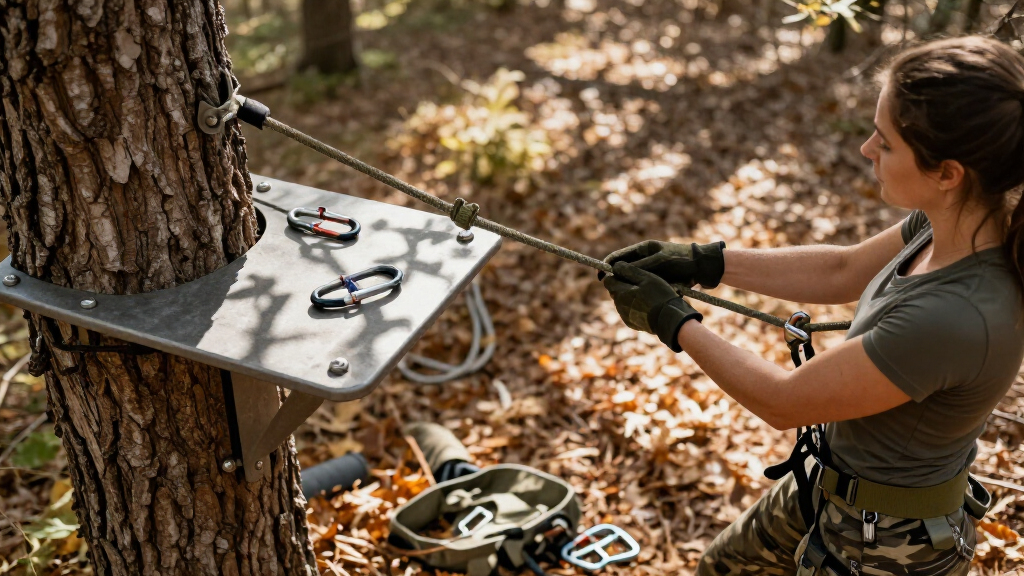
The report also matters for safety. Dahlke emphasizes that most falls happen while climbing into or out of a stand, not while seated in it, so hunters must be connected to a harness and lifeline from the moment they leave the ground — not only once settled in the stand. That advice is consistent with long-standing hunter-safety guidance.
Products Worth Considering

YETI Tundra Haul Wheeled Cooler

Therabody Theragun Relief Massage Gun, 3-Speed, Navy

BowFlex Results Series SelectTech Adjustable Dumbbells
As an affiliate, we earn on qualifying purchases.
How the 20-Foot Standard Took Hold
As Dahlke notes, most articles and videos on treestand placement treat the 20-foot mark as a default standard. Some hunters advocate climbing even higher — 25 feet or more — to avoid being seen or smelled, while others argue for hanging lower to improve the shot angle on close-range deer. The Outdoor Life test was designed to compare those positions directly rather than rely on conventional wisdom.
The test also found that gear marketing can mislead hunters about height. A lifeline system Dahlke used was rated for hunting up to 30 feet but, measured to the base of the stand, would not reach the 25-foot setup; he needed two tethers. He also observed that stands hung by other hunters on public land and outfitted properties typically sit at about 15 feet or lower, and that hang-and-hunt hunters carrying three or four climbing sticks are unlikely to exceed 15 feet.
“If you are going to fall out of a stand, it’s most likely going to be when you’re climbing into it or out of it, so being harnessed up only while in the stand is not enough.”
— Jake Dahlke, Outdoor Life
Limits of a Backyard Test
The findings come from a single informal backyard test, not a controlled study. Variables including one tree, one target distance of 18 yards, one wind condition and one shooter’s accuracy limit how far the results generalize. The scent observations were made with a wind checker rather than with live deer, so the downwind behavior of scent around real whitetails remains an inference. The article’s takeaways reflect the author’s interpretation of his own arrow impacts and form at each height.
Applying the Findings This Season
Bowhunters heading into the season can apply the test’s practical takeaways: prioritize cover and shot angle over maximum height, treat 10 to 20 feet as a workable range for double-lung shots at typical bow distances, and verify that safety gear — harness, lifeline and climbing sticks — is rated and long enough for the actual height being hunted. Hunters should also measure stand height honestly from the base of the platform to the ground, since the test suggests most setups fall short of what their owners assume.
Key Questions
What is the best treestand height according to the test?
The report found that heights between 10 and 20 feet keep shot angles manageable for double-lung hits at typical bow distances of about 20 yards, provided the tree offers good surrounding cover for concealment.
Does hunting from 25 feet eliminate scent detection?
No. According to the test, scent at 25 feet may pass over deer within 15 to 20 yards downwind, but it drifts back down to deer height eventually, and deer roughly 100 yards away could still smell the hunter.
Why are steep shot angles harder for bowhunters?
Steep angles reduce vertical margin for error — the hunter must aim high enough for the arrow to exit the bottom of the offside lung without missing the front lung — and they also make consistent shooting form harder to maintain.
How high do most hunters actually hang their stands?
The author observed that most stands on public land and outfitted properties sit at about 15 feet or lower, and hunters packing in three or four climbing sticks rarely exceed 15 feet.
What safety equipment does the report recommend?
A full-body harness and lifeline, connected from the moment the hunter leaves the ground, since falls most often occur while climbing into or out of the stand.
Source: rss