TL;DR

Get sports gear delivered free with Prime
- Fast, free delivery on millions of items
- Prime Video, Amazon Music and more included
- Member-only deals all year
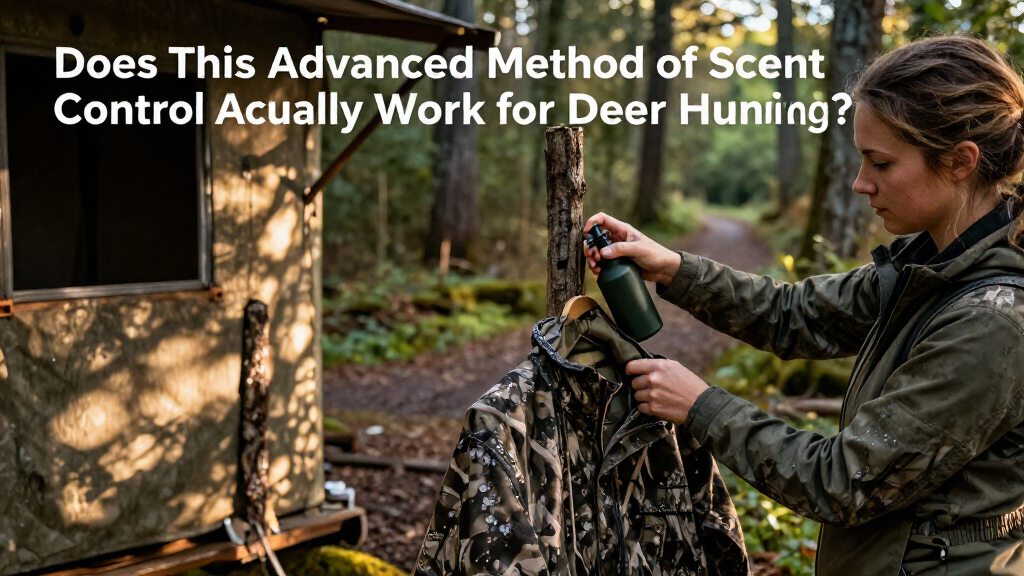
Outdoor Life reported that five experienced, unaffiliated deer hunters used Ozonics ozone-generating units during the 2023 season and all said the devices had a noticeable positive impact. Their reports came from more than 400 deer encounters, but the test was not a controlled scientific study, and the report found no peer-reviewed field research establishing that ozone prevents deer from detecting human scent.
Five experienced deer hunters who tested Ozonics ozone-generating units during the 2023 season said the devices had a noticeable positive impact on their hunts, according to a report published by Outdoor Life on October 26, 2026. The testers reported more than 400 deer encounters in total, but the informal field test does not establish scientifically that ozone stops deer from detecting human scent.
The magazine supplied new Ozonics units to five hunters with no sponsorships or industry affiliations and asked them to use the devices throughout the season. The participants were not paid for completing the end-of-season survey, and the report said Ozonics did not pay them either. All five described either a “very noticeable positive impact” or “some noticeable positive impact” on their hunting and said they would continue using the equipment.
Ozonics devices generate ozone, or O3, by sending high-voltage electricity through a coil and moving air across it. The company’s explanation is that ozone can attach to scent molecules and oxidize them, potentially changing or neutralizing human odor before deer detect it. Company president Buddy Piland told the magazine that the amount and direction of ozone may need adjustment to account for wind conditions.
The test has important limits. It relied on hunters’ observations and end-of-season survey responses, rather than a controlled comparison of hunts with and without the units. The report said its search found no peer-reviewed scientific field study demonstrating that ozone use in hunting prevents deer from smelling a person. The testers’ favorable impressions are evidence of their experience, not proof of the device’s effectiveness under controlled conditions.
What the Field Test Can Show
The findings offer a grounded account of how five unaffiliated hunters experienced the equipment, rather than another product endorsement from sponsored personalities. That may help hunters weigh the device against their own experience and budget. The test also documents positive reports across more than 400 encounters, while leaving open whether the units caused those outcomes.
That distinction matters because the current top Ozonics model was listed at $456 on sale in the report, a substantial purchase for many hunters. Without a control group or objective scent measurements, favorable encounters cannot show how many deer would have behaved differently without ozone. The results should be read as an anecdotal field report, not a performance guarantee.
Products Worth Considering

Solo Stove Bonfire 2.0 Smokeless Wood-Burning Fire Pit with Stand, Silver

Garmin Venu 3 Fitness Smartwatch, 45 mm, Black

GoPro LIT Hero – Lightweight, Compact, Waterproof Action Camera with Built-in Light, 4K60 Ultra HD Video, 12MP Photo, Touch Screen, HyperSmo
As an affiliate, we earn on qualifying purchases.
How Ozonics Is Meant to Work
Ozonics, which the report said began using ozone for hunting scent control in 2007, is the only company identified in the article as making a field-use ozone device. Its president, Buddy Piland, said the company has sold hundreds of thousands of units. Those sales figures and the proposed mechanism are company statements, not independent evidence that the units prevent detection by deer.
Piland described wind as uneven, with changing currents that can carry scent in different ways. In his account, ozone may overlap with and alter some scent while missing other pockets, so he said hunters should adjust a unit’s angle and distance in stronger or less stable wind. The report presents this as the company’s explanation; it does not independently verify how much ozone reaches a hunter’s scent or how deer respond.
““I’m selling you an invisible molecule. I’m saying ‘Hey, there’s something coming out of this box that will keep deer from smelling you.’””
— Buddy Piland, Ozonics president, quoted by Outdoor Life
What the Test Cannot Establish
The report does not describe a control group, randomized hunt conditions, or objective measurements of human scent and ozone exposure. It therefore cannot separate the effect of a unit from other factors, such as wind direction, hunting location, deer behavior, or ordinary variation between encounters. The total of more than 400 encounters also does not establish how many occurred under comparable conditions or how the deer responded in each case.
It remains unclear whether ozone consistently reduces the scent a deer detects in real hunting conditions, what settings are most effective, and whether the hunters’ positive assessments would hold in a controlled comparison. The article’s account of the five hunters is a survey-based observation from the 2023 season, not a peer-reviewed test. It also does not establish the safety or exposure implications of using ozone in every field situation.
Evidence Needed Beyond One Season
The report does not announce a follow-up trial or a planned scientific study. Its findings leave the central effectiveness question open: does an Ozonics unit change deer responses compared with otherwise similar hunts without one? Answering that would require controlled testing, clear records of wind and device settings, and a consistent way to measure encounters and deer behavior.
For now, readers can treat the five hunters’ favorable reports as personal field experience rather than independent proof of scent elimination. Any further claim about effectiveness would need stronger evidence than testimonials or an uncontrolled season of hunting observations.
Key Questions
Did all five hunters report a positive effect?
Yes. According to Outdoor Life, all five reported either a “very noticeable positive impact” or “some noticeable positive impact” on their hunting. These were survey responses, not controlled measurements.
Was the Ozonics test a scientific study?
No. The report describes an anecdotal field test based on five hunters’ experiences during the 2023 season. It does not report a control group or peer-reviewed results.
How does Ozonics say its units work?
The units generate ozone (O3), which the company says can attach to scent molecules and oxidize them. The report does not establish through independent field research that this reliably prevents deer from detecting human scent.
How many deer encounters were included?
The five hunters reported more than 400 encounters while using the units. The article does not give a controlled comparison or a detailed breakdown of the encounters by conditions and outcome.
Does the report prove the device is worth its price?
No. The report listed the top Ozonics model at $456 on sale and recorded favorable feedback from the testers, but it did not establish that the device caused better hunting outcomes or offer a measured return on the purchase.
Source: outdoorlife.com