TL;DR

Get sports gear delivered free with Prime
- Fast, free delivery on millions of items
- Prime Video, Amazon Music and more included
- Member-only deals all year
Outdoor Life’s Oct. 29 report on researcher and hunter Dr. Grant Woods says cold fronts may make deer easier for hunters to see, but do not speed up breeding activity. Woods recommends using local trail-camera observations, seasonal conditions and hunting access to plan sits, rather than relying on moon phases or dramatic weather changes.
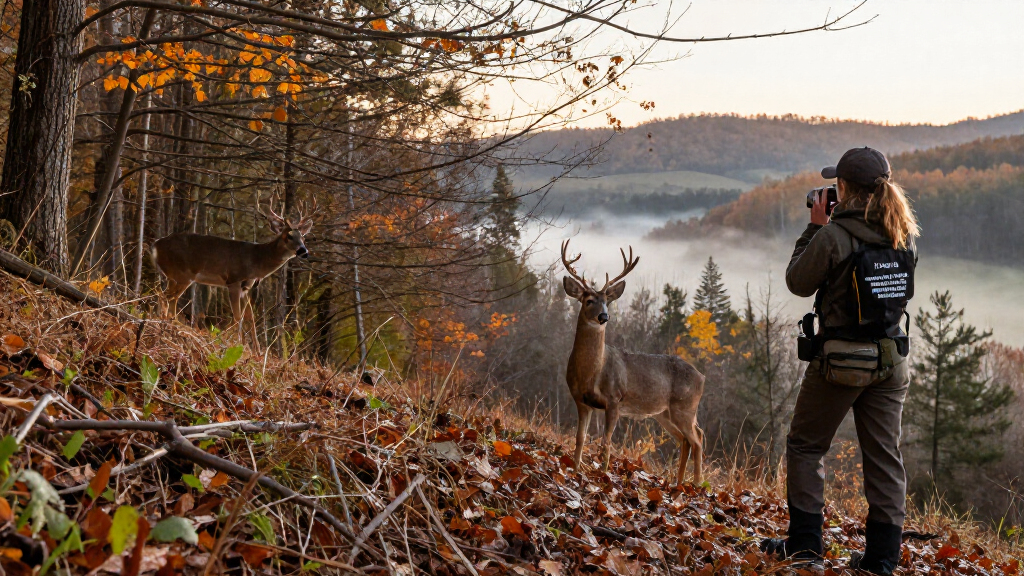
Dr. Grant Woods, a wildlife researcher and deer hunter, says hunters should not expect a cold front to speed up the whitetail rut, according to an Outdoor Life report published Oct. 29. Woods’ advice is to plan around local deer behavior and weather that affects hunting conditions, because colder weather may increase sightings without changing when does become receptive. Hunters can also review deer shot placement before a hunt.
Woods told Outdoor Life that hunters and researchers can appear to disagree because they are measuring different things. Hunters may see more deer during a cold front, while research may not show a corresponding increase in breeding activity. Woods said temperature is only one part of a complex picture, and factors such as barometric pressure, the size of a temperature change and the phase of the rut can make results difficult to interpret.
During the pre-rut, Woods said, bucks generally move within their home ranges rather than making long journeys, though they may walk more inside those areas. He defines the pre-rut as the period when fewer than 25 percent of does are receptive. As more does become receptive, buck activity increases, but Woods says that progression is not dictated by a particular cold front.
Woods also advises hunters not to wait only for dramatic weather. When temperatures have been warmer than normal, he uses a roughly 10 percent temperature drop as a reason to consider hunting. During the late season, he looks for a similar increase when deer are moving in warmer conditions. He says ordinary, stable weather can also offer good hunting as the rut intensifies. The report describes those figures as Woods’ personal rule of thumb, not a universal forecast or guarantee.
Weather Can Change Sightings, Not Rut Timing
The distinction matters because hunters can mistake seeing more deer for evidence that breeding has accelerated. Woods’ account suggests a cold front may change how often deer are visible from a stand without moving the local rut calendar. Treating those as separate effects can help hunters avoid relying on a single weather event or an isolated trail-camera image to make decisions.
His advice also shifts attention to factors hunters can evaluate on their own ground: local camera data, recent temperatures, deer travel within home ranges, and whether the approach to a stand risks disturbing animals. For hunters deciding when to take time off or commit to an all-day sit, that may be more useful than a blanket claim that one kind of weather will make deer move.
Products Worth Considering

GoPro Hero12 Black Waterproof Action Camera with 5.3K60 Video and 27MP Photos

Therabody JetBoots PRO Plus Wireless LED 3-in-1 Compression Boots, Short (29 in Inseam)

Coleman Skydome 4-Person Tent with Full-Fly Weather Vestibule
As an affiliate, we earn on qualifying purchases.
Woods’ View of the Rut Cycle
The report is based on an interview with Woods, who runs Growing Deer TV and uses local trail-camera data to assess deer behavior. The interview took place around Halloween, as a strong cold front moved into the central part of deer country. Woods described temperatures falling from the high 70s to 30 degrees or lower within 24 hours and said his cameras recorded a sharp increase in deer activity.
That observation does not, by itself, establish that weather caused a change in breeding. Woods said scientific studies require a result to recur consistently, while field observations can be affected by several interacting conditions. He also describes the rut as a seasonal curve that rises and falls locally; warm weather does not stop breeding activity that is already progressing.
“The research says that weather is not much of a [factor in regards to deer rutting activity].”
— Dr. Grant Woods, as quoted by Outdoor Life
Local Conditions Still Shape the Picture
The report does not provide a new, peer-reviewed study or a dataset establishing how much a particular temperature change affects deer movement. Woods’ temperature rule is a field guideline, and the account does not establish that it will apply across regions, seasons or individual properties. The source excerpt also ends while discussing deer movement in rain, so it does not provide the full detail of Woods’ advice on precipitation.
It remains difficult to isolate weather’s effect from other variables, Woods said, including pressure changes, the rut’s stage and local conditions. Hunters should not read a camera spike during a front as proof that breeding activity has accelerated.
Use Local Signs to Plan Hunts
For hunters following Woods’ advice, the next step is to compare local trail-camera observations with the forecast and the seasonal stage, then select a stand and entry route that minimize disturbance. In hot conditions, Woods suggests considering a shorter evening hunt closer to bedding areas if a hunter can get there without bumping deer; he says deer may move only shortly before legal shooting light ends.
The report does not announce a forthcoming study or a scheduled next update. Deer movement and the rut will continue to vary by location, so the practical test for hunters is whether local observations support a particular sit—not whether a forecast promises a dramatic front.
Key Questions
Does a cold front make the whitetail rut happen sooner?
Woods says no. He distinguishes increased deer visibility during colder weather from a change in breeding timing.
Why might hunters see more deer during a cold front?
Woods says deer may be more active within their home ranges, making them more likely to be seen. He cautions that a sighting increase does not prove that rutting activity has accelerated.
What temperature change does Woods watch for?
After warmer-than-normal weather, Woods uses a roughly 10 percent temperature drop as a personal cue to consider hunting. In the late season, he watches for a similar increase during warmer conditions. These are his guidelines, not guaranteed rules.
Can warm weather interrupt the rut?
Woods says the rut continues as it progresses locally even during warm spells. He describes breeding activity as a seasonal curve rather than a response that stops whenever temperatures rise.
Source: outdoorlife.com