TL;DR

Get sports gear delivered free with Prime
- Fast, free delivery on millions of items
- Prime Video, Amazon Music and more included
- Member-only deals all year
Outdoor Life’s shot-placement guide advises hunters to target a deer’s heart and lungs, with aim points adjusted for the animal’s angle and the weapon used. It says broadside shots generally offer the clearest target, while bowhunters should avoid shoulder bones and pass on difficult angles such as frontal or straight-away shots in most cases.
Outdoor Life has published a deer shot-placement guide advising hunters to aim for the heart and lungs and adjust their point of aim to the animal’s position. The guidance matters because a shot that misses those vital organs can wound an animal, while bowhunters have less margin for error around the shoulder than hunters using a rifle.
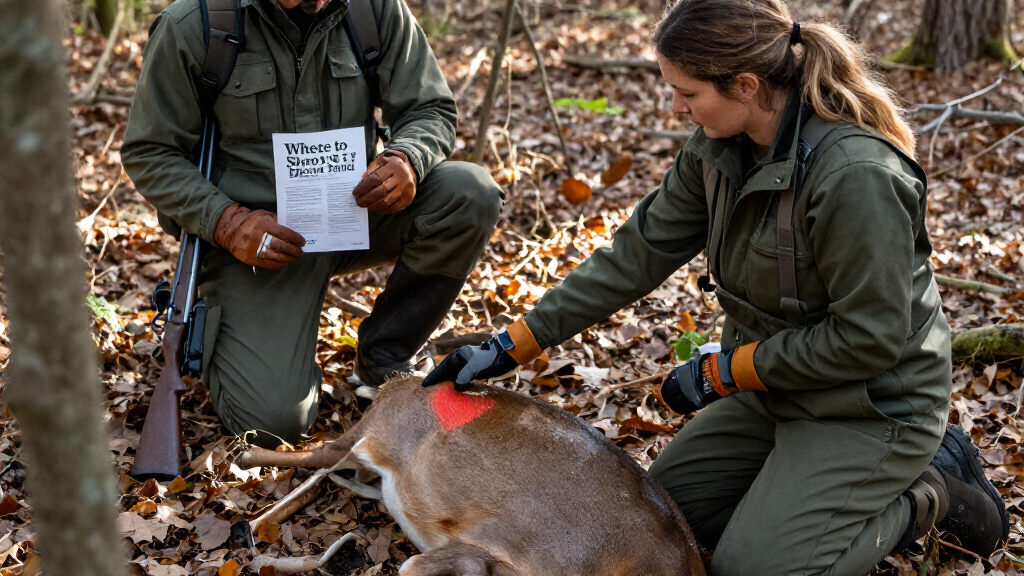
For a broadside deer, the guide recommends following the front leg upward and aiming just below the midpoint of the chest, near the crease behind the shoulder. It describes the heart-and-lung area as the traditional “boiler room,” where a bullet or arrow can cause substantial blood loss and a quick death. The article says this placement can also limit meat damage compared with shots that pass through the shoulder.
The recommended point shifts with the animal’s angle: hunters should hold farther back on a quartering-away shot and farther forward when the deer is quartering toward them, aiming along a path through the heart and lungs. For a frontal shot, the guide says to aim between the shoulders, slightly below the middle of the chest, but stresses that the target is narrow and the shot should be taken only at close range.
The guide distinguishes bow and rifle placement. Rifle hunters can aim closer to the shoulder because suitable bullets can pass through bone, according to the article. Bowhunters are advised to aim an inch or two behind the shoulder crease to reduce the chance of hitting large bones. It calls quartering-to shots unsuitable for most archers because the arrow must pass through the shoulder or risks striking the abdomen.
Shot Angle Changes the Risk
Shot placement affects whether a hunter reaches the heart and lungs, how quickly an animal may die, and whether meat or hide is damaged. The guide’s central practical point is that a familiar aim point cannot simply be used from every angle: hunters must account for the route a bullet or arrow will take through the body.
That distinction is especially relevant to bowhunters. The article says shoulder bones create a narrower safe margin for an arrow than for a rifle bullet, making a poorly aligned shot more likely to fail to reach the vital organs. Its advice to wait for a clearer angle, rather than force a shot, is tied to reducing the risk of a wounded animal.
Products Worth Considering

GoPro Fluid Pro AI 3-Axis Gimbal Stabilizer

YETI Carbon Steel Griddle, Pre-Seasoned Nonstick, 12 x 22 x 4.2, Black

Coleman Skydome XL 8-Person Family Tent
As an affiliate, we earn on qualifying purchases.
Why the Shoulder Matters
The article explains that a deer’s shoulder is not a single solid bone. The bone angles forward near the leg, while the shoulder blade sweeps back. That anatomy affects the path of an arrow or bullet and underlies the guide’s different aim points for bows and rifles.
For quartering-away shots, Outdoor Life says some hunters prefer the angle because the animal faces away, potentially making it easier to draw a bow or shoulder a firearm unnoticed. The guide advises visualizing a path through the vital organs and toward the far-side shoulder. It says rifle hunters should aim a few inches farther forward than bowhunters at that angle.
“Knowing where to shoot a deer for a quick kill is the responsibility of every deer hunter.”
— Outdoor Life
Limits of the Guidance
The supplied source material does not give the article’s publication date, identify a specific jurisdiction, or lay out local hunting regulations. It also does not establish that every firearm, bullet, bow, arrow, or broadhead will perform as described; equipment and shot conditions can vary. The recommendations are presented as general guidance, not a guarantee of a particular outcome.
The source says extreme quartering-away shots should be passed up and advises against the straight-away “Texas heart shot” in ordinary circumstances, particularly for bowhunters. It does not quantify the distance or angle at which every shot becomes unacceptable. Hunters should follow applicable regulations and make decisions based on their equipment, conditions, and ability to place a shot responsibly.
Choosing Whether to Take a Shot
The article’s practical advice is to assess the deer’s angle before aiming and wait for a shot that offers a clear path through the vital organs. It recommends passing on difficult angles, including a straight-away shot, except that a hunter may consider a follow-up shot when they know the deer was hit and need to stop it.
Hunters can review the guide’s diagrams and the National Deer Association video it references to understand the anatomy and aim points. The supplied material does not announce a further update or scheduled next step.
Key Questions
Where should a hunter aim at a broadside deer?
Outdoor Life advises aiming just below the midpoint of the chest, near the crease behind the front shoulder, to reach the heart and lungs.
Does shot placement differ for bowhunters and rifle hunters?
Yes. The guide says rifle hunters can aim closer to the shoulder, while bowhunters should aim an inch or two behind the shoulder crease to reduce the chance of striking bone.
How should aim change for a quartering deer?
The guide recommends aiming farther back for a quartering-away deer and farther forward for one quartering toward the hunter, so the shot path crosses the heart and lungs. It cautions bowhunters against quartering-to shots.
Should hunters take a frontal or straight-away shot?
Outdoor Life says frontal shots have a narrow target and should be limited to close range. It advises passing on straight-away shots in most cases, particularly with a bow, because the angle can make a vital-organ hit uncertain.
Source: rss