
TL;DR

Get sports gear delivered free — and shop member deals
- Fast, free delivery on millions of items
- Access to Prime Big Deal Days deals on October 6–7
- Prime Video, Amazon Music and more included
Outdoor Life published a rifle sight-in method that combines shots from several aiming points into one 20-shot data set before making a scope correction. The report says the larger sample can better show a rifle’s point of impact than repeated adjustments based on three- or five-shot groups; the method does not guarantee the same results for every rifle or shooter.
Outdoor Life published a rifle sight-in guide on October 3 recommending that shooters combine shots from multiple aiming points into a single 20-shot group before making a scope adjustment. The report says the method can provide a more dependable estimate of a rifle’s point of impact than repeatedly adjusting based on three- or five-shot groups.
The article describes a common approach in which a shooter fires a small group at 100 yards, estimates its center, adjusts the scope and fires again. Outdoor Life’s author says this can turn into “chasing” the zero: each small group may appear to call for another correction, while the shooter still lacks enough data to know where the rifle generally places shots.
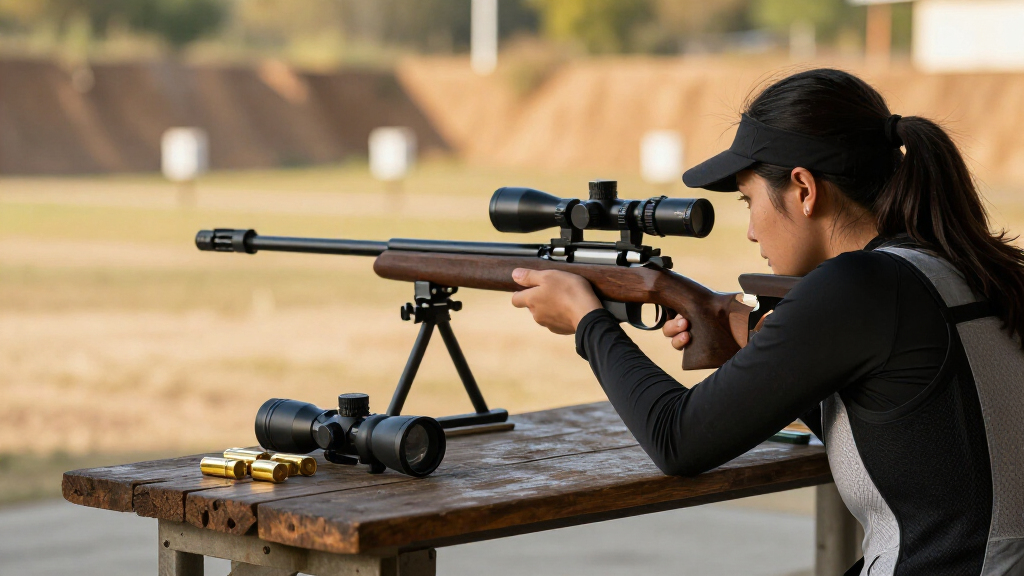
The alternative is to fire several groups at separate aiming points on a target, without changing the scope between groups. The shooter then plots the impacts together around one reference point and uses group-analysis software to estimate the aggregate group’s center relative to the point of aim. That offset informs a single scope correction, followed by confirmation shots.
Outdoor Life names Hornady’s 4DOF app, which it says has a paid group-analysis upgrade, and Ballistic X as tools for analyzing the plotted impacts. The report also says a target with horizontally and vertically aligned aiming points and reference marks can help keep the data accurate. Its E.A.T.S. targets are offered as one example, but any suitably gridded target can be used with careful alignment.
More Data Before Scope Corrections
The method matters because a sight-in is only as useful as the estimate behind the adjustment. A larger set of shots can help distinguish a rifle’s general point of impact from the variation seen in a few individual shots. For hunters, that may reduce repeated scope changes and provide a clearer basis for checking whether the rifle is zeroed before a season.
Outdoor Life frames the approach as a way to collect better data and potentially use less ammunition than repeated trial-and-error adjustments. That is the article’s stated rationale, not a guarantee that every shooter will save rounds or achieve a particular level of precision. Results still depend on factors including the rifle, ammunition, shooter consistency and shooting conditions.
As an affiliate, we earn on qualifying purchases.
From Small Groups to Aggregated Data
Many sight-in routines rely on three-shot groups, sometimes followed by a second small group after a scope adjustment. Outdoor Life’s author says he later moved to five-shot groups but still found that confirmation shots could land away from where he expected. The report identifies combining the shots into a larger group as the additional step he had missed.
The article connects that approach to larger-sample testing. It says Hornady employees have conducted tests using groups of 100 shots or more, and that Outdoor Life has begun including 20-shot group sizes and mean radius in some rifle evaluations. Mean radius is described in the report as the average distance of impacts from the group center, offered as a measure that can help predict performance. The article does not present a controlled comparison proving that the 20-shot sight-in method works better in every setting.
““near-o””
— Outdoor Life
target with grid for rifle sighting
As an affiliate, we earn on qualifying purchases.
As an affiliate, we earn on qualifying purchases.
Limits of the 20-Shot Method
The report does not establish that 20 shots are a universal threshold for an accurate zero, nor does it provide a controlled trial comparing the method with other sight-in routines across different rifles and shooters. It describes the larger sample as giving shooters more confidence in the data, rather than guaranteeing a perfect zero.
It is also unclear how much ammunition or time a particular shooter would save. The article’s analysis depends on correctly recording and overlaying impacts, using a target with aligned reference points and making the scope adjustment accurately. The report does not set out a single required distance, ammunition type or confirmation procedure for all rifles.
As an affiliate, we earn on qualifying purchases.
Confirm the Adjustment at the Range
After calculating the aggregate group’s center and adjusting the scope, shooters still need to fire confirmation shots to check the resulting point of impact. Outdoor Life presents that follow-up as part of establishing a zero, not as a step replaced by the 20-shot analysis. The report does not announce a formal study or additional testing schedule; readers seeking to use the method can consult the cited group-analysis apps and targets, while following applicable range rules and firearm-safety practices.
As an affiliate, we earn on qualifying purchases.
Key Questions
What is the 20-shot rifle sight-in method?
It combines impacts from several groups fired at different aiming points, with no scope adjustments between groups, into one aggregate data set. The center of that combined group is then compared with the point of aim to guide a scope correction.
Why does Outdoor Life recommend more than three or five shots?
The article says small groups may not provide enough data to estimate where a rifle generally shoots. A larger sample can offer a more informative view of the point of impact, though it does not guarantee a particular result.
Do I need an E.A.T.S. target?
No. Outdoor Life says a target with aiming points arranged on a grid can work. The shooter must keep the aiming points and reference marks aligned when plotting the impacts.
Which apps does the report mention?
The article cites Hornady’s 4DOF app, including its paid group-analysis upgrade, and Ballistic X. It describes these as tools for calculating group measurements and the center’s offset from the point of aim.
Does the method replace confirmation shots?
No. The method is intended to guide a scope adjustment using a larger sample. The report says shooters should still fire confirmation shots after making that correction.
Source: rss
Halloween Picks
halloween
As an affiliate, we earn on qualifying purchases.