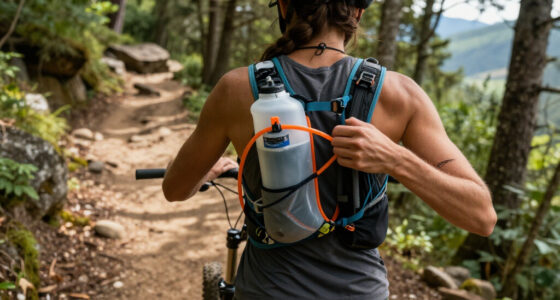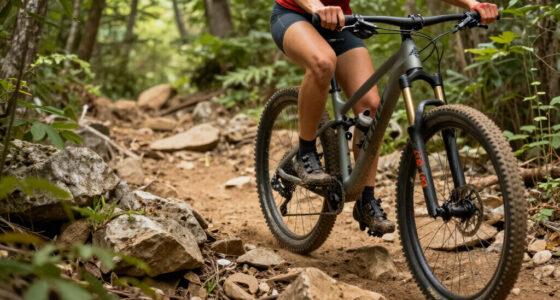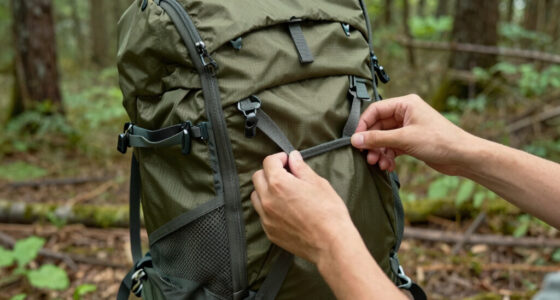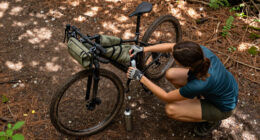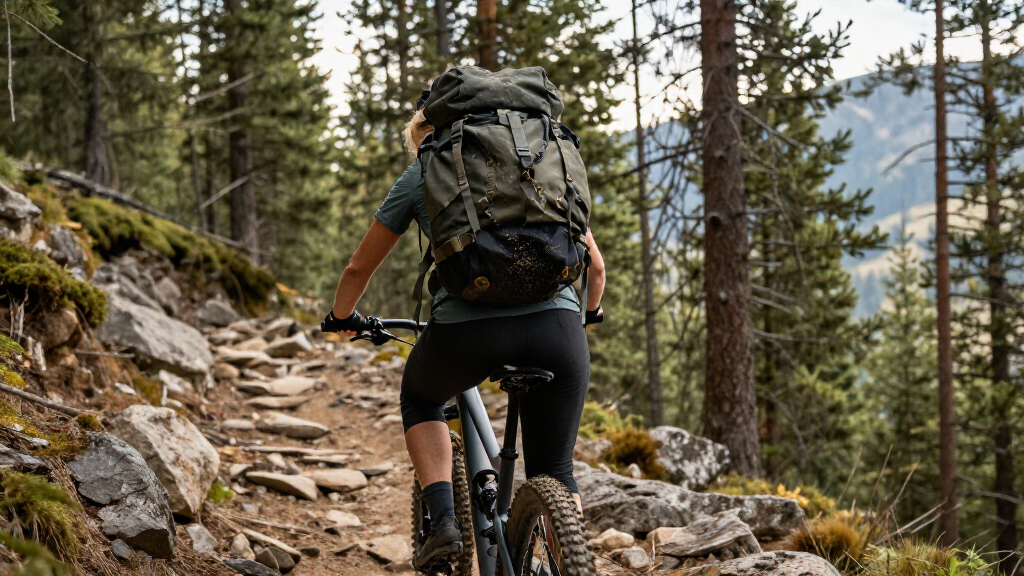

Choosing among rugged mountain biking backpacks comes down to three questions: how much protection you need, how much gear you carry, and how much weight you’re willing to strap to your back on technical descents. The Evoc Trail Pro 16L Protector Backpack earns my best overall pick because it pairs CE-certified back protection with genuine trail-riding durability, something almost nothing else in this price range manages. If crash protection is non-negotiable but you ride bigger days, the Evoc Trail Pro 26 offers the same spine protector with far more capacity. Budget-minded riders should zero in on the Osprey Raptor 14, which trades the armor for best-in-class fit and organization. The main tradeoff throughout this category is weight versus protection: armored packs like the Evocs carry heavier but can save your spine, while lightweight options like the 6L MTB daypack disappear on your back but leave you exposed. Read on for the full breakdown of all 13 packs.

Get sports gear delivered free with Prime
- Fast, free delivery on millions of items
- Prime Video, Amazon Music and more included
- Member-only deals all year
Complete the kit


Key Takeaways
- Only two packs in this lineup — the Evoc Trail Pro 16L and Trail Pro 26 — include certified spine protection, which is why they dominate the top spots for aggressive trail and enduro riding despite their higher weight.
- The Osprey family (Raptor 10, Raptor 14, Raptor LT 12, and Berm) delivers the best suspension and ventilation per dollar, but the four models overlap heavily — the real decision is capacity, not quality.
- Budget packs under $60 (Oumurs 15L, Outdoor Cycling 18L, FORBEMK, Everfun, MARCHWAY) matched premium packs on raw storage but fell short on load stability, meaning contents bounce noticeably on rough descents.
- The CamelBak M.U.L.E. Pro 14 remains the best all-around hauler for long days thanks to its cargo organization, but it’s heavier and hotter than the Osprey alternatives for shorter, faster rides.
- The 6L minimalist daypack is the only true featherweight option here, and it’s unbeatable for lift-served laps — but anything beyond a tube, tool, and a shell jacket overwhelms it.
| Outdoor Cycling Backpack, 18L, Black |  | Best Value All-Rounder | Capacity: 18L | Material: Waterproof tear-resistant nylon | Color: Black | VIEW LATEST PRICE | See Our Full Breakdown |
| Oumurs 15L Motocross Backpack with Rain Cover and Tool Pouch |  | Best for Trailside Repairs | Capacity: 15L | Weight: 3 lbs | Dimensions: 18.5 x 7.5 x 6.5 inches | VIEW LATEST PRICE | See Our Full Breakdown |
| Small Mountain Biking Backpack Lightweight 6L Daypack | 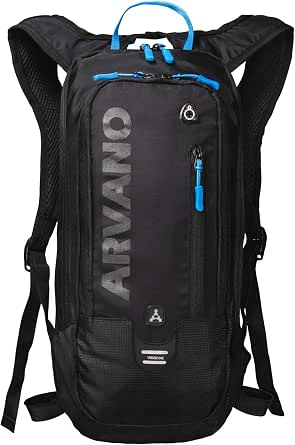 | Best Minimalist Hydration Pack | Capacity: 6L | Weight: 1.1 lbs | Dimensions: 18 x 8.6 x 2 inches | VIEW LATEST PRICE | See Our Full Breakdown |
| Evoc Trail Pro 16L Protector Backpack |  | Best Back Protection | Volume: 16L | Back Protector: LITESHIELD PLUS, CE EN 1621-2 Level 2 | Weight: 1100g | VIEW LATEST PRICE | See Our Full Breakdown |
| FORBEMK Waterproof Cycling Backpack with Shoe Compartment |  | Best for Ride-and-Travel Days | Waterproof: Yes | Material: High-density polyester | Compartments: Shoe compartment, front zippered pockets | VIEW LATEST PRICE | See Our Full Breakdown |
| Evoc Trail Pro 26 Hydration Backpack with Spine Protector |  | Best Impact Protection | Volume: 26L | Weight: 1070g | Dimensions: 26 x 50 x 16 cm | VIEW LATEST PRICE | See Our Full Breakdown |
| Osprey Raptor 10L Men’s Mountain Bike Hydration Pack |  | Best Fit and Stability | Capacity: 10L | Reservoir: 2.5L included | Dimensions: 18.9H x 9.8W x 9.1D in | VIEW LATEST PRICE | See Our Full Breakdown |
| Everfun Hydration Backpack 18L with Water Bladder |  | Best Value All-Rounder | Capacity: 18L | Water Bladder: 2L/70oz insulated | Insulation Duration: Up to 6 hours | VIEW LATEST PRICE | See Our Full Breakdown |
| MARCHWAY Tactical Molle Hydration Pack with 3L TPU Water Bladder |  | Best Slim Profile | Material: 1000D water-repellent nylon | Water Capacity: 3L TPU bladder | Dimensions: 19.5″ x 8.7″ x 2.6″ | VIEW LATEST PRICE | See Our Full Breakdown |
| Raptor LT 12 Hydration Pack |  | Best Lightweight Performer | Reservoir: 2.5L included | Weight: 1.41 lb / 641 g (pack only); 0.36 lb / 165 g (reservoir) | Dimensions: 18.5 x 9.8 x 7.5 in / 47 x 25 x 19 cm | VIEW LATEST PRICE | See Our Full Breakdown |
| Osprey Raptor 14L Men’s Mountain Biking Backpack with Hydraulics Reservoir |  | Best for All-Day Trail Organization | Capacity: 14L | Reservoir Included: Yes — Hydraulics LT | Reservoir Capacity: 2.5L | VIEW LATEST PRICE | See Our Full Breakdown |
| Osprey Berm Biking Backpack with Hydraulics Reservoir |  | Best Lightweight Value | Reservoir Capacity: 2.5L | Weight: 1.27 lb / 574 g | Dimensions: 16.1 x 8.3 x 7.9 in / 41 x 21 x 20 cm | VIEW LATEST PRICE | See Our Full Breakdown |
| CamelBak M.U.L.E. Pro 14 Bike Hydration Backpack |  | Best Premium Feature Set | Capacity: 14L | Reservoir Volume: 3L Crux | Back Panel: Air Support Pro with body-mapped ventilation | VIEW LATEST PRICE | See Our Full Breakdown |
| rugged mountain biking backpack | Dimensions | Weight | Capacity | Material |
|---|---|---|---|---|
| Outdoor Cycling Backpack | — | — | 18L | Waterproof tear-resistant nylon |
| Oumurs 15L Motocross Backpack | 18.5 x 7.5 x 6.5 inches | 3 lbs | 15L | 600D TPU-coated nylon |
| Small Mountain Biking Backpack | 18 x 8.6 x 2 inches | 1.1 lbs | 6L | — |
| Evoc Trail Pro 16L Protector B | 28 x 55 x 9 cm | 1100g | — | — |
| FORBEMK Waterproof Cycling Bac | — | — | — | High-density polyester |
| Evoc Trail Pro 26 Hydration Ba | 26 x 50 x 16 cm | 1070g | — | — |
| Osprey Raptor 10L Men’s Mounta | 18.9H x 9.8W x 9.1D in | 2.09 lb | 10L | — |
| Everfun Hydration Backpack 18L | 18.5" x 10.5" x 6" | 1.74 lbs | 18L | High-density nylon |
| MARCHWAY Tactical Molle Hydrat | 19.5" x 8.7" x 2.6" | — | — | 1000D water-repellent nylon |
| Raptor LT 12 Hydration Pack | 18.5 x 9.8 x 7.5 in / 47 x 25 x 19 cm | 1.41 lb / 641 g (pack only); 0.36 lb / 165 g (reservoir) | — | 50% recycled EVA foam |
| Osprey Raptor 14L Men’s Mounta | 18.5H x 11W x 10.6D in | 2.22 lbs | 14L | — |
| Osprey Berm Biking Backpack wi | 16.1 x 8.3 x 7.9 in / 41 x 21 x 20 cm | 1.27 lb / 574 g | — | 50% recycled EVA foam |
| CamelBak M.U.L.E. Pro 14 Bike | — | — | 14L | — |
More Details on Our Top Picks
Outdoor Cycling Backpack, 18L, Black
For riders who want the most complete accessory bundle for the least money, this 18L pack makes a strong case. Where the Oumurs 15L focuses on tool organization, this option spreads its value across weather protection and versatility: a rain cover, phone case, hidden helmet net, and 2L bladder compatibility all come standard, so there is little left to buy separately. The waterproof tear-resistant nylon holds up to trail abuse, and the reflective strips add visibility for rides that run past sunset. The tradeoff is focus — compared with the Evoc Trail Pro 16L, there is no back protection, and the shape is more generic outdoor pack than bike-specific, so it bounces more on rough descents. Still, for the price, the included kit is hard to beat.
Pros:- Waterproof tear-resistant nylon shell
- Rain cover, phone case, and helmet net included
- 2L hydration bladder compatibility
- Reflective safety strips for low-light rides
Cons:- Generic outdoor shape is less stable on rough descents than bike-specific packs
- 18L fills fast on longer trips needing extra layers or tools
Best for: Budget-minded riders who want a rain cover, helmet net, and bladder sleeve included without buying extras
Not ideal for: Aggressive downhill riders — no back protector and a generic fit that shifts on technical terrain
- Capacity:18L
- Material:Waterproof tear-resistant nylon
- Color:Black
- Hydration Compatibility:2L bladder
- Included Accessories:Rain cover, phone case, hidden helmet net
- Safety Features:Reflective strips
Our verdict“The smart pick if you want a fully equipped trail pack without paying premium-brand prices.”
Oumurs 15L Motocross Backpack with Rain Cover and Tool Pouch
What separates this pack is its mechanic-first layout. The separate tool pouch and full-opening main compartment mean you can reach a tube, tire lever, or multi-tool without unpacking everything — something neither the Outdoor Cycling Backpack 18L nor the 6L Small MTB Daypack can match. The 600D TPU-coated nylon is genuinely rugged, closer to motocross-grade fabric than typical hiking-pack material, and the built-in rain cover tucks away neatly. At 15L, capacity sits between the compact 6L option and the roomier Evoc, a sensible middle ground for half-day rides. The catch: at 3 lbs empty, it is heavier than nearly every pack here, and the off-road styling will feel overbuilt for casual commuters or occasional riders.
Pros:- Dedicated tool pouch keeps repair kit organized
- Full-opening main compartment with inner pockets
- Rugged 600D TPU-coated nylon built for off-road abuse
- Built-in rain cover included
Cons:- Heavier than comparable packs at 3 lbs empty
- Specialized off-road design feels excessive for casual riders
Best for: Riders who do their own trailside repairs and want tools organized and instantly reachable
Not ideal for: Weight-conscious riders and commuters — 3 lbs empty is heavy for casual use
- Capacity:15L
- Weight:3 lbs
- Dimensions:18.5 x 7.5 x 6.5 inches
- Material:600D TPU-coated nylon
- Lining:230D gray twill polyester
- Hydration Compatibility:2L bladder
- Included Accessories:Tool pouch, built-in rain cover
Our verdict“The choice when trailside wrenching matters more than shaving ounces.”
Small Mountain Biking Backpack Lightweight 6L Daypack
At 1.1 lbs and 6 liters, this is the featherweight of the lineup, built for riders who carry only water, a tube, and keys. Compared with the Oumurs 15L, it strips away everything nonessential — no tool pouch, no rain cover — in exchange for a pack you genuinely forget you are wearing on climbs. The 2L/70oz bladder compartment accepts most reservoirs (though none is included, unlike the Everfun 18L which ships with one), and the slim 2-inch profile stays put when you are out of the saddle. The unspecified material is the honest weak point: durability is a question mark next to the TPU-coated Oumurs, and there is simply no room for layers, food, or a full repair kit. This is a fair-weather, short-ride specialist.
Pros:- Extremely light at 1.1 lbs with a slim, stable 2-inch profile
- 2L/70oz hydration reservoir compatibility
- Reflective strips and headphone outlet
- Adjustable straps for a bounce-free fit
Cons:- Hydration reservoir not included
- Material unspecified — durability is uncertain
- 6L capacity limits ride length
Best for: Weight-obsessed riders doing short, fast laps who carry only water and the basics
Not ideal for: All-day riders or anyone needing layers, food, and a full repair kit — 6L disappears fast
- Capacity:6L
- Weight:1.1 lbs
- Dimensions:18 x 8.6 x 2 inches
- Hydration Compatibility:2.0L/70 oz bladder (not included)
- Features:Headphone outlet, reflective strips, adjustable straps
- Recommended Uses:Mountain biking, hiking, skiing, snowboarding
Our verdict“A near-invisible pack for short, fast rides — as long as you already own a reservoir.”
Evoc Trail Pro 16L Protector Backpack
This is the only pack in the batch with a CE Level 2 back protector (EN 1621-2 certified LITESHIELD PLUS), which fundamentally changes what it is for: riders tackling rocky, high-consequence terrain where a crash is a real possibility. Despite the armor, it weighs just 1100g — lighter than the Oumurs 15L despite carrying more volume and more protection, a reminder that premium construction buys efficiency. Storage is well sorted with a tool pocket and up to 3L of hydration, a full liter more than the Oumurs or the 6L daypack allow, plus an included rain cover. Two caveats: it only comes in L/XL, so smaller riders are locked out, and the price of protection and brand quality is a sticker far above the Outdoor 18L value pick.
Pros:- CE Level 2 certified back protector for genuine crash protection
- Light 1100g weight despite integrated armor
- Up to 3L hydration capacity plus tool pocket
- Rain cover included
Cons:- Only available in L/XL sizing
- Premium price point well above budget options
Best for: Aggressive trail and enduro riders on technical terrain who want certified spine protection
Not ideal for: Smaller riders — the single L/XL size will not fit — and buyers on a budget
- Volume:16L
- Back Protector:LITESHIELD PLUS, CE EN 1621-2 Level 2
- Weight:1100g
- Size:L/XL
- Hydration Capacity:Up to 3 liters
- Dimensions:28 x 55 x 9 cm
- Included Accessories:Rain cover
- Color:Black / Carbon Grey
Our verdict“The pack to buy when crash protection on technical descents is non-negotiable.”
FORBEMK Waterproof Cycling Backpack with Shoe Compartment
The dedicated shoe compartment is the feature no other pack here offers, and it defines who this is for: riders who mix cycling with travel — commuting to a trailhead, packing flat shoes, or heading to camp afterward with muddy cleats quarantined from clean gear. The waterproof high-density polyester handles sustained wet weather, and the front zippered pockets keep small items reachable without digging into the main compartment. Where the Outdoor Cycling Backpack 18L wins on included accessories, the FORBEMK wins on gear separation and wet-weather organization. But riders should note the gaps: there is no stated capacity figure, no mention of hydration bladder compatibility, and no back protection or helmet net — so pure-bike buyers may find the Evoc or the 18L pack better fits their needs.
Pros:- Waterproof high-density polyester construction
- Dedicated shoe compartment isolates dirty gear
- Lightweight with adjustable shoulder straps
- Front zippered pockets for quick-access items
Cons:- No published capacity specification
- No stated hydration bladder compatibility
- Lacks bike-specific features like back protection or helmet carry
Best for: Riders and travelers who need muddy shoes and gear kept separate in wet conditions
Not ideal for: Hydration-focused riders — no stated bladder compatibility, and vague capacity specs make planning hard
- Waterproof:Yes
- Material:High-density polyester
- Compartments:Shoe compartment, front zippered pockets
- Strap Type:Adjustable shoulder straps
- Recommended Uses:Mountain biking, travel, camping
- Design:Lightweight with front pocket organization
Our verdict“Pick this for mixed ride-and-travel days where wet gear and shoes need their own space.”
Evoc Trail Pro 26 Hydration Backpack with Spine Protector
Most hydration packs carry your gear; the Evoc Trail Pro 26 is built to protect your spine while doing it. The standout feature is the CE Level 2 back protector rated to EN 1621-2 with 95% shock absorption — something no other pack in this lineup offers, including its smaller sibling, the Evoc Trail Pro 16L. For riders attacking technical descents, rock gardens, or jump lines, that protection changes the risk calculus entirely. The 26L capacity swallows layers, tools, and food for big backcountry days, and at 1070g it stays reasonable for its class. The tradeoff is size: compared with the slim Osprey Raptor 10L, this pack feels substantial, and casual trail riders who never leave flowy singletrack are paying — in weight, bulk, and price — for protection they may never need.
Pros:- CE Level 2 spine protector with 95% shock absorption — genuine safety gear, not just padding
- Large 26L capacity handles big backcountry days and extra layers
- Adjustable straps and lightweight build keep long rides comfortable
- Well-rounded kit: hydration sleeve, tool pocket, helmet carry, and rain cover included
Cons:- Bulky and heavier than minimal packs like the Raptor LT 12 for short or casual rides
- Limited color options
- Premium protection comes at a premium price
Best for: Aggressive and backcountry riders who want certified spine protection plus full-day carrying capacity on technical terrain
Not ideal for: Casual flow-trail riders and bike park lap-takers — the bulk and weight are wasted without gnarly terrain
- Volume:26L
- Weight:1070g
- Dimensions:26 x 50 x 16 cm
- Back Protector:CE Level 2 (EN 1621-2), 95% shock absorption
- Hydration Capacity:Up to 3 liters
- Color:Black / Carbon Grey
Our verdict“If you ride terrain where crashes are a real possibility, this is the pack that justifies its place on your back as safety equipment first and storage second.”
Osprey Raptor 10L Men’s Mountain Bike Hydration Pack
The Osprey Raptor 10L earns its spot on fit alone. The winged harness and wrap hipbelt lock the pack against your back so it stops bouncing over chattery descents — a problem slimmer, more generic packs like the MARCHWAY Tactical never fully solve. Osprey’s bike-specific engineering shows in the details: a dedicated tool roll keeps your tube and multitool from rattling loose, and the quick-access hydration sleeve means no digging through the main compartment mid-ride. Compared with the Raptor LT 12 from the same family, this version trades some capacity and the lighter frame for a more secure, structured carry, making it the better pick for rough, fast riding. The limitation is obvious, though: 10L fills up fast once you add a layer, lunch, and tools, so all-day adventurers should look toward the Raptor 14L or the Evoc Trail Pro 26 instead.
Pros:- Winged harness and wrap hipbelt keep the pack stable on rough descents
- Included 2.5L reservoir with quick-access sleeve
- Tool roll keeps repair kit organized and rattle-free
- Thoughtful internal organization rivals larger packs
Cons:- Only 10L of cargo space — tight for long rides with layers and food
- At 2.09 lb it’s noticeably heavier than the Raptor LT 12
Best for: Trail riders and bike park regulars who prioritize a locked-down, bounce-free fit over maximum cargo space
Not ideal for: Riders planning full-day or overnight-adjacent trips — 10L fills up fast, and the structured harness adds weight
- Capacity:10L
- Reservoir:2.5L included
- Dimensions:18.9H x 9.8W x 9.1D in
- Weight:2.09 lb
- Harness:Winged harness with wrap hipbelt
- Organization:Tool roll, internal pockets, stretch mesh front pocket
Our verdict“The pick for riders who’d rather have a pack that disappears on the descents than one that hauls everything — buy it for the fit, not the capacity.”
Everfun Hydration Backpack 18L with Water Bladder
For riders who want one pack that covers mountain biking, hiking, and trail running without a specialist price tag, the Everfun 18L is the pragmatic choice. It undercuts premium options like the Osprey Raptor 10L on price while offering more raw storage, plus a rain cover integrated into the design — something the Raptor and the MARCHWAY both leave out. The insulated bladder is a genuine plus for hot summer rides, keeping water cool for up to six hours where standard bladders go lukewarm within an hour. The catch is refinement: the harness lacks the bike-specific winged fit that makes Osprey packs feel welded to your back, so expect a bit more sway on aggressive terrain. Reflective detailing is also weak, which matters if your rides stretch into dusk. As a budget workhorse, though, it delivers more versatility per dollar than anything else here.
Pros:- 18L of organized storage rivals packs costing far more
- Insulated bladder keeps water cold for up to 6 hours
- Integrated rain cover included at no extra cost
- Lightweight at 1.74 lb for its capacity
Cons:- Generic harness lacks the bike-specific stability of the Osprey Raptor 10L
- Reflective strips offer weak low-light visibility
- Bladder tops out at 2L
Best for: Budget-minded multi-sport users who split time between mountain biking, hiking, and running and want one affordable do-it-all pack
Not ideal for: Aggressive descenders who need a locked-down bike-specific fit, or anyone riding regularly in low light
- Capacity:18L
- Water Bladder:2L/70oz insulated
- Insulation Duration:Up to 6 hours
- Material:High-density nylon
- Weight:1.74 lbs
- Dimensions:18.5″ x 10.5″ x 6″
Our verdict“The smart buy if you want capacity, insulation, and weather protection for the price of a bare-bones specialist pack — just don’t expect race-day stability.”
MARCHWAY Tactical Molle Hydration Pack with 3L TPU Water Bladder
At just 2.6 inches deep, the MARCHWAY Tactical Molle is the flattest pack in this roundup, and that slimness is its whole argument. Where the Everfun 18L bulges with gear, this pack hugs your spine and adds minimal bulk — exactly what you want when you’re throwing the bike around on tight singletrack. The 3L TPU bladder is the largest hydration capacity here, and it’s taste-free, which cheaper bladders often aren’t. The MOLLE webbing lets you bolt on pouches as needed, a flexibility no bike-brand pack offers. The compromises are real, though: the narrow profile means almost no room for layers, food, or tools beyond the basics, and the straps need patient adjustment to sit right. It’s a hydration-first, cargo-barely design — closer to a vest than a backpack.
Pros:- Slimmest profile in the lineup at 2.6 inches deep — barely noticeable on the back
- Largest bladder here at 3L, with taste-free TPU construction
- Rugged 1000D water-repellent nylon shrugs off abuse
- MOLLE webbing allows modular add-on storage
Cons:- Very limited space for layers, tools, or spare parts
- Too compact for extended trips or bikepacking-adjacent rides
- Straps require fiddly adjustment to get comfortable
Best for: Minimalist riders and climbers who prioritize maximum water in the slimmest possible profile over cargo capacity
Not ideal for: All-day riders or anyone hauling layers, tools, and food — the 2.6-inch depth rules out bulkier cargo entirely
- Material:1000D water-repellent nylon
- Water Capacity:3L TPU bladder
- Dimensions:19.5″ x 8.7″ x 2.6″
- Profile Depth:2.6 inches
- Expansion:MOLLE webbing for modular attachments
- Pockets:Multiple external pockets
Our verdict“Buy this if you want water, not cargo — it’s the closest thing to wearing nothing while still carrying three liters.”
Raptor LT 12 Hydration Pack
The Raptor LT 12 is Osprey’s answer to riders who found the standard Raptor 10L too heavy and overbuilt. At 1.41 lb pack-only, it shaves meaningful weight while actually adding capacity, and the AirScape backpanel keeps air moving on hot climbs where full-contact backs turn into sweat traps. The magnetic bite valve is a small luxury that pays off constantly — the hose snaps back into place one-handed, which matters when you’re pinned on a descent. Compared with the MARCHWAY Tactical, it carries nearly as unobtrusively but with better ergonomics and ventilation. Two honest caveats: the men’s-specific fit won’t suit every torso, and there’s no reflective element mentioned anywhere, so night commuters should look elsewhere. For fast, aggressive day rides, though, this is the sweet spot between the stripped-down MARCHWAY and the burlier Raptor 14L.
Pros:- Featherweight at 1.41 lb — one of the lightest full-featured packs here
- AirScape backpanel keeps ventilation strong on climbs
- Magnetic bite valve secures the hose one-handed
- 12L of capacity punches above its weight class
Cons:- Men’s-specific fit excludes some body types
- No reflective elements for low-light riding
- Stripped-down design lacks the tool roll and structure of the standard Raptor 10L
Best for: Fitness-focused riders doing fast, aggressive day rides who count grams and want ventilation on climbs
Not ideal for: Riders whose body type doesn’t match the men’s-specific fit, or anyone riding in the dark without reflective gear
- Reservoir:2.5L included
- Weight:1.41 lb / 641 g (pack only); 0.36 lb / 165 g (reservoir)
- Dimensions:18.5 x 9.8 x 7.5 in / 47 x 25 x 19 cm
- Backpanel:AirScape ventilated
- Material:50% recycled EVA foam
- Bite Valve:Magnetic attachment
Our verdict“The gram-counter’s choice: nearly the stability of the full Raptor at a fraction of the weight, as long as the fit works for you.”
Osprey Raptor 14L Men’s Mountain Biking Backpack with Hydraulics Reservoir
The Raptor 14L earns its place as the organization workhorse of this lineup. Where the Osprey Berm keeps storage minimal in the name of weight savings, this pack leans into trailside organization with a dedicated tool roll, multiple pockets, and a wrap hipbelt that keeps everything locked down on rough descents. The included Hydraulics LT 2.5L reservoir means buyers don’t need to source a bladder separately — a real advantage over budget picks like the Outdoor Cycling Backpack that ship without one. The tradeoff is weight: at 2.22 lbs empty, it’s nearly double the Berm, and riders who prioritize a barely-there feel will notice. Compared to the Raptor 10L, the extra 4 liters makes it the better call for big single-day missions, though it still falls short for multi-day bikepacking loads.
Pros:- Bike-specific harness and wrap hipbelt keep the load stable on technical terrain
- Included Hydraulics LT 2.5L reservoir saves a separate purchase and integrates cleanly
- Dedicated tool roll and multiple pockets make trailside repairs fast and organized
- More cargo room than the smaller Raptor 10L without a big fit penalty
Cons:- At 2.22 lbs empty, it’s heavy for riders used to stripped-down hydration vests
- 14L still isn’t enough for multi-day trips or bulky cold-weather gear
Best for: Serious trail riders who carry tools, layers, and spare tubes on long single-day rides and want everything in its place
Not ideal for: Weight-conscious riders chasing a minimalist feel, or bikepackers who need capacity beyond a single day
- Capacity:14L
- Reservoir Included:Yes — Hydraulics LT
- Reservoir Capacity:2.5L
- Dimensions:18.5H x 11W x 10.6D in
- Weight:2.22 lbs
- Fit:Men’s bike-specific harness
Our verdict“Buy this if you want a true all-day trail pack with the best organization in the lineup; skip it if you count every ounce.”
Osprey Berm Biking Backpack with Hydraulics Reservoir
At just 1.27 lbs, the Berm is the lightest full-featured option in this roundup, and that changes how it feels on hour three of a climb. Compared with the Osprey Raptor 14L, it sacrifices cargo volume for a barely-there ride — the tradeoff is simple: less storage, less weight. The ventilated back panel with ridged foam does a solid job of cutting sweat buildup, outperforming basic budget packs like the Outdoor Cycling Backpack on hot days. Storage is modest but real: enough compartments for tools, a tube, and snacks rather than layers and full spare kits. The one-size design is the main weakness — taller or broader riders may struggle to get a dialed fit the way they would with the Raptor’s adjustable harness.
Pros:- Featherweight at 1.27 lbs — nearly half the Raptor 14L
- Ventilated harness with airflow channels reduces sweat buildup on climbs
- Included 2.5L reservoir with easy access and a clean fill design
- Recycled EVA foam construction keeps the footprint low
Cons:- One-size fit won’t suit every body type
- Minimal cargo capacity compared to 14L rivals like the Raptor or M.U.L.E. Pro
Best for: Riders who want hydration plus essential storage on fast, hot rides without paying a weight penalty
Not ideal for: Taller or broader riders needing an adjustable harness, or anyone hauling layers, tools, and spare parts on big days
- Reservoir Capacity:2.5L
- Weight:1.27 lb / 574 g
- Dimensions:16.1 x 8.3 x 7.9 in / 41 x 21 x 20 cm
- Back Panel:Mesh-covered ridged foam
- Material:50% recycled EVA foam
- Fit:Unisex, one size
Our verdict“The pick for riders who value light weight and ventilation over carrying capacity; choose a bigger pack if your rides require gear beyond the basics.”
CamelBak M.U.L.E. Pro 14 Bike Hydration Backpack
The M.U.L.E. Pro 14 is the most forward-looking pack here. Its Air Support Pro back panel with body-mapped ventilation is the standout — compared to the Osprey Berm’s foam ridges, it keeps more of your back dry on sustained climbs. The 3L Crux reservoir also out-hydrates both Osprey options by half a liter, which matters on hot summer rides. What separates it from the Evoc Trail Pro 16L is versatility: built-in e-bike battery compatibility and impact protector readiness make it a natural match for e-MTB riders. The catch is bulk — riders who prefer a minimal, vest-like feel will find it more pack than they need, and it’s the priciest segment of this lineup, so value shoppers may prefer the Raptor 14L at a similar size.
Pros:- Air Support Pro body-mapped ventilation is the best cooling in this lineup
- 3L Crux reservoir offers half a liter more water than either Osprey pick
- Impact protector and e-bike battery compatibility add safety and e-MTB versatility
- Integrated cargo hip belt keeps essentials reachable on technical terrain
Cons:- Bulky for riders who prefer a stripped-down, vest-like setup
- Premium positioning makes it harder to justify for casual weekend riders
Best for: E-MTB riders and aggressive trail riders who want maximum hydration, ventilation, and protector/battery compatibility
Not ideal for: Minimalists and short-ride riders who find a 14L pack with a 3L reservoir overkill for their needs
- Capacity:14L
- Reservoir Volume:3L Crux
- Back Panel:Air Support Pro with body-mapped ventilation
- Harness Material:3D Vent Mesh
- Hip Belt:Integrated cargo
- Impact Protector Compatibility:Yes
- E-bike Battery Compatibility:Yes
Our verdict“The most capable and future-proof pack in the roundup — buy it for e-MTB or long hot rides, skip it if you rarely fill a 14L bag.”
How We Picked
My ranking logic for this roundup starts with durability under crash conditions, because a mountain biking backpack faces abuse no commuting pack ever will: rock strikes, falls onto backs and hips, abrasion against trail furniture, and repeated soaking. I weighted fabric denier, reinforcement at contact points, and whether the brand backs the pack with a real warranty. The second criterion was load stability — a pack that bounces on descents is dangerous, so chest and hip straps, back panel rigidity, and compression systems mattered more than raw liter counts.
From there I scored each pack on hydration system quality (reservoir inclusion, hose routing, ease of cleaning), protection features like spine protectors and hip padding, tool and organization layout for trail-side repairs, and finally value for money at the actual street price. Packs that cost less but nailed stability and durability ranked above premium bags with gimmicky features. That’s why the Evoc protector packs lead despite their weight, and why the Osprey Raptors cluster together near the top — they simply get the fundamentals right.
Factors to Consider When Choosing Rugged Mountain Biking Backpacks
Before you commit to a pack, it helps to understand the real-world factors that separate a pack you’ll forget you’re wearing from one you’ll curse halfway up the first climb. These are the decision points that shaped my rankings.Protection: The Feature That Justifies the Price Gap
The single biggest fork in this category is whether the pack includes a certified back protector. Evoc’s CE-certified inserts are engineered to absorb impact energy across your spine, and that certification is not marketing fluff — it involves standardized impact testing. The honest tradeoff is weight and heat: protector packs run roughly 300–500 grams heavier and trap more heat against your back on climbs. Riders who race enduro or regularly ride steep, rocky terrain should treat protection as mandatory; casual flow-trail riders can reasonably skip it. One common mistake is assuming thick foam padding equals protection — it doesn’t, and only certified inserts have been tested to do anything in a crash. If you already own body armor, factor that in too, since wearing both is often overkill for the terrain most people actually ride.
Capacity: Buy for Your Shortest Ride, Not Your Longest
A 6L pack handles a tube, multitool, pump, and thin shell. An 18L pack swallows a full change of clothes, pads, and food for an all-day epic. The mistake I see most often is riders buying capacity for the one big ride they do twice a year, then carrying a half-empty floppy pack the rest of the season — an underfilled large pack bounces more than a properly sized small one. As a rule, most trail riders are best served in the 10–14L range, which covers 90% of rides without excess. Step up to 18L+ only if you genuinely do all-day backcountry rides or bikepacking-adjacent trips. Also remember that hydration reservoirs consume 2–3L of your stated capacity, so a ’10L’ pack really holds about 7L of gear once the bladder is full. Compression straps are the compromise feature that lets a larger pack cinch down on light days.
Load Stability: What Separates Premium From Budget
This is where the price difference between a $50 pack and a $150 pack becomes obvious within the first rocky descent. Premium packs use structured back panels, load-lifting straps, and stiffened hip belts that keep the load pressed against your spine instead of swinging behind it. Budget packs typically rely on simple webbing straps and a floppy panel, which is fine on smooth singletrack but produces bounce and shoulder fatigue on technical terrain — and bounce affects your balance over drops and jumps. When comparing specs, look for a sternum strap with magnetic hose retention, a hip belt wide enough to actually transfer weight, and a back panel that holds its shape when empty. If your rides are mellow, budget packs are honest value. If you ride chunk, stability is worth paying for, and it’s the main reason the Osprey and Evoc models rank above cheaper alternatives with similar liter counts.
Hydration Systems: Included Bladders Are Not Created Equal
Several budget packs in this category include a bladder ‘free,’ but bladder quality varies enormously. Cheaper TPU and PVC bladders often impart a plastic taste, develop mold in the drink tube, and split at the seams within a season, while Osprey’s Hydraulics reservoirs and CamelBak’s Crux bladders are widely regarded as the durability benchmarks — wide openings for cleaning, taste-free materials, and replaceable bite valves. If you buy a pack without a bladder, budget an extra $35–45 for a quality one, which narrows the real price gap between included-bladder budget packs and premium options. Hose routing also matters: magnetic sternum-strap clips keep the bite valve from flapping into your sightline on descents. One overlooked factor is freezing resistance — if you ride through winter, insulated hose sleeves prevent the tube from icing shut, and very few packs in this class include them stock.
Weather Resistance and Materials
‘Water-resistant’ on a spec sheet usually means a light DWR coating that handles drizzle and spray, not sustained rain — and almost no riding pack is truly waterproof without a dedicated liner or rain cover. For riders in wet climates, the included rain cover on the Oumurs or a pack liner inside something like the FORBEMK makes more practical sense than chasing waterproof fabric claims. Fabric denier matters for abrasion: 210D and up shrugs off rock contact and crash scrapes, while lightweight 100D-ish fabrics on minimalist packs will scuff if you habitually toss your pack on the ground. Also check the zipper quality, because zips fail before fabric on most packs — YKK or equivalent branded zips are a good durability signal. A common mistake is buying a fully waterproof pack for occasional rain; you’ll pay a weight and breathability penalty for weather protection you rarely need.
Ventilation and All-Day Comfort
Back panel design determines whether you finish a July ride with a soaked jersey or just a sweaty rectangle between your shoulder blades. Air-mesh suspended panels with channels beat flat foam for hot-weather comfort, though they add a little weight and can clog with mud. Protector packs are inherently the hottest because the armor insert sits flush against your back, which is a real cost of the Evoc options in summer. Hip belt padding is another differentiator that spec sheets hide — thin webbing belts dig in above your hips after a couple of hours, while padded belts let the pack ride on your hips instead of your shoulders, which matters enormously as loads approach 5 kg with a full bladder. Finally, consider adjustability range if you’ll share the pack or ride with varying layer thicknesses; some systems tune to winter jackets easily, others don’t.
Frequently Asked Questions
Do I really need a spine protector in my mountain biking backpack?
It depends entirely on the terrain and consequences you ride. If you regularly ride steep, rocky trails where a fall onto your back is plausible — enduro, bike parks, chunky technical descents — a certified protector like the one in the Evoc Trail Pro line is cheap insurance compared to the cost of a spinal injury. For mellow flow trails, green and blue singletrack, or gravel-adjacent riding, the added weight and heat usually aren’t justified, and a well-fitting standard pack like the Osprey Raptor 14 makes more sense. One thing worth knowing: soft foam padding in a pack is not a protector, since it hasn’t been impact-tested and won’t absorb energy in a meaningful way. Also check that any protector insert is removable, so you can drop the weight on climbs or hot days. If you already wear a dedicated back protector vest, adding an armored pack is redundant.
Is a bigger pack always better value since it holds more?
No — and this is the most common purchasing mistake in the category. A large pack carried half-full lacks compression against your back, so it bounces on descents and fatigues your shoulders, while a properly sized smaller pack loaded correctly rides far more comfortably. Capacity should match your typical ride, not your rarest one: most trail riders need 10–14L for a tube, tools, layers, food, and a bladder, and 6L covers short laps or lift days. Remember that reservoirs eat 2–3L of stated capacity, so check the gear-only figure when comparing packs. Where bigger packs win is all-day rides, camera or pad hauling, and travel versatility — the CamelBak M.U.L.E. Pro 14 and Outdoor Cycling 18L shine in those roles. If in doubt, buy the smaller pack with good compression straps rather than the bigger one.
It can be, and it’s worth doing the math before comparing prices. Premium packs like the Osprey Raptor and CamelBak lines include high-quality reservoirs that cost $35–45 on their own, so a $160 pack with a great bladder is often closer in true cost to a $120 pack without one. The catch is that budget packs with ‘free’ bladders frequently include low-quality ones — expect plastic taste, weak seams, and valves that leak after a season, at which point you’re buying a name-brand bladder anyway. My suggestion is to treat included cheap bladders as a starter, not a permanent fixture. If you already own a reservoir you like, buying a bladder-free pack at a discount is genuinely better value. Check hose routing compatibility too, since some packs are designed around specific bite-valve and magnetic clip systems.
How important is the hip belt on a mountain biking backpack?
More important than most riders realize, and it’s a big part of what separates premium from budget models. A padded, structured hip belt transfers load from your shoulders to your hips, which is the difference between comfort and aching traps by hour three — especially once you’re carrying 4–6 kg with a full bladder and tools. On technical descents, a good hip belt also keeps the load pinned to your back so it doesn’t shift your center of gravity over drops. Thin webbing-only belts, common on budget packs like the minimalist 6L daypack, are acceptable for very light loads but dig in above your hips once you exceed a couple of kilograms. Look for belts that wrap your iliac crest rather than sitting on soft tissue, and make sure they’re adjustable enough to work over both a summer jersey and a winter jacket.
Can I use one of these packs for hiking, skiing, or motocross too?
Many are cross-functional, but the design compromises matter. Packs like the Everfun 18L and MARCHWAY tactical pack are explicitly marketed across hiking, running, and festivals, and they work fine at moderate paces — but their suspension isn’t tuned for the violent bounce of technical MTB descents, so expect some slop on rough trails. Skiing works if the pack has external carry for a helmet or isn’t too bulky under a jacket, and the 6L daypack lists all three sports for good reason. Motocross is a different animal: the Oumurs 15L is built for it, with high-impact tool pouches, but riding-position requirements mean a general MTB pack may sit wrong on a dirt bike. If you genuinely split time across sports, prioritize versatile strap systems and skip the spine protector, since certified inserts are shaped for cycling posture specifically.
Conclusion
Matching the right pack to your riding comes down to terrain, ride length, and budget. For most trail riders, the Evoc Trail Pro 16L Protector is my best overall pick — it’s the only mid-capacity pack here that combines certified spine protection with a genuinely stable ride, and if you need more room, the Evoc Trail Pro 26 extends the same formula for big days. Riders chasing best value should look at the Osprey Raptor 14, which delivers premium fit, a quality Hydraulics reservoir, and lifetime-warranty durability at a mid price. The true premium choice for long, gear-heavy days is the CamelBak M.U.L.E. Pro 14, whose cargo organization is unmatched in this lineup.
For beginners, the Oumurs 15L with rain cover and tool pouch is the smart entry point — everything you need for trail-side repairs, weather protection, and enough structure to learn what you actually use. For specific needs: lift-served and short-lap riders get the best experience from the 6L minimalist daypack, wet-climate commuters and campers from the FORBEMK waterproof pack, and budget all-rounders from the Everfun 18L with its included bladder. Whatever you choose, buy for the rides you actually do — your shoulders will thank you by the bottom of the first descent.
Halloween Picks
halloween
As an affiliate, we earn on qualifying purchases.