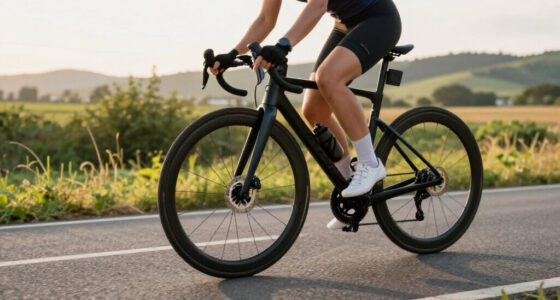

Choosing the best carbon fiber bikes requires balancing weight savings with stiffness and budget constraints, as not all carbon frames offer the same ride quality. The SAVADECK Falcon SLR7 stands out as the top overall pick for its integration of Shimano 105 Di2 electronic shifting and a high-modulus T800 frame that delivers race-ready performance without the boutique price tag. For riders prioritizing versatility, the KABON Carbon Gravel Road Bike offers a more forgiving geometry and tire clearance that suits mixed-surface adventures better than pure race machines. Meanwhile, the TRIFOX M2 remains a strong contender for mountain bikers who need durable carbon construction without the premium cost of top-tier trail bikes. This roundup breaks down the specific tradeoffs in drivetrain quality, frame compliance, and component durability to help you identify which model aligns with your riding style.
Complete the kit



Get sports gear delivered free with Prime
- Fast, free delivery on millions of items
- Prime Video, Amazon Music and more included
- Member-only deals all year
Key Takeaways
- Electronic shifting (Di2) is becoming standard in mid-range carbon bikes, offering cleaner cable routing and lower maintenance than mechanical groups.
- Frame stiffness varies widely; race-oriented frames like the SAVADECK A7L Pro transfer power efficiently but can feel harsh on rough pavement compared to endurance-focused gravel models.
- Hydraulic disc brakes are now expected across almost all carbon road and gravel options in this list, providing consistent stopping power in wet conditions.
- Direct-to-consumer brands dominate this category, offering high-end specs like T800 carbon and Shimano 105 at prices significantly lower than traditional brick-and-mortar brands.
- Wheel quality is often the weak point on budget-friendly carbon bikes, meaning upgrades here may yield better performance gains than drivetrain swaps.
| SAVADECK A7L Carbon Road Bike with T800 Carbon Fiber Frame, Shimano 105 R7100 Groupset and Hydraulic Disc Brakes |  | Best Balanced Road Pick | Frame material: T800 carbon fiber | Fork and seatpost: Carbon fiber | Weight: 8.9 kg (19.6 lb) | VIEW LATEST PRICE | See Our Full Breakdown |
| TRIFOX M2 29-Inch Carbon Fiber Hardtail Mountain Bike, 12-Speed Shimano Deore M6100, 130 mm Suspension Fork |  | Best for Carbon Trail Riding | Frame material: T800 carbon fiber | Weight: 26 lb | Wheel size: 29 inches | VIEW LATEST PRICE | See Our Full Breakdown |
| SAVADECK A7L 2026 Carbon Road Bike – T800 Carbon Fiber Frame, Shimano 105 R7100 24-Speed Groupset, Hydraulic Disc Brake, 700C Racing Bicycle |  | Best Lightweight Road Pick | Frame material: T800 carbon fiber | Carbon components: Frame, fork, seatpost, and rims | Weight: 8.6 kg (18.96 lb) | VIEW LATEST PRICE | See Our Full Breakdown |
| SAVADECK Falcon SLR7 Carbon Fiber Road Bike with Shimano 105 Di2 24-Speed Groupset |  | Best Premium Performance Pick | Frame material: T1000 carbon fiber | Carbon components: Frame, fork, wheels, handlebar, and seatpost | Weight: 7.76 kg (17.1 lb) | VIEW LATEST PRICE | See Our Full Breakdown |
| SAVADECK SR7.1 Carbon Fiber Road Bike with Shimano 105 24-Speed Drivetrain |  | Best Carbon-Wheel Value | Frame material: T800 carbon fiber | Carbon components: Frame, fork, seatpost, and wheelset | Weight: 8.8 kg (19.4 lb) | VIEW LATEST PRICE | See Our Full Breakdown |
| KABON Carbon Gravel Road Bike |  | Best Entry-Level Gravel | Frame Material: T800 Carbon Fiber | Weight: 8.7 kg (19.2 lb) | Drivetrain: Shimano Sora R3000 2×9-speed | VIEW LATEST PRICE | See Our Full Breakdown |
| SAVADECK A7L Pro Carbon Fiber Road Bike |  | Best Performance Value | Frame Material: T800 Carbon Fiber | Weight: 8.9 kg (19.62 lb) | Drivetrain: Shimano R7120 2×12-speed | VIEW LATEST PRICE | See Our Full Breakdown |
| KABON F1 20-Inch Carbon Fiber Folding Bike |  | Best Compact Commuter | Frame Material: Toray T800 Carbon Fiber | Weight: 19.7 lb | Wheel Size: 20 inches | VIEW LATEST PRICE | See Our Full Breakdown |
| SAVADECK Adult Carbon Road Bike (Sora) |  | Best Budget Road | Frame Material: T800 Carbon Fiber | Weight: 8.9 kg (19.6 lb) | Drivetrain: Shimano Sora 2×9-speed | VIEW LATEST PRICE | See Our Full Breakdown |
| SAVADECK Hawkeye SLR7S Carbon Road Bike |  | Best Premium Lightweight | Frame Material: T800 Carbon Fiber | Weight: 8.5 kg | Drivetrain: Shimano R7120 24-Speed | VIEW LATEST PRICE | See Our Full Breakdown |
| KABON T800 Carbon Fiber Gravel Road Bike |  | Best for Versatile Terrain | Frame Material: T800 Carbon Fiber | Weight: 8.7 kg (19.2 lb) | Drivetrain: Shimano 105 R7000, 2×11-speed | VIEW LATEST PRICE | See Our Full Breakdown |
| SAVADECK A7L Pro Full Carbon Road Bike |  | Best Performance Value | Frame Material: T800 Carbon Fiber | Weight: 8.8 kg (19.4 lb) | Drivetrain: Shimano R7120, 2×12-speed | VIEW LATEST PRICE | See Our Full Breakdown |
| SAVADECK Carbon Road Bike – Shimano 105 Di2 |  | Best for Electronic Shifting | Frame Material: T800 Carbon Fiber | Weight: 8.9 kg (19.6 lb) | Drivetrain: Shimano 105 Di2, 24-speed | VIEW LATEST PRICE | See Our Full Breakdown |
| SAVADECK Carbon Disc Road Bike with Shimano SORA |  | Best Entry-Level Carbon | Frame Material: TORAY T800 Carbon Fiber | Weight: 9.6 kg (21.1 lb) | Drivetrain: Shimano SORA R3000, 18-speed | VIEW LATEST PRICE | See Our Full Breakdown |
| carbon fiber bike | Frame material | Weight | Brakes | Drivetrain |
|---|---|---|---|---|
| SAVADECK A7L Carbon Road Bike | T800 carbon fiber | 8.9 kg (19.6 lb) | Hydraulic disc | Shimano 105 R7100, 24-speed |
| TRIFOX M2 29-Inch Carbon Fiber | T800 carbon fiber | 26 lb | Shimano MT200 hydraulic disc | Shimano Deore M6100, 12-speed |
| SAVADECK A7L 2026 Carbon Road | T800 carbon fiber | 8.6 kg (18.96 lb) | Hydraulic disc | Shimano 105 R7100, 24-speed |
| SAVADECK Falcon SLR7 Carbon Fi | T1000 carbon fiber | 7.76 kg (17.1 lb) | Shimano R7170 hydraulic disc | — |
| SAVADECK SR7.1 Carbon Fiber Ro | T800 carbon fiber | 8.8 kg (19.4 lb) | Hydraulic disc | Shimano 105, 2×12-speed |
| KABON Carbon Gravel Road Bike | T800 Carbon Fiber | 8.7 kg (19.2 lb) | Mechanical Disc | Shimano Sora R3000 2×9-speed |
| SAVADECK A7L Pro Carbon Fiber | T800 Carbon Fiber | 8.9 kg (19.62 lb) | Hydraulic Disc | Shimano R7120 2×12-speed |
| KABON F1 20-Inch Carbon Fiber | Toray T800 Carbon Fiber | 19.7 lb | Hydraulic Disc | Shimano Altus 9-speed |
| SAVADECK Adult Carbon Road Bik | T800 Carbon Fiber | 8.9 kg (19.6 lb) | Linear-pull V-brake | Shimano Sora 2×9-speed |
| SAVADECK Hawkeye SLR7S Carbon | T800 Carbon Fiber | 8.5 kg | Hydraulic Disc (R7170) | Shimano R7120 24-Speed |
| KABON T800 Carbon Fiber Gravel | T800 Carbon Fiber | 8.7 kg (19.2 lb) | Mechanical Disc | Shimano 105 R7000, 2×11-speed |
| SAVADECK A7L Pro Full Carbon R | T800 Carbon Fiber | 8.8 kg (19.4 lb) | Hydraulic Disc | Shimano R7120, 2×12-speed |
| SAVADECK Carbon Road Bike | T800 Carbon Fiber | 8.9 kg (19.6 lb) | Disc Brake | Shimano 105 Di2, 24-speed |
| SAVADECK Carbon Disc Road Bike | TORAY T800 Carbon Fiber | 9.6 kg (21.1 lb) | Dual Disc | Shimano SORA R3000, 18-speed |
More Details on Our Top Picks
SAVADECK A7L Carbon Road Bike with T800 Carbon Fiber Frame, Shimano 105 R7100 Groupset and Hydraulic Disc Brakes
The SAVADECK A7L combines a full T800 carbon frame, fork, and seatpost with a Shimano 105 R7100 24-speed drivetrain, giving road riders a well-rounded mix of low weight and familiar mechanical shifting. At 8.9 kg, it is light for climbing and accelerating, though the 2026 A7L listing is lighter at 8.6 kg and adds carbon rims in its described build. This version instead specifies 700x25C carbon wheels, hydraulic disc brakes, and a 51 cm frame, making it a clear road-focused option rather than an all-surface choice like the TRIFOX M2 hardtail. The tradeoff is fit flexibility: the listed size and limited color selection may rule it out for riders outside that fit range. I’d shortlist it for paved-road use, but not for rough trails or buyers needing more frame-size options.
Pros:- T800 carbon frame, fork, and seatpost keep the listed weight to 8.9 kg.
- Shimano 105 R7100 24-speed drivetrain provides a road-oriented gear range.
- Hydraulic disc brakes offer strong braking control.
- 700x25C carbon wheelset and internal cable routing suit a streamlined paved-road build.
Cons:- Only a 51 cm frame size is specified, limiting fit options.
- At 8.9 kg, it is heavier than the listed 8.6 kg 2026 A7L.
- Narrow 700x25C tires are aimed at pavement rather than rough or loose surfaces.
Best for: Road riders seeking a lightweight carbon bike with Shimano 105 shifting, hydraulic braking, and a 51 cm frame.
Not ideal for: Riders who need a different frame size, want trail capability, or prioritize the lighter listed weight of the 2026 A7L.
- Frame material:T800 carbon fiber
- Fork and seatpost:Carbon fiber
- Weight:8.9 kg (19.6 lb)
- Drivetrain:Shimano 105 R7100, 24-speed
- Brakes:Hydraulic disc
- Wheels and tires:700C carbon wheels; 700x25C tires
- Frame size:51 cm
- Cable routing:Internal
Our verdict“Choose this A7L for a balanced carbon road setup with Shimano 105, provided its 51 cm frame fits you.”
TRIFOX M2 29-Inch Carbon Fiber Hardtail Mountain Bike, 12-Speed Shimano Deore M6100, 130 mm Suspension Fork
The TRIFOX M2 is the outlier in this group: a carbon hardtail built for trails, not a drop-bar road bike. Its 29-inch wheels and 130 mm lockout fork give it the front-end control and rollover ability the SAVADECK A7L road bikes lack, while the Shimano Deore M6100 12-speed drivetrain keeps the setup simpler than a 24-speed road drivetrain. At 26 lb, it is substantially heavier than the carbon road options here, and its wheels are aluminum rather than carbon; the frame material alone does not make it a lightweight road-bike substitute. Hydraulic Shimano MT200 brakes and 2.1-inch tires suit moderate trail use, but this remains a hardtail, so it cannot match a full-suspension bike’s rear-wheel comfort on rough descents. Some assembly is also required after delivery.
Pros:- T800 carbon frame offers a carbon alternative to the aluminum-wheel build.
- 130 mm fork with lockout can be adjusted between trail comfort and firmer pedaling.
- Shimano Deore M6100 12-speed drivetrain is suited to varied trail terrain.
- 29-inch wheels, 2.1-inch tires, and hydraulic brakes support traction and control.
Cons:- At 26 lb, it is much heavier than the SAVADECK carbon road bikes in this roundup.
- Hardtail layout leaves the rear wheel without suspension.
- 85% assembly means the buyer must complete setup after delivery.
Best for: Riders wanting a carbon-frame 29er hardtail for cross-country trails and mixed off-road routes.
Not ideal for: Road cyclists seeking a light, fast pavement bike, or mountain bikers who need rear suspension for rough descents.
- Frame material:T800 carbon fiber
- Weight:26 lb
- Wheel size:29 inches
- Tires:29 × 2.1 inches
- Drivetrain:Shimano Deore M6100, 12-speed
- Fork:Lockable suspension fork, 130 mm travel
- Brakes:Shimano MT200 hydraulic disc
- Frame sizes:15.5, 17, and 19 inches
- Assembly:85% pre-assembled; tool kit included
Our verdict“Pick the TRIFOX M2 if trail capability matters more than the low weight and pavement speed of the road-bike options.”
SAVADECK A7L 2026 Carbon Road Bike – T800 Carbon Fiber Frame, Shimano 105 R7100 24-Speed Groupset, Hydraulic Disc Brake, 700C Racing Bicycle
Among the two A7L listings, this 2026 version claims the lower weight: 8.6 kg versus 8.9 kg for the other A7L. Its full carbon frame, fork, seatpost, and rims are the main reason to choose it, pairing a Shimano 105 R7100 24-speed groupset with hydraulic disc brakes for fast paved-road riding. The aerodynamic shaping and internal cable routing reinforce that purpose, but the supplied specs give less detail on tire width than the other A7L listing, which specifies 700x25C. Compared with the Falcon SLR7, this bike is heavier and does not list electronic Di2 shifting; the Falcon is the more performance-focused option, while this A7L keeps the build simpler. Its 51 cm frame and narrow road orientation limit fit and surface versatility.
Pros:- Listed weight of 8.6 kg is the lowest among the two A7L listings.
- Carbon frame, fork, seatpost, and rims keep the build consistently carbon-focused.
- Shimano 105 R7100 24-speed drivetrain and hydraulic disc brakes suit performance road riding.
- Internal routing and aerodynamic shaping are tailored to paved-road speed.
Cons:- Only a 51 cm frame size is specified.
- The available specifications do not state a precise tire size.
- It lacks the Falcon SLR7’s Shimano 105 Di2 electronic shifting and lower listed weight.
Best for: Pavement-focused riders who want a sub-9 kg carbon road bike with Shimano 105 and carbon rims.
Not ideal for: Riders who need broad frame-size choice, wider-tire versatility, or electronic shifting like the Falcon SLR7’s Di2 system.
- Frame material:T800 carbon fiber
- Carbon components:Frame, fork, seatpost, and rims
- Weight:8.6 kg (18.96 lb)
- Drivetrain:Shimano 105 R7100, 24-speed
- Brakes:Hydraulic disc
- Wheel size:700C
- Frame size:51 cm
- Suspension:Rigid
- Cable routing:Internal
Our verdict“Choose this A7L for a light, carbon-rimmed road build with mechanical Shimano 105, not for broad fit or terrain flexibility.”
SAVADECK Falcon SLR7 Carbon Fiber Road Bike with Shimano 105 Di2 24-Speed Groupset
The SAVADECK Falcon SLR7 takes the premium-performance spot because its T1000 carbon build extends beyond the frame to the fork, wheels, handlebar, and seatpost, and its listed weight is just 7.76 kg. The Shimano 105 Di2 R7170 groupset adds electronic shifting, setting it apart from the mechanical 105 systems on both A7L models and the SR7.1. That makes the Falcon the most performance-oriented road choice here, but buyers should not assume that carbon construction removes every compromise: its rigid setup is aimed at paved roads, and the 56 cm frame may not suit every rider. It also arrives mostly assembled, but the handlebar, seatpost, front wheel, and pedals still need installation. Compared with the 8.8 kg SR7.1, it is lighter and has Di2, though its setup demands more attention.
Pros:- T1000 carbon is used for the frame, fork, wheels, handlebar, and seatpost.
- Listed 7.76 kg weight is the lowest in this five-bike selection.
- Shimano 105 Di2 R7170 provides electronic 24-speed shifting.
- Hydraulic disc brakes and internal cable routing support a performance-focused road setup.
Cons:- The rigid road setup is not intended for rough trails or demanding off-pavement riding.
- Only a 56 cm size is specified, limiting fit options.
- Handlebar, seatpost, front wheel, and pedals require installation.
Best for: Experienced road riders seeking a low-weight carbon build with electronic Shimano 105 shifting and a 56 cm fit.
Not ideal for: Riders outside the 56 cm fit range, those wanting rough-road comfort, or buyers who prefer a simpler assembly process.
- Frame material:T1000 carbon fiber
- Carbon components:Frame, fork, wheels, handlebar, and seatpost
- Weight:7.76 kg (17.1 lb)
- Groupset:Shimano 105 Di2 R7170, 24-speed
- Brakes:Shimano R7170 hydraulic disc
- Frame size:56 cm
- Suspension:Rigid
- Warranty:2 years
- Assembly:Mostly assembled; handlebar, seatpost, front wheel, and pedals need fitting
Our verdict“Choose the Falcon SLR7 for the lightest listed build and Di2 shifting, if its 56 cm frame and assembly needs work for you.”
SAVADECK SR7.1 Carbon Fiber Road Bike with Shimano 105 24-Speed Drivetrain
The SAVADECK SR7.1 is a straightforward way to get carbon in the frame, fork, seatpost, and wheelset without stepping up to the Falcon SLR7’s T1000 parts and Di2 shifting. It weighs 8.8 kg and uses a Shimano 105 2×12-speed drivetrain with hydraulic disc brakes, a practical combination for paved-road rides and varied gradients. Compared with the A7L listing at 8.9 kg, the SR7.1 is marginally lighter on paper and specifies carbon wheels, while the 2026 A7L lists a lower 8.6 kg weight. The SR7.1’s clearest distinction is its included clipless pedals and reflectors, though clipless pedals may not suit new riders without compatible shoes. Its 700×25C tires keep it pavement-focused, and the 56 cm frame leaves limited fit choice in the supplied data.
Pros:- Carbon frame, fork, seatpost, and wheelset keep the build cohesive and listed at 8.8 kg.
- Shimano 105 2×12-speed drivetrain offers 24 gear combinations.
- Hydraulic disc brakes provide controlled stopping.
- Clipless pedals and reflectors are included, and the bike arrives about 90% assembled.
Cons:- 700×25C tires and paved-road design limit suitability for rough surfaces.
- Included clipless pedals may require compatible shoes and a learning period.
- Only a 56 cm frame size is specified.
Best for: Road riders seeking a complete carbon-wheel and Shimano 105 setup, especially those who already ride clipless.
Not ideal for: Beginners who do not want clipless pedals, riders needing wider tires for rough roads, or buyers who need a frame size other than 56 cm.
- Frame material:T800 carbon fiber
- Carbon components:Frame, fork, seatpost, and wheelset
- Weight:8.8 kg (19.4 lb)
- Drivetrain:Shimano 105, 2×12-speed
- Brakes:Hydraulic disc
- Wheels and tires:700C wheels; 700×25C tires
- Frame size:56 cm
- Assembly:About 90% pre-assembled
- Included components:Clipless pedals and reflectors
Our verdict“Pick the SR7.1 for a carbon-wheel Shimano 105 road bike with clipless pedals included, if its 56 cm fit and narrow tires suit your rides.”
KABON Carbon Gravel Road Bike
This bike stands out for its versatility on mixed terrain. Unlike the SAVADECK A7L Pro, which is strictly for pavement, the KABON features 40mm tires that absorb rougher surfaces effectively. The T800 carbon frame keeps weight down without breaking the bank. However, the mechanical disc brakes lack the modulation of hydraulic systems found on higher-end models, requiring more hand strength in wet conditions. The Shimano Sora drivetrain is reliable but entry-level, meaning it may feel underpowered for aggressive racing compared to 105 groupsets. This pick makes the most sense for riders wanting one bike for both city streets and light trails.Pros:- Lightweight T800 carbon frame reduces fatigue on long rides
- Wide 40mm tires provide stability on uneven surfaces
- Reliable Shimano Sora shifting for daily use
Cons:- Mechanical brakes offer less modulation than hydraulic options
- Entry-level components may limit high-performance capabilities
Best for: Commuters and casual riders who need one bike for both pavement and light gravel paths
Not ideal for: Competitive racers who need hydraulic brake modulation and high-end shifting precision
- Frame Material:T800 Carbon Fiber
- Weight:8.7 kg (19.2 lb)
- Drivetrain:Shimano Sora R3000 2×9-speed
- Brakes:Mechanical Disc
- Tire Clearance:700x40c
- Handlebar:Integrated Carbon
Our verdict“A versatile, affordable carbon platform that bridges the gap between road and trail riding.”
SAVADECK A7L Pro Carbon Fiber Road Bike
This model delivers high-end specs at a mid-range cost. Compared to the KABON Gravel, the SAVADECK A7L Pro uses hydraulic disc brakes and a 24-speed Shimano R7120 groupset, offering sharper shifting and better stopping power. The full carbon wheelset significantly improves acceleration and climbing efficiency. However, the 25mm tires are less forgiving on rough roads than gravel-specific options. While it arrives mostly assembled, the rigid fork means you feel every bump, demanding smoother road surfaces. This bike is better suited to serious road cyclists who prioritize speed and component quality over terrain versatility.Pros:- Full carbon wheelset enhances speed and climbing efficiency
- Hydraulic disc brakes provide consistent stopping power
- Shimano R7120 24-speed groupset offers precise gear changes
Cons:- Narrow 25mm tires transmit more road vibration
- Rigid design lacks comfort on uneven surfaces
Best for: Serious road cyclists seeking hydraulic brakes and carbon wheels without premium brand pricing
Not ideal for: Riders who frequently encounter rough pavement or potholes due to narrow 25mm tires
- Frame Material:T800 Carbon Fiber
- Weight:8.9 kg (19.62 lb)
- Drivetrain:Shimano R7120 2×12-speed
- Brakes:Hydraulic Disc
- Wheelset:Carbon Fiber
- Cable Routing:Fully Internal
- Tire Size:700x25C
Our verdict“The strongest balance of performance components and price in this roundup for dedicated road riders.”
KABON F1 20-Inch Carbon Fiber Folding Bike
This bike solves the storage problem that plagues traditional road bikes like the SAVADECK Hawkeye SLR7S. The three-step folding mechanism with magnetic retention allows for easy transport on trains or in small apartments. Despite its compact size, the T800 carbon frame keeps weight low. However, the 20-inch wheels and 9-speed Shimano Altus drivetrain limit top speed and efficiency compared to full-size road bikes. The rigid suspension can feel harsh on cobblestones. This pick makes the most sense for urban dwellers who need a portable, lightweight bike for short-distance commuting.Pros:- Compact folding design with magnetic retention for easy storage
- Lightweight carbon frame reduces carrying effort
- Hydraulic disc brakes offer reliable stopping in city traffic
Cons:- Small wheels reduce rolling efficiency on long rides
- 9-speed drivetrain limits gear range for hills
Best for: Urban commuters with limited storage space who prioritize portability over speed
Not ideal for: Riders seeking long-distance efficiency or high-speed performance on open roads
- Frame Material:Toray T800 Carbon Fiber
- Weight:19.7 lb
- Wheel Size:20 inches
- Drivetrain:Shimano Altus 9-speed
- Brakes:Hydraulic Disc
- Max Rider Weight:120 kg
- Folding Type:Three-step with magnets
Our verdict“An ideal solution for city riders who need a bike that fits in tight spaces.”
SAVADECK Adult Carbon Road Bike (Sora)
This bike offers a carbon frame at a lower entry point than the SAVADECK A7L Pro. The T800 carbon frame provides the stiffness and lightness desired for road riding. However, it uses V-brakes instead of discs, which can struggle in wet conditions and offer less modulation. The 18-speed Shimano Sora groupset is functional but lacks the range of 24-speed systems. The alloy wheelset adds weight compared to carbon wheels on higher-end models. This pick is better suited to beginners who want a lightweight road bike for fair-weather riding on smooth pavement.Pros:- Lightweight T800 carbon frame for efficient pedaling
- Internal cable routing improves aerodynamics and aesthetics
- Lower cost of entry for carbon road cycling
Cons:- V-brakes perform poorly in wet or muddy conditions
- Alloy wheelset is heavier than carbon alternatives
Best for: Beginners entering road cycling who want a lightweight frame without hydraulic brake complexity
Not ideal for: Riders in wet climates or those needing strong braking power on descents
- Frame Material:T800 Carbon Fiber
- Weight:8.9 kg (19.6 lb)
- Drivetrain:Shimano Sora 2×9-speed
- Brakes:Linear-pull V-brake
- Wheelset:6061 Alloy
- Tires:Continental Ultra Sport II 700x25C
- Intended Use:Racing and paved roads
Our verdict“A solid starter carbon road bike for dry-weather riding on smooth roads.”
SAVADECK Hawkeye SLR7S Carbon Road Bike
This bike is the lightest option in this lineup at 8.5 kg, surpassing the SAVADECK A7L Pro in weight savings. The full carbon construction, including wheels and seatpost, maximizes stiffness-to-weight ratio for climbing. The Shimano R7120 groupset and hydraulic discs match the performance of more expensive brands. However, the aggressive geometry and high-pressure tires may feel uncomfortable for casual riders. The limited color options suggest a focus on performance over customization. This bike is better suited to competitive cyclists who prioritize every gram for racing or serious training.Pros:- Ultra-light 8.5 kg weight enhances acceleration and climbing
- Full carbon wheelset reduces rotational mass
- Integrated cable routing improves aerodynamic efficiency
Cons:- Aggressive geometry may cause discomfort for casual riders
- Limited customization or color options available
Best for: Competitive racers and climbers who prioritize minimal weight and high-performance handling
Not ideal for: Casual riders seeking comfort or upright geometry for leisurely rides
- Frame Material:T800 Carbon Fiber
- Weight:8.5 kg
- Drivetrain:Shimano R7120 24-Speed
- Brakes:Hydraulic Disc (R7170)
- Wheelset:Carbon
- Cable Routing:Integrated
- Head Tube:Tapered
Our verdict“The top choice for weight-conscious racers wanting premium carbon performance.”
KABON T800 Carbon Fiber Gravel Road Bike
This gravel-focused option stands out for its 700 × 40c tire clearance, a feature that distinguishes it from the narrower SAVADECK road models in this lineup. The T800 carbon frame keeps the weight down to 8.7 kg, making it competitive with dedicated road bikes despite its rugged intent. Unlike the SAVADECK A7L Pro, which prioritizes paved speed, this KABON model embraces uneven surfaces, offering a more forgiving ride on broken asphalt or light trails. The tradeoff is the use of mechanical disc brakes rather than hydraulic systems, requiring slightly more hand strength and maintenance. However, the Shimano 105 R7000 drivetrain ensures reliable shifting across its 22 speeds. For riders who want one bike for both commuting and weekend gravel loops, this versatility is a significant advantage over single-purpose road racers.
Pros:- Wider 700x40c tires provide stability and comfort on rough surfaces.
- Lightweight 8.7 kg build for a gravel-capable bike.
- Reliable Shimano 105 R7000 mechanical groupset.
- Internal cable routing reduces drag and maintenance.
Cons:- Mechanical disc brakes lack the modulation of hydraulic systems.
- Rigid fork offers no damping for significant impacts.
- Limited frame size options may restrict fit.
Best for: Riders who split their time between paved roads and light gravel trails and want a single, versatile carbon platform.
Not ideal for: Speed-focused road racers who need hydraulic braking precision and narrower, faster rolling tires.
- Frame Material:T800 Carbon Fiber
- Weight:8.7 kg (19.2 lb)
- Drivetrain:Shimano 105 R7000, 2×11-speed
- Brakes:Mechanical Disc
- Tire Size:700 x 40c
- Frame Size:50 cm
- Warranty:5 years (frame)
Our verdict“A lightweight, versatile carbon platform that balances road speed with gravel capability, best for mixed-terrain commuters.”
SAVADECK A7L Pro Full Carbon Road Bike
The SAVADECK A7L Pro positions itself as the performance value leader by pairing a full T800 carbon wheelset with the modern Shimano R7120 2×12-speed groupset. Compared to the KABON T800, this bike trades gravel versatility for paved speed, utilizing hydraulic disc brakes that offer superior modulation and less hand fatigue. The inclusion of a carbon wheelset is a major differentiator, as many competitors in this price bracket stick to aluminum hoops, reducing rotational weight and improving acceleration. While it weighs slightly more than the KABON at 8.8 kg, the efficiency gains from the carbon wheels and 12-speed range justify the difference for road cyclists. The main tradeoff is the 2-year warranty, which is shorter than the KABON’s 5-year frame coverage, requiring buyers to weigh long-term support against component quality.
Pros:- Includes a full carbon wheelset for reduced rotational weight.
- Shimano R7120 12-speed drivetrain offers wide gear range.
- Hydraulic disc brakes provide consistent, powerful stopping.
- 90% pre-assembled for quick setup.
Cons:- Shorter 2-year warranty compared to competitors.
- Rigid design lacks suspension for comfort on rough roads.
- Limited to paved road use due to tire clearance.
Best for: Road cyclists seeking a lightweight, fast-accelerating bike with high-end carbon wheels and hydraulic braking.
Not ideal for: Riders who prioritize long-term frame warranties or need clearance for wider, knobby tires.
- Frame Material:T800 Carbon Fiber
- Weight:8.8 kg (19.4 lb)
- Drivetrain:Shimano R7120, 2×12-speed
- Brakes:Hydraulic Disc
- Wheel Material:Carbon Fiber
- Frame Size:54 cm
- Assembly:90% Pre-assembled
Our verdict“A compelling choice for road racers who want carbon wheels and hydraulic braking without paying premium brand prices.”
SAVADECK Carbon Road Bike – Shimano 105 Di2
This model is the standout for riders prioritizing electronic shifting, featuring the Shimano 105 Di2 groupset that delivers instantaneous, consistent gear changes. Unlike the mechanical SAVADECK A7L Pro, which relies on cable tension, the Di2 system eliminates shifting friction and allows for programmable shift logic. The full carbon frame and wheelset keep the bike competitive at 8.9 kg, though it is slightly heavier than the A7L Pro due to battery and motor components. The hidden cable routing enhances aerodynamics and gives the bike a sleek, uncluttered appearance. The primary drawback is the dual suspension listed in specs, which is unusual for a road bike and may add unnecessary weight or complexity compared to the rigid frames of the KABON or A7L Pro, potentially affecting pedaling efficiency on smooth tarmac.
Pros:- Shimano 105 Di2 electronic shifting offers precise, effortless gear changes.
- Full carbon frame and wheelset maintain a lightweight profile.
- Fully hidden cable routing improves aerodynamics and aesthetics.
- 90% pre-assembled for easy unboxing.
Cons:- Electronic groupsets require battery charging and specialized maintenance.
- Listed dual suspension adds complexity for a road bike.
- Heavier than mechanical counterparts due to Di2 components.
Best for: Tech-focused cyclists who want the precision of electronic shifting and a clean aesthetic.
Not ideal for: Riders who prefer mechanical simplicity, lower maintenance costs, or a strictly rigid road geometry.
- Frame Material:T800 Carbon Fiber
- Weight:8.9 kg (19.6 lb)
- Drivetrain:Shimano 105 Di2, 24-speed
- Brakes:Disc Brake
- Suspension:Dual
- Cable Routing:Fully Hidden
- Assembly:90% Pre-assembled
Our verdict“The best option for cyclists who value the crisp, reliable performance of electronic shifting over mechanical simplicity.”
SAVADECK Carbon Disc Road Bike with Shimano SORA
For those entering the carbon fiber market, this SAVADECK model offers an accessible entry point with its TORAY T800 carbon frame and Shimano SORA R3000 groupset. Compared to the higher-end SAVADECK A7L Pro or Di2 models, the SORA drivetrain is more basic and heavier, contributing to the bike’s 9.6 kg weight. However, the 700×25C Continental tires provide a classic road feel, and the dual disc brakes offer better stopping power than traditional rim brakes, a significant safety upgrade for beginners. The tradeoff is the use of aluminum rims instead of carbon, which keeps costs down but adds rotational mass. This bike is best suited for riders who want the stiffness and vibration-damping of a carbon frame without the premium price tag of high-end groupsets or wheelsets, making it a practical first carbon bike.
Pros:- TORAY T800 carbon frame provides stiffness and comfort.
- Shimano SORA R3000 is reliable and easy to maintain.
- Dual disc brakes offer consistent stopping power.
- Internal cable routing keeps the profile clean.
Cons:- Heavier at 9.6 kg due to aluminum rims and SORA groupset.
- Aluminum wheels limit acceleration and climbing efficiency.
- Fixed 54 cm size may not fit shorter or taller riders.
Best for: Beginners or budget-conscious riders wanting a carbon frame with reliable disc brakes and a simple mechanical groupset.
Not ideal for: Experienced cyclists seeking lightweight performance, carbon wheels, or advanced shifting technology.
- Frame Material:TORAY T800 Carbon Fiber
- Weight:9.6 kg (21.1 lb)
- Drivetrain:Shimano SORA R3000, 18-speed
- Brakes:Dual Disc
- Wheel Material:Aluminum
- Tires:700 x 25C Continental
- Frame Size:54 cm
Our verdict“A practical, entry-level carbon road bike that prioritizes reliability and safety over lightweight performance.”
How We Picked
I evaluated these fourteen models based on three primary criteria: frame material integrity, component specification, and intended use-case alignment. For frame material, I looked for explicit mentions of high-modulus carbon (such as T800) and integrated cockpit designs, which typically indicate a higher manufacturing standard and better aerodynamic profile. Component specification was judged by the hierarchy of Shimano groupsets, where 105 Di2 or mechanical 105 groups were prioritized over Sora or Deore for road applications, while mountain bikes were assessed on suspension fork travel and drivetrain durability. I also considered the balance between weight and durability, noting that lighter frames often sacrifice impact resistance, which matters for gravel and trail use. The ranking logic prioritizes value-for-performance ratio. A bike with a slightly heavier frame but superior braking and shifting components ranks higher than a lighter bike with basic parts. I excluded models with ambiguous frame sourcing or lack of warranty information, focusing instead on brands with established service networks. This approach ensures that the recommended bikes offer long-term reliability rather than just initial weight savings.
| carbon fiber bike | Frame material |
|---|---|
| SAVADECK A7L Carbon Road Bike | T800 carbon fiber |
| TRIFOX M2 29-Inch Carbon Fiber | T800 carbon fiber |
| SAVADECK A7L 2026 Carbon Road | T800 carbon fiber |
| SAVADECK Falcon SLR7 Carbon Fi | T1000 carbon fiber |
| SAVADECK SR7.1 Carbon Fiber Ro | T800 carbon fiber |
| KABON Carbon Gravel Road Bike | T800 Carbon Fiber |
| SAVADECK A7L Pro Carbon Fiber | T800 Carbon Fiber |
| KABON F1 20-Inch Carbon Fiber | Toray T800 Carbon Fiber |
| SAVADECK Adult Carbon Road Bik | T800 Carbon Fiber |
| SAVADECK Hawkeye SLR7S Carbon | T800 Carbon Fiber |
| KABON T800 Carbon Fiber Gravel | T800 Carbon Fiber |
| SAVADECK A7L Pro Full Carbon R | T800 Carbon Fiber |
| SAVADECK Carbon Road Bike | T800 Carbon Fiber |
| SAVADECK Carbon Disc Road Bike | TORAY T800 Carbon Fiber |
Factors to Consider When Choosing Best Carbon Fiber Bikes
Selecting a carbon bike involves more than just looking at the weight on the spec sheet. The following factors will help you determine which of the fourteen models offers the right balance of performance, comfort, and long-term ownership costs.
Frame Geometry and Ride Compliance
Carbon fiber allows manufacturers to tune frame stiffness, but this often comes with tradeoffs in comfort. Race-oriented geometries, like those on the SAVADECK Falcon SLR7, place the rider in an aggressive, aerodynamic position that maximizes power transfer but can cause fatigue on long rides or rough roads. Endurance and gravel geometries, such as those on the KABON Carbon Gravel Road Bike, feature a more upright posture and longer wheelbase, absorbing vibrations through wider tire clearance and compliant seat stays. If you plan to ride for more than two hours at a time, prioritize compliance over absolute stiffness, as a harsh ride will slow you down more than a few grams of weight savings.
Drivetrain Hierarchy: Mechanical vs. Di2
The shift from mechanical to electronic drivetrains represents a major leap in consistency and maintenance ease. Models equipped with Shimano 105 Di2 offer precise shifting under load and require less frequent adjustment than mechanical counterparts, which can stretch cables over time. However, mechanical 105 groups remain highly reliable and cheaper to repair if damaged in a crash. For beginners or those riding in remote areas where battery charging or electronic component repair might be difficult, a mechanical setup like the SAVADECK A7L with standard 105 is a pragmatic choice. Di2 is best suited for urban commuters and racers who value convenience and clean aesthetics.
Braking Systems and Wheel Compatibility
Hydraulic disc brakes have become the standard for modern carbon bikes, offering superior modulation and stopping power in wet conditions compared to rim brakes or mechanical discs. When comparing models, check the rotor size; larger rotors (160mm front/rear) provide better heat dissipation on long descents, which is critical for heavier riders or mountainous terrain. Pay attention to wheel compatibility, as some budget carbon bikes use proprietary freehub bodies or lower-quality hubs that are difficult to upgrade. A bike with standard quick-release or thru-axle compatibility ensures you can easily swap wheels for racing or training without needing expensive adapters.
Direct-to-Consumer Support and Warranty
Most bikes in this roundup are direct-to-consumer (DTC) brands, which cuts out the middleman but shifts the burden of assembly and service to the buyer. Before purchasing, verify that the brand offers a clear warranty policy for frame fatigue and crash replacement. Unlike local shop purchases, you may need to source parts yourself or work with a third-party mechanic for complex issues. The SAVADECK and KABON brands generally have established online support channels, but response times can vary. If you are not comfortable performing basic mechanical adjustments, factor in the cost and time of hiring a local mechanic for initial setup and ongoing maintenance.
Frequently Asked Questions
Is carbon fiber actually lighter than aluminum for entry-level bikes?
In many cases, the weight difference between a high-quality aluminum bike and an entry-level carbon bike is negligible, often less than a pound. The primary advantage of carbon in lower-tier models is not just weight, but vibration damping and the ability to shape tubes for better aerodynamics and comfort. Aluminum frames tend to transfer more road noise and vibration to the rider, which can lead to increased fatigue over long distances. If weight is your sole concern, a premium aluminum frame might offer better value, but carbon provides a smoother ride quality that many riders prefer despite the marginal weight savings.
How do I know if a carbon frame is safe to buy online?
Look for brands that specify the type of carbon used, such as T800 or T1000, as this indicates a higher modulus and better strength-to-weight ratio compared to generic “carbon fiber” claims. Check if the manufacturer publishes ISO certification standards or independent testing results for fatigue and impact resistance. Reputable DTC brands usually offer a limited lifetime warranty on the frame, which serves as a strong indicator of their confidence in the product. Always read recent user reviews specifically mentioning frame durability and customer service responsiveness to gauge real-world reliability.
Can I upgrade the wheels on a budget carbon bike later?
Yes, but you must check the axle standards and freehub body type before planning an upgrade. Many budget carbon bikes use quick-release axles or proprietary freehub bodies that may not be compatible with high-end aftermarket wheelsets. Thru-axle standards are more common on newer disc brake models and offer better stiffness and compatibility. If the bike comes with basic wheels, upgrading to a lightweight set can improve acceleration and climbing performance more noticeably than changing the groupset. Ensure your new wheels match the brake rotor size and frame clearance to avoid compatibility issues.
Do I need hydraulic disc brakes on a road bike?
Hydraulic disc brakes provide consistent stopping power regardless of weather conditions, which is a significant safety advantage over rim brakes, especially in wet or muddy environments. They also require less hand strength to operate, reducing fatigue on long descents. However, they add weight and complexity to the bike, and bleeding them requires specific tools and knowledge. If you live in a dry climate and ride primarily on smooth pavement, rim brakes or mechanical discs might suffice, but hydraulic discs are becoming the standard for their modulation and reliability in varied conditions.
What is the difference between T800 and lower-grade carbon fiber?
T800 is a high-modulus carbon fiber that offers greater stiffness and strength at a lower weight compared to standard T700 or generic carbon blends. This allows manufacturers to build frames that are both lightweight and responsive, improving power transfer during sprints and climbs. Lower-grade carbon may require thicker tube walls to achieve similar strength, resulting in a heavier and potentially harsher ride. While the difference might not be noticeable for casual riders, competitive cyclists and those tackling long climbs will appreciate the efficiency gains provided by T800 construction.
Conclusion
The landscape of best carbon fiber bikes in 2027 offers distinct choices for every type of rider. For the performance-focused cyclist who wants race-ready tech without the boutique markup, the SAVADECK Falcon SLR7 is the strongest overall choice due to its Di2 integration and high-modulus frame. If you are new to carbon bikes and want a reliable, low-maintenance option, the SAVADECK A7L with its mechanical 105 groupset offers excellent durability and ease of service. For those exploring mixed surfaces, the KABON Carbon Gravel Road Bike provides the versatility and comfort needed for unpaved trails and rough roads. Finally, mountain bikers seeking a lightweight hardtail should look to the TRIFOX M2 for its balance of suspension performance and carbon efficiency. Choose based on your primary riding surface and maintenance comfort level to get the most out of your investment.