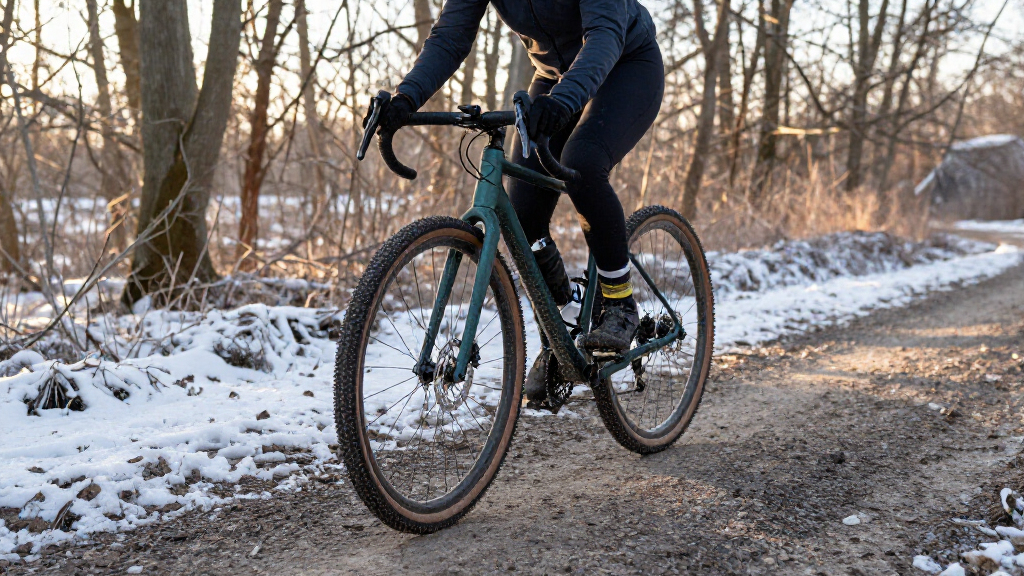

Choosing the best winter gravel bike tire depends on whether your routes bring you mostly frozen gravel, occasional ice, or long stretches of clear pavement. I rank the Panaracer GravelKing SK first for mixed winter riding because its tread, tubeless-ready build, and puncture protection suit rough surfaces without making it a dedicated ice tire. For rides where ice is a regular hazard, the Schwalbe Winter 700 x 40C brings actual studs and a wider footprint. If speed on compact gravel matters more than deep-tread grip, the GravelKing X1 R-Line is the quicker-rolling alternative.

Get sports gear delivered free with Prime
- Fast, free delivery on millions of items
- Prime Video, Amazon Music and more included
- Member-only deals all year
The main tradeoff is straightforward: studs add security on ice but can feel out of place on bare pavement, while non-studded gravel tires roll more naturally on mixed and clear roads but cannot offer the same dedicated ice traction. I also account for fit: the listed options range from a 30 mm winter tire to a 40 mm studded model, and the X1 listing does not specify its dimensions. My picks are therefore ranked by winter gravel usefulness, not by a claim that one tire suits every cold-weather route.
Complete the kit


Key Takeaways
- Best mixed-condition pick: Panaracer GravelKing SK combines semi-knobby tread, 120 TPI TuffTex+ casing, and dual-layer puncture protection for gravel and rough pavement, but it has no studs for ice.
- Best for frequent ice: Schwalbe Winter 700 x 40C uses studs and KevlarGuard, making it a more direct ice choice than either Panaracer, with a tradeoff in pavement-friendly rolling.
- Best for compact gravel speed: Panaracer GravelKing X1 R-Line has a semi-slick center and shoulder tread, but its listed dimensions are missing and it is not a dedicated ice tire.
- Best narrower studded option: Schwalbe Winter 700C x 30C suits compatible narrower setups and includes Kevlar Guard, though its 805 g listed weight and winter-focused tread are compromises.
- Check fit before choosing: The products span 30 mm, 35 mm, and 40 mm listings; confirm your frame, rim, and intended pressure compatibility rather than relying on the product name alone.
| Panaracer GravelKing SK Tubeless Ready Folding Gravel Tire |  | Best Overall for Mixed Winter Gravel | Size: 700 x 35C | Tire type: Tubeless-ready gravel tire | Tread: Semi-knobby | VIEW LATEST PRICE | See Our Full Breakdown |
| Schwalbe Winter Studded Bike Tire, 700 x 40C |  | Best for Frequent Ice and Wider Tire Setups | Size: 42-622 (700 x 40C) | Tire type: Clincher | Studs: Studded tread; fewer spikes than Marathon Winter | VIEW LATEST PRICE | See Our Full Breakdown |
| Panaracer GravelKing X1 R-Line TLR Tubeless Gravel Tire |  | Best for Fast Compact Gravel | Model: GravelKing X1 R-Line TLR | Tire type: Tubeless-ready folding gravel tire | Tread: Semi-slick center with progressive shoulder tread | VIEW LATEST PRICE | See Our Full Breakdown |
| Schwalbe Winter WIC Studded Bicycle Tire, 35-622 |  | Best Narrow Studded Option for Icy Routes | Tire size: 35-622 | Studs: 120 steel studs | Casing: 50 EPI | VIEW LATEST PRICE | See Our Full Breakdown |
| Schwalbe Winter Studded Tire, 700C x 30C, 28 x 1.20 |  | Best for Narrow Road-Gravel Winter Setups | Tire size: 700C x 30C (28 x 1.20) | Tire type: Clincher | Tread: Studded | VIEW LATEST PRICE | See Our Full Breakdown |
| winter gravel bike tire | Tire type | Tread | Casing | Puncture protection |
|---|---|---|---|---|
| Panaracer GravelKing SK Tubele | Tubeless-ready gravel tire | Semi-knobby | 120 TPI TuffTex+ | Dual-layer, bead-to-bead |
| Schwalbe Winter Studded Bike T | Clincher | — | — | KevlarGuard |
| Panaracer GravelKing X1 R-Line | Tubeless-ready folding gravel tire | Semi-slick center with progressive shoulder tread | 120 TPI TuffTex-R | Advanced Extra Alpha Cord |
| Schwalbe Winter WIC Studded Bi | — | HS396 | 50 EPI | — |
| Schwalbe Winter Studded Tire | Clincher | Studded | 50 TPI | Kevlar Guard |
More Details on Our Top Picks
Panaracer GravelKing SK Tubeless Ready Folding Gravel Tire
I put the GravelKing SK first because it suits the broadest version of winter gravel riding in this lineup: cold, rough routes that may include loose gravel and pavement, but are not covered in ice from start to finish. Its semi-knobby tread gives it a more suitable gravel profile than the studded Schwalbe tires for riders who spend much of the ride on clear surfaces. The 120 TPI TuffTex+ casing and dual-layer bead-to-bead puncture protection also speak to rough-road durability, rather than relying on studs to solve every winter problem.
The ZSG Gravel compound is described as aiming to maintain grip and lower rolling resistance across temperatures. That makes this a more balanced choice than a dedicated studded tire when your winter route changes from hardpack to pavement. Tubeless readiness and BeadLock compatibility with hookless and clincher rims add setup flexibility, though the supplied specifications give a 700 x 35C size and 60 PSI maximum; those details should be checked against your wheel and intended pressure.
Its limit is just as clear: no studs means no dedicated ice traction. If your commute or gravel loop regularly crosses polished ice, the 40C Schwalbe Winter is a more appropriate specialist. The SK also may not fit a bike that needs a different tire width, and its pressure ceiling may be restrictive for riders seeking a higher-pressure setup. I would choose it for mixed winter surfaces, not as a substitute for an ice tire.
Pros:- Semi-knobby tread is aimed at gravel, dirt, and rough pavement.
- Dual-layer bead-to-bead protection adds a layer of defense on debris-strewn routes.
- Tubeless-ready BeadLock design is listed for hookless and clincher rims.
- ZSG Gravel compound is designed to balance grip and rolling resistance across temperatures.
Cons:- No studs, so it is less suited to recurring icy sections than either Schwalbe Winter tire.
- The listed 700 x 35C size and 60 PSI maximum may not suit every bike or setup.
Best for: Gravel riders who want one tubeless-ready tire for cold, mixed routes with dirt, loose gravel, and rough pavement, and who encounter ice only occasionally.
Not ideal for: Riders whose routes regularly include extensive ice, or anyone whose frame and rim setup cannot accept a 700 x 35C tire.
- Size:700 x 35C
- Tire type:Tubeless-ready gravel tire
- Tread:Semi-knobby
- Casing:120 TPI TuffTex+
- Puncture protection:Dual-layer, bead-to-bead
- Compound:ZSG Gravel
- Bead:Folding BeadLock
- Maximum pressure:60 PSI
Our verdict“I recommend the GravelKing SK as the most versatile winter gravel choice here, provided your winter riding is mixed-surface rather than consistently icy.”
Schwalbe Winter Studded Bike Tire, 700 x 40C
For riders who actually need traction on ice, the Schwalbe Winter 700 x 40C is the clearest specialist in this group. Its studded tread is the key distinction from the GravelKing SK and X1: those Panaracer tires are gravel-focused, while this model is explicitly built around winter control on icy surfaces. At 40 mm wide, it is also the widest stated option here, which may suit a gravel bike with the required clearance and a preference for a broader winter tire.
This model is described as having half the number of spikes found on the Marathon Winter. That distinction matters because it positions the tire as a less aggressive studded option, not as the strongest choice for extreme cornering. Its 50 EPI carcass, KevlarGuard puncture protection, and reflective sidewall lines add practical details for winter riding. Compared with the narrower 30C Schwalbe, this 40C version puts width ahead of a slimmer road-bike fit, but the supplied information does not specify tubeless readiness, so I would not assume it supports that setup.
The tradeoff is specialization and pavement compromise. Studs are useful when the surface is icy, but a rider on mostly clear roads may prefer the GravelKing SK’s more conventional gravel tread or the X1’s semi-slick center. The supplied description also notes less cornering performance than the Marathon Winter in extreme turns, so riders facing sharp icy turns should not mistake this tire for the most aggressive studded option. Confirm that the 700 x 40C size clears your frame and fork before choosing it.
Pros:- Studded tread is designed to improve control on icy surfaces.
- 40 mm listed width offers a broader fit than the 30C Schwalbe option.
- KevlarGuard adds stated puncture protection.
- Reflective sidewall lines are a useful visibility detail in dark winter conditions.
Cons:- The description states it has fewer spikes than the Marathon Winter and less cornering performance in extreme turns.
- Tubeless compatibility is not specified in the supplied product details.
- Studded tread is a less natural match for routes dominated by bare pavement.
Best for: Gravel riders with compatible clearance who regularly encounter icy roads or paths and want a wider studded winter tire.
Not ideal for: Riders on mostly dry pavement or compact gravel, and anyone who needs a tubeless tire without verifying compatibility first.
- Size:42-622 (700 x 40C)
- Tire type:Clincher
- Studs:Studded tread; fewer spikes than Marathon Winter
- Carcass:50 EPI
- Puncture protection:KevlarGuard
- Bead:Wire
- Sidewall:Reflective lines
- Listed item weight:1.9 lb
Our verdict“I would pick this Schwalbe over the Panaracer gravel tires when icy sections are routine and the bike has room for a 40C tire.”
Panaracer GravelKing X1 R-Line TLR Tubeless Gravel Tire
The GravelKing X1 R-Line is the speed-oriented pick in this roundup. Its semi-slick center is intended to reduce rolling resistance on compact gravel and mixed terrain, while progressive shoulder tread and the ZSG Advanced Compound are described as supporting cornering grip. Against the more visibly gravel-focused GravelKing SK, the X1 trades a more assertive central tread pattern for a faster-rolling profile. That can make sense when winter routes are mostly firm, cleared, and predictable.
Its tubeless-ready construction and BeadLock technology are listed as compatible with hookless and standard rims, and Advanced Extra Alpha Cord supplies the stated puncture protection. Those details make it appealing to a rider who wants a lightweight gravel setup without giving up shoulder tread. But the winter-specific case is limited: there are no studs, and the semi-slick center is not a substitute for ice traction. Compared with the Schwalbe Winter tires, this is the choice for speed on compact surfaces, not security on icy ones.
The biggest buying caveat is fit information. The supplied product details do not specify tire dimensions, so I would verify the exact size for the listing before comparing it with the SK’s known 700 x 35C size or checking frame clearance. Its terrain focus is also a limitation: loose, muddy, or deeply rutted winter gravel gives the GravelKing SK a stronger case. I rank the X1 below the SK for winter versatility, but above a studded tire for riders whose routes are mostly firm and ice-free.
Pros:- Semi-slick center tread is designed for low rolling resistance on compact gravel.
- Progressive shoulder tread and ZSG Advanced Compound are aimed at cornering grip.
- Tubeless-ready BeadLock design is listed for hookless and standard rims.
- Advanced Extra Alpha Cord provides stated puncture protection.
Cons:- No studs, making it a poor substitute for a dedicated tire on frequent icy routes.
- Product information does not specify tire dimensions.
- Its compact-gravel focus is less suited to loose or deeply rough winter surfaces than the GravelKing SK.
Best for: Riders on compact gravel and cleared mixed routes who prioritize rolling speed, want tubeless-ready construction, and rarely face ice.
Not ideal for: Riders who need dependable traction on ice, or buyers who cannot confirm the exact tire dimensions and fit before ordering.
- Model:GravelKing X1 R-Line TLR
- Tire type:Tubeless-ready folding gravel tire
- Tread:Semi-slick center with progressive shoulder tread
- Compound:ZSG Advanced Compound
- Casing:120 TPI TuffTex-R
- Puncture protection:Advanced Extra Alpha Cord
- Rim compatibility:Hookless and standard rims
- Weight:16 ounces
Our verdict“I see the X1 as the fast choice for cleared winter gravel, not the safest choice for icy or consistently rough routes.”
Schwalbe Winter WIC Studded Bicycle Tire, 35-622
The Schwalbe Winter WIC 35-622 is a narrower studded option for riders who want ice-focused traction without moving to the 40 mm width of the other Schwalbe Winter tire. Its listed 120 steel studs make it a more direct choice for icy surfaces than either Panaracer, neither of which is described as studded. The 35-622 size may appeal to a bike with less clearance than a setup suited to the 40C model, though I would confirm the manufacturer’s actual sizing and frame compatibility before buying.
Its straightforward construction includes a 50 EPI casing and rubber material. The provided information does not list puncture protection, reflective sidewall details, or tubeless support, unlike the 40C Schwalbe description, which specifically includes KevlarGuard and reflective lines. That makes the 40C model easier to assess for those features, while the WIC listing makes stud count and the narrower stated size its clearest differentiators. The listed 816 g weight is another detail to compare if your build already carries winter gear or you are sensitive to added rotating mass.
This is a winter specialist, not a year-round gravel tire. Studs may make it less suitable for routes dominated by bare pavement, while the GravelKing SK or X1 better suit riders who want a conventional tread for gravel and cleared roads. I would choose the WIC when ice is the main problem and its 35-622 size fits; I would choose the wider Schwalbe when its added stated protection and reflective details matter more. The listing also gives an item diameter of 26 inches alongside 35-622, so I would verify the exact wheel-size information with the seller or manufacturer.
Pros:- 120 steel studs are specified for traction on icy surfaces.
- 35-622 sizing provides a narrower stated option than the 40C Schwalbe Winter.
- 50 EPI casing is listed.
- Rubber construction is specified.
Cons:- Studded tread is less suited to routes dominated by bare pavement.
- The product details do not specify tubeless compatibility, puncture protection, or reflective sidewall features.
- The listed diameter and tire-size information should be verified before purchase.
Best for: Riders seeking a narrower listed studded tire for icy winter routes, especially when a 40 mm tire may be too wide for their setup.
Not ideal for: Riders who spend most of winter on bare pavement or need clearly stated tubeless support, puncture protection, or reflective details.
- Tire size:35-622
- Studs:120 steel studs
- Casing:50 EPI
- Tread:HS396
- Material:Rubber
- Item weight:816 g
- Wheel size:70 cm listed
- Warranty:Limited
Our verdict“I would consider the WIC for ice-focused riding where a narrower studded tire is needed, but its specification gaps call for a careful fit check.”
Schwalbe Winter Studded Tire, 700C x 30C, 28 x 1.20
This Schwalbe Winter 700C x 30C is the narrowest listed tire in the roundup and the most road-oriented studded option. Its studded tread is designed for snow and ice, while Kevlar Guard and reflective details give it two practical features that are not specified for the narrower WIC model. Its pressure range is listed as 50–95 psi, so it differs from the tubeless-ready Panaracer options in both its stated use and setup details.
For a gravel bike with limited clearance that still needs a studded winter tire, the 30C size may be more relevant than the 40C Schwalbe. Compared with the WIC 35-622, this tire has clearer information on puncture protection, reflective details, and pressure. However, it is listed at 805 g, and its description identifies it as a road-bike tire. That combination makes it a more specialized fit for a narrow-clearance winter bike than a broad gravel tire intended for rougher dirt and loose surfaces.
I rank it below the other picks for winter gravel because the narrow width and 805 g listed weight do not make it the most compelling option for rough, loose routes. It is also a poor choice for riders whose winter riding is mostly dry or on bare pavement; studs are a purposeful compromise for snow and ice. If your bike accepts a 35 or 40 mm tire and your gravel roads are uneven, I would compare the WIC or 40C Schwalbe first. Before purchase, confirm the listed dimensions, rim fit, and pressure guidance for your particular wheel.
Pros:- Studded tread is designed for snow and ice.
- Kevlar Guard is listed for puncture protection.
- Reflective details can help with visibility in winter conditions.
- A 50–95 psi pressure range is supplied.
Cons:- At 805 g, it is a relatively heavy tire by the supplied specification.
- The 30C width is less suited to riders seeking a wider gravel footprint.
- Winter-focused studs are a compromise on routes that are mostly dry or clear.
Best for: Riders with a compatible narrow-clearance bike who need a studded tire for winter roads and icy sections.
Not ideal for: Gravel riders seeking a wider tire for rough or loose surfaces, or anyone who rides mainly on clear pavement.
- Tire size:700C x 30C (28 x 1.20)
- Tire type:Clincher
- Tread:Studded
- Puncture protection:Kevlar Guard
- Casing:50 TPI
- Pressure range:50–95 psi
- Weight:805 g
- Material:Rubber
Our verdict“I would reserve this Schwalbe for a narrow-clearance winter bike that needs studs, rather than choosing it as a general-purpose gravel tire.”
How We Picked
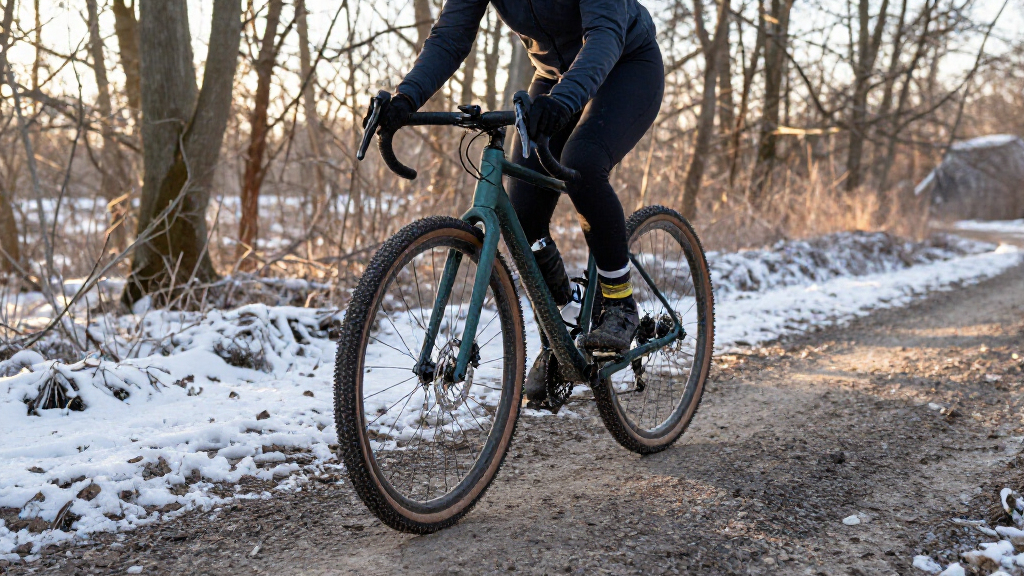
I ranked these tires around the problems winter gravel riders actually face: slick patches, cold-weather mixed surfaces, punctures, and the need to keep a bike rolling when the route moves between pavement and dirt. I gave more weight to usable winter traction and route versatility than to a single speed or protection claim. A studded tire earns its place for ice control, but it does not automatically outrank a gravel tire when the likely ride is mostly clear pavement and compact dirt.
I compared the supplied information on tread, studs, casing, puncture protection, tubeless readiness, tire size, and pressure. The GravelKing SK ranks first because its semi-knobby profile and dual-layer protection address varied gravel conditions, while its ZSG Gravel compound is described as aiming for grip and lower rolling resistance across temperatures. The two Schwalbe Winter models serve riders whose routes justify studs; I distinguish them by width and stated features rather than treating them as interchangeable. The X1 sits lower for winter use because its speed-focused center tread is intended for compact gravel and mixed terrain, and the supplied description does not give tire dimensions.
I have not treated these product descriptions as proof of performance on every icy surface. Stud count, tread design, and casing details are useful selection clues, but fit, pressure, road conditions, and rider control still matter. I also flag specification gaps and mismatches where they affect a buying decision. Before ordering, I would verify exact size availability, rim and frame clearance, and the manufacturer’s current compatibility guidance, especially for a tubeless setup or a tire listed under a different bike category.
| winter gravel bike tire | Tire type | Tread | Puncture protection |
|---|---|---|---|
| Panaracer GravelKing SK Tubele | Tubeless-ready gravel tire | Semi-knobby | Dual-layer, bead-to-bead |
| Schwalbe Winter Studded Bike T | Clincher | — | KevlarGuard |
| Panaracer GravelKing X1 R-Line | Tubeless-ready folding gravel tire | Semi-slick center with progressive shoulder tread | Advanced Extra Alpha Cord |
| Schwalbe Winter WIC Studded Bi | — | HS396 | — |
| Schwalbe Winter Studded Tire | Clincher | Studded | Kevlar Guard |
Factors to Consider When Choosing Best Winter Gravel Bike Tires
I would choose a winter gravel tire by matching it to the surface that causes the most trouble, rather than the coldest temperature in the forecast. Ice calls for studs; rough mixed gravel calls for a suitable casing and tread. Then I would check whether the listed size, rim type, and pressure guidance fit my bike and setup. The five picks split into two groups: Panaracer’s non-studded gravel tires for speed and mixed surfaces, and Schwalbe’s studded options for icy conditions.
Decide how often you encounter ice
If ice is rare and your usual winter ride includes dirt, gravel, and rough pavement, I would start with the GravelKing SK. Its semi-knobby tread and puncture protection are aimed at gravel use without committing to studs. The X1 is more appropriate when the surface is mainly compact and firm. If ice appears routinely on your route, the Schwalbe Winter models make more sense because their studs are the defining feature; neither Panaracer should be treated as an equivalent ice tire.
Studded tires are a targeted tool, not a universal winter upgrade. On mostly clear pavement, their winter-focused tread may be an unnecessary compromise. I would base the decision on the worst recurring surface I need to ride, while recognizing that road conditions can change quickly and no tire removes the need for careful speed and cornering.
Match tire width to your bike and terrain
The listed sizes differ substantially: Schwalbe offers a 30C and a 40C option, the WIC is listed as 35-622, and the GravelKing SK is 700 x 35C. A wider tire may suit rougher ground and a rider seeking more tire volume, while a narrower option can be relevant when frame clearance is tight. Those general advantages only matter if the tire clears the frame, fork, and any fenders under real riding conditions.
Do not rely on a product title alone to establish compatibility. The WIC listing includes size and diameter information that should be checked, and the X1 product description does not state dimensions at all. I would verify the exact bead-seat diameter and measured tire width for the intended rim before ordering. The bike’s maker may set a maximum tire size, and clearance can vary with rim width and mud buildup.
Choose tread for your typical surface, not one ideal ride
The GravelKing SK’s semi-knobby tread is the more versatile Panaracer profile for loose gravel and rough pavement. The X1’s semi-slick center favors rolling speed on compact gravel, with shoulder tread intended to support cornering. Both are non-studded, so their tread differences matter on gravel but do not turn either into a dedicated ice tire.
The Schwalbe tires trade a conventional gravel profile for studs intended for icy surfaces. The 40C Winter description notes fewer spikes than the Marathon Winter and less cornering performance in extreme turns, a useful limitation for buyers who assume every studded tire has the same level of grip. I would not select a studded tire solely because the word “winter” appears in its name; make sure ice is a regular enough part of your route to justify that design.
Compare casing and puncture protection
For debris-strewn gravel, protection can matter as much as tread. The GravelKing SK lists dual-layer, bead-to-bead protection, while the X1 lists Advanced Extra Alpha Cord. The 40C Schwalbe specifies KevlarGuard, and the 30C model specifies Kevlar Guard. The WIC listing does not provide a puncture-protection detail, so I would not assume it has the same protection as the other Schwalbe options.
Casing figures such as 120 TPI or 50 EPI describe part of the tire’s construction, but they are not a complete measure of winter durability or comfort. I would weigh the listed protection alongside tire size, tread purpose, and the route’s debris. Product specifications can differ by size and version, so check the exact item details rather than assuming every tire sold under a model family shares the same casing.
Check tubeless, bead, rim, and pressure details
The two Panaracer products are described as tubeless-ready; the GravelKing SK has a folding BeadLock bead, while the X1 listing describes BeadLock technology for hookless and standard rims. By contrast, the Schwalbe Winter 40C and 30C are identified as clinchers, and the WIC information does not state tubeless compatibility. Do not infer tubeless support when the listing does not say so.
Pressure limits also differ. The GravelKing SK lists a maximum of 60 PSI, while the 30C Schwalbe lists a 50–95 psi range. Those figures are not directly interchangeable recommendations: tire pressure depends on tire width, rim, system, load, and manufacturer guidance. I would follow the current tire and rim instructions and never exceed the lower applicable limit. Before setting up tubeless, verify that the rim and tire are approved for that use.
Account for the compromises of studs
Studs are most compelling when your ride repeatedly crosses ice. The 40C Schwalbe provides the clearest wider studded option, the WIC lists 120 steel studs in 35-622, and the 30C Schwalbe serves a narrower setup. The listings do not provide directly comparable stud counts for all models, so I would avoid ranking them by an unsupported count comparison.
When most of a route is clear, a non-studded gravel tire may feel like a more suitable match to the terrain. If the ride includes both long clear stretches and genuinely icy corners, think about which condition has greater consequences for your route and riding habits. I would also check local availability and exact specifications, since product descriptions may omit details that matter to a particular wheel or frame.
Frequently Asked Questions
Are studded tires necessary for winter gravel riding?
No. I would choose studs when ice is a recurring part of the route, not simply because temperatures are low. For cold rides on gravel, dirt, and rough pavement without persistent ice, the Panaracer GravelKing SK offers a more conventional gravel tread and stated puncture protection. The Schwalbe Winter options are better suited to riders who need the specific ice-focused feature of studded tread.
Which tire in this roundup is best for mixed winter surfaces?
I rank the Panaracer GravelKing SK first for mixed winter surfaces because its semi-knobby tread is described for dirt, gravel, and rough pavement, and its casing includes dual-layer bead-to-bead protection. It is not a dedicated ice tire, so riders who regularly face icy roads should compare it with the studded Schwalbe Winter models instead of expecting the SK to provide the same kind of traction.
Which of these tires is best for compact gravel and speed?
The Panaracer GravelKing X1 R-Line is the speed-oriented option here. Its semi-slick center is designed to roll efficiently on compact gravel, while shoulder tread is intended to support cornering. I would favor the GravelKing SK for looser or rougher routes and a Schwalbe studded tire for ice. The X1 listing does not specify dimensions, so confirm the exact size and fit before purchase.
Can I use a studded winter tire on bare pavement?
A studded tire can be used when pavement is clear, but the design is intended for winter conditions and may be a poor match for routes dominated by bare roads. I would choose one when ice is a regular enough hazard to justify that compromise. For mainly clear pavement and gravel, the non-studded GravelKing SK or X1 is a more natural fit, depending on whether the route is rough or compact.
What should I check before buying a winter gravel tire?
I would confirm the exact tire size, wheel diameter, frame and fork clearance, rim type, and whether the tire is approved for the setup you plan to use. Check tubeless compatibility rather than assuming it, and follow the tire and rim maker’s pressure instructions. For this lineup, pay particular attention to the X1’s missing dimensions and the WIC listing’s size and diameter details, which should be verified before ordering.
Conclusion
For most riders who want one tire for cold, mixed gravel routes, I recommend the Panaracer GravelKing SK: it has the clearest balance of gravel tread, stated puncture protection, and tubeless-ready construction. If ice is a regular feature of your ride, choose a studded Schwalbe instead, with the 700 x 40C Winter the wider stated option and the WIC 35-622 a narrower studded alternative whose size details deserve a fit check. For a narrow-clearance bike, the 30C Schwalbe offers another studded path, with weight and winter-focused use as tradeoffs.
Riders who prioritize pace on compact gravel and rarely encounter ice should look at the GravelKing X1 R-Line, after confirming its exact dimensions. I would skip any studded option for mostly clear routes unless ice traction is worth the compromise, and I would skip either non-studded Panaracer if recurring ice is the main risk. Match the tire to the surface you ride most—and verify fit before ordering.