Complete the kit



Get sports gear delivered free with Prime
- Fast, free delivery on millions of items
- Prime Video, Amazon Music and more included
- Member-only deals all year
Key Takeaways
- Carbon fiber frames like the SAVADECK Titan 612 offer measurable weight savings that improve climbing efficiency, whereas aluminum frames provide better durability for rougher terrain at a lower cost.
- Hydraulic disc brakes are now standard on mid-range models like the ROCKBROS MT400, offering significantly better modulation and stopping power compared to mechanical discs found on entry-level bikes.
- 29-inch wheels dominate the cross-country category for rolling efficiency, but 27.5-inch options remain relevant for smaller riders or those preferring a more agile feel.
- Full-suspension bikes are rare in true cross-country setups; most top performers utilize hardtail designs to maximize power transfer and minimize maintenance.
- Drivetrain complexity varies widely, with 12-speed systems on premium models offering tighter gear ratios compared to the wider gaps found in 21-speed budget builds.
| HILAND Rockford Mountain Bike, 21-Speed Adult MTB with Aluminum Alloy Frame and Dual Disc Brakes |  | Best for Beginner Cross-Country Riders | Frame material: Aluminum alloy | Wheel sizes: 26 or 27.5 inches | Drivetrain: 21-speed chain drive | VIEW LATEST PRICE | See Our Full Breakdown |
| SAVADECK Titan 612 Carbon Fiber Full-Suspension Mountain Bike, 12-Speed |  | Best Premium Full-Suspension Pick | Frame material: Carbon fiber | Suspension: Dual-link full suspension | Rear shock: DNM air shock with rebound adjustment and three-stage lockout | VIEW LATEST PRICE | See Our Full Breakdown |
| ROCKBROS MT600 29″ Trail Mountain Bike |  | Best for Long, Rougher Trail Routes | Frame material: Aluminum | Wheel size: 29 inches | Tire width: 2.2 inches | VIEW LATEST PRICE | See Our Full Breakdown |
| ROCKBROS MT400 29″ Mountain Bike, Aluminum Frame, Hydraulic Disc Brakes |  | Best Cross-Country Hardtail for Taller Riders | Frame material: Aluminum | Wheel size: 29 inches | Tire width: 2.1 inches | VIEW LATEST PRICE | See Our Full Breakdown |
| ROCKBROS MT600 29-Inch Mountain Bike |  | Best for Deore 1×12 Hardtail Performance | Frame material: Aluminum | Wheel size: 29 inches | Drivetrain: Shimano Deore M6100 1×12-speed | VIEW LATEST PRICE | See Our Full Breakdown |
| ROCKBROS MT200 27.5″ Mountain Bike |  | Best for Urban-Trail Commuters | Frame Material: Aluminum Alloy | Drivetrain: Shimano 8-Speed (EF500 Shifter, TY300 FD, M310 RD) | Suspension: Front Mechanical Fork with Lockout | VIEW LATEST PRICE | See Our Full Breakdown |
| QARSWA Mountain Bike with Aluminum Frame, 21 Speeds, and Dual Disc Brakes |  | Best Budget-Value All-Rounder | Frame Material: Aluminum | Drivetrain: 21-Speed Trigger Shifter | Suspension: Front Fork | VIEW LATEST PRICE | See Our Full Breakdown |
| Huffy Stone Mountain 26-Inch Dual-Suspension Mountain Bike |  | Best for Casual Trail Comfort | Frame Material: Alloy Steel | Suspension: Front and Rear Spring | Brakes: Dual Linear Pull | VIEW LATEST PRICE | See Our Full Breakdown |
| cross-country mountain bike | Frame material | Drivetrain | Brakes | Wheel size |
|---|---|---|---|---|
| HILAND Rockford Mountain Bike | Aluminum alloy | 21-speed chain drive | Dual mechanical disc | — |
| SAVADECK Titan 612 Carbon Fibe | Carbon fiber | Shimano DEORE M6100, 12-speed | Four-piston hydraulic disc | 27.5 inches |
| ROCKBROS MT600 29" Trail Mount | Aluminum | 1×12-speed, 11–50T cassette | Hydraulic disc | 29 inches |
| ROCKBROS MT400 29" Mountain Bi | Aluminum | 1×10-speed | Hydraulic disc | 29 inches |
| ROCKBROS MT600 29-Inch Mountai | Aluminum | Shimano Deore M6100 1×12-speed | Shimano MT200 hydraulic disc | 29 inches |
| ROCKBROS MT200 27.5" Mountain | Aluminum Alloy | Shimano 8-Speed (EF500 Shifter, TY300 FD, M310 RD) | Mechanical Disc | 27.5 inches |
| QARSWA Mountain Bike with Alum | Aluminum | 21-Speed Trigger Shifter | Dual Mechanical Disc | 27.5 inches |
| Huffy Stone Mountain 26-Inch D | Alloy Steel | 21-Speed Shimano Twist Shifter | Dual Linear Pull | 26 inches |
More Details on Our Top Picks
HILAND Rockford Mountain Bike, 21-Speed Adult MTB with Aluminum Alloy Frame and Dual Disc Brakes
The HILAND Rockford suits riders starting out on mellow trails and mixed-surface commutes, where approachable gearing and a front suspension fork matter more than race-ready weight or components. Its 21-speed drivetrain offers more gear choices than the ROCKBROS MT400’s 1×10 setup, which can help newer riders find a comfortable cadence across varied terrain. The aluminum frame keeps the bike relatively easy to handle, while mechanical disc brakes provide dependable braking without the complexity of a hydraulic system. That simplicity has a tradeoff: mechanical brakes can need more frequent adjustment, and this bike is aimed at beginner to intermediate use rather than demanding cross-country pace. The limited size combinations also make fit worth checking carefully before choosing it.
Pros:- Aluminum alloy frame balances manageable handling with resistance to rust.
- 21-speed drivetrain gives beginners multiple gearing options for climbs and flat stretches.
- Front suspension fork helps reduce impact from bumps on moderate trails.
- Mechanical disc brakes provide braking in varied weather, with a straightforward setup.
Cons:- Mechanical disc brakes may need more frequent adjustment than hydraulic brakes on the ROCKBROS MT400.
- Available only in 26-inch/17-inch and 27.5-inch/18-inch combinations, limiting fit options.
- Beginner-oriented component level is less suited to demanding or fast cross-country riding.
Best for: Newer riders seeking an aluminum hardtail for moderate trails, hills, and commuting, especially if they prefer a wider range of gear choices.
Not ideal for: Experienced cross-country riders seeking high-end components, advanced trail capability, or a broad range of frame sizes.
- Frame material:Aluminum alloy
- Wheel sizes:26 or 27.5 inches
- Drivetrain:21-speed chain drive
- Shifter:Trigger
- Suspension:Front suspension fork
- Brakes:Dual mechanical disc
- Skill level:Beginner
- Assembly:85% pre-assembled
Our verdict“Choose the HILAND Rockford for beginner-friendly mixed riding and flexible gearing, but look elsewhere if you need advanced components or more size choices.”
SAVADECK Titan 612 Carbon Fiber Full-Suspension Mountain Bike, 12-Speed
The SAVADECK Titan 612 is the lineup’s full-suspension choice for riders who put traction and control on rougher routes ahead of a simple, efficient hardtail. Its carbon fiber frame, dual-link suspension, and adjustable DNM air shock are a more performance-focused package than the front-only ROCKBROS MT600 29-Inch Mountain Bike. The three-stage lockout lets riders firm up the shock for smoother climbs, while four-piston hydraulic brakes are designed for controlled stopping on descents. That added suspension and braking capability comes with unanswered fit and weight questions: the listing gives limited sizing information and does not state the bike’s weight. Its 27.5-inch wheels also differ from the larger 29-inch wheels on several hardtails here, so riders should choose based on fit and handling preference, not assume one size suits all.
Pros:- Carbon fiber frame pairs with a reinforced rear triangle for a performance-oriented build.
- Dual-link suspension and an adjustable air shock add rear-wheel control on uneven ground.
- Three-stage shock lockout supports a firmer feel on smoother climbs.
- Four-piston hydraulic disc brakes are designed to manage heat during sustained braking.
Cons:- Bike weight is not specified, making comparisons for climbing and transport difficult.
- Sizing information is limited beyond the 27.5 × 19-inch listing.
- Full suspension adds complexity compared with the hardtail options in this lineup.
Best for: Riders prioritizing full-suspension comfort and braking control on rough cross-country routes, who can confirm the listed frame size fits.
Not ideal for: Buyers who need clearly documented sizing or weight, or who favor the simpler climbing efficiency of a hardtail such as the ROCKBROS MT400.
- Frame material:Carbon fiber
- Suspension:Dual-link full suspension
- Rear shock:DNM air shock with rebound adjustment and three-stage lockout
- Drivetrain:Shimano DEORE M6100, 12-speed
- Brakes:Four-piston hydraulic disc
- Wheel size:27.5 inches
- Tire width:2.4 inches
- Warranty:2 years
Our verdict“Pick the SAVADECK Titan 612 if rear suspension and downhill control matter more than straightforward hardtail efficiency and clearly documented fit.”
ROCKBROS MT600 29″ Trail Mountain Bike
The ROCKBROS MT600 29-inch Trail stands out for a 140mm air fork, a substantial amount of front travel for a hardtail in this group. That extra suspension can help smooth rough sections, though it does not provide rear-wheel cushioning like the SAVADECK Titan 612’s full-suspension design. A 1×12 drivetrain with an 11–50T cassette keeps shifting simple while offering a broad climbing range, and hydraulic disc brakes add more modulation than the mechanical brakes on the HILAND Rockford. The tradeoff is fit: this listing specifies only a 16-inch frame, stated for riders from 5’3″ to 5’9″, which rules out many buyers. Its 29-inch wheels favor rollover on trail obstacles, but this combination makes the most sense for riders who fit the frame and want a capable hardtail rather than rear suspension.
Pros:- 140mm air fork with hydraulic damping provides substantial front suspension travel.
- 1×12 drivetrain and 11–50T cassette combine simple shifting with a broad gear range.
- Hydraulic disc brakes offer more controlled braking than the HILAND Rockford’s mechanical discs.
- 29-inch wheels help roll over trail obstacles.
Cons:- Only a 16-inch frame is listed, limiting fit for shorter or taller riders.
- Hardtail layout lacks rear suspension, unlike the SAVADECK Titan 612.
- The 140mm fork is a more trail-focused setup than some cross-country riders may want for efficient, smooth-course riding.
Best for: Riders 5’3″ to 5’9″ seeking a 29-inch hardtail with a wide-range 1×12 drivetrain and generous front-fork travel for varied trails.
Not ideal for: Riders outside the stated height range or those who want rear suspension for repeated rough descents.
- Frame material:Aluminum
- Wheel size:29 inches
- Tire width:2.2 inches
- Fork:140mm air suspension with hydraulic damping
- Drivetrain:1×12-speed, 11–50T cassette
- Brakes:Hydraulic disc
- Frame size:16 inches
- Listed rider height:5’3″–5’9″
- Warranty:1 year manufacturer
Our verdict“Choose this MT600 if you fit its limited size and want long-travel front suspension with 1×12 gearing, but skip it if rear suspension or broader sizing is a priority.”
ROCKBROS MT400 29″ Mountain Bike, Aluminum Frame, Hydraulic Disc Brakes
The ROCKBROS MT400 takes a more straightforward cross-country approach than the 140mm-fork MT600: it pairs a 29-inch hardtail frame with a 1×10 drivetrain and a remote-lockout oil-spring fork. Locking out the fork can reduce bob on smoother climbs and roads, while the 11–50T cassette keeps steep sections manageable without a front derailleur. Compared with the MT600’s 1×12 setup, this bike has fewer gear steps, but its simpler configuration may suit riders who value uncomplicated shifting over finer gear selection. Hydraulic disc brakes provide dependable control; the main limitation is the 21-inch frame, listed for riders 5’9″–6’6″. The hardtail also gives up the rear-wheel comfort of the SAVADECK Titan 612, so it is a better match for rolling cross-country terrain than repeated rocky descents.
Pros:- Remote-lockout fork helps reduce suspension movement on smoother climbs and road sections.
- 1×10 drivetrain with an 11–50T cassette offers a broad climbing range with simple shifting.
- Hydraulic disc brakes deliver controlled stopping in varied conditions.
- 29-inch wheels and an aluminum frame suit efficient rolling over cross-country terrain.
Cons:- Only a 21-inch frame is listed, limiting fit for shorter riders.
- Hardtail design offers less comfort on rough descents than the full-suspension SAVADECK Titan 612.
- The 1×10 drivetrain has fewer gear choices than the 1×12 ROCKBROS MT600.
Best for: Taller riders from 5’9″ to 6’6″ who want a 29-inch hardtail for climbs, cross-country routes, and smoother mixed-surface rides.
Not ideal for: Riders below the listed height range, those wanting rear suspension, or riders seeking the 12-speed gearing found on the ROCKBROS MT600.
- Frame material:Aluminum
- Wheel size:29 inches
- Tire width:2.1 inches
- Drivetrain:1×10-speed
- Cassette:11–50T
- Fork:Front oil-spring suspension with remote lockout
- Brakes:Hydraulic disc
- Frame size:21 inches
- Listed rider height:5’9″–6’6″
Our verdict“The MT400 is a strong match for taller cross-country riders who prefer a lockout-equipped hardtail, but its single listed frame size makes fit the deciding factor.”
ROCKBROS MT600 29-Inch Mountain Bike
This ROCKBROS MT600 is the lineup’s clearest hardtail pick for riders who want Shimano Deore 1×12 gearing and a broad range of sizes. Its 140mm air fork has a lockout for firmer climbing, while front and rear thru-axles add a secure wheel connection. Compared with the ROCKBROS MT400, this MT600 has two more gears and an air fork rather than an oil-spring fork, making it better suited to riders who want more tuning and gear choice. It remains a hardtail, though, so the SAVADECK Titan 612 is the more appropriate choice for buyers seeking rear-wheel suspension. At 32 pounds, it is not a lightweight race-focused option, and its 220-pound maximum system weight can exclude heavier riders or those carrying substantial gear.
Pros:- Shimano Deore M6100 1×12 drivetrain gives a broad gear range with simplified shifting.
- 140mm air fork with lockout can be tuned for comfort or firmer climbing.
- Front and rear thru-axles provide secure wheel mounting.
- Small, medium, and large sizes offer more fit options than the listed MT400.
Cons:- Hardtail design lacks the rear suspension offered by the SAVADECK Titan 612.
- The 220-pound maximum system weight may limit heavier riders or riders carrying substantial cargo.
- Listed weight is 32 pounds, which may not suit riders prioritizing a lightweight cross-country bike.
Best for: Cross-country riders who want a 29-inch hardtail with Deore 1×12 gearing, an adjustable air fork, and several frame-size options.
Not ideal for: Riders above the 220-pound maximum system weight, those carrying heavy loads, or anyone seeking rear suspension for rough trails.
- Frame material:Aluminum
- Wheel size:29 inches
- Drivetrain:Shimano Deore M6100 1×12-speed
- Cassette:11–50T
- Crankset:34T chainring
- Fork:140mm-travel air fork with lockout
- Brakes:Shimano MT200 hydraulic disc
- Bike weight:32 lb
- Maximum system weight:220 lb
Our verdict“Choose this MT600 for Deore 1×12 gearing and size options in a hardtail, but look to the SAVADECK for rear suspension or avoid it if you exceed its system-weight limit.”
ROCKBROS MT200 27.5″ Mountain Bike
This model occupies a specific niche: riders who need a lightweight aluminum frame that handles pavement efficiently but can still tackle light dirt paths. Compared to the QARSWA Mountain Bike, the MT200 features a Shimano 8-speed drivetrain rather than a generic 21-speed setup, offering more precise shifting and less maintenance. The mechanical suspension fork with lockout is a standout feature, allowing you to stiffen the front end for speed on roads, a capability the Huffy Stone Mountain lacks. However, the mechanical disc brakes require more frequent adjustment than hydraulic systems, and the limited gearing range means steep off-road climbs will feel laborious. It is a refined commuter first, trail bike second.Pros:- Lockout suspension fork improves pedaling efficiency on smooth surfaces
- Shimano EF500 shifters provide reliable, indexed gear changes
- Lightweight aluminum frame reduces fatigue during longer rides
- Mechanical disc brakes offer better wet-weather stopping power than rim brakes
Cons:- Limited 8-speed gearing struggles on steep inclines
- Mechanical brakes require regular cable tension adjustments
- Single frame size option limits fit for shorter riders
Best for: Riders who split time between paved roads and light gravel trails and prioritize efficient gear changes over heavy-duty off-road capability.
Not ideal for: Aggressive trail riders who need hydraulic brakes for consistent modulation and a wider gear range for steep technical climbs.
- Frame Material:Aluminum Alloy
- Drivetrain:Shimano 8-Speed (EF500 Shifter, TY300 FD, M310 RD)
- Suspension:Front Mechanical Fork with Lockout
- Brakes:Mechanical Disc
- Wheel Size:27.5 inches
- Tire Size:27.5 x 1.95 inches
- Frame Size:21-Inch (Fits 5’9″-6’6″)
Our verdict“Choose this bike if you want a low-maintenance hybrid that prioritizes road efficiency without sacrificing basic trail capability.”
QARSWA Mountain Bike with Aluminum Frame, 21 Speeds, and Dual Disc Brakes
This bike delivers impressive utility for its class, featuring a 21-speed drivetrain and dual mechanical disc brakes on an aluminum frame. Unlike the ROCKBROS MT200, which uses a simpler 8-speed Shimano setup, the QARSWA offers a wider gear range, making it more versatile for varied terrain, though the generic shifters lack the refinement of branded components. The quick-release front wheel simplifies transport, a practical touch often missing in this price bracket. However, the bike weighs 44 pounds, making it heavier than many competitors, and the front-only suspension means rougher trails will transmit more vibration to the rider than the dual-suspension Huffy Stone Mountain. It is a capable workhorse, but not a lightweight racer.Pros:- Wide 21-speed range accommodates both hills and flat sections
- Quick-release front wheel simplifies loading into cars
- Aluminum frame and wheels offer a good strength-to-weight balance for the price
- 85% pre-assembled delivery reduces initial setup time
Cons:- 44-pound weight makes climbing and acceleration slower
- Generic drivetrain components may wear faster than Shimano equivalents
- Lacks rear suspension, limiting comfort on rough trails
Best for: Budget-conscious riders who need a wide gear range and easy transport features for mixed-terrain riding.
Not ideal for: Performance-focused cyclists who prioritize a lightweight frame and high-quality branded drivetrain components.
- Frame Material:Aluminum
- Drivetrain:21-Speed Trigger Shifter
- Suspension:Front Fork
- Brakes:Dual Mechanical Disc
- Wheel Size:27.5 inches
- Weight:44 pounds
- Max Rider Weight:350 pounds
Our verdict“This is the sensible choice for riders who want maximum feature density and versatility without paying for premium brand names.”
Huffy Stone Mountain 26-Inch Dual-Suspension Mountain Bike
The Huffy Stone Mountain distinguishes itself with dual suspension (front and rear), providing a level of comfort that the hardtail QARSWA Mountain Bike cannot match on rocky paths. This setup absorbs significant impact, making it ideal for casual riders who prioritize comfort over speed. However, the steel frame results in a heavier ride, and the dual linear pull brakes are a significant downgrade from the mechanical disc brakes found on both the QARSWA and the ROCKBROS MT200, offering less consistent stopping power in wet conditions. The 26-inch wheels also roll over obstacles less smoothly than the 27.5-inch wheels on its competitors. It is a comfort-focused option, but it sacrifices braking performance and modern rolling efficiency.Pros:- Rear suspension absorbs significant trail impacts
- 21-speed Shimano twist shifters are easy for beginners to operate
- All-terrain tires provide decent traction on mixed surfaces
- Lower center of gravity enhances stability for new riders
Cons:- Linear pull brakes lack the power and consistency of disc brakes
- Steel frame adds unnecessary weight compared to aluminum rivals
- 26-inch wheels roll slower and less smoothly than 27.5-inch options
Best for: Relaxed riders who encounter frequent bumps and prefer maximum cushioning over braking precision or speed.
Not ideal for: Riders who need reliable wet-weather braking or want to navigate technical obstacles with larger wheels.
- Frame Material:Alloy Steel
- Suspension:Front and Rear Spring
- Brakes:Dual Linear Pull
- Drivetrain:21-Speed Shimano Twist Shifter
- Wheel Size:26 inches
- Weight:35.3 pounds
- Max Rider Weight:225 pounds
Our verdict“Select this bike if your priority is cushioning on rough paths and you accept older brake technology as a tradeoff.”
How We Picked
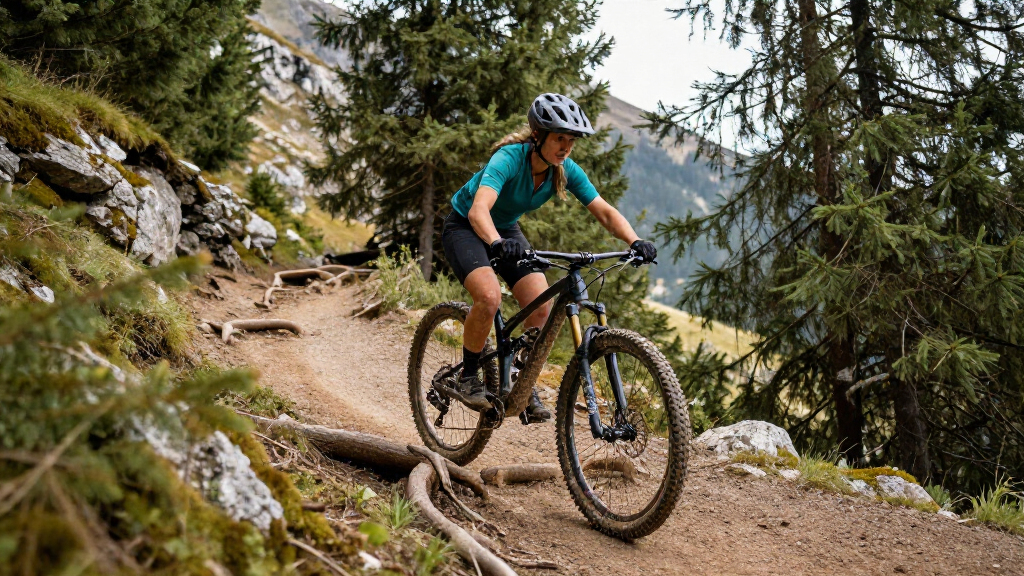
I evaluated these bikes based on frame material quality, suspension performance, and component hierarchy. Cross-country riding demands efficiency, so I prioritized models that minimize energy loss through stiff frames and responsive drivetrains. I also considered the weight-to-strength ratio, as lighter bikes climb better but must remain durable enough to withstand root-choked trails.
The ranking reflects a balance of performance per dollar and long-term reliability. While premium carbon bikes offer the best riding experience, I ensured that mid-range and budget options were assessed on their ability to deliver consistent braking and shifting without frequent adjustment. This approach highlights which models offer genuine value versus those that cut corners on critical safety features.
| cross-country mountain bike | Frame material | Suspension | Brakes |
|---|---|---|---|
| HILAND Rockford Mountain Bike | Aluminum alloy | Front suspension fork | Dual mechanical disc |
| SAVADECK Titan 612 Carbon Fibe | Carbon fiber | Dual-link full suspension | Four-piston hydraulic disc |
| ROCKBROS MT600 29" Trail Mount | Aluminum | — | Hydraulic disc |
| ROCKBROS MT400 29" Mountain Bi | Aluminum | — | Hydraulic disc |
| ROCKBROS MT600 29-Inch Mountai | Aluminum | — | Shimano MT200 hydraulic disc |
| ROCKBROS MT200 27.5" Mountain | Aluminum Alloy | Front Mechanical Fork with Lockout | Mechanical Disc |
| QARSWA Mountain Bike with Alum | Aluminum | Front Fork | Dual Mechanical Disc |
| Huffy Stone Mountain 26-Inch D | Alloy Steel | Front and Rear Spring | Dual Linear Pull |
Factors to Consider When Choosing Best Cross-country Mountain Bikes
Selecting the right cross-country bike involves more than just picking the lightest frame. You must consider how each component interacts with your riding style, terrain, and maintenance willingness. This guide breaks down the key factors to help you make an informed decision.Frame Material: Carbon vs. Aluminum
Carbon fiber is the gold standard for cross-country due to its low weight and vibration-damping properties, which reduce fatigue on long rides. However, it is more susceptible to impact damage and often costs double what an equivalent aluminum frame would. Aluminum frames are stiffer and more affordable, making them ideal for riders who hit technical features or prefer lower maintenance costs. If you are new to the sport, aluminum offers a forgiving learning curve without the fear of cracking a high-value frame. Advanced riders might prioritize carbon for its ability to accelerate quickly on flat sections.Wheel Size and Terrain Compatibility
29-inch wheels roll over obstacles more easily and maintain momentum better, which is why they dominate the cross-country category. They require a slightly longer wheelbase, which can feel less nimble on tight, twisty singletrack. 27.5-inch wheels offer quicker acceleration and sharper handling, appealing to smaller riders or those navigating technical, root-heavy trails. Your choice should depend on your local terrain; open fire roads favor 29ers, while dense forests with tight turns may benefit from the agility of 27.5s.Braking Systems: Hydraulic vs. Mechanical
Hydraulic disc brakes provide consistent performance in wet and muddy conditions, requiring less hand strength to engage. They are self-adjusting for pad wear, which simplifies maintenance for casual riders. Mechanical disc brakes are cheaper and easier to repair in remote locations with basic tools, but they often suffer from cable stretch and reduced modulation. For serious cross-country use, hydraulic systems are preferred for their reliability and control, especially during long descents where hand fatigue can become an issue.Drivetrain Complexity and Gear Range
Modern cross-country bikes often feature 1x drivetrains with wide-range cassettes, simplifying shifting and reducing weight by eliminating the front derailleur. This setup provides enough gears for steep climbs and fast descents with minimal maintenance. Older or budget models may use 2x or 3x drivetrains, which offer overlapping gears and increased mechanical complexity. While 3x systems provide a wider gear range, they are prone to chain drops and require more frequent adjustment. A 1x system is generally the better choice for efficiency and reliability in 2027.Frequently Asked Questions
Is a hardtail or full-suspension bike better for cross-country?
For most cross-country riders, a hardtail is the superior choice because it offers better power transfer and lower weight. The rigid rear end ensures that every pedal stroke translates directly into forward motion, which is critical for climbing efficiency. Full-suspension bikes add weight and complexity, which can hinder speed on smoother trails unless the terrain is exceptionally rough. I recommend full-suspension only if you frequently encounter large drops or rocky, unpredictable descents.How important is bike weight for cross-country performance?
Weight plays a significant role in climbing efficiency and acceleration, but it should not be the sole deciding factor. A bike that is too light may compromise durability or component quality, leading to frequent breakdowns. For cross-country, aim for a balance where the bike is light enough to climb easily but robust enough to handle crashes and rough trails. The difference between 25 lbs and 27 lbs is noticeable on long climbs, but the difference between 27 lbs and 30 lbs is less critical if the suspension and geometry are well-tuned.Can I use a cross-country bike for casual trail riding?
Yes, a cross-country bike is versatile enough for casual trail riding, though it may feel less comfortable on extremely rough terrain. The geometry is typically more aggressive, putting you in a forward-leaning position that prioritizes efficiency over stability. If you plan to do mostly smooth trails and fire roads, a cross-country bike will perform exceptionally well. However, if your local trails feature large rocks and steep, technical drops, a trail bike with slacker geometry might offer more confidence.What is the typical maintenance schedule for these bikes?
Maintenance needs vary by component quality, but hydraulic brakes and modern drivetrains generally require less frequent adjustment than mechanical systems. You should inspect your bike before every ride for tire pressure, brake function, and quick-release security. Deep cleaning and lubrication of the chain and cassette should occur every few rides, especially after wet conditions. Suspension forks on mid-range and premium models need periodic service to maintain smooth operation, often every 50-100 hours of riding.Do I need a carbon frame to be competitive in cross-country?
You do not need a carbon frame to enjoy cross-country riding or even to compete in local events. Aluminum frames from reputable brands offer excellent stiffness and durability, often performing within a small margin of carbon in real-world conditions. Carbon provides marginal gains in weight and vibration damping, which matter more at the elite level. For recreational riders and amateurs, investing in better tires and suspension might yield more noticeable performance improvements than upgrading to carbon.Conclusion
Choosing among the best cross-country mountain bikes depends on your budget and riding goals. The SAVADECK Titan 612 is the best overall choice for serious riders seeking maximum efficiency and lightweight performance. If you are looking for the best value, the ROCKBROS MT600 delivers reliable aluminum construction and hydraulic braking without the premium price tag. For beginners, the HILAND Rockford offers a forgiving entry point with decent components, though you may upgrade soon as your skills progress. The Huffy Stone Mountain serves as a budget-friendly option for casual riders who prioritize basic functionality over race-ready specs. Match the frame material and suspension type to your local terrain, and you will find a bike that enhances your riding experience rather than hindering it.