
Choosing the best hiking gear often comes down to balancing weight, durability, and specific trail needs. For most day hikers, the Zelvot Running Hydration Vest stands out as the best overall pick because it combines a 2-liter bladder with a lightweight, breathable design that eliminates the bulk of traditional backpacks. If you prioritize stability on uneven terrain, the Trekology Trek-Z Hiking Trekking Poles offer adjustable support without adding excessive weight to your pack. However, hikers facing cold or unpredictable weather might find the UNIHAND AI Rechargeable Hand Warmers more critical for comfort than a standard water bottle. The main tradeoff in this category is between carrying capacity and mobility; larger packs hold more water but restrict movement, while vests and belts offer speed at the cost of storage space. Continue reading for a detailed breakdown of these nine essential items and how they fit into different hiking scenarios.

Get sports gear delivered free with Prime
- Fast, free delivery on millions of items
- Prime Video, Amazon Music and more included
- Member-only deals all year
Complete the kit


Key Takeaways
- Hydration vests significantly outperform traditional backpacks for day hikes under 10 miles due to reduced center-of-gravity shift and better ventilation.
- Rechargeable electronics like headlamps and hand warmers offer superior long-term value and reliability compared to battery-dependent alternatives, despite higher upfront costs.
- Merino wool socks are the single most impactful upgrade for foot health, preventing blisters better than synthetic blends even when wet.
- Multi-tool trekking poles provide versatility but often lack the structural integrity and ergonomic comfort of dedicated, single-purpose trekking poles.
- Compact survival filters are essential backups for emergency situations but are too slow for primary hydration on long, dry trails.
| LHKNL Rechargeable LED Headlamp, 2-Pack |  | Best Headlamp for Shared Trips | Pack size: 2 headlamps | Brightness: 1200 lumens | Battery capacity: 1500 mAh | VIEW LATEST PRICE | See Our Full Breakdown |
| Zelvot Running Hydration Vest with 2L Water Bladder |  | Best for Fast, Organized Day Hikes | Capacity: 2-liter bladder | Weight: 0.65 kg | Materials: 900D Oxford fabric and polyester | VIEW LATEST PRICE | See Our Full Breakdown |
| UNIHAND AI Rechargeable Hand Warmers (2-Pack) |  | Best for Cold-Weather Comfort | Pack size: 2 hand warmers | Material: Aluminum | Battery life: 8.5–20 hours | VIEW LATEST PRICE | See Our Full Breakdown |
| Trekology Trek-Z Hiking Trekking Poles – Adjustable Walking Sticks (2 pcs) |  | Best Compact Trekking Poles | Material: Aircraft-grade aluminum alloy | Grip material: Sweat-wicking EVA foam | Weight per pole: 10.4 oz (294 g) or 10.8 oz (306 g), depending on size | VIEW LATEST PRICE | See Our Full Breakdown |
| N NEVO RHINO 12L Lightweight Hydration Backpack with 2L Water Bladder |  | Best Compact Hydration Pack | Pack capacity: 12 liters | Water bladder capacity: 2 liters | Weight: 8.5 oz | VIEW LATEST PRICE | See Our Full Breakdown |
| Rechargeable 2-Piece 230° Wide Beam LED Headlamp with Motion Sensor |  | Best for Hands-Free Utility | Weight: 2.47 oz | Beam Angle: 230 degrees | Brightness: 350 lumens | VIEW LATEST PRICE | See Our Full Breakdown |
| 15-in-1 Tactical Survival Walking Stick & Hiking Staff – Heavy-Duty Collapsible Multitool |  | Best for Survival Preparedness | Weight: 3.74 lbs | Material: Aluminum alloy 6061-T6 | Extended Length: 54.7 inches | VIEW LATEST PRICE | See Our Full Breakdown |
| Practical Survival Reusable Emergency Water Filter Straws, 2-Pack |  | Best for Emergency Water Security | Filtration Method: Hollow fiber membrane | Bacteria Removal: Over 99.99% | Filter Capacity: Up to 1,800 gallons | VIEW LATEST PRICE | See Our Full Breakdown |
| MQELONG Women’s Merino Wool Crew Socks, 5 Pairs |  | Best for Cold-Weather Comfort | Material: 70% Merino Wool, 22% Polyester, 8% Spandex | Style: Crew Socks | Quantity: 5 Pairs | VIEW LATEST PRICE | See Our Full Breakdown |
| hiking gear | Weight | Material |
|---|---|---|
| LHKNL Rechargeable LED Headlam | 1.87 oz | — |
| Zelvot Running Hydration Vest | 0.65 kg | — |
| UNIHAND AI Rechargeable Hand W | — | Aluminum |
| Trekology Trek-Z Hiking Trekki | — | Aircraft-grade aluminum alloy |
| N NEVO RHINO 12L Lightweight H | 8.5 oz | Nylon |
| Rechargeable 2-Piece 230° Wide | 2.47 oz | — |
| 15-in-1 Tactical Survival Walk | 3.74 lbs | Aluminum alloy 6061-T6 |
| Practical Survival Reusable Em | 56.7 g (2 oz) | — |
| MQELONG Women’s Merino Wool Cr | — | 70% Merino Wool, 22% Polyester, 8% Spandex |
More Details on Our Top Picks
LHKNL Rechargeable LED Headlamp, 2-Pack
The two-headlamp set is a practical choice for hiking partners or anyone who wants a spare light ready to go. Each lamp combines white and red light, eight modes, and a motion-sensor control that can switch the beam without fumbling for a button. The 60-degree tilt also helps aim light at a trail, map, or campsite task. Compared with the Zelvot Running Hydration Vest, which is built around carrying water and small essentials, this set solves a different problem: hands-free visibility without adding much weight. Its 1.87-ounce weight per listed specification and rechargeable battery suit day hikes and camp use, but the 4–10-hour runtime can require planning on longer outings. IPX4 protection handles splashes and light exposure, not immersion or prolonged heavy rain, so I would not choose it as my only backup light for severe conditions.
Pros:- Two lamps provide a companion light or a ready spare.
- Motion sensing allows hands-free switching.
- 60-degree tilt helps direct the beam at nearby tasks.
- Rechargeable design avoids disposable batteries.
Cons:- Runtime ranges from 4 to 10 hours depending on use.
- IPX4 resistance is not suited to immersion or sustained heavy rain.
Best for: Hiking partners, families, or solo hikers who want a lightweight rechargeable headlamp plus a second lamp for a companion or backup.
Not ideal for: Backpackers needing dependable all-night illumination in wet conditions, since runtime varies by use and IPX4 protection is limited to splashes and light exposure.
- Pack size:2 headlamps
- Brightness:1200 lumens
- Battery capacity:1500 mAh
- Battery type:Rechargeable lithium-ion polymer
- Battery life:4–10 hours
- Lighting modes:8, including white and red light
- Weight:1.87 oz
- Water resistance:IPX4
Our verdict“Choose this set for shared hikes and camp tasks when two lightweight rechargeable lights matter more than extended runtime or stronger weather protection.”
Zelvot Running Hydration Vest with 2L Water Bladder
The Zelvot vest makes the most sense for hikers who want water and essentials close at hand without carrying a conventional daypack. Its included 2-liter bladder and high-flow bite valve support hands-free drinking, while three front zip pockets keep frequently used items accessible. Two larger rear pockets add room for a layer or other gear. Compared with the N NEVO RHINO 12L Lightweight Hydration Backpack, Zelvot puts more emphasis on a close-fitting vest layout and adjustable waist and shoulder straps, rather than a defined 12-liter pack capacity. The 900D Oxford fabric, breathable mesh, and reflective details are useful for active outings, but its 0.65 kg weight is heavier than the NEVO RHINO’s listed 8.5 ounces. The two chest-size ranges may also leave some body shapes between fits, and the detachable holster and tactical pen slot add features many hikers may never use.
Pros:- Includes a 2-liter BPA- and PVC-free bladder with a high-flow bite valve.
- Three front zippered pockets keep small essentials easy to reach.
- Adjustable shoulder straps and waist belt help limit shifting.
- Breathable mesh and reflective details suit active outdoor use.
Cons:- At 0.65 kg, it is heavier than the listed N NEVO RHINO hydration backpack.
- Two chest-size ranges may not provide a suitable fit for every body type.
- Holster and tactical pen slot may add unnecessary complexity for many hikers.
Best for: Day hikers and trail runners who want a close-fitting vest, quick-access front pockets, and a hands-free 2-liter water supply.
Not ideal for: Minimalist hikers prioritizing the lightest possible carry, or buyers whose chest measurement falls outside the two listed adjustment ranges.
- Capacity:2-liter bladder
- Weight:0.65 kg
- Materials:900D Oxford fabric and polyester
- Bladder:Food-grade, BPA- and PVC-free
- Chest adjustability:XS/S: 25–35 in; M/L: 29–41 in
- Pockets:3 front zippered pockets and 2 large back pockets
- Fit:Adjustable shoulder straps and waist belt
- Warranty:2 years
Our verdict“Pick the Zelvot for active day hikes when a vest-style fit and easy-access storage matter more than minimizing pack weight.”
UNIHAND AI Rechargeable Hand Warmers (2-Pack)
For cold-weather hikes, these warmers add a comfort-focused piece of gear rather than a substitute for gloves or a suitable clothing system. The two units can be used separately or connected for 360-degree warmth, making them useful for warming both hands or sharing one with a companion. Three heat settings reach 130°F, and the listed 8.5-to-20-hour battery range gives more flexibility than a short outing requires, though actual runtime depends on the setting. The USB-C rechargeable aluminum bodies are designed with an anti-slip shape, while the AI temperature control is intended to maintain heat and prevent overheating. Unlike the LHKNL Rechargeable LED Headlamp, which addresses visibility, this pick is about keeping hands comfortable during stops and chilly starts. It is less versatile as core safety gear, and fixed heat levels offer less fine control than continuous adjustment.
Pros:- Two units can be used separately or connected for warmth around both hands.
- Three settings provide heat up to 130°F.
- Listed battery life spans 8.5 to 20 hours depending on use.
- USB-C charging and an anti-slip aluminum design support regular outdoor use.
Cons:- Three fixed settings do not offer continuous temperature adjustment.
- Battery life varies substantially with the selected heat level.
- Adds a comfort item rather than replacing gloves or other cold-weather essentials.
Best for: Cold-weather day hikers who want rechargeable warmth for breaks, early starts, or chilly camp time and can carry the warmers alongside gloves.
Not ideal for: Ultralight hikers who count every item, or buyers who need continuously adjustable heat or a primary piece of essential safety equipment.
- Pack size:2 hand warmers
- Material:Aluminum
- Battery life:8.5–20 hours
- Maximum temperature:130°F (54°C)
- Heat settings:3
- Charging port:USB-C
- Included components:2 hand warmers, charging cable, and user manual
- Warranty:2 years
Our verdict“Choose these warmers for cold outings where extra hand comfort is worth carrying rechargeable gear alongside proper gloves.”
Trekology Trek-Z Hiking Trekking Poles – Adjustable Walking Sticks (2 pcs)
The Trek-Z poles earn their place for hikers who want two adjustable supports that pack down small between trail sections or in luggage. Their tri-fold design collapses to 15 inches, making them easier to stow than full-length poles; the aircraft-grade aluminum shafts favor practical durability over the lightest possible construction. Flip-lock adjustment covers a 20 cm range, so hikers can tune pole length for terrain or share them with someone within the selected size range. EVA foam grips wick sweat, while the included mud stops, snow baskets, rubber tips, and feet make the pair more adaptable across surfaces. Compared with the 15-in-1 Tactical Survival Walking Stick in this roundup, Trek-Z is a straightforward pair of trekking poles rather than a multitool staff. The tradeoff is that the listed size options do not fit users taller than 6’5″, and TSA carry-on rules mean they need checked baggage for air travel.
Pros:- Folds to 15 inches for compact storage in a pack or checked luggage.
- Flip-lock mechanism supports quick length changes across a 20 cm range.
- EVA foam grips wick sweat for a more comfortable hold.
- Includes tips, mud stops, snow baskets, rubber feet, and a carry bag.
Cons:- TSA carry-on restrictions mean the poles require checked baggage for air travel.
- Available length ranges do not accommodate users taller than 6’5″.
- Aluminum construction may weigh more than lighter pole materials.
Best for: Hikers who want a packable pair of adjustable poles for varied terrain, travel, or sharing with another person within the available height range.
Not ideal for: Travelers who need poles in carry-on luggage, users taller than 6’5″, or those seeking the lightest possible pole construction.
- Material:Aircraft-grade aluminum alloy
- Grip material:Sweat-wicking EVA foam
- Weight per pole:10.4 oz (294 g) or 10.8 oz (306 g), depending on size
- Length range:100–120 cm or 115–135 cm
- Adjustment mechanism:Flip-lock with metal stopper; 20 cm adjustment range
- Folded length:15 in (38 cm)
- Included items:2 poles, carry bag, rubber tips, mud stops, snow baskets, and rubber feet
Our verdict“Pick the Trek-Z pair if compact storage and adaptable trail accessories matter more than carry-on convenience or the lowest possible weight.”
N NEVO RHINO 12L Lightweight Hydration Backpack with 2L Water Bladder
The N NEVO RHINO is a compact hydration pack for hikers who want room for water and small essentials without the bulk of a larger daypack. Its 12-liter capacity leaves space for trail necessities, while the included 2-liter BPA-free PEVA bladder supplies hands-free drinking through a bite valve with a hose clamp. At a listed 8.5 ounces, it is lighter than the Zelvot Running Hydration Vest, though Zelvot offers more front-pocket access and a vest-style arrangement. The RHINO instead uses a breathable mesh back, adjustable shoulder and chest straps, and four pockets to keep a modest load organized. Its nylon shell is described as waterproof and tear-resistant, but the compact capacity limits how much extra clothing or food it can carry. The listed strap measurements may also make the fit uncertain for some users, so it suits short, light outings better than gear-heavy hikes.
Pros:- Includes a 2-liter BPA-free PEVA bladder with a leak-resistant bite valve.
- Listed weight is 8.5 ounces, lighter than the Zelvot vest.
- Four pockets provide organization for small essentials.
- Breathable mesh back and adjustable straps support a closer fit.
Cons:- The 12-liter capacity limits room for extra clothing and larger gear.
- Listed strap measurements may not suit every user’s body shape.
- Offers less front-pocket access than the Zelvot vest’s three front zippered pockets.
Best for: Day hikers, cyclists, and runners who want a lightweight pack for water, small essentials, and a limited amount of extra gear.
Not ideal for: Hikers carrying bulky layers, substantial food, or specialized equipment who need more than a 12-liter pack can hold.
- Pack capacity:12 liters
- Water bladder capacity:2 liters
- Weight:8.5 oz
- Material:Nylon
- Dimensions:11.8 × 16.5 in
- Number of pockets:4
- Shoulder strap adjustment:19–34 in
- Warranty:365 days
Our verdict“Choose the RHINO for light day outings when low listed weight and a small gear-carrying capacity are a better fit than a full daypack.”
Rechargeable 2-Piece 230° Wide Beam LED Headlamp with Motion Sensor
This headlamp stands out for its 230-degree wide beam and integrated motion sensor, which activates the light with a simple hand wave. This feature is particularly useful for hikers who frequently need to check maps or adjust gear while wearing gloves, a convenience the LHKNL Rechargeable LED Headlamp lacks. The IPX4 waterproof rating ensures it withstands rain, though it is not designed for submersion. At 2.47 oz, it is light enough for all-day wear without causing neck strain. However, the non-removable battery means you cannot swap out cells if you run out of power mid-trip, unlike some competitors with replaceable AA batteries. The silicone band provides a secure fit but may degrade faster than fabric alternatives under harsh UV exposure.
Pros:- Motion sensor allows hands-free on/off operation, ideal when wearing gloves.
- 230° wide beam eliminates dark spots without needing to turn your head.
- Lightweight 2.47 oz design reduces fatigue during long hikes.
- IPX4 rating provides reliable protection against rain and splashes.
Cons:- Non-removable lithium polymer battery limits field-swapping options.
- Preset lighting modes offer no customizable brightness levels.
- Silicone band may lose elasticity faster than fabric straps over time.
Best for: Hikers who prioritize hands-free operation for tasks like cooking, map reading, or setting up tents in the dark.
Not ideal for: Backpackers on multi-day trips without reliable access to charging points, as the internal battery cannot be swapped.
- Weight:2.47 oz
- Beam Angle:230 degrees
- Brightness:350 lumens
- Water Resistance:IPX4 waterproof
- Battery Type:Lithium Polymer (Rechargeable)
- Light Modes:6 modes including Motion Sensor
Our verdict“This headlamp is the smart choice for day hikers and campers who value the convenience of motion-activated lighting over extended battery life.”
15-in-1 Tactical Survival Walking Stick & Hiking Staff – Heavy-Duty Collapsible Multitool
This walking stick prioritizes survival utility over pure trekking efficiency, housing 15+ tools within its machined aluminum 6061-T6 shaft. Unlike the lightweight Trekology Trek-Z Hiking Trekking Poles, which focus solely on stability, this staff acts as a compact survival kit, including items likely useful for emergency repairs or fire-starting. The telescoping design adjusts to fit various heights, but this complexity adds significant weight at 3.74 lbs. While the collapsible nature allows it to fit into a waist bag, the bulk of the eight tubes makes it less streamlined than standard poles. It is an excellent backup for unexpected situations, but the heavy build may cause arm fatigue on technical terrain where agility is key.
Pros:- Constructed from durable machined aluminum alloy 6061-T6.
- Includes over 15 integrated tools for survival and camping tasks.
- Adjustable telescoping design accommodates a wide range of user heights.
- Collapses into a compact size for easy storage in a waist bag.
Cons:- Heavy at 3.74 lbs, which can cause fatigue on long hikes.
- Bulkier than standard trekking poles due to the multi-tool components.
- Complex telescoping mechanism may be slower to adjust than simple locks.
Best for: Preppers and solo hikers who want an all-in-one survival tool integrated into their walking aid.
Not ideal for: Thru-hikers or trail runners who prioritize minimal weight and quick adjustment over multi-tool features.
- Weight:3.74 lbs
- Material:Aluminum alloy 6061-T6
- Extended Length:54.7 inches
- Tubes:8
- Warranty:2 Years
- Tool Count:15+ integrated tools
Our verdict“Choose this staff if you want a rugged, multi-functional survival tool that doubles as a walking stick, but skip it if you are counting every ounce.”
Practical Survival Reusable Emergency Water Filter Straws, 2-Pack
This two-pack of filter straws offers critical water security for hikers who rely on natural sources. With a capacity of up to 1,800 gallons per filter, it outperforms many single-use purification tablets in terms of longevity and cost-per-use. The hollow fiber membrane removes 99.99% of bacteria and parasites, providing peace of mind that is hard to match with basic gravity filters. Compared to the Zelvot Running Hydration Vest, which requires pre-filtered water, this straw lets you drink directly from streams. However, the straw-style design requires you to put your mouth on the water source or use a bottle, which can be awkward. The backflushing plunger included helps maintain flow rate, a feature often missing in budget filters.
Pros:- Removes over 99.99% of bacteria and parasites for safe drinking.
- High capacity of up to 1,800 gallons ensures long-term usability.
- Includes a backflushing plunger to clean the filter and restore flow.
- Lightweight at 2 oz per filter, making it easy to carry in any kit.
Cons:- Requires direct suction from the source or a compatible bottle.
- Discrepancy in listed capacity (1,100 vs 1,800 gallons) may cause confusion.
Best for: Backpackers and emergency preppers who need a reliable, long-lasting solution for filtering natural water sources.
Not ideal for: Day hikers who only drink pre-bottled or treated municipal water, as this adds unnecessary weight and complexity.
- Filtration Method:Hollow fiber membrane
- Bacteria Removal:Over 99.99%
- Filter Capacity:Up to 1,800 gallons
- Weight:56.7 g (2 oz)
- Dimensions:8 × 1.5 × 1.5 inches
- Microplastic Filtration:Down to 0.1 micron
- Filter Life:Up to 10 years
Our verdict“This filter straw is a must-have for anyone venturing into the backcountry where water sources are uncertain and heavy filtration systems are impractical.”
MQELONG Women’s Merino Wool Crew Socks, 5 Pairs
These merino wool blend socks provide the thermal regulation needed for chilly hikes, a significant advantage over the synthetic options often paired with lightweight gear like the N NEVO RHINO Hydration Backpack. The 70% merino wool content wicks moisture and resists odors, keeping feet dry and comfortable during long treks. The elastic fit is designed for women’s sizes 6–10, offering a snug feel that prevents blisters. However, the five-pair set is a bulkier investment than buying single pairs, and the care instructions suggest hand washing for longevity, which can be inconvenient after a muddy day. While not as durable as reinforced hiking-specific socks, they offer superior warmth-to-weight ratio for cold conditions.
Pros:- High merino wool content provides excellent warmth and odor resistance.
- Moisture-wicking properties keep feet dry during active hikes.
- Five-pair set offers good value for regular hikers.
- Elastic fit reduces bunching and blister risk for sizes 6-10.
Cons:- Recommended hand washing may be inconvenient for frequent users.
- One-size fit may not accommodate feet outside sizes 6-10 comfortably.
Best for: Female hikers who prioritize warmth and moisture-wicking properties in cold or wet weather conditions.
Not ideal for: Hikers with foot sizes outside the 6–10 range or those who prefer low-maintenance, machine-only care items.
- Material:70% Merino Wool, 22% Polyester, 8% Spandex
- Style:Crew Socks
- Quantity:5 Pairs
- Fit:Women’s Sizes 6-10
- Care Instructions:Machine wash or hand wash; do not iron
- Origin:Imported
Our verdict“These socks are an ideal choice for women hiking in cool climates who want reliable warmth and moisture management without breaking the bank.”
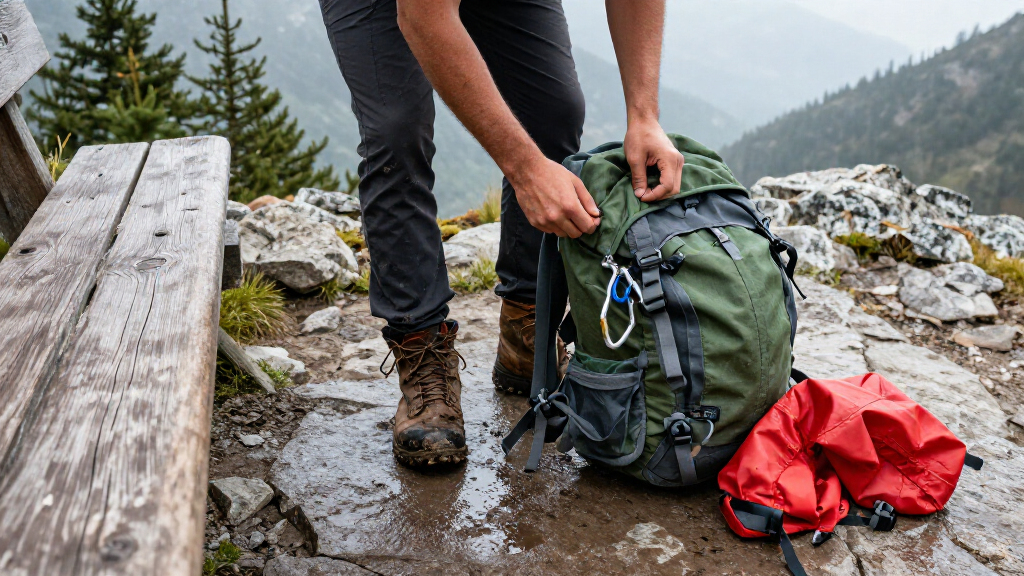
How We Picked
I evaluated these products based on their utility in common hiking scenarios, focusing on weight-to-performance ratios and ease of use. For hydration systems, I compared how well each option maintained hydration levels without causing chafing or balance issues. Electronics were judged on battery life consistency and usability with gloves on, while footwear accessories were assessed for moisture-wicking capabilities and durability over multiple wash cycles.
The ranking logic prioritizes gear that solves the most common pain points for day hikers: fatigue, discomfort, and lack of preparedness. Products that offer dual-purpose functionality, like the survival walking stick, were ranked lower than dedicated tools if their primary function (stability) was compromised by secondary features (bulk). I also considered maintenance requirements, favoring gear that is easy to clean and repair in the field.
Factors to Consider When Choosing Best Hiking Gear
Selecting gear isn’t just about buying the most expensive item; it’s about matching your equipment to your specific environment and physical needs. Here are the key factors to weigh before making a purchase.
Weight vs. Storage Capacity
The biggest mistake beginners make is overpacking. A large backpack might hold all your gear, but the added weight increases fatigue and injury risk. For day hikes, hydration vests or waist packs are often superior because they distribute weight closer to your body’s center of gravity. If you are hiking in areas with scarce water sources, you may need the capacity of a larger pack, but for well-traveled trails with refill stations, going lighter improves your speed and enjoyment. Always ask yourself if an item is a ‘want’ or a ‘need’ before adding it to your pack.
Material Durability and Maintenance
Hiking gear takes a beating from rocks, branches, and weather. Merino wool socks, for instance, resist odor and wick moisture but require gentle washing to maintain their structure. Synthetic fabrics dry faster but can retain smells and degrade quicker under UV exposure. When choosing electronics like headlamps, check if the charging ports are sealed against dust and rain. A product that fails after three hikes due to poor build quality is more expensive in the long run than a durable item that lasts for years.
Ease of Access on the Move
Having to stop and remove your backpack to get a water bottle or snack breaks your rhythm and can be dangerous on steep terrain. Gear designed for hands-free access, such as vests with front pockets or poles with quick-lock mechanisms, allows you to adjust or hydrate without stopping. This feature is particularly important for solo hikers who need to maintain constant awareness of their surroundings. Test how easily you can operate buckles and zippers with cold hands or gloves on before committing to a purchase.
Versatility vs. Specialization
Multi-tools and survival sticks promise many functions, but often perform none of them perfectly. A dedicated trekking pole usually offers better shock absorption and ergonomics than a collapsible survival staff with a built-in compass. While having a backup tool is smart, relying on a jack-of-all-trades item for critical tasks like knee support or navigation can lead to failure. Buy specialized gear for your primary needs and keep multi-tools as emergency backups only.
Frequently Asked Questions
Is a hydration vest better than a regular backpack with a water bottle?
For hikes under 10 miles, a hydration vest is generally superior. It keeps water accessible via a tube, encouraging frequent sips, and distributes weight evenly across your shoulders and back. A regular backpack with a bottle requires you to stop, remove the pack, and find the bottle, which disrupts your pace and increases the risk of dehydration. However, if you need to carry extra layers, food, or safety gear beyond water, a traditional backpack with a hydration sleeve offers more storage flexibility.
Do I really need trekking poles if I am fit and healthy?
Yes, even fit hikers benefit from poles. They reduce impact on your knees by up to 25% during descents, which is where most joint strain occurs. Poles also provide stability on loose gravel or mud and can help probe water depth or test snow crusts. While they add weight to your pack, the reduction in fatigue and lower body stress over long distances usually outweighs the burden. Beginners often find they help build confidence on technical terrain.
Are rechargeable hand warmers safe to use inside gloves?
High-quality rechargeable hand warmers are designed to be safe inside gloves or pockets, featuring automatic shut-off sensors if they get too hot. However, cheap, unbranded models can overheat and cause burns or battery failure. Always buy from reputable manufacturers with safety certifications. If you plan to use them for extended periods, choose models with adjustable temperature settings so you can manage heat output based on your activity level and ambient temperature.
How often should I replace my hiking socks?
Merino wool socks should be replaced when you notice thinning in the heel and toe areas, or if they lose their elasticity and fit loosely. Loose socks cause blisters, and thin socks expose your feet to friction and cold. For regular hikers, this might mean replacing them every 6 to 12 months. Rotate multiple pairs to allow the fibers to recover between hikes, which extends the lifespan of each pair and maintains their moisture-wicking properties.
Can I rely on a survival water filter for all my hiking water needs?
No, survival straws are best as emergency backups, not primary hydration systems. They have low flow rates, meaning it takes a long time to drink enough water to stay hydrated during strenuous activity. They can also clog quickly with sediment. For primary hydration, carry a sufficient volume of water in a bladder or bottle and refill at known sources. Use the filter only when you are caught short or need to treat questionable water sources in an emergency.
Conclusion
Choosing the best hiking gear depends on your specific trail conditions and personal comfort preferences. For the majority of day hikers, the Zelvot Running Hydration Vest offers the best balance of hydration access and mobility, making it the Best Overall pick. If you are just starting out and want to invest in comfort without breaking the bank, the MQELONG Women’s Merino Wool Crew Socks and Trekology Trek-Z Poles provide the most immediate improvement in foot health and stability, serving as the Best Value for beginners. For those tackling unpredictable weather or cold environments, the UNIHAND AI Rechargeable Hand Warmers are the Best Premium comfort upgrade. Finally, for survivalists or those venturing off-trail, the 15-in-1 Tactical Survival Walking Stick is the Best for Specific Needs, though it should complement rather than replace dedicated gear. Match these picks to your next adventure to hike lighter, safer, and more comfortably.