TL;DR

Get sports gear delivered free with Prime
- Fast, free delivery on millions of items
- Prime Video, Amazon Music and more included
- Member-only deals all year
An Outdoor Life report published Oct. 26, 2026, outlines how hunters can remove a deer hide before butchering, with a sharp knife as the only essential tool. The report says hunters can skin a deer hanging head-up or head-down, and stresses keeping the meat clean and working quickly in warm weather.
Outdoor Life published a guide on Oct. 26 to removing a deer’s hide before butchering, describing the basic equipment and hanging options hunters can use. The report says a sharp skinning knife is the only essential tool, while the choice to hang a deer head-up or head-down depends on the hunter’s setup and next steps.
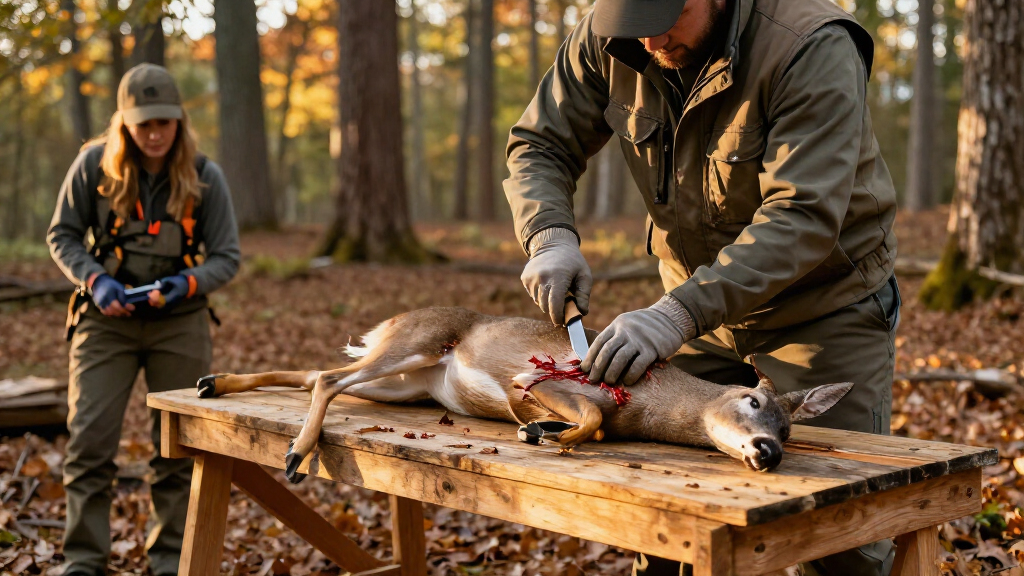
Before skinning, the deer must be field dressed, meaning its internal organs have been removed from the chest and abdominal cavities. The report says hanging the animal can make the work easier and help keep the meat away from dirt, bacteria and hair. Hunters can also skin and process a deer on the ground or another flat surface, particularly in the backcountry, where they may quarter it and pack the meat out in game bags.
Outdoor Life lists a sharp knife as required equipment and recommends a knife sharpener. Other optional tools include gloves, a headlamp, a gambrel, a hoist or rope, and a bone saw or loppers. The report cautions against using a dull knife, which it says can make the job slower and more dangerous.
Both hanging positions can work. Hanging head-up can make it easier to remove the hide over the shoulders and forelegs. Hanging head-down can make the later butchering process more convenient because the deer is already suspended by its Achilles tendons. For a deer intended for a shoulder mount, the report warns against hanging it by the neck because that can damage the cape; hanging by the antlers is an alternative, with a caution about antlers that may be loosening near shedding season.
Keeping Venison Clean and Usable
Skinning is an early step in turning a harvested deer into meat, and the method can affect how cleanly the work proceeds. The report says suspending the animal helps keep meat from contacting the ground or a truck tailgate, where it could pick up dirt, hair or bacteria. That matters to hunters handling the carcass before butchering and packaging.
Preparation can also affect transport. The report says a hitch-mounted hoist can serve as a field workstation, including for hunters working alone. It also notes that carcass-transport rules vary: where regulations restrict moving bone-in meat, spinal columns or heads across county or state lines, hunters may need to skin and quarter the animal before traveling. Readers should check the rules that apply to their location rather than assume one approach is permitted everywhere.
Products Worth Considering

Yeti Trailhead Field Chair – Tan

GoPro Fluid Pro AI 3-Axis Gimbal Stabilizer

YETI Carbon Steel Griddle, Pre-Seasoned Nonstick, 12 x 22 x 4.2, Black
As an affiliate, we earn on qualifying purchases.
Preparation and Hanging Choices
The report describes skinning as one stage in a broader process: field dress the deer, remove the hide, then butcher and package the meat. It says hunters who work near home often find hanging the deer easier, while backcountry hunters may use a gutless field method to skin and quarter it where it was harvested. The article does not present one method as the only correct sequence.
Cheyne Matzenbacher, identified in the report as a former deer processor and a deer outreach specialist for the National Deer Association, says his processing crew sometimes hung deer head-up for skinning and then flipped them head-down for butchering. That illustrates why hanging direction can change during the job, depending on the task and available equipment.
““Let gravity help you, and let the natural way a deer is going to fold up help you skin it. Don’t fight it.””
— Cheyne Matzenbacher, describing how he approaches the animal’s legs
Methods Depend on the Situation
The guide stresses that hunters use different techniques and that there is no single required order for skinning. The best setup depends on whether the deer is being processed at home or in the field, what lifting equipment is available, and whether the hide or cape must be preserved for a mount.
The source material does not give a complete step-by-step sequence for every cut, nor does it specify temperature thresholds for spoilage or a universal time limit for getting the hide off. Its general advice is to work quickly in hot conditions and move the meat into shade or a cooler. Local carcass-transport rules also differ, so the applicable requirements are not established without knowing the hunter’s location.
Before Skinning the Harvest
Hunters preparing to skin a deer should first confirm that field dressing is complete, choose a stable hanging or field setup, and have a sharp knife and clean work area ready. Those planning to transport a carcass should check current state and local rules before crossing jurisdictional lines. In warm weather, the report advises removing the hide promptly and keeping the meat shaded or cooled.
Key Questions
What is the one required tool for skinning a deer?
The guide identifies a sharp skinning knife as the only essential tool. A sharpener is recommended, while hoists, gloves, a gambrel and saws are optional aids.
Should a deer hang head-up or head-down?
Either position can work. Head-up hanging can make skinning the shoulders and forelegs easier; head-down hanging can simplify the move into butchering. The choice depends on the hunter’s setup and workflow.
Does a deer have to be hung before skinning?
No. The report says hunters can skin a deer on the ground or a flat surface. Hanging is often more convenient and can help keep the meat away from dirt and hair.
What should hunters do in warm weather?
The guide advises working quickly to remove the hide, then keeping the meat in shade or a walk-in cooler. It does not provide a specific temperature or time limit.
Can a deer intended for a mount be hung by the neck?
The report advises against hanging it by the neck because that may damage the cape. It says hanging by the antlers can be an option, but warns hunters to account for antlers that may be loosening near shedding season.
Source: outdoorlife.com